Sound amidst the mist
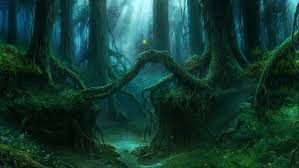
Leave it to the Japanese and their love for blending different strands of musical traditions at liberty to paint an impressionistic picture on a magical forest canvas that sprouts from world music, classical, jazz and pop/rock conventions. An uniquely video gamey sounding piece where the name of the game is using combinations of instruments you would not normally see on real ensembles out there in the wild; this is the true fusion genre. Game tracks such as this might be responsible for introducing ears all around the world to sophisticated sonorities they otherwise would not have found on their radios; both harmonically and timbre wise. Japanese RPGs have the bulk of the blame since the influences from jazz and progressive rock on popular music there were a bigger deal and jazz was considered cool kids’ music way beyond the 60s when rock’ n’ roll took over and not just old people stuff—what else would the J in J-pop mean if not jazz pop? According to some estimates, Japan has the largest proportion of jazz fans in the world. These genres had a profound effect on many composers coming of age just in time for the interactive medium boom that was to come.
Secret of the Forest by Yasunori Mitsuda is exactly what is on the label, an ambiguous and ambitious piece used for a minuscule section of the game that probably does not take more than two minutes to traverse and leave. Its sense of wistful mysticism permeates from the placement of each melodic stream allowing those who wish to peacefully meditate at the Guardia Forest to find a small foggy sanctuary for the mind before continuing on their quest.
Musical Analysis
This fusion coming from Mitsuda freely mixes some ancient world percussion with old concert instruments with modern electric instruments; There are exotic sounding flutes coupled with an electric bass that not only sounds like a bass but speaks the modern instrument’s language—an instrument often found in Square Enix’s sword and sorcery styled games that you would seldom find in, say, The Legend of Zelda. The bass, just like the flute, also makes use of pitch bending to make it sound as a fretless bass. Like the game itself, It is a blending of eras.
There is also a minimalistic edge to the piece as for most of its run it consist of just two chords going back and forth; and if you plan to make most of your piece be based around just two arpeggiated chords in order to carry the entire harmonic landscape, you better make them interesting enough. In this case the harmony in question is a vamp of the two five-note chords Gbmaj7/13 to Fm7/9/. It is as impressionistic as you can get, an elegant progression that uses effective voice leading to move as few intervals as possible to maintain a balance and a sense of trancelike flow throughout. On this vamp the F note and Eb note stay put while others have minimal movements like the bass line itself, which is the foundational point of view we are taking to construct the chords, that takes us from the Gb to the F by way of the standard perfect fifths based bass playing that allows room for the lower frequencies to not muddy the painting while the light harp is allowed the cluster harmony of both major and minor seconds; no note moves an interval larger than a whole tone when changing chords.
Strings join later to accompany the melody playing in more open voicing. As far as five note chord go, they could have different names since internally they are composed of multiple basic chords: something like Gbmaj7/13 not only has the Gb major in there but also the flavour of Eb minor and Bb minor and somebody could say the first chord is Ebm7/9 or Bbm11/b13; you could play a simpler vamp beginning with each constituent chord and the piece would still be recognizable with the melody. We are just anchoring them with the bass line since it has the most weight on the ears for accompaniment.
Under this picture you get an arbitrary yet tasteful landscape of world percussion consisting of the tabla jug sound, tambourine and conga sounds, including its articulation known as moose call in which the player just sides the finger across the membrane creating friction that produces this sound here sounding like some owl on a tree. Over this the lead instruments are allowed to improvise, the flute with pitch manipulation sounding more like an exotic Japanese shakuhachi than a traditional orchestral flute and female choirs giving us some countermelodies. The different sections blend seamlessly thanks to the unchanging vamps, reuse of motifs and the long melodic phrases going from flute to piano to choir in a natural fashion.
The intro sets the vamp, which going exclusively by the harmony would set us on the Phrygian profile of F or even the Aeolian/Natural minor profile of Bb which is anyway enharmonic with it so the two profiles are closely related and the piece will take advantage of this relation later on. Yet the melody uses the G natural as a core note which is the single note of difference between the F Phrygian profile and the F Aeolian/Minor, so the harmonic ambiguity begins from there as the composers solos with the F Aeolian/Minor scale over a Phrygian vamp. There are lots of dissonances between the melody and harmony that creates the sense of mystique apt for a piece called the Secret of the Forest. Just the first note of the melody is a tritone against the Gb and it is then emphasized to create that Lydian sense that also served well the Lost Woods from Zelda. Then against the Fm chord we have a major second interval with the melody as it descends via the F Aeolian/minor profile.
We also get the motif of a descending chromatic figure that connects core notes and has its own name, often dubbed the ‘Mitsuda lick’ due to the repeated use of this device on the composer’s catalogue; it is a basic, little chromatic gesture and ornamentation that anyone can use to automatically give a more mysterious feeling to a phrase, connecting a minor third interval via a rapid run of their chromatic neighbors. It is used in a lot of Japanese music. Although the forerunner was actually Koji Kondo who first invoked this sense of mystique when making the short flute cue for the original The Legend of Zelda, later reused as the basis for the title theme in Ocarina of Time. Kondo himself explained that coming up with this lick was particularly difficult as his boss Shigeru Miyamoto was very particular about how the flute had to sound mystical and ancient, so the solution he came up with was this more ambiguous lick made with chromaticism; it was also used for the magic flute in Super Mario Bros 3 so there is a possibility that it had already associations with some magical/fantasy tropes. If anyone knows of this lick used in similar contexts that predates the Zelda flute sound please let me know.
A Pokemon track almost directly references this entire composition:
In the melody sometimes the G natural is played over the Gb chord creating what is known as a false relation, a music theory term that describes a chromatic contradiction that occurs in two voices sounding simultaneously producing the clash of an augmented unison by sounding the note and its altered version at the same time. So overall, plenty of dissonances that give interest and a sense of unrest to the cue.
Section 2 would be when the piano takes over the melody playing a slightly altered version of the melodic motif transposed to start in F, foreshadowing the climax of the piece in which the Section 1 phrase is transposed to start up there. The piano first note is repeated to create an effect of manual delay. The choir responds with the same melodic motif starting in G but with altered, faster rhythm (same note relationship but it just does not sustain the first note). The feeling between the sections remains almost the same since the underlying harmony has not changed and the melodic phrases are based around the same motif. i t is as if different musicians are improvising over the dreamlike vamp.
For Section 3 the piece gets to its highest point in terms of energy by way of an harp arpeggio using the notes of the Fm7/9 chord. The same melody from Section 1 is transposed to start on F making it a recapitulation that feels more climatic now with the Bb Aeolian/Minor profile aided by the strings reinforcing the flute melody. For the first time the harmony changes and part of the forward energy also resides in the fact that chords are now changing each bar as opposed to the more passive two bar change. The voice leading continues to be economical, the harp arpeggios anchored to the F note. The new, also rich harmony injects new life into the same melody, making it feel like a truly new section as opposed to a simple repetition. The accompaniment strings also get a lot more movement than before. The new harmony would be something like:
Ebm7/9 – B7/9/#11 – Bbm7/9sus4
Ebm7/9 – B7/9/#11 – Cm7/11 – F7
Still some false relations within the harmony like the B chord having both the fifth and the tritone clashing. The clashes between the melody and specially the bass line are still present, emphasizing the tritone and the major second. With this progression and melody the piece is now dancing more closely between the Bb Phrygian and Bb Aeolian/Minor profiles, with the touch of the harmonic minor courtesy of that last F chord that serves now as the dominant.
The last section is the one most tinged with sadness and mystery as if something is not quite right with this forest. It is the uncanny section since all of the chords are minor and the piano melody just transposes a single new motif whose first note is always in a relation of a major second with the underlying chord. The bass line gets jazzier and more intense, shining in its moment where the piece is at its sparsest since all other instruments drop off as if they got tired of the previous intensity ridden section. The progression would be implied to be:
Bbm7/9/11 – Gm7/9/11 – Ebm7/9/11 – Fm7/9/11
Bbm7/9/11 – Gm7/9/11 – Ebm7/9/11 – Fm7/9/11 – Db9/#11 – Cm7 – Fsus4 – F
Continuing the trend of extended harmony found in the piece we basically put all the notes implied with the piano here. They are all the same chord color. This part is when you get lost in the forest since it gives the illusion of leaping from profile to profile as each parent chord pulls towards its own minor profile. The Gm chord with G as the raised sixth is the one sounding more sinister because it does not belong in the Bb Aeolian/Minor profile where the others are easier to fit. It ends with the F as if it were a dominant of the Bb Harmonic minor profile, creating an ambiguity with the loop intro where the harp note is the Bb that would have resolved the piece but the bass begins with a Gb which impairs it and robs that sense of resolution; the ambiguity never abandons this forest after all.
It is an enchanted forest where you can get pleasantly lost, find all kinds of magical creatures and come out of it without knowing whether minutes or years have passed since you entered it. It is the right place where you expect to find some kind of wise hermit with intentions unclear having deep knowledge after musing under these trees with this music in a trancelike state for eons. An impressionistic pocket of the world of Chrono Trigger takes form in front of our ears.
Not only Pokemon was influenced by this track. Other games have had a go at it for their own woods:

Help to keep the rites going around here by supporting the shrine:

Media Files, requests and support for more interactive content

Thou shall donate since this is a cult and you are now a sheep

Help staying awake analyzing game tracks and writing posts or else everything will end up being written by A.I
- Inside The Score – Super Mario All-Stars – Ending Theme (SMB)
 Wedding bells Romance is in the air. Before credit themes were introduced into the series we had this little hymn for Princess Toadstool of the Mushroom Kingdom. A wedding march for when the plumber and the princess tie the knot at the end of the series—so never, since Peach works… Read More »Inside The Score – Super Mario All-Stars – Ending Theme (SMB)
 - Inside The Score – Super Mario All-Stars – Bowser Final Battle (SMB)Last show down The companion piece to the previous track in which composer Soyo Oko goes beyond the call of duty to musicalize the final battle of the original game even if it is not that much different from the other encounters with king Koopa (which technically are minions disguised… Read More »Inside The Score – Super Mario All-Stars – Bowser Final Battle (SMB)
- Inside The Score – Super Mario All-Stars – Bowser Battle (SMB)Latin fire Here is composer Soyo Oka bringing us yet another heavy metal subgenre from the millions that sprout each week—since even adding a cello to a song is apparently a new subgenre—in the form of Cuban metal. So try and enjoy this dance instead of killing king Koopa right… Read More »Inside The Score – Super Mario All-Stars – Bowser Battle (SMB)
- Inside The Score – Super Mario All-Stars – Castle (SMB)Inferno The musical equivalent of two walls closing in to crush you. The serpentine track written for the Koopa castle is the pinnacle of claustrophobia, taking the dissonance of the Underground theme to its extreme in this diminutive cue that keeps going and going stressing you out throughout the castle… Read More »Inside The Score – Super Mario All-Stars – Castle (SMB)
- Inside The Score – Super Mario All-Stars – Underwater (SMB)Floating in three steps A waltz that today is not only a famous video game track but a piece of music worth of being cultural heritage of a classical repertoire even if it has a diminutive length. Because this tune is as recognizable in pop culture as other famous waltzes… Read More »Inside The Score – Super Mario All-Stars – Underwater (SMB)
- Inside The Score – Super Mario All-Stars – Underground (SMB)Obscure influences The environment where the Mario brothers thrive and where we first encountered them both having fights with turtles; the reason why we even have pipes in the first place. This is the underworld, which is meant to be a juxtaposition with the colorful world above in all senses… Read More »Inside The Score – Super Mario All-Stars – Underground (SMB)