A visitor from the island across the sea
Something magical is up in the air, the grass is even reacting. It is the mystical Keaton, oh what a strange sight indeed.
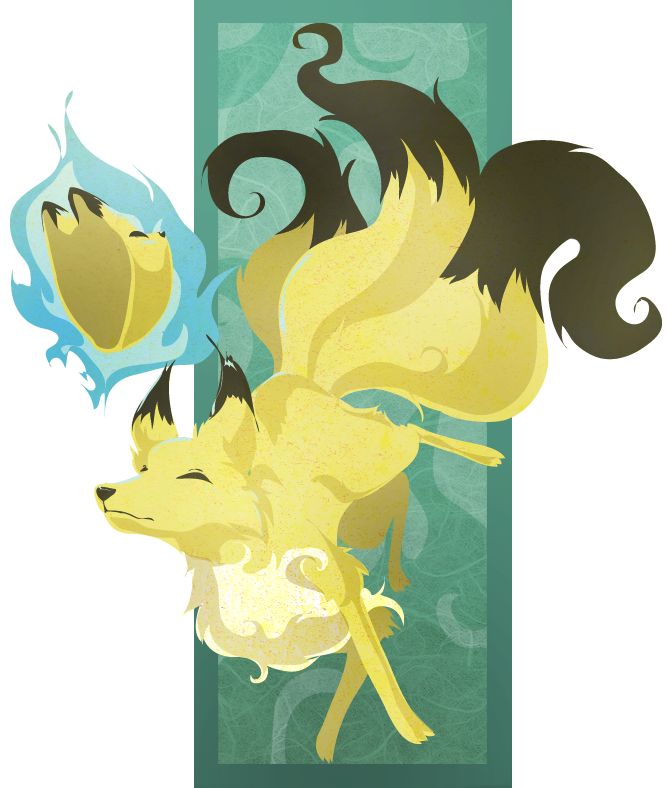
We are going back to the Far East. The first mask in the series belonging to animals (six in total), the Keaton mask has always been, in the world of Zelda, a popular mask for children; the perfect disguise if you wanted to be taken as an unassuming kid just having fun out there or putting mail without arousing suspicion. After obtaining this mask in Clock Town, Link will have the rare opportunity to meet the real life fox-like creature known as a Keaton.
Koji Kondo always complains that, with time, the developers and directors, specially the young ones, often got intimidated by his oeuvre, and began to give less and less advice and direction about what kind of music he should write for a scene, thinking that he had everything already figured out since he had been the guardian of the sonic identity of Nintendo games since the early days; as many composers know, this can be a very challenging situation since not having a framework to start with and be left out to your own devices can feel very open and aimless. So for most of Ocarina of Time and Majora’s Mask, Koji didn’t have a lot of direction; for the most part he just followed his instincts.
The Keaton’s quiz is one of the few exceptions to this, where the track Kondo had originally composed was rejected by the director since the designers wanted a completely different vibe. The most likely scenario is that Koji Kondo had originally written a funny, quirky animal tune full of jumpy pizzicatos in either a Lydian or Mixolydian mode. But Eiji Aonuma, the director, wanted the Asianness of this character to be emphasized as much as possible, thus Kondo had to go back to the drawing board in order to craft a cue that captured the mystical side of this sacred spirit.
So Answer me this…what kind of fantastic, sacred magical fox do we have here?
→ Chinese húli jīng
→ Japanese kitsune
→ Pikachu
Don’t dismiss too easily the third option since it is very likely that the Keaton mask was always meant to be a meta commentary on one of the most popular characters from Nintendo and Japanese media in general. When Ocarina of Time was released in 1998 Pokemon was at one of its peaks of popularity thanks to the television series which heavily featured the Pokemon known as Pikachu. In Ocarina of Time all kinds of characters—even Princess Zelda— imply that the mask has a relation with this famous yellow Pokemon.
So we already know that the Keaton is close to Nintendo in many ways. Still, it goes even deeper; what is for sure is that we are right now in the land of the rising sun and not only that but we are in presence of a truly sacred and important creature as the music let’s us know.
Now that we are in the presence of a real Keaton, we can see that it is truly a fox with multiple tails. The Japanese name of the character makes it even clearer (Kītan); this is none other than the sacred Kitsune from Japanese mythology.
In many cultures foxes are seen as creatures with a reputation for almost supernatural cunning and cleverness, hence It’s not a surprise that their mythological counterparts draw their inspiration from these traits. In folklore and myth the fox is often depicted as a very wise animal or in the case of the West, as a trickster and cunning thief. The mysterious and eerie cry of the fox has led to many mythological versions having mystical or supernatural powers; the interesting thing is that many people in different parts of the world reach similar conclusions even without cultural exchange.
Especially in East Asian folklore foxes are depicted as a spirit possessed of magic powers. These foxes are portrayed as mischievous, usually tricking other people. By far the best-known outside of its country of origin, the Kitsune is the Japanese version of the myth. Kitsune are neutral tricksters in general, they can be malicious or benevolent. Like many things of the Nippon country, The motif of nine-tailed foxes was transmitted and introduced to Japan directly from Chinese culture. The more tails a Kitsune has, the older, wiser, and more powerful it is. Kitsunes are typically portrayed with feminine qualities so there is a chance the Keatons Link finds in Termina are female ones.
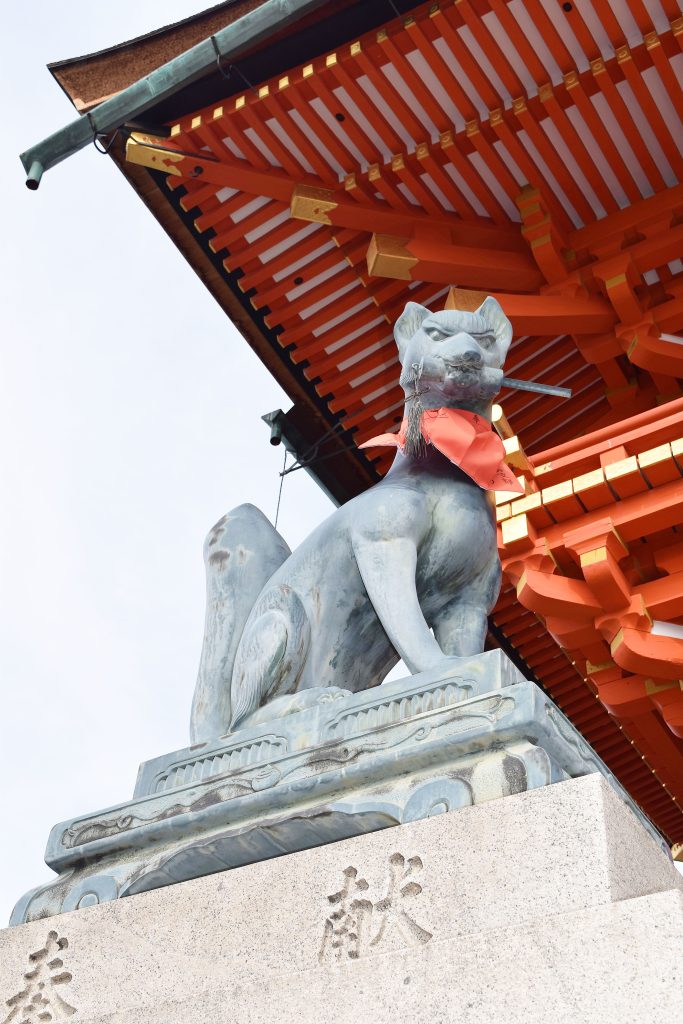
As a fun fact, it was one of these same creatures which inspired Shigeru Miyamoto to create the Star Fox series and its protagonist Fox McCloud since an important shrine in Kyoto, where the company is based, is full of Kitsune statues and shinto arcs that look just like the arcs crossed by the space pilots.
Musical Analysis
Structure: Section 1
Time Signature: Free Time
Tempo: 60
Melodic and Harmonic Profiles: E Pentatonic Minor; Microtonal
Therefore, as can be seen, it is overall an important creature to Japan, Shinto and Nintendo. The music that ended up accompanying the Keaton reflects this level of importance as it is one of the most recognizable and solemn sounds of Japan. The ancient court music of Japan is known as gagaku. The name is a Japanese pronunciation of the Chinese characters for elegant music. Once again, China provides the basis for this cultural aspect of the Japanese. The music of the ancient, lost kingdom of Kucha, a mighty kingdom that once flourished on the deserts of China and whose music was famous across the trade lines of the Silk Road, along with other early medieval music, was transmitted from China to Japan and was preserved there, somewhat transformed, as gagaku or Japanese court music (This same mysterious kingdom might have inspired the rich culture of music we will encounter in the Ikana region).
You can seize its elegantness by hearing some samples of it here:
As was said previously, the musicians from East Asia are capable of distinguishing the minute differences and subtleties of the rhythms from the percussion, and are able to extract or impart different emotions and meanings by varying the speed, articulation and patterns of the percussion in a similar way to how Western musicians associate harmonic language with emotions. Koji Kondo uses the djembe to do just that, giving subtle, small changes, each time the drum plays. Like the good student he is, Kondo appropriates all of the techniques to make it sound authentic, also sticking to a Japanese pentatonic scale equivalent to the Western pentatonic minor.
Needless to say, the music is very apt for this kind of Shinto kami (god spirit); very primal, ancient, refined and, of course, Oriental. Just like the director wanted.
Also, it doesn’t need to be said that the accordion is not meant to be an actual accordion. It is just the Japanese cousin to the Chinese sheng, the sho, a free reed musical instrument that was introduced from China. The jingle is the Shinto suzu bells known as kagura suzu, and the two articulations of the djembe are probably meant to be two different Japanese taiko (drums); the high pitch Tsuzumi and the low pitch Tsuri-daiko, similar to the Rosa Sisters Dance. It’s all in free form and Kondo even pays attention to the characteristic silences of the style.
If the first animal mask from the game comes with a very Oriental flavor courtesy of the land of the rising sun, then our next mask will contrast heavily with it by appropriating music most likely straight from films made on eagleland. Time to follow the leader.

Help to keep the rites going around here by supporting the shrine:

Media Files, requests and support for more interactive content

Thou shall donate since this is a cult and you are now a sheep

Help staying awake analyzing game tracks and writing posts or else everything will end up being written by A.I
- Inside The Score – Super Mario All-Stars – Ending Theme (SMB)
 Wedding bells Romance is in the air. Before credit themes were introduced into the series we had this little hymn for Princess Toadstool of the Mushroom Kingdom. A wedding march for when the plumber and the princess tie the knot at the end of the series—so never, since Peach works… Read More »Inside The Score – Super Mario All-Stars – Ending Theme (SMB)
 - Inside The Score – Super Mario All-Stars – Bowser Final Battle (SMB)Last show down The companion piece to the previous track in which composer Soyo Oko goes beyond the call of duty to musicalize the final battle of the original game even if it is not that much different from the other encounters with king Koopa (which technically are minions disguised… Read More »Inside The Score – Super Mario All-Stars – Bowser Final Battle (SMB)
- Inside The Score – Super Mario All-Stars – Bowser Battle (SMB)Latin fire Here is composer Soyo Oka bringing us yet another heavy metal subgenre from the millions that sprout each week—since even adding a cello to a song is apparently a new subgenre—in the form of Cuban metal. So try and enjoy this dance instead of killing king Koopa right… Read More »Inside The Score – Super Mario All-Stars – Bowser Battle (SMB)
- Inside The Score – Super Mario All-Stars – Castle (SMB)Inferno The musical equivalent of two walls closing in to crush you. The serpentine track written for the Koopa castle is the pinnacle of claustrophobia, taking the dissonance of the Underground theme to its extreme in this diminutive cue that keeps going and going stressing you out throughout the castle… Read More »Inside The Score – Super Mario All-Stars – Castle (SMB)
- Inside The Score – Super Mario All-Stars – Underwater (SMB)Floating in three steps A waltz that today is not only a famous video game track but a piece of music worth of being cultural heritage of a classical repertoire even if it has a diminutive length. Because this tune is as recognizable in pop culture as other famous waltzes… Read More »Inside The Score – Super Mario All-Stars – Underwater (SMB)
- Inside The Score – Super Mario All-Stars – Underground (SMB)Obscure influences The environment where the Mario brothers thrive and where we first encountered them both having fights with turtles; the reason why we even have pipes in the first place. This is the underworld, which is meant to be a juxtaposition with the colorful world above in all senses… Read More »Inside The Score – Super Mario All-Stars – Underground (SMB)