Connecting with the underground inhabitants for the first time
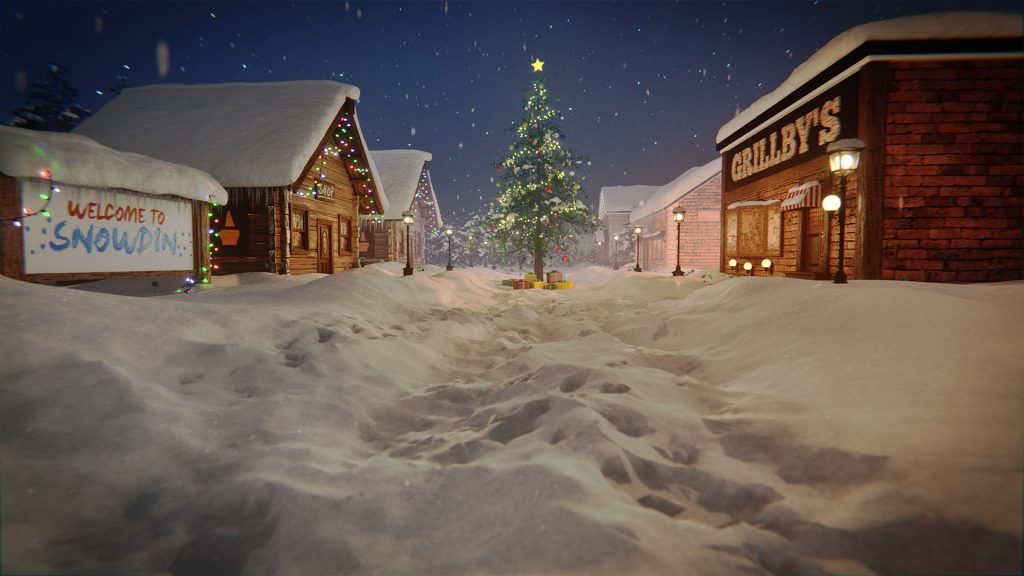
It is Christmas time, time for family, friendship and forgiveness, stuff you would totally not expect to find in the underworld where monsters and demons are cast away; but maybe even they too have a lesson to teach us during these times. Your soul just has to be open to it. In fact, it may be even the same lesson that the man after which the most universal celebration is named came to teach. So move on Christmas movies and carols, and leave space for the new genre upon us, the Christmas game genre.
For our Christmas special episode here is a visualization of a much requested game that took a lot of determination to put together since we are not only dealing with the Christmas representative but also the first view at one of the definitive staples of modern gaming, one that bridges the past with the future and a product of the internet era; a project that could only materialize in the digital landscape. As such, the era of sequenced music for the sound of the games has long passed, leaving in its place just raw audio files that video game composers make in the same way any other media composer does, just use whatever tools you like without constraints, even a recording studio with a full orchestra if you want, then bring the song in the highest possible quality and put it in your game since memory concerns are not a thing anymore, even for indie games.
Fortunately, Undertale fans being the obsessive bunch that they are, have its beloved soundtrack thoroughly documented down to the samples, plug-ins and effects that composer-turned game designer Toby Fox, the one man operation behind Undertale, used to create the score in his FL Studio 10 software. With this information it was possible to do a MIDI visualization with caution and checked for accuracy with an advanced methodology (just listening to it many times), since, just like guitar tabs, most online recreations are bogus. So let me know if anyone ever catches any discrepancies between the notes shown and what you hear—as a disclaimer, the audio is the same from the game; just don’t alert Toby and ruin Christmas, will ya? Just a nice opportunity to talk about a modern game.
Indeed a project that could only be born in modern times and in the video game medium, times where the democratization and widespreadization of computer tools allows any fan of old-school SNES RPG era with a lot of determin…ed programs and time to single handedly get funds, write, compose, program, distribute and market their own game, bringing it out directly to da people without a middle man to fabricate physical copies. Welcome to the digital era, where you can be anything you want and serve directly to your weird niches. Now, getting noticed is an entirely different story which is what makes Undertale takeover of the cultural zeitgeist more remarkable seeing as how it was a brand new independent property. Something to do with the fact it is simultaneously a love letter to classic games and a deconstruction and subversion of gaming tropes. Sometimes you can talk your way through a game and become a knight in shining armor without slaying any dragons.
The Earthbound for the modern era. Just like the quirky, charming, slightly offbeat and plain bizarre adventures of Ness and his friends full of dadaist humour took place in the year 199X, Frisk’s Alice in Wonderland-style passage through the underworld takes place in the year 201X, showing the commitment to continue what that game started, with a similar look and feel. And just like the Mother series sat out to be a subversion of the typical RPG staples, replacing heroic medieval fantasy tales with a modern U.S city setting full of strange characters and wacky dialogue that parodies the medium, Undertale takes on this obligation of deconstructing and subverting the expectations of an RPG with a similar cast where this time every character and monster encounter is unique and counts for something. So you better think what you are going to do. But it also goes beyond that, playing even with functional conventions themselves like menu interfaces, fourth wall breaking and messing directly with your system. It may not even want to be an RPG at all but more of a narrative driven, text based adventure just cross dressing as one in order to have fun with its conventions; after all, you as a human are overpowered against the monsters, being able to kill them easily with the stick you get at the beginning and the the battles take the form of micro-games straight from the WarioWare series with Touhou project style boss battles.

However, subversive as it might be, there is a singular element from which it would not dare or want to stray away from its RPG tradition and pedigree, that is its soundtrack. Made by a guy who is first and foremost a musician, Toby Fox score for his own game is made with care, knowing that, without voice acting, music will have the responsibility to carry the bulk of the emotions that can make or break the experience. And as a fan of the rich video game music tradition, Mr Fox brings up with him an arsenal of sounds—mostly free plugins and samples anyone can get since otherwise how could you be an indie darling—that span all the different eras, from the 8-bit, characteristic chiptune sounds to low fidelity samples taken directly from SNES games (including, to the surprise of no one, a lot from Earthbound) to modern quality samples that sound pristine and realistic—and even sounds from SpongeBob TV series. It is also an OST that makes heavy use of leitmotifs to structure and convey its narrative, creating a coherent package with incoherent sounds. From funny to bizarre to emotional to epic, Toby reuses his themes across multiple cues throughout the adventure for a classic video game score that does not rely on the incidental film-like music but the traditional loop based tunes.
Before making Undertale Toby Fox, a self taught musician, was mostly known in internet circles for composing music for the webcomic Homestuck, after making and writing music for his own Earthbound ROM hacks he decided to create an original one with just a little help of some character designers and a crowdfunding campaign. As an auteur he could create an interlocking space between music, story and visuals; he composed the music prior to programming, as it helped to dictate how scenes should go. The soundtrack ends up being cohesive and memorable due to the multiple references to its themes and the connections that arise between the different pieces.
Musical Analysis
The selected track for a jolly Christmas—that is, only if you are on a sparing spree since otherwise the soundtrack of the game dynamically changes to reflect your dark inner self—is the one heard across Snowdin Town, a pun name since it is a small, cozy village engulfed in snow that somehow falls in the underworld inside of a mountain (the Hotlands evaporating the water of the water region might have something to do with it). It is inhabited by all kinds of furry creatures that are adapted and enjoy this apparently permanent season. As in your typical slippy-slidey ice world where, even if you character is dressed in a tutu, coldness is not an issue, the Christmas theme is strong on this one, even though the monsters here apparently reached the same traditions from us in an independent fashion and by different means; for example giving gifts and putting them under a decorated tree arose as a result of mischievous monster kids decorating the tree-like horns of some local monster, with people giving it presents in order to make it feel better. Yet, there are some mentions of Santa Claus—implied to be the king— and the name Christmas is referenced directly so it is likely a similar cultural process to our own Christmas, where multiple threads of traditions and practices of various people in the world came together and ended up being part of the birthday celebration of the Christ thanks to Him being the most influential figure in human culture; they also have access to human history although it is butchered due to it coming from comic books and other media. In any case what matters is that it is a white Christmas over here and that means we have a lot of lights, presents, polar bears—albeit without coke—and of course sleight bells.
However, Snowdin Town and its accompanying carol is not any generic Christmas town that looks pretty but also a pivotal point in the narrative. Here is where you can begin to suspect the underlying message of the game since it is at this place where you start to see these creatures as fellow humanlike, beings with unique lives outside being random generic monster encounters. And thus your perspective starts to shift a little after, most likely, playing the game as a normal RPG and often just sparing the cute dogs since we evolved to sympathize with their cuteness. Here in Snowdin Town is where the Christmas miracle takes place and you empathize with the monsters, deciding how you will play the rest of the game—there is no going back to normal society for whoever has the nerve to kill Papyrus—So this theme ends up being not simply a town theme but much more than that, a theme of friendship since it also plays whenever you are having a good time with any of the monsters and at another key moments in the history where the power of friendship, as the cliche goes, can conquer everything. It was also a theme you constantly heard in a more taciturn version through your snowy path before reching the town.
Nevertheless, in the context of Snowdin Town the music retains the characteristics of Christmas themed media music which get mixed up with more generic winter themes. You have the icy celesta, plucky pizzicato strings meant to sound like icicles or snow falling, Christmas bells that carolers and churches use and of course the sleight bells that are related to the bells attached to these vehicles meant to warn of their presence since in the snow you may not be able to see them and unlike cars or horses they are more silent when moving; by now they are associated with the magical sleight of Santa Claus—which is a name that originates when you deform the real name, Saint Nicholas, by saying it too fast.
The merry music is in the Ab Ionian/Major key and its main intro motif, like many other tracks from the Undertale soundtrack, is based around a three note figure from the Opening theme C Section, cue that functions as the main theme of the game and pervades a lot of the score; that one was inspired by the Mother 1 intro theme, also being made in chiptune style. The Mabel Town theme from The Legend of Zelda: Link’s Awakening, a game that also inspired Toby Fox and has a similar feeling, has the exact same intro motif. The celesta melody, mixed in with the piano, opens the piece which this three note motif that is already familiar to players and connected with the entrenched score. This intro establishes the main melodic and rhythmic motifs that set the tone for the rest of the piece; this opening is made out of four question-answer blocks, first one ends in the fifth to create that tension-release dynamic with the second that ends up in the tonic Ab; the track makes use of ritardando to create a more organic and expressive feeling to the playing and then repeats the phrase, but this time it leaves the last answer incomplete, letting the tension of the dominant to stay before entering the proper melody in its A Section.
The piano and celesta are interlocked throughout the intro, the piano providing most of the harmony and implying all kinds of Christmasy extended chords. The harmony for this intro can be seen as:
Intro:
Dbadd9 – Abadd9 – Abmaj7 – Bbm7
Dbadd9 – Abadd9 – Eb – Fm7
Nothing like the sound of ninths and minor sevenths to bring that winter Christmas spirit. Second repetition omits the Fm7, ending in the dominant chord.
The A Section starts reiterating this special three note motif and develops it towards a full fledged melody, also made of question-answer phrases, same pattern of first one ending on the fifth with an ascending motion and the second ending on the tonic with descending motion to continue this tension-release dynamic that characterizes many melody lines. The pair of phrases repeat just like in the intro. The pizzicato strings, bells and percussion are introduced to set the mood. The Celesta is played with some ornamental notes from the classical tradition where they are called grace notes. The chords can be interpreted as:
A Section:
Db6 – Db6 – Ab – Bbm – Ab – Bbm – Abadd9
Db6 – Db6 – Ab – Db – Eb – Ab
The repeat of the Db6 chords shows us that the melody uses a device where it repeats the question two times before launching itself into the answer, making the melody line more asymmetric in contrast with the intro and leaving the fourth bar of each phase with a single sustained note.
The contrasting B Section is where Undertale really shows how far it can go in subverting all expectations by giving for the first time in the history of music the possibility to a viola player to shine and play a melody. Even though very similar to the violin, the queen bee of the orchestra, since they share a lot of range, the warmer and woodier tone of the viola that all failed violin players enjoy discovering when they pick it up fits perfectly with the ensemble and the cozy town. It allows us to hear how far the sounds in games have come since it sounds more real than the generic string patches, which, by the way, are not forgotten since they are played as a pad of extended harmony over which the violist is finally able to shine. Being a viola player though, it is paramount that the part is easy to perform and Toby was considerate enough; the best he could do was coming with two pairs of simple question-answer blocks of repeated notes where the first answer is pretty much just the same question one octave up and then the viola player forgets the answer to the second question-answer so the pianist has to help and complete the piece with a little outro ditty.
Harmony is:
B Section:
Cm7 – Dbmaj7/9 – Cm7 – Eb – Fm7 Cm7 – Dbmaj7/9 – Bm7/9 – Eb
For the contrasting B Section the composer goes to the iii chord that gives the Christmas nostalgia
The entire piece then loops.
Not too bad for a bedroom producer who does not know how to write or read music notation. Toby Fox turned out toby a formidable game developer and composer after just messing around with some ROM hacks, making his very first game a success. The phenomenon of Undertale took over the internet age and its music made with humble tools has come to be performed by orchestras, reached both the Pope and the Super Smash Bros series and allowed him to compose for the biggest franchise which is Pokemon. Undertale is also the most popular video game soundtrack in streaming platforms.
The Christmas special goes beyond a Christmas theme village and music with sleight bells. The entire message of the game is relevant for the particular holiday season that always finds a way even in the unlikeliest places and as an independent game through and through, a perfect first look at the modern gaming landscape which by this point has matured enough to even be talking about hip indie gems.
Help to keep the rites going around here by supporting the shrine:

Media Files, requests and support for more interactive content

Thou shall donate since this is a cult and you are now a sheep

Help staying awake analyzing game tracks and writing posts or else everything will end up being written by A.I
- Inside The Score – The Legend of Zeda: A Link to the Past – End Credits / Staff Roll
 The land rests As the last few minutes of this extensive journey that has now come to an end fly by, the nostalgia and reflective mood kicks in. Because such a massive enterprise as a Zelda game or a Lord of the Rings movie require multiple endings to convey everything… Read More »Inside The Score – The Legend of Zeda: A Link to the Past – End Credits / Staff Roll
 - Inside The Score – The Legend of Zelda: A Link to the Past – Ending / Epilogue ~ Beautiful HyruleFinal of the fantasy The Triforce has been touched. A wish has been granted. For the occasion, the newly undeceased king of Hyrule has commissioned a march in honor of the legendary hero to the Hylian Sousa, who might as well be composer Nobuo Uematsu since this piece is very… Read More »Inside The Score – The Legend of Zelda: A Link to the Past – Ending / Epilogue ~ Beautiful Hyrule
- Inside The Score – The Legend of Zelda: A Link to the Past – Triforce Chamber / Power of the GodsTake your boots off your feet And thus the Triforce spoke to men. And it became present in history. And you better treasure and contemplate this moment seldom witnessed in the course of the series. The elusive opportunity to interact and touch the most important artifact. You are now in… Read More »Inside The Score – The Legend of Zelda: A Link to the Past – Triforce Chamber / Power of the Gods
- Inside The Score – The Legend of Zelda: A Link to the Past – Ganon Battle / Prince of DarknessProgressive evil En Garde! And you better be prepared since you are about to duel the iconic enemy of the series at perhaps his canonically most powerful incarnation. Right after having touched the sacred Triforce which allowed him to conquer all of the Golden Land and whose evil and darkness… Read More »Inside The Score – The Legend of Zelda: A Link to the Past – Ganon Battle / Prince of Darkness
- Inside The Score – The Legend of Zelda: A Link to the Past – Boss Battle / Anger of the GuardiansQuick mayhem Ah, the simpler times when boss battles where not a multi epic orchestral suite but just an ostinato more basic that even what became the music for standard battle encounters out there. We are a long way from each boss having his own personalized track. And this early… Read More »Inside The Score – The Legend of Zelda: A Link to the Past – Boss Battle / Anger of the Guardians
- Inside The Score – The Legend of Zelda: A Link to the Past – Dark World Dungeon / Dungeon of ShadowsMemento mori We are getting closer to Ganondorf (or at least the wizard Agahnim who ultimately fulfills the same human side of evil role in this game) and that means getting closer to the profiles and motifs of his own theme song (which naturally was the theme of Agahnim at… Read More »Inside The Score – The Legend of Zelda: A Link to the Past – Dark World Dungeon / Dungeon of Shadows