Heavy Shanty
Musikal Analysis
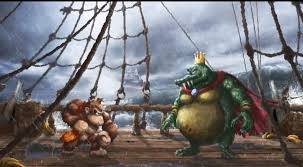
You are on a pirate boat fighting a crocodile because they are water creatures. So you hear some sea shanty-inspired Irish track that then transforms into an Iron Maiden song bekause you are against evil and metal is evil.

Help to keep the rites going around here by supporting the shrine:

Media Files, requests and support for more interactive content

Thou shall donate since this is a cult and you are now a sheep

Help staying awake analyzing game tracks and writing posts or else everything will end up being written by A.I
- Inside The Score – Super Mario All-Stars – Ending Theme (SMB)
 Wedding bells Romance is in the air. Before credit themes were introduced into the series we had this little hymn for Princess Toadstool of the Mushroom Kingdom. A wedding march for when the plumber and the princess tie the knot at the end of the series—so never, since Peach works… Read More »Inside The Score – Super Mario All-Stars – Ending Theme (SMB)
 - Inside The Score – Super Mario All-Stars – Bowser Final Battle (SMB)Last show down The companion piece to the previous track in which composer Soyo Oko goes beyond the call of duty to musicalize the final battle of the original game even if it is not that much different from the other encounters with king Koopa (which technically are minions disguised… Read More »Inside The Score – Super Mario All-Stars – Bowser Final Battle (SMB)
- Inside The Score – Super Mario All-Stars – Bowser Battle (SMB)Latin fire Here is composer Soyo Oka bringing us yet another heavy metal subgenre from the millions that sprout each week—since even adding a cello to a song is apparently a new subgenre—in the form of Cuban metal. So try and enjoy this dance instead of killing king Koopa right… Read More »Inside The Score – Super Mario All-Stars – Bowser Battle (SMB)
- Inside The Score – Super Mario All-Stars – Castle (SMB)Inferno The musical equivalent of two walls closing in to crush you. The serpentine track written for the Koopa castle is the pinnacle of claustrophobia, taking the dissonance of the Underground theme to its extreme in this diminutive cue that keeps going and going stressing you out throughout the castle… Read More »Inside The Score – Super Mario All-Stars – Castle (SMB)
- Inside The Score – Super Mario All-Stars – Underwater (SMB)Floating in three steps A waltz that today is not only a famous video game track but a piece of music worth of being cultural heritage of a classical repertoire even if it has a diminutive length. Because this tune is as recognizable in pop culture as other famous waltzes… Read More »Inside The Score – Super Mario All-Stars – Underwater (SMB)
- Inside The Score – Super Mario All-Stars – Underground (SMB)Obscure influences The environment where the Mario brothers thrive and where we first encountered them both having fights with turtles; the reason why we even have pipes in the first place. This is the underworld, which is meant to be a juxtaposition with the colorful world above in all senses… Read More »Inside The Score – Super Mario All-Stars – Underground (SMB)



Pushing back against Nintendo’s attempt at Kremlin erasure in favor of the Tiki Tan tribe, here we are watching and hearing the final boss battle theme that accompanies the fight against the demented crocodile known as King K.Rool (also known by the monikers Kaptain K. Rool, Baron K. Roolenstein or King “Krusha” K. Rool), which is a play on the word ‘cruel’ that describes his behavior; he is a king who for some reason commands a sea pirate armada and is after the bananas of the DK Isle—most likely the bananas are just a ploy to capture Donkey Kong and remove the guardian of an island that conceals countless ancient treasures as proven by the golden bananas in Donkey kong 64—The Kremlin king replaces Mario as the original villain of Donkey Kong (the plumber truly has done everything)—becoming the main foil of the series; he is what Bowser is to the Super Mario franchise since both share some similarities.
The idea of a Pirate crocodile flotilla dates back to an unreleased game Rareware was working on, Jonny Blastoff and the Kremling Armada, which was conceived as a game featuring pirates and it would have been set in a series of islands with coconut palms, galleons and hidden treasures. One of the main Rare developers, Gregg Mayles, has been obsessed with the golden age of piracy for all of his life, resulting in various Rare games featuring this motif, all culminating on the expansive Sea of Thieves video game. This single sequence will be the basis for the entire sequel.
Musical Analysis
This composition by David Wiise, like many others from his Donkey Kong Country soundtracks, stitches together two different tracks in order to convey the tempo of the final battle and the imagery the player encounters. Selecting the Gangplank Galleon ship as the location of this encountered, the player is treated to a happy-go-lucky sea shanty in major tonality that slowly transitions into a minor metal theme as the battle progresses, the beat speed following closely the movements of King K. Rool and the cannonballs falling all around. The two tracks are blended by way of a Dm long chord on the strings—that for some reason got delayed a little on the visualization—that slowly creeps from beneath the Irish folk tune that is the sound that inspired many a sea shanty.
These shanties as are recognized on the collective imaginary probably were never sung on a proper pirate ship from the golden age of piracy much less these modern elaborate versions closer to a professional barbershop quartet than a bunch of drunken sailors just trying to coordinate the labor within a pre-industrial ship. This is just like many other myths of pirates propagated by Hollywood films and first popularized by the book Treasure Island from 1883, many years removed from the classic pirate era; so just like eyepatches, peg legs, parrots (sometimes themselves with mini eyepatches), buried treasure, exciting adventures and codes of honor, the version of sea shanties we think today as pirate or sailor music is a highly romanticized distortion coming from films and cartoons. Pirates probably sung stuff aboard and they were certainly known for kidnapping musicians for entertainment purposes, but the music most likely didn’t follow any particular pattern other than the trends of the times and locations or the instruments available to steal. Still, there is a kernel of truth in that sailors of merchant ships sang working songs in order to coordinate movement and keep up the morale. They were usually call and response single line melodies where a shauntier sang the call and sailors joined unison on the response; certainly it is not likely anybody would be harmonizing while working.
What people usually think of as sailor sea shanties are Gaelic, English folk and polka songs written many years later by professional songwriters arranging popular sailor chants, especially those from the popular route between Liverpool and New York which is a city full of Irish immigrants. The songs romanticize the topics of seafaring culture and the bygone eras. The Celtic style stuck and even if composers were not Irish they tried to sound like it just for the sake of the style. The form probably acquired that exaggerated shuffle feel and triplet rhythm trying to imitate the rocking back and forth of a boat against the ocean waves (just like swimming is synonymous with a waltz).
The most famous modern example of a shanty song might be the theme song for the TV show SpongeBob, which is itself based on the sea shant ‘Blow the Man Down’:
What is probably true is the use of cheap, easy to find (or to rob) portable instruments for the entertainment of the crew, like non-orchestral flutes and recorders, fiddles and especially the concertina, which many confuse with the accordion since both are of the same family; It also consists of expanding and contracting bellows with buttons (or keys) usually on both ends, unlike accordion buttons which are on the front. Same applies for the Harmonica which is what David Wise uses here; all these instruments belong to the free reed aerophone family, making them sound alike. Just use it on the lower registers and now everybody thinks it is an accordion.
The switch to steam-powered ships and the use of machines for shipboard tasks by the end of the 19th century meant that shanties gradually ceased to serve a practical function in merchant and military crews (or maybe pirates did not actually have steam powered ships in a long time so they were indeed actually doing sea shanties during the modern era).
This sea shanty version is not in a typical triplet time signature like 6/8 or 12/8 but still features a heavy use of shuffle feel to capture the marine vibe of the laidback quarters. David Wise takes a part he originally came up with for the title screen music for the video game Sid Meier’s Pirates! which Rareware ported to the NES back in the day (I told you Rare were obsessed with pirates) and uses it as the tails for his melodic phrases, adding then a main motif which will form the basis for both the Gaelic track and the metal version later.
The seafaring track is introduced with this particular Sid Meier’s Pirates! coda, with sections separated by the pitch bent notes that slow down the tempo. The tune uses harmonicas everywhere and a synthesizer that sounds just like one for the upper voice in order to add richness to the sound. There are also sailor pipes used in counterpoint fashion to create a rich tapestry for this K. Rool sea chant. The piece uses standard major chords in F major—I dare you to find another final boss battle theme based around a I – IV – V progression—ending up with the accompaniment of:
Intro
Bb – C – F
C
A Section
F – Bb – F – Bb – C – F
F
The harmonicas are used in a concertina or accordion style, with a defined left hand/right hand separation playing the standard pirate rhythms.
The last F chord subliminally begins the path towards the transition of the key into its relative minor key D, preparing the proceedings for the minor based metal track that is to come. This makes the B Section having a slight tonal change even though the melodic motif remains the same and the chords are still major. Yet, the tune begins introducing some different notes and intervals like the Eb note.
Harmony is
Bb – F – Bb –
G – C – A – Dm
The G chord serves as the bridge towards the new world alongside the smooth voice leading of the C-A-Dm progression. During this part the drummer begins introducing the toms in a style similar to the jungle beats of the Donkey Kong series.
So with the Dm chord of the strings and a choir sample bubbling up, the mood starts to shift. The electric guitar is plugged in and is warming up, and then the drummer punctuates the beginning of the new track with an epic tom fill. Then the galloping rhythms that sound like the four horsemen of the apocalypse riding in countless metal tracks are heard since now the player is aware that this is the real deal and the battle ramps up its difficulty. Just like King Bowser, the Kremlin king is also accompanied by the high octane sounds of heavy metal which are not only action packed but also often presented with motifs and sounds that are evil. David Wise had just recently attended a showcase by the band Iron Maiden, which inspired him to incorporate the rhythmic and harmonic approach of the British heavy metal band. The minor VI-VII-i which here would be (Dm – Bb – C – Dm) progression and galloping rhythm playing are a staple of many songs of the band, like the song Hallowed by Thy Name:
David Wise imitates the style of the band down to the triple guitar attack of two leads, one rhythmic, opting to use a distorted electronic wave as opposed to the distorted guitar sample for his lead guitars; perhaps these 8-bit sounds lend themselves better to mimic the staple soloing guitar technique of the pitch bend, which is all over the place on Gangplank Galleon. The DK acoustic bass sounds in conjunct with the distorted electric guitar, creating together the powerful low end of the track.
Like other David Wise tracks from the era, the sound design is top notch, painstakingly using volume techniques and pitch manipulation to convey various real techniques like guitar feedback or big drum rooms with compressed reverb. Even though the drum pattern would be impossible to play by a single human, it creates a big reverb illusion by manually putting delayed notes with progressively lower volume. A lot of techniques going on here than cannot be translated properly in visualizer form.
The metal section is opened with an heroic question-answer melody phrase first descending towards D and then ascending to the upper D, all with pitch bends. After a guitar feedback laden interlude, the track ramps up the pace with the drummer going for a double time feel on the kick and snare and the main motif of the cue returning in grand fashion. Finally, there is an outro that sets the stage for the loop point of the track which understandably never returns to the Irish folk for the remainder of the battle.
The Gangplank Galleon theme ended up becoming the K. Rool theme, being used through the years associated with the kremlin king. On the Super Smash Bros series it is even using it as the Victory cue for the character—not even Bowser has his own melody as a victory cue—Since Donkey Kong Country 2 begins where the first left off and the game leans even harder on the pirate motif, there are arrangements of the Gangplank Galleon theme that use it as its basis for new tracks like Klomp’s Romp and Snakey Chantey which themselves are the basis for the Game Over cue. On the Super Smash Bros Mariachi arrangement there are also some rapping vocals added since of course K.Rool would not let the Kongs be the only ones with a rap of their own. Naturally when K. Rool returns this theme will be there too.
Help to keep the rites going around here by supporting the shrine:
Media Files, requests and support for more interactive content
Thou shall donate since this is a cult and you are now a sheep
Help staying awake analyzing game tracks and writing posts or else everything will end up being written by A.I
- Inside The Score – Super Mario All-Stars – Ending Theme (SMB)Wedding bells Romance is in the air. Before credit themes were introduced into the series we had this little hymn for Princess Toadstool of the Mushroom Kingdom. A wedding march for when the plumber and the princess tie the knot at the end of the series—so never, since Peach works… Read More »Inside The Score – Super Mario All-Stars – Ending Theme (SMB)
- Inside The Score – Super Mario All-Stars – Bowser Final Battle (SMB)Last show down The companion piece to the previous track in which composer Soyo Oko goes beyond the call of duty to musicalize the final battle of the original game even if it is not that much different from the other encounters with king Koopa (which technically are minions disguised… Read More »Inside The Score – Super Mario All-Stars – Bowser Final Battle (SMB)
- Inside The Score – Super Mario All-Stars – Bowser Battle (SMB)Latin fire Here is composer Soyo Oka bringing us yet another heavy metal subgenre from the millions that sprout each week—since even adding a cello to a song is apparently a new subgenre—in the form of Cuban metal. So try and enjoy this dance instead of killing king Koopa right… Read More »Inside The Score – Super Mario All-Stars – Bowser Battle (SMB)
- Inside The Score – Super Mario All-Stars – Castle (SMB)Inferno The musical equivalent of two walls closing in to crush you. The serpentine track written for the Koopa castle is the pinnacle of claustrophobia, taking the dissonance of the Underground theme to its extreme in this diminutive cue that keeps going and going stressing you out throughout the castle… Read More »Inside The Score – Super Mario All-Stars – Castle (SMB)
- Inside The Score – Super Mario All-Stars – Underwater (SMB)Floating in three steps A waltz that today is not only a famous video game track but a piece of music worth of being cultural heritage of a classical repertoire even if it has a diminutive length. Because this tune is as recognizable in pop culture as other famous waltzes… Read More »Inside The Score – Super Mario All-Stars – Underwater (SMB)
- Inside The Score – Super Mario All-Stars – Underground (SMB)Obscure influences The environment where the Mario brothers thrive and where we first encountered them both having fights with turtles; the reason why we even have pipes in the first place. This is the underworld, which is meant to be a juxtaposition with the colorful world above in all senses… Read More »Inside The Score – Super Mario All-Stars – Underground (SMB)