It’s all in the name
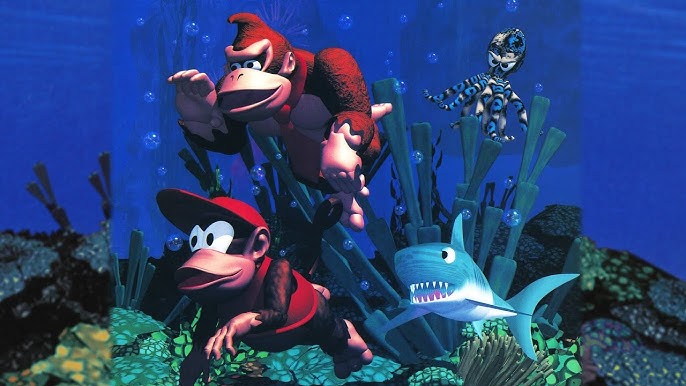
This is a game where two monkeys ride on a cartoonish swordfish collecting bananas underwater yet here we are pondering the mysteries of the universe and reflecting on the vicissitudes of the human condition. We can thank British composer David Wise for that.
Wise is known for his atmospheric style of music, mixing natural environmental sounds with prominent melodic and percussive accompaniment. The music goes against the typical mascot platformer, opting for atmosphere and buildup as opposed to immediate catchiness and bounciness. Before David, the philosophy was that the music should match the action and jumps of the character; for him it is all about the environments and atmosphere.
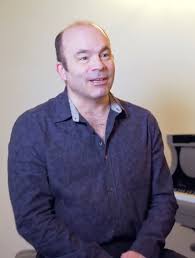
The DK gig was offered to David Wise. He was at the time a freelance composer used by the company Rareware, who were trusted with reviving and rebranding the famous Nintendo character Donkey Kong thanks to their mastery of very sophisticated equipment to create realistic graphics. David was introduced into the video game world when the founders of Rare found him at a music equipment store, where he showcased some demos he composed just for the sake of demonstrating equipment capabilities; he was adept and knowledgeable about synthesizers so they invited him to their headquarters and forced him to play Super Mario Bros in order to get a feel for video game music. He worked on various NES games for the company but when it came to the Donkey Kong property he was sure that a composer at Nintendo would be the one in charge of the music. Rare was preparing to show the project at Nintendo and only required music to accompany this demonstration; they basically asked David to provide a tempt track for the showcase, just for it to not to be pure silence. The instruction was just to make “jungle music” so David composed different pieces in three different styles for them to choose. The developers liked them so much that just directed him to piece together all three and the DK Island Swing was born. So the main theme of the series was the very first composition and were just multiple piece stitched together, establishing the pattern of the country series of long intros, cool jazz melodies and atmospheric ambience at the same time. People were so satisfied with his work that the company proceeded to hire him full time to focus on scoring most of the game.
Musical Analysis
Aquatic Ambience is a state of the art technical marvel that pushed the Super Nintendo sound chip beyond its limit. The piece is basically David trying to cram a professional synthesizer into the console by sheer force of will and programming wizardry. The melancholic piece has transcended the video game medium, simply becoming a staple of ambient music overall and beloved by synth nerds all over the world. The name “Aquatic Ambience” is so generic that it was most likely just the placeholder title of what Rare wanted for the water level; somehow it also ended up being the perfect characterization of the composition since it is all about sounding like an.. ehm.. aquatic ambient. It is the ground zero for many of the other compositions on the Donkey Kong Country soundtracks, the spiritual precursor to tracks such as Stickerbrush Symphony on the sequel. It is the favorite track of the composer on the soundtrack.
The origin and inspiration for the track would be like this: People at Rare wanted a water level, David Wise fascinated with synthesizer music and looking for inspiration pulled up his Korg Wavestation, a vector synthesis synthesizer produced in the early 1990s whose primary innovation was the Wave Sequencing technique, a method of multi-timbral sound generation in which different waveforms are played successively, resulting in continuously evolving sounds. There he found a preset called “The Wave Song”, Was this wave referring to sound waves or to water waves? doesn’t matter, it caught the imagination of the composer and kickstarted his obsession with making the SNES sound like a Wavestation; he felt the obligation of matching the graphical innovation in the audio department. The preset itself is a sequence of bass sounds changing and evolving, like an arpeggiator of some kind. He wanted to create a track based around this electronic bass sound.
It took 5 weeks of experimenting with the hardware but through black magic and meddling with the programming he managed to make the Super Nintendo change between eight samples in sequence in order to create the bass track that sounds like different kinds of bubbles and echoes bouncing around underwater caves; truly a sound evolving. This sound design technique was also applied to the percussion where David Wise manages to morph between the samples of a tambourine, a bass drum, and a woodblock to create the sensation of a submarine sonar years before GoldenEye 007. This was also inspired by a preset inside the Korg Wavestation.
There is a video showing the original presets and elucidating how the composer translated this into the Nintendo hardware:
The rest of the sound design is, sadly, mostly lost in translation when you get it in music visualization form. We can indeed view all the exact sequences that were inputted as notes in the SNES but in piano roll format we cannot see all the volume and pitch bend information poured in to get the ahead of its time sound. The pitch bend is specially fundamental in order to create the whale chants of the mini Shepard tone at the beginning; it creates the auditory illusion of a tone that seems to continually ascend. There is even a barely perceptible mini bass scale just before the third chord of the piece hits; this scale was not made with notes but by pitch bending those Shepard tones on the low register.
The super long intro, in classic David Wise fashion, uses icy synth voices, likely all from the Korg Wavestation, to set the player floating into an environment full of marine creatures and underwater caves; you can hear the whale chants alongside an arpeggio using extended harmony. Then in section 2 we get the submarine and cavern sounds alongside electric guitar feedback, a technique for extending guitar sustain by using the output of the amp and let it enter again into the guitar pickup, creating a reinforcing sound that can get pretty nasty— read cool in guitar player language—
However not everything is ambience, of course what elevates the track is its melancholic minor key melody in the C scale, using pitch bending to create a melodica sound out of the harmonica sample. Harmonically, the synthesized strings play some ninth chords, creating the progression composed of chords like Cmadd 9 – Abadd 9 – F7sus4 – Bbadd 9.
You can watch David Wise recreating his backing track on new hardware by Korg here:

Help to keep the rites going around here by supporting the shrine:

Media Files, requests and support for more interactive content

Thou shall donate since this is a cult and you are now a sheep

Help staying awake analyzing game tracks and writing posts or else everything will end up being written by A.I
- Inside The Score – The Legend of Zeda: A Link to the Past – End Credits / Staff Roll
 The land rests As the last few minutes of this extensive journey that has now come to an end fly by, the nostalgia and reflective mood kicks in. Because such a massive enterprise as a Zelda game or a Lord of the Rings movie require multiple endings to convey everything… Read More »Inside The Score – The Legend of Zeda: A Link to the Past – End Credits / Staff Roll
 - Inside The Score – The Legend of Zelda: A Link to the Past – Ending / Epilogue ~ Beautiful HyruleFinal of the fantasy The Triforce has been touched. A wish has been granted. For the occasion, the newly undeceased king of Hyrule has commissioned a march in honor of the legendary hero to the Hylian Sousa, who might as well be composer Nobuo Uematsu since this piece is very… Read More »Inside The Score – The Legend of Zelda: A Link to the Past – Ending / Epilogue ~ Beautiful Hyrule
- Inside The Score – The Legend of Zelda: A Link to the Past – Triforce Chamber / Power of the GodsTake your boots off your feet And thus the Triforce spoke to men. And it became present in history. And you better treasure and contemplate this moment seldom witnessed in the course of the series. The elusive opportunity to interact and touch the most important artifact. You are now in… Read More »Inside The Score – The Legend of Zelda: A Link to the Past – Triforce Chamber / Power of the Gods
- Inside The Score – The Legend of Zelda: A Link to the Past – Ganon Battle / Prince of DarknessProgressive evil En Garde! And you better be prepared since you are about to duel the iconic enemy of the series at perhaps his canonically most powerful incarnation. Right after having touched the sacred Triforce which allowed him to conquer all of the Golden Land and whose evil and darkness… Read More »Inside The Score – The Legend of Zelda: A Link to the Past – Ganon Battle / Prince of Darkness
- Inside The Score – The Legend of Zelda: A Link to the Past – Boss Battle / Anger of the GuardiansQuick mayhem Ah, the simpler times when boss battles where not a multi epic orchestral suite but just an ostinato more basic that even what became the music for standard battle encounters out there. We are a long way from each boss having his own personalized track. And this early… Read More »Inside The Score – The Legend of Zelda: A Link to the Past – Boss Battle / Anger of the Guardians
- Inside The Score – The Legend of Zelda: A Link to the Past – Dark World Dungeon / Dungeon of ShadowsMemento mori We are getting closer to Ganondorf (or at least the wizard Agahnim who ultimately fulfills the same human side of evil role in this game) and that means getting closer to the profiles and motifs of his own theme song (which naturally was the theme of Agahnim at… Read More »Inside The Score – The Legend of Zelda: A Link to the Past – Dark World Dungeon / Dungeon of Shadows