Riding your mount into the sunset
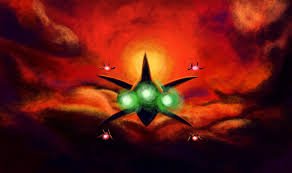
The triumphant reception of our arriving heroes who just saved the entire galaxy is upon us, with a military parade celebrating all things Star Fox, a consummation of all of the team’s motifs and pulling the nostalgia strings even though this may be the fastest end credits to reach and also one of the most heard staff rolls due to the nature of the gameplay—which has a lot of untapped potential in the video game medium, having different adventures and narratives depending on what routes you take, which only some text driven adventure novels tend to do. It plays with the main Star Fox team themes explored throughout the adventure, which came to define the musical direction of the rest of the series after Koji Kondo overhauled completely the original SNES musical themes never to be heard again; no traces of them here, not even as a nod, altering the slightly industrial, beat based direction in favour of a fully space opera orchestra complete with a romantic adventure score. Maybe this was a decision made due to the fact that this was technically a remake of that original story so there was no reason to pay homage to the past the way Nintendo games usually do since this was thought of as a from zero thing—for some reason this same story has now been repurposed three times—or the N64 allowed them to get closer to the romantic style they always wanted. After all, this orchestra will be the precursor to The Legend of Zelda: Ocarina of Time which pretty much uses the same soundfont.
The score made jointly by Koji Kondo and Hajime Wakai has the two cinematic sensibilities that each bring to the table, with Wakai contributions as the music for the missions and levels being more battle oriented, having the mix between militaristic music using the trusted snare marching and all kinds of fanfare brass playing duty calls combined with more modern film sensibilities like the Independence Day influence, while Kondo on the other hand in charge of the main themes and motifs of the game that are more traditional adventure oriented and influenced by the series’ original inspiration, the TV show Thunderbirds, which had the traditional orchestral romantic swashbuckling score from adventure Hollywood films of the 30s as exemplified by film composer like Korngold. Another important lineage for space operas pretty much started when George Lucas decided to tempt track his Star Wars film project with the aptly named Planets suite from Gustav Holst, a seven movement piece that is not only relevant for the space theme but also to film music in general since it purports to capture different emotions for each planet, so it is referenced a lot in media. It then guided the original John Williams’ score that resurrected romantic orchestras and melodies in film music.
Musical Analysis
The End Credits theme written by Kondo is pretty much the plus size, glorified version of the Mission Complete cue that would already be familiar to players advancing through the game.
Which itself is based around motif profiles of the brand new main theme made for the series here. Focused mostly on the heroic G Mixolydian profile and its parallel modes (mostly the Ionian since it is a success cue). So by the time you hear it rearranged for the end credits the sense of nostalgia and empowerment will be enhanced considerably. For the ending we will get mostly an interplay between Mixolydian and Ionian, one in charge of the heroism and sense of adventure and the other in charge of the nostalgia.
Staff Roll It is the definitive statement and amalgam of the Star Fox team motifs which also has the goal of scoring to picture with the short story told in the credits; Koji Kondo has said that he is particularly proud of how he managed to connect everything as a single cohesive piece following the narrative beats of the images presented even though you can see how the composer adds multiple parts in order to reach the proper lengths for the scene.
The opening is a fanfare accompanied by a glockenspiel; but rather than providing tonal information, it is meant to be heard as a triangle percussion sound. This opening is imitating the End titles from the movie Independence Day, which was on the mind of the developers at the time and has a similar start in which the horns play the main melody.
Which itself might be inspired by the Star Wars film that also starts with a crazy triangle. The developers were very specific in the kind of music they wanted to have for this game. One that captures cinematic adventure, battles and military patriotism like these films.
The Mission Accomplished melody plays and the trumpets and then strings emphasize the Mixolydian profile due to the interplay between G major and F major. The military parade begins with the snare marching. The Mission Accomplished plays in full with the flute offering the more contrasting , calming section where the cue now uses the F# establishing the G Ionian/Major profile and a more longing sense of nostalgia thanks to the trusted IV to I chord. In contrast with the parent Mission Accomplished cue there are even more melancholic chords, the flute melody now accompanied by something like:
C – G – Em – C – D7 – Bm – Em7
C – G – Em7 – Am7 – D7sus4 – D7
The oboe then plays the countermelody originally played by the horns on the parent cue but now an octave higher. The Ionian profile is what makes the Mission Accomplished cue more jubilant in contrast with the main theme of the series which goes into more dangerous territory courtesy of the Phrygian Major profile (or technically a key change to C Aeolian/Minor).
When the Great Fox arrives at Corneria the piece restates its main mission complete motif at its most triumphant with even harp arpeggios excitingly playing across a broad register with an added ninth and the horns playing a chordal melody in the wavelike pattern of G – Am – Ddim – Am.
A brand new section outside the Mission Accomplished cue plays, the oboe taking the lead. A more melancholic part with a descending bass line that also returns to the G Ionian/Major profile. The progression is now the one from the second phrase of the Mission Accomplished cue, the C – G – Am – G. The tuba is allowed to play in a high register here in order to harmonize the melody. After this part a military coda guided by the horns and the progression F – C – C/D – D7 sieges into the next section which is more solemn.
The solemn section arrives when the Great Fox is descending towards the surface of the planet where the Star Fox team of mercenaries will be decorated and celebrated. The solemn heroism returns thanks to the use of the Mixolydian profile which is the main modal interplay occurring throughout the piece, going back and forth between G and F. Continuing the theme of interconnecting Star Fox motifs for the end piece, this section phrase is maybe based around the Mission Failed / Complete cue which is more sombre.
The proper ceremony before General Pepper is presumably the only part of the cue with diegetic music, meaning that it is an actual fanfare played at the palace to receive the team; it is your standard fanfare with all the brass instruments. It is made with parallel movements of the open perfect fifth interval G5 – F5 – G5 – A5- G5. The chords are naturally on brand for Star Fox.
After the fanfare the music conveys a sense of pride for our heroes and the sense of a difficult task well done. This is accomplished with just the more mellow string section and as per the nostalgia/heroism dictate a return to the Ionian/Major profile. A low G stays as pedal while the strings smoothly move between G – C – D – G. Following the narrative, establishing their independence and the fact that duty once again calls the accomplished Star Fox team for their next grand adventure, the piece slowly transitions into the main theme of the series playing the motif of the the B Section which is the more elegant and dangerous section that brings to the table the Phrygian Major profile (a Phrygian mode where the I chord is major) that grants us a cooler brand of heroism due to the progression that could be thought of as:
C – Dbmaj7 – Bbm – C
Bbm – C
Dbmaj7 – C – Bbm
Because modality is the only way to make anthropomorphic animals seem epic. Like in other Nintendo games, the music makes wacky worlds and characters take themselves more seriously, creating very unique tones for the properties.
Naturally, the whole piece has extensive tempo manipulation in order to capture all kinds of emotions and following the scenes.
Then, running against the sunset, the Star Fox team is back to action and their main theme inspired by the Thunderbirds march plays in full glory, the first section on the heroic G Mixolydian profile, the second, more elegant section on the C Phrygian Major and then the full danger section with the C Harmonic minor profile. Just like the Zelda theme it is a modal piece that brings us to various places. As said, it is music that takes itself seriously.
Section 1: G
Section 2: C – Db – C
Section 3: Ab – G – Ab – G – Bb – Bdim – Cm – Ddim
Then, right when the unforgettable image of the Great Fox reappears from the bottom of the screen, the piece starts to climb towards the climax with a sustained G chord and enters one last reprise of the second phrase from the Mission Accomplished cue at its most epic, complimenting the images of the spaceship moving against the sunset. It is a perfect coda that could have ended on the tonic G but this is what Kondo meant when saying he had to score the full cinematic, so extra sections and multiple codas are needed to fill the run time. In doing so, it ends on the standard epic orchestral finish with the classic timpani pattern and choirs joining in to celebrate. Before this there is one last brass fanfare in 3/4 connecting the two codas, playing monolithic fifth chords in parallel motion that change progressively faster and higher:
A5 – C5 – D5 – E5 – G5 – A5 – C5 – D5 – E5 – G5
This motif is also a throwback to the Main Theme of the series intro which also moves in a similar pattern (D – G – A – C – D)
Now we are allowed to hear the first phrase of the Mission Accomplished cue or, more accurately, the Title Screen of the game that ends with that long note. And in true Kondo fashion we are treated to a tease of a long Mario Cadence. The cadence is extended as long as it needs to be extended in order to fit the very last names of the game credits, going so far as teasing the bVI – bVII progression three times. The orchestra is eager to end it all on the glorious C major chord, but wait there is more, the piece does not go the easy route but instead connects the entire theme to the Mission Accomplished cue by ending with none other than the intro of that one cue because of course they had to end on G major somehow. It more people had worked on the game we can be sure that Kondo would have thrown in more codas there. The final here is so epic that Koji Kondo will go on to use pretty much the same device for the End Credits in Ocarina of Time.
The codas go through
G – F – Ab – Bb – Ab – Bb – Ab – Bb
G – F – G – F – G – F – Cm – F – G
G
The assignment was an integration of all of the themes from the Star Fox team.
Mission Accomplished.

Help to keep the rites going around here by supporting the shrine:

Media Files, requests and support for more interactive content

Thou shall donate since this is a cult and you are now a sheep

Help staying awake analyzing game tracks and writing posts or else everything will end up being written by A.I
- Inside The Score – The Legend of Zeda: A Link to the Past – End Credits / Staff Roll
 The land rests As the last few minutes of this extensive journey that has now come to an end fly by, the nostalgia and reflective mood kicks in. Because such a massive enterprise as a Zelda game or a Lord of the Rings movie require multiple endings to convey everything… Read More »Inside The Score – The Legend of Zeda: A Link to the Past – End Credits / Staff Roll
 - Inside The Score – The Legend of Zelda: A Link to the Past – Ending / Epilogue ~ Beautiful HyruleFinal of the fantasy The Triforce has been touched. A wish has been granted. For the occasion, the newly undeceased king of Hyrule has commissioned a march in honor of the legendary hero to the Hylian Sousa, who might as well be composer Nobuo Uematsu since this piece is very… Read More »Inside The Score – The Legend of Zelda: A Link to the Past – Ending / Epilogue ~ Beautiful Hyrule
- Inside The Score – The Legend of Zelda: A Link to the Past – Triforce Chamber / Power of the GodsTake your boots off your feet And thus the Triforce spoke to men. And it became present in history. And you better treasure and contemplate this moment seldom witnessed in the course of the series. The elusive opportunity to interact and touch the most important artifact. You are now in… Read More »Inside The Score – The Legend of Zelda: A Link to the Past – Triforce Chamber / Power of the Gods
- Inside The Score – The Legend of Zelda: A Link to the Past – Ganon Battle / Prince of DarknessProgressive evil En Garde! And you better be prepared since you are about to duel the iconic enemy of the series at perhaps his canonically most powerful incarnation. Right after having touched the sacred Triforce which allowed him to conquer all of the Golden Land and whose evil and darkness… Read More »Inside The Score – The Legend of Zelda: A Link to the Past – Ganon Battle / Prince of Darkness
- Inside The Score – The Legend of Zelda: A Link to the Past – Boss Battle / Anger of the GuardiansQuick mayhem Ah, the simpler times when boss battles where not a multi epic orchestral suite but just an ostinato more basic that even what became the music for standard battle encounters out there. We are a long way from each boss having his own personalized track. And this early… Read More »Inside The Score – The Legend of Zelda: A Link to the Past – Boss Battle / Anger of the Guardians
- Inside The Score – The Legend of Zelda: A Link to the Past – Dark World Dungeon / Dungeon of ShadowsMemento mori We are getting closer to Ganondorf (or at least the wizard Agahnim who ultimately fulfills the same human side of evil role in this game) and that means getting closer to the profiles and motifs of his own theme song (which naturally was the theme of Agahnim at… Read More »Inside The Score – The Legend of Zelda: A Link to the Past – Dark World Dungeon / Dungeon of Shadows