Final of the fantasy
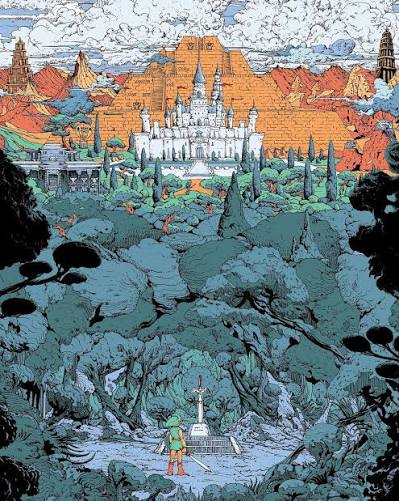
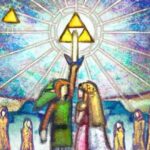
The Triforce has been touched. A wish has been granted.
For the occasion, the newly undeceased king of Hyrule has commissioned a march in honor of the legendary hero to the Hylian Sousa, who might as well be composer Nobuo Uematsu since this piece is very similar to the main theme of the Final Fantasy series.
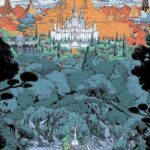
The multi section composition has to adapt to the pseudo cinematic that shows us the effects of the wish all across the true protagonist of the series which is the kingdom of Hyrule. Unlike some other endings from the rest of the games, the one for A Link to the Past is an unambiguous ‘and they lived happily ever after’ fairy tale ending. No yearning or melancholy to be found here since pretty much every single character finds themselves completely fulfilled and all wrongdoings are reversed. Characters we thought gone like our uncle, the priest and the maidens come back and everything is nice all around. Cue to one of the most triumphant cues from the Zelda series, an heroic parade with literal great fanfare. You can picture the celebrations taking place throughout the land and confetti being thrown everywhere.
But it is not just a march since the track itself is then treated to a long string arrangement that employs the voices of the different string instruments, imitating what a violin, viola, cello and double bass would presumably do. There is a main motif that is played by horns, then strings and then the piano plus some other sections that help the music reach the length required for the different scenes showed.
Musical Analysis
First part here is the ‘Triforce Get’ cue that sounds when Link reaches for the sacred relic. Like many Zelda item get cues, we have none other than the Mario Cadence in C major, which is the figure that borrows two major chords from the parallel minor scale. Here they are Ab – Bb – C. In fact it is almost the same cue as the ‘Learn Song’ from Ocarina of Time. This one ends on Csus2. The harp here adds the magic fairy dust just like it does on the Learn Song cue. It is sprinkled all across the harmony progression without any extended harmony notes in the arpeggio.
Then the proper parade begins. The almost Final Fantasy motif plays first with the bombastic horn section alongside drums and cymbals for that excitement noise. Only the low strings remain to serve as the bedrock of the harmony with the wavelike contour characteristic of some martial romantic compositions such as the Wedding March; it even has the romantic note, the F sharp that leads to the G. Other than that the section commemorates the moment with the unambiguous C Ionian/Major profile. The first phrase of the chordal melody is the one closest to the contour of the Final Fantasy main theme; both melodies open with the ascending perfect fourth interval from the dominant to the tonic and then use that dominant note as pivot. Both melody lines keep ascending until they reach the subdominant and then begin their descent. The only major difference between phrases is that here the line ends on the dominant note whereas the other one ends on the leading tone—this one could perfectly have ended on the leading tone too, B.
Whereas the melody of the Final Fantasy theme keeps developing as a long form one and ends up sounding more solemn due to the use of some outside the key notes, this one just repeats the same fanfare with an added string part added, opting for the question-answer format, in which the answer to the second question goes to higher notes and then ends once again on the dominant, leaving the piece to continue to the new section where the string arrangement is featured.
The next section is more pensive, with pedal C notes in which another string voice goes E F Ab G. The second time this figure repeats it does so with another string part an octave up.
After that the piece gets the dignified treatment that its hero deserves, with a romantic string melody that is accompanied with some minor chords. It still features the motif of opening with the perfect fourth interval with the same rhythm. We get a classic progression of vi – iii – IV – I that keeps evolving towards a secondary dominant – dominant movement. The full progression for this ceremonial part would be something like:
Am – Em – F – C
Dm7 – Am – D7/9 – G7
The phrase repeats and after the second Am chord it then prepares the coda that will culminate in the return of the fanfare motif but played with the strings. After the Am it goes into the descent, maintaining an upper C as pedal it goes on to produce Ab7 – Gb7/♯11 – Eaug – Dm7/9 – G7. The choice of chords meant to amplify the tension to generate a catharsis when the fanfare returns just in sync with Link and his uncle wielding their swords as family once again. The harp adds more of its fairy dust to the last two chords.
The main motif repeats with the caveat that now it has a proper cadence to the tonic. After the phrase now the idea is able to develop towards a new phrase, a different question-answer block. The bass line maintains a descending figure going from F to C, plus a cheeky G note for the D5 chord. Following the detour, in true ABA form we get back to the main motif.
The main motif does its thing, ending on the tonic. A good pace as any to finish the piece. But characters and landmarks keep pouring so the composer needs to bring new parts to buy time. To keep things interesting, he opts to use now an accompaniment in the high end of the spectrum, dropping the bass bedrock and using the upper strings. A lower string voice is now in charge of the melody. The harmony seems to be C – Dm – Bdim – C. The low voice is reserved for the second repetition of the new question-answer block. Next to this repetition the piece goes on to a more noble part where the trombone that is often used as a second trumpet on these soundtracks plays some scales akin to the ones that a string part played on a previous section. The melody keeps the same rhythmic pattern. The harmony now is based around:
Am – Em – F – C
Dm7 – Am – D7/9 – G7
So yeah, it pretty much repeats the previous dignified section but with a lower melody and higher accompaniment. The same descending coda also prepares us for two last instances of the main motif. Because somehow the upright piano also has to be present here, with even a proper left hand upright piano accompaniment.
Right after the piano showcases itself we get the most triumphant repeat of the main motif, and that means with the timpani, orchestral cymbals, new brass countermelodies and of course a key change. It ends up on a high F Ionian/Major profile and has the bombastic ending where the timpani and the rest of the orchestra decelerates and teases with the ending before dropping onto us the last chord after the anticipation, right on time with Link leaving the Master Sword at its resting place, a musical and visual device that will be deployed once again for Ocarina of Time.
And just like in Ocarina of Time, the ending is a two part piece, the next one bringing the usual Nintendo nostalgia and wistfulness characteristic of its End Credits tunes at the time.

Help to keep the rites going around here by supporting the shrine:

Media Files, requests and support for more interactive content

Thou shall donate since this is a cult and you are now a sheep

Help staying awake analyzing game tracks and writing posts or else everything will end up being written by A.I
- Inside The Score – The Legend of Zeda: A Link to the Past – End Credits / Staff Roll
 The land rests As the last few minutes of this extensive journey that has now come to an end fly by, the nostalgia and reflective mood kicks in. Because such a massive enterprise as a Zelda game or a Lord of the Rings movie require multiple endings to convey everything… Read More »Inside The Score – The Legend of Zeda: A Link to the Past – End Credits / Staff Roll
 - Inside The Score – The Legend of Zelda: A Link to the Past – Ending / Epilogue ~ Beautiful HyruleFinal of the fantasy The Triforce has been touched. A wish has been granted. For the occasion, the newly undeceased king of Hyrule has commissioned a march in honor of the legendary hero to the Hylian Sousa, who might as well be composer Nobuo Uematsu since this piece is very… Read More »Inside The Score – The Legend of Zelda: A Link to the Past – Ending / Epilogue ~ Beautiful Hyrule
- Inside The Score – The Legend of Zelda: A Link to the Past – Triforce Chamber / Power of the GodsTake your boots off your feet And thus the Triforce spoke to men. And it became present in history. And you better treasure and contemplate this moment seldom witnessed in the course of the series. The elusive opportunity to interact and touch the most important artifact. You are now in… Read More »Inside The Score – The Legend of Zelda: A Link to the Past – Triforce Chamber / Power of the Gods
- Inside The Score – The Legend of Zelda: A Link to the Past – Ganon Battle / Prince of DarknessProgressive evil En Garde! And you better be prepared since you are about to duel the iconic enemy of the series at perhaps his canonically most powerful incarnation. Right after having touched the sacred Triforce which allowed him to conquer all of the Golden Land and whose evil and darkness… Read More »Inside The Score – The Legend of Zelda: A Link to the Past – Ganon Battle / Prince of Darkness
- Inside The Score – The Legend of Zelda: A Link to the Past – Boss Battle / Anger of the GuardiansQuick mayhem Ah, the simpler times when boss battles where not a multi epic orchestral suite but just an ostinato more basic that even what became the music for standard battle encounters out there. We are a long way from each boss having his own personalized track. And this early… Read More »Inside The Score – The Legend of Zelda: A Link to the Past – Boss Battle / Anger of the Guardians
- Inside The Score – The Legend of Zelda: A Link to the Past – Dark World Dungeon / Dungeon of ShadowsMemento mori We are getting closer to Ganondorf (or at least the wizard Agahnim who ultimately fulfills the same human side of evil role in this game) and that means getting closer to the profiles and motifs of his own theme song (which naturally was the theme of Agahnim at… Read More »Inside The Score – The Legend of Zelda: A Link to the Past – Dark World Dungeon / Dungeon of Shadows