Everything is gonna be okie dokie
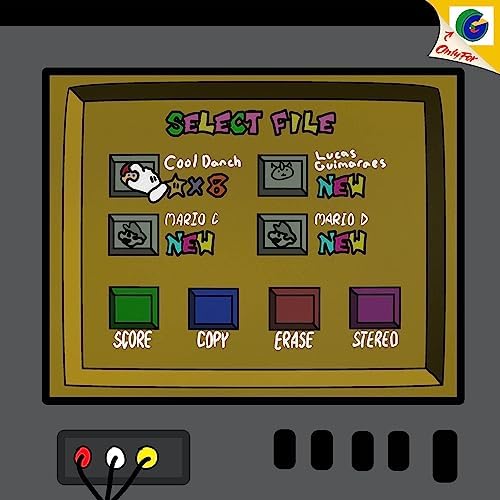
Indeed, the song that lets you know everything is gonna be oki doki. A short piece of music that can instantly transport anyone as far back as 1996 to the very first memories of Super Mario 64; it is Christmas morning and this is the moment you are about to embark on a brand new Mario adventure the likes of which had never been seen before. A brand new realistic world that still remains the biggest leap in visuals for video game characters in a single generation. You are at the lounge right before entering a new reality.
Back when the sounds themselves were characters in the game that you end up distinguishing as opposed to just ‘professionally well recorded orchestra’. The magical sounds of the pan flute immediately identify this as a Nintendo 64 era game and as part of the DNA built for Mario 64 for anyone whose ears come in contact with it; it is so much a part of the identity of the games themselves that even in remakes Kondo specifically ask for composers to track down the original primitive samples even though the new arrangers want to use better sounds. So both the sound design and musical composition end up contributing to that characteristic sense of bittersweet nostalgia Koji Kondo was adept at with just a few well placed notes even if a menu screen does not need these feelings. It is all right there in the piece. You don’t even have to have played the game to get the sense on longing within it. Because for some reason during this era some Nintendo games decided that the basic interface of file select screens should be accompanied with a sense of yearning and melancholy as heard also in Star Fox 64 instead of just exciting or cool synth menu music. It was a trend probably inspired by the The Legend of Zelda screen select theme which has the soothing Great Fairy theme, so it was probably a way to make players feel relaxed right before the start of a new play session.
And it is a piece that only very recently was revisited in the series, being used on the brand new Mario Kart World as a transitional cue between tracks, that is, race tracks; okay, also tracks.
Musical Analysis
As has been discussed there are some cheat codes in place to make a piece automatically feel nostalgic on first listen. Here we got the straightforward Ionian/Major profile doing the bulk of the work showing that this mode is not only for ultra happy tunes but also can pack a tender punch. The main reason for this is the vamp between the I and the IV chord which is a very smooth chord transition due to the fact that the root note of the one, the tonic, remains in place and the other two notes move just a little; in this case we get the key of G and the two note implied chords move from [G-D] to [C-E] with smooth voice leading. It is a harmony progression that will be deployed again for the End Credits theme of the game alongside the same pan flutes, creating a connection between opening and closing.
The other cheat code is the pedal melody technique in which the same melodic material is used for each chord, the changing harmony coloring the exact same melody and giving it a new identity. You can pretty much play a I to IV vamp repeating ad nauseam a short ostinato on top of it and it already will yield that yearning sound automatically. In this case, however, the piece has a proper melody presumably made of question-answer blocks all with the same rhythmic profile in which the questions are always the same and only the answers differ, a classic approach to melody writing. Each chord will accompany a basic question-answer block; the I-IV vamp will then be a macro question-answer block and what we could call Section 1 and Section 2 of the piece will be the macro question-answer block at the lowest resolution. At the end of the day many pieces can be seen as atomic question-answer blocks inside bigger question-answer blocks creating sort of a fractal pattern or like those Russian matrioska dolls). Here there is a catch for the first part though.
So using that framework to analyze the melody and harmony here we have the question motif over the G chord: [G D D A D B]. The rhythm of this phrase will be the main motif for all the melodies. This question block then receives an answer which varies the rhythm for contrast : [D B C D]. Then you repeat the same question but now over the C chord, creating the pedal melody effect. So the melodic structure would be:
[ (G D D A D B – D B C D) – (G D D A D B – ) ] First first parenthesis over G, second over C
And as can be noticed here the second question never receives an answer even though the piece would be perfectly serviceable if Kondo had decided to do it. Without it it just introduces asymmetry into the composition making it more unpredictable.
The vamp then repeats and after that goes to the second section which would be the macro answer to the entire first part. Naturally, for variety, there are new chords and melody here—still with the same rhythm motif though, now used for both question and answer phrases—The melody phrases feel now slower because now the question-answer blocks are distributed to every single bar of music. This time the composition is symmetrical with both question blocks receiving an answer. The implied chords of the smooth moving harmony would be:
[ (G – Am) – (G – C) ]
The ii adding even more melancholy to the proceedings.
As can be seen in the voice leading, the choir sample never leaps more than a whole step.
Another classic Mario staple found here is contrasting this straight melody line with a percussion part which is swinging, a not so common technique that gives Mario music its characteristic bounce and was the basis for its main theme back in the original Super Mario Bros. In fact the congas and tambourine are doing the exact same Latin, reggaeton sounding rhythm that we found on the D section from that Mario series theme.
The choir sample which is also another distingued character from the soundtrack is first heard here. It is a synthesized voice sample appropriately called ‘Lost Boy’ from the Digidesign SampleCell II Library.

Help to keep the rites going around here by supporting the shrine:

Media Files, requests and support for more interactive content

Thou shall donate since this is a cult and you are now a sheep

Help staying awake analyzing game tracks and writing posts or else everything will end up being written by A.I
- Inside The Score – The Legend of Zeda: A Link to the Past – End Credits / Staff Roll
 The land rests As the last few minutes of this extensive journey that has now come to an end fly by, the nostalgia and reflective mood kicks in. Because such a massive enterprise as a Zelda game or a Lord of the Rings movie require multiple endings to convey everything… Read More »Inside The Score – The Legend of Zeda: A Link to the Past – End Credits / Staff Roll
 - Inside The Score – The Legend of Zelda: A Link to the Past – Ending / Epilogue ~ Beautiful HyruleFinal of the fantasy The Triforce has been touched. A wish has been granted. For the occasion, the newly undeceased king of Hyrule has commissioned a march in honor of the legendary hero to the Hylian Sousa, who might as well be composer Nobuo Uematsu since this piece is very… Read More »Inside The Score – The Legend of Zelda: A Link to the Past – Ending / Epilogue ~ Beautiful Hyrule
- Inside The Score – The Legend of Zelda: A Link to the Past – Triforce Chamber / Power of the GodsTake your boots off your feet And thus the Triforce spoke to men. And it became present in history. And you better treasure and contemplate this moment seldom witnessed in the course of the series. The elusive opportunity to interact and touch the most important artifact. You are now in… Read More »Inside The Score – The Legend of Zelda: A Link to the Past – Triforce Chamber / Power of the Gods
- Inside The Score – The Legend of Zelda: A Link to the Past – Ganon Battle / Prince of DarknessProgressive evil En Garde! And you better be prepared since you are about to duel the iconic enemy of the series at perhaps his canonically most powerful incarnation. Right after having touched the sacred Triforce which allowed him to conquer all of the Golden Land and whose evil and darkness… Read More »Inside The Score – The Legend of Zelda: A Link to the Past – Ganon Battle / Prince of Darkness
- Inside The Score – The Legend of Zelda: A Link to the Past – Boss Battle / Anger of the GuardiansQuick mayhem Ah, the simpler times when boss battles where not a multi epic orchestral suite but just an ostinato more basic that even what became the music for standard battle encounters out there. We are a long way from each boss having his own personalized track. And this early… Read More »Inside The Score – The Legend of Zelda: A Link to the Past – Boss Battle / Anger of the Guardians
- Inside The Score – The Legend of Zelda: A Link to the Past – Dark World Dungeon / Dungeon of ShadowsMemento mori We are getting closer to Ganondorf (or at least the wizard Agahnim who ultimately fulfills the same human side of evil role in this game) and that means getting closer to the profiles and motifs of his own theme song (which naturally was the theme of Agahnim at… Read More »Inside The Score – The Legend of Zelda: A Link to the Past – Dark World Dungeon / Dungeon of Shadows