The Enlightened ones
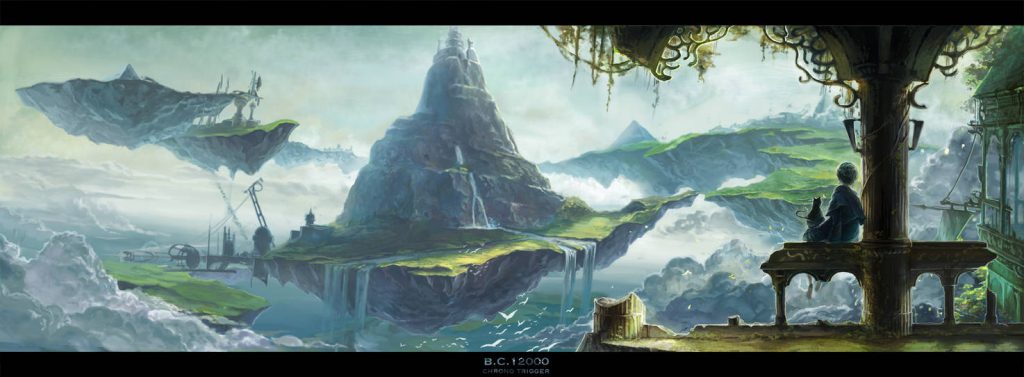
The Dream Team, a group of chosen ones entrusted with birthing upon the world the ultimate JRPG experience thanks to the combined development pedigree of Squaresoft in conjunction with several members of then-rival Enix; on the one hand we have Final Fantasy series creator Hironobu Sakaguchi, on the other hand we have Yuji Horii, creator of the Dragon Quest series. Add to the mix the iconic art style of Akira Toriyama, famed for the hit manga Dragon Ball, and the result is the last hurrah for the golden age of epic RPGs on the SNES, the crown jewel in a hit series of Square games that included Final Fantasy VI, Secret of Mana and Super Mario RPG. The Dream Team indeed….except for the composer who due to some peculiar circumstances ended up with the main gig of scoring this priced gem despite being a total newbie in a company which also employed superstar composer Nobuo Uematsu known for his Final Fantasy scores.
The reason why Yasunori Mitsuda became the main composer was simply because he got so fed up with the low wage and unfulfilling nature of his job as a sound designer that he got the nerve to come into his boss office and demand that he wanted to compose music for a game. He got offered the challenge of doing the music for their upcoming Chrono Trigger (his salary didn’t go up that much though). The job was so demanding and he was such a perfectionist, staying late at the studio and working long hours, that he almost literally work himself to death since he developed stomach ulcers and had to leave the last batch of tracks in the hands of Nobuo Uematsu plus one track by Noriko Matsueda.
Mitsuda composed new music and drew on a personal collection of pieces composed over the previous two years. He wanted to create pieces that wouldn’t fit into any established genre, music of a truly imaginary world. So we end up with an eclectic mix apt for a game that takes the time travel trope of the JRPGs to its ultimate conclusion, spanning different eras and locations. The composer went so far as to sleep in his studio several nights, and attributed certain pieces to inspiring dreams. The result is a soundtrack that has remained popular throughout the years and the fame gained allowed the composer the liberty to be one of the first freelancer composers in the medium of video games and creating a trend, with many of the rest of the crew from Square following suit. Although Mitsuda considers Chrono Trigger a landmark game he is critical of it saying that for him it is immature and that the music by itself is not that good. Go figure.
Musical Analysis
The track known as Corridors of Time heard for the first time when the player reaches the magical kingdom of Zeal up in the skies exemplifies the eclecticism and excellent sound design skills of his composer, using volume and pan control to create a mix more way ahead of its time than many of his contemporaries’ compositions in the SNES era. The instruments represent the mythical kingdom of Zeal, an ancient floating realm of beauty and magic high above the clouds, by association with magical Orientalism imagery and mysticism; it combines Indian instrumentation with traditional Gamelan gong chimes such as the kenong and kethuk; Unfortunately the citizens of Zeal are slightly dead inside, having turned their backs on everything aside from their own pleasantries and selfish objectives, this brings us a melancholic minor key melody courtesy of the sitar in the Gb tonality.
The track makes clever use of volume and panning to create a magical soundscape, with the gongs moving clockwise through the stereo and thus conveying the passage of time found in the name of the piece. They also create a delay effect by combining two samples with just a little timing difference.
Since Yasunori Mitsuda wanted originally to be a film composer after finishing his music degree, it is no wonder that he was inspired by film scores from his days; in this case, the piece known as Corridors of Time takes heavy orchestration and melodic influences from a piece included in the Image Album for the animated movie ‘Nausicaä of the Valley’ of the Wind by the famous Japanese composer Joe Hisaishi:
Seems like mystical India never gets old for fantastical settings
What other tracks from Chrono Trigger would you like to see?

Help to keep the rites going around here by supporting the shrine:

Media Files, requests and support for more interactive content

Thou shall donate since this is a cult and you are now a sheep

Help staying awake analyzing game tracks and writing posts or else everything will end up being written by A.I
- Inside The Score – The Legend of Zeda: A Link to the Past – End Credits / Staff Roll
 The land rests As the last few minutes of this extensive journey that has now come to an end fly by, the nostalgia and reflective mood kicks in. Because such a massive enterprise as a Zelda game or a Lord of the Rings movie require multiple endings to convey everything… Read More »Inside The Score – The Legend of Zeda: A Link to the Past – End Credits / Staff Roll
 - Inside The Score – The Legend of Zelda: A Link to the Past – Ending / Epilogue ~ Beautiful HyruleFinal of the fantasy The Triforce has been touched. A wish has been granted. For the occasion, the newly undeceased king of Hyrule has commissioned a march in honor of the legendary hero to the Hylian Sousa, who might as well be composer Nobuo Uematsu since this piece is very… Read More »Inside The Score – The Legend of Zelda: A Link to the Past – Ending / Epilogue ~ Beautiful Hyrule
- Inside The Score – The Legend of Zelda: A Link to the Past – Triforce Chamber / Power of the GodsTake your boots off your feet And thus the Triforce spoke to men. And it became present in history. And you better treasure and contemplate this moment seldom witnessed in the course of the series. The elusive opportunity to interact and touch the most important artifact. You are now in… Read More »Inside The Score – The Legend of Zelda: A Link to the Past – Triforce Chamber / Power of the Gods
- Inside The Score – The Legend of Zelda: A Link to the Past – Ganon Battle / Prince of DarknessProgressive evil En Garde! And you better be prepared since you are about to duel the iconic enemy of the series at perhaps his canonically most powerful incarnation. Right after having touched the sacred Triforce which allowed him to conquer all of the Golden Land and whose evil and darkness… Read More »Inside The Score – The Legend of Zelda: A Link to the Past – Ganon Battle / Prince of Darkness
- Inside The Score – The Legend of Zelda: A Link to the Past – Boss Battle / Anger of the GuardiansQuick mayhem Ah, the simpler times when boss battles where not a multi epic orchestral suite but just an ostinato more basic that even what became the music for standard battle encounters out there. We are a long way from each boss having his own personalized track. And this early… Read More »Inside The Score – The Legend of Zelda: A Link to the Past – Boss Battle / Anger of the Guardians
- Inside The Score – The Legend of Zelda: A Link to the Past – Dark World Dungeon / Dungeon of ShadowsMemento mori We are getting closer to Ganondorf (or at least the wizard Agahnim who ultimately fulfills the same human side of evil role in this game) and that means getting closer to the profiles and motifs of his own theme song (which naturally was the theme of Agahnim at… Read More »Inside The Score – The Legend of Zelda: A Link to the Past – Dark World Dungeon / Dungeon of Shadows