Stairway to hell
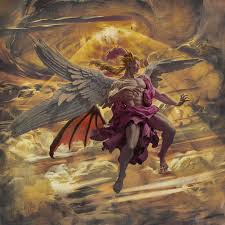
This one goes out for the masochists who want to spend their evening watching an entire opus that some other masochist painstakingly spent his time making with the primitive sound chip of the SNES (WARNING: the Visuaizer Music Tracks channel, Video Game Music Shrine and Google LLC are are not liable for any harmful side effects or seizures that prolonged exposure to visualizations might cause to viewers; by reading this you accept all terms). Because as other commenters have pointed out this over the top display for a final boss in both audio and visuals is like trying to paint the sistine chapel with crayons, creating a truly outstanding moment that goes beyond what any Super Nintendo sprites have any right to go. It is the track that future game directors point out to their modern composers as: But Uematsu did it! In a cave, with a box of scraps!
The bar was set too high.
But never despair, even the most massive track can be unpacked into smaller chunks and the fundamental call and response nature of music so no matter if it is a popular 3 minute tune or an epic symphony it is just a matter of iterating this question-answer process for any length and the structure gets elucidated. Nothing can be too intimidating to compose—unlike the analysis which is why this should have been always proper blog post—Even here, there is, for the most part, not any attempts at connecting the different movements or pieces, they just start one after the other or even fade out; so for Nobu Uematsu it was just a way to stretch his creative juices and influences by having fun with the grandiose display of power by Kefka and his ascent to godhood as the typical JRPG needs to end—in fact it is Kefka himself who cemented this cliche in the popular imagination; no Kefka, no Sephirot, no One Winged Angel.
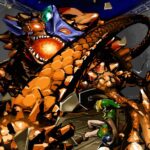
So it is like writing various tracks for different moments. In this case the context of the battle is of the ascent through the statue of the gods built by Kefka, his monument to non-existence. He not only becomes a god but it is more of a true Lucifer figure, the ultimate trickster of history that can and actually did cause harm to the world by being one of the few villains who actually destroyed most of it. Even if we ultimately succeed, healing the wounds caused by him, that is if they can even be healed, will take years.
A fight in four stages that corresponds to the four movements as conceptualized by Uematsu. But within each monument you can also break it down, usually in groups of two clearly distinct sections; and, like matrioska dolls, you can break it down as long as you feel you need to or a long as it makes sense based in the change of energy or patterns within the sections.
We already did the bulk of the work by covering the Intro of the game and Kefka’s Theme. From those we get the main leitmotifs used and played with throughout the piece. As the main influences of interest we get:
The Catastrophe leitmotif, used in the intro to showcase the destruction caused by the empire and the influence of evil all over the world, and then later when Kefka shows what he is truly capable of when destroying the world. It signals destruction and hopelessness. The name is self explanatory.
The Clown leitmotif, influences of circus march music and Kefka’s own music.
The Omen leitmotif, the very first thing we hear when booting the game. The dark cousin mocking the iconic ‘Also Sprach Zarathustra’ orchestral opening by Strauss. The name is also self explanatory and we discover that it is ultimately an omen about Kefka. He descends to the tune of this as any nihilist should.
Bach and church organ counterpoint music in general, specially the famous organ piece Toccata and Fugue in D minor which Uematsu must have studied because he even quotes a little bit of it. Uematsu is not a classically trained musician so he does most composition by ear; he certainly must not know all of those counterpoint rules that always come after the composers not before them. So instead of doing a deep dive into technical counterpoint theory the best thing anyone can do is pay attention to good voice leading which is just a fancy word for good ol’ melody writing; everything is melody all the way down, just make sure that each melody is unique and independent enough on its own and maybe just check here and there the relationship between intervals as to not have repeated notes or too much parallel motion since this is what makes the melodies less unique. Balance between repetition and novelty is the key. This is certainly how Uematsu approaches his counterpoint instead of any too cerebral application of rules—most likely how Bach himself also did it since he wrote at a high pace—As we have discussed previously, the pipe organ is the instrument of choice for very powerful villains who deem themselves gods due to the grandiose nature of the instrument and its relationship with the church, funerals, etc. Having said that, the next influence permeates more even the pipe organ sections.
And of course out of nowhere we get the proper battle music that is Progressive Rock. Unlike One Winged Angel, here there is no pretension of dressing up a rock tune roleplaying as an orchestral work. In the entire piece there is no brass, no strings, no woodwinds. Here we get the real deal—or at least the best deal for the SNES—Proggy instrumetns such as faithful synthesizers, Hammond organs, a drum kit, bass line and distorted guitars befitting the style. Additionally we get the the staple asymmetric time signatures of the genre that video game composers have been using for battle cues to create destabilizing patterns and make it all feel way more chaotic. As a keyboardist you tend to gravitate to bands that feature your instrument as the main drive, so for guys like Kondo and Uematsu this means less Pink Floyd and more Emerson, Lake and Palmer since this showcases the abilities of prodigious keyboardist Keith Emerson. The prog track takes its sensibilities straight from the work of the band. If you wanna get into some progressive rock and end up taking months just to finish an album check at least the intro to the track Tarkus and see the similarities with this one:
Many of the instruments from the opening of the game return, such as the bell tools signaling death, our vocal performers who in a perfect world would be singing in Latin—like many a SNES situation, you have to use your imagination to help fulfill the developers’ intentions—And instead of a bass guitar, a synthesizer in the same role in charge of the low end. Nevertheless the organ is the absolute protagonist of the piece.
Musical Analysis
So we can dub the four movements
I. The Catastrophe Movement
II. The Clown Movement
III. The Bach Movement
IV. The Prog Movement
And this is just how Uematsu conceptualized it as the the four phases of the battle. But even then there are clearly defined sections between movements. Each movement is meant to loop and here all repeat twice except for the last one where a custom ending to the piece has been made.
I.
First movement begins straight with the catastrophe leitmotif also heard in the intro of the game, only its ending changes to go from dread to a more epic crescendo that sets the stage for the stakes of the battle. The bass begins with a sequence played to simulate an arpeggiator across three octaves. The piece begins in C minor, using the harmonic and natural minor profiles related to Kefka. In fact, simulating his own ascension and the literal escalation of the battle, the tonality keeps going higher, with Kefka’s theme in B minor, then in C minor and then going to Db minor. Orchestral percussion instruments are dong their expected roles. The descending part of the catastrophe theme is made more creepy and with weight by adding some rumble sounds as if straight from the steps or roar of the huge monster you are encountering right now. The pedal notes of the organ and bass synth generate all kinds of extended chords. The crescendo part is full of major chords to signal that this is the moment of truth. It uses the II which is outside the minor profile and always creates that high stakes sensation. The use of the IV also gives this part the Phrygian major vibe with respect to the II chord. The epic cadence chords would be: D – Eb – F – Eb – Cm – D – Eb – D. All with D as a pedal note.
Instead of going straight into battle mode we get a mourning section courtesy of our female soloist. A solemn part that tells you that there is no hope and that you are probably going to die. The first indications of counterpoint in the piece begin to take form with the bass line sometimes taking a life of its own and playing countermelody as an answer to the endings of the soloist phrases. The piece navigates smoothly between the Harmonic minor profile and the natural minor by combining the B note with its flattened version. By not employing modal mixture with the church modes, the composition sounds more in line with proper Western classical canon before impressionism and romantic composers popularized other kinds of harmony.
It does not need to be said that the entire piece employs all kinds of tempo changes throughout. How else can you make 17 minute suites? What we can identify as the third section of the movement is the proper first battle theme, where male vocals join in singing phrases with tension-filled semitone movements that you can picture in Latin. The level of intensity is multiplied with speed snares entering the picture. The organ begins playing ascending runs through the scale and a manic synth sound, which is some kind of triangle wave that here could be another stop in the pipe organ, plays fast descending ones.The Accompaniment maintains the C note as an anchor point except for the little counterpoint section where the harmony can be interpreted as Fm – G – Ab – Fm – G7. Movement loops verbatim. The movement ends with one last instance of the Catastrophe melody.
II.
The second movement comes to remind you of who you are fighting with. The playful rhythm brings forward the Kefkaness and he is teasing you. You are jut a play thing for him at this point, The circus march emphasized by the timpani in fourths and anticipative snare rolls as if you are doing juggling acrobatics on a tightrope. The piece modulates a half step up just like you ascended through the monument. The evil clown music is brought forward courtesy of using the tritone note G to add the sinister flavor. The progression is basically a vamp between Dbm and Bm. The sung voices keep moving by the smallest interval, the tension-filled minor second. This pattern is interjected with the usual outburst of Kefka, this time made with parallel sus2 chords which are also common for villains, specially in fantasy RPG games. They move erratically between octaves and towards their tritone chords such as F#sus2 to Csus2 and Asus2 to Ebsus2.
The next section is the one smoothly connected since the organ naturally develops into a proper coda section. It is an organ solo in free time where the baroque influences start to pour in, with multiple voices contributing to the polyphony. For the most part it is not complex counterpoint since the maximum independent voices would be three and it is just for a short time. As said, for Uematsu this is easy since he relies more on his voice leading and melodic intuition than any proper theory rules. The piece modulates once again to F minor. Because this is Kefka we are talking about, the beautiful solo gets loud dissonant chords out of nowhere like the Cdim7 that forces its way into the solo. After the full G chord sounds, the organ solo becomes more progressive than baroque, with more unpredictable rhythm, ambiguous tonality and abrupt interval and chord changes—even though of course progressive rock was heavily inspired by classical music so they are similar—After the solo, the Kefka marching pattern returns as if nothing had happened, undeterred.
III.
The third movement is when the gates of heaven are within our grasp. This is the true baroque movement that would not be out of place in any church. It is directly inspired by works of Bach, specially the Toccata and Fugue in D minor which it tries to imitate. We are beginning to understand the divine nature Kefka has achieved. The church bells return signaling that Kefka is close and the piece shifts to a major tonality, an uncanny profile for a final boss. The composition is now in new highs. Just like the player is at the top of the tower, the piece can be thought of as now climbing to Ab major after beginning in Db major. Even though the counterpoint here is more complex it is still mostly two voices with the third only appearing from time to time. So not the super advanced kind of counterpoint with five voices where you would probably need to be more aware of the interval relationships. The piece modulates between Db major and Ab major, the easiest modulation in the book since the scale built on the I and the scale built on the V only differ in one note (both share the same major tetrachord which is why they are next to each other in the circle of fifths); so it is a matter of flavor more than true transposition. The piece is technically fully in Db major but uses the G natural as a leading note to reach Ab from below, something many classical composers like Bach and Mozart do. We also get the true meaning of why pedal notes are called that since the term comes from organ music where the low notes were literally played with a pedal; here we get the low sustained notes characteristic of the style.
Yet, this holiness cannot be sustained for too long, as Kefka’s leitmotif begins to pollute the sacredness of the music. While the upper voice plays pedal arpeggios befitting a piece written by somebody who clearly did his homework in listening to a lot of Bach music, the low notes play the opening notes of Kefka’s Theme sounding in a major key, He is now a god. Or maybe he is a demon, as the piece then shifts to a minor key showing his true, ugly face (not that minor keys are ugly but you get the point). After some more authentic baroque organ we get a fast triplet based section in which the piece’s underlying harmony—or in this case overlying since the bass notes play the melody—moves by fourths to create that keyless effect, moving as: D – Gm – C – F – Bb – Eb – A. Then we reach a clear, short quotation of the melody in Toccata and Fugue. By this point we would be now in G minor. And this baroque ends there in G, interrupted by the erratic diminished chords Ddim7, Ebdim7 and Edim7 plus minor scale runs that identify this as a villain theme. It ends with an Amen cadence [IV – I] in Db major. Technically an extended chord whose voices move roughly as Absus2 – Ab – Db. The most pure appropriation of the Baroque style.
IV.
For the last movement there is not even an attempt at a transition. The piece just fades out and a brand new theme starts. This syncs with the true form of Kefka descending from the heavens accompanied by the Omen cue that kickstarted the adventure. The ultimate nihilistic statement since it is based around the Richard Strauss piece that was named after the writings of philosopher Friedrich Nietzsche.
After this, the beauty of the orchestra is over and we get the fully fledged progressive rock track based around the main melody of Kefka’s Theme alongside that theme’s outbursts. The track begins with the bass line ostinato around Db and overblown drum pattern full of toms. We can navigate the asymmetric rhythms of the piece via the steady hi-hat in eight; the only sane instrument here will be our anchor point. For the intro we can see that the drum and bass accent certain patterns against the steady hi hats. So this intro can by counted in 8/8 as 3 + 3 + 2. The piece is still even at this stage.
When the melody begins, the asymmetry begins, as if beats are missing from the piece since it is an odd number which feels awkward. Progressive musicians and video game battle themes love this awkwardness since it is truly more difficult to follow and feels more disorienting. The easiest way to count it based on the accents and melody would be as 3 + 4 + 5 + 3 after this the pattern repeats giving us a total of 15 hi hats, so 15/8 would be an interpretation. Distorted electric guitars play fourth and fifth intervals. But it is even more chaotic than that since it constantly changes time signatures to fit the different parts of Kefka’s Theme. the interludes of that theme for example revert back to normal time signatures like 8/8 and then when the bass line ends alone for the first time it can be counted as 3 + 3 + 3 + 4 so 13/8. In any case the important thing is to have the hi-hat there and pay attention to the drum accents and melodic phrases. So the last bass line right before the entire melody repeats is 3 + 5 + 3 + 5. So the rhythms are all over the place.
We then get the prog organ solo as if Keith Emerson was featured on the track accompanied by Kefka’s Theme forcing its way in by itself—in even time signature to make it even more grating‚—The pattern is again in 15/8 but with different accents in the melody so you can count as 3 + 4 + 3 + 5. It is all about feel. The actual order does not matter so long as there are the correct number of hi hats. The prog rock section ends up with one last iteration of the Kefka’s Theme that instead arrives to the tritone note G and then it is transposed to then from G to Db.
The very last part is either the requiem section for when Kefka finally realizes he is gonna lose and that nothing else matters or the usual B section of progressive rock tunes in which they go to a slower part that showcases various kinds of solos. It sounds sad and the proper church organ returns. In this case the crying triangle wave synth does the solo alongside the upper notes of the organ. The different voices retain some independence sounding as an oratorio that could be made as a choir. The hi hat got bored of being steady and to compensate it is now making a more complex fast pattern. If you haven’t defeated Kefka by this point he mocks you by using his iconic laugh which is part of the music and that means you need to sit through a new battle loop. Only defeating him will stop that laugh forever.
And as always we got carried away with analyzing the music but the fault lies entirely in the ambitions of Nobuo Uematsu who following the ambition of his own fantasy series cannot help but going as over the top as the aspiration of his villains.
Help to keep the rites going around here by supporting the shrine:

Media Files, requests and support for more interactive content

Thou shall donate since this is a cult and you are now a sheep

Help staying awake analyzing game tracks and writing posts or else everything will end up being written by A.I
- Inside The Score – The Legend of Zeda: A Link to the Past – End Credits / Staff Roll
 The land rests As the last few minutes of this extensive journey that has now come to an end fly by, the nostalgia and reflective mood kicks in. Because such a massive enterprise as a Zelda game or a Lord of the Rings movie require multiple endings to convey everything… Read More »Inside The Score – The Legend of Zeda: A Link to the Past – End Credits / Staff Roll
 - Inside The Score – The Legend of Zelda: A Link to the Past – Ending / Epilogue ~ Beautiful HyruleFinal of the fantasy The Triforce has been touched. A wish has been granted. For the occasion, the newly undeceased king of Hyrule has commissioned a march in honor of the legendary hero to the Hylian Sousa, who might as well be composer Nobuo Uematsu since this piece is very… Read More »Inside The Score – The Legend of Zelda: A Link to the Past – Ending / Epilogue ~ Beautiful Hyrule
- Inside The Score – The Legend of Zelda: A Link to the Past – Triforce Chamber / Power of the GodsTake your boots off your feet And thus the Triforce spoke to men. And it became present in history. And you better treasure and contemplate this moment seldom witnessed in the course of the series. The elusive opportunity to interact and touch the most important artifact. You are now in… Read More »Inside The Score – The Legend of Zelda: A Link to the Past – Triforce Chamber / Power of the Gods
- Inside The Score – The Legend of Zelda: A Link to the Past – Ganon Battle / Prince of DarknessProgressive evil En Garde! And you better be prepared since you are about to duel the iconic enemy of the series at perhaps his canonically most powerful incarnation. Right after having touched the sacred Triforce which allowed him to conquer all of the Golden Land and whose evil and darkness… Read More »Inside The Score – The Legend of Zelda: A Link to the Past – Ganon Battle / Prince of Darkness
- Inside The Score – The Legend of Zelda: A Link to the Past – Boss Battle / Anger of the GuardiansQuick mayhem Ah, the simpler times when boss battles where not a multi epic orchestral suite but just an ostinato more basic that even what became the music for standard battle encounters out there. We are a long way from each boss having his own personalized track. And this early… Read More »Inside The Score – The Legend of Zelda: A Link to the Past – Boss Battle / Anger of the Guardians
- Inside The Score – The Legend of Zelda: A Link to the Past – Dark World Dungeon / Dungeon of ShadowsMemento mori We are getting closer to Ganondorf (or at least the wizard Agahnim who ultimately fulfills the same human side of evil role in this game) and that means getting closer to the profiles and motifs of his own theme song (which naturally was the theme of Agahnim at… Read More »Inside The Score – The Legend of Zelda: A Link to the Past – Dark World Dungeon / Dungeon of Shadows