Soothing nothingness
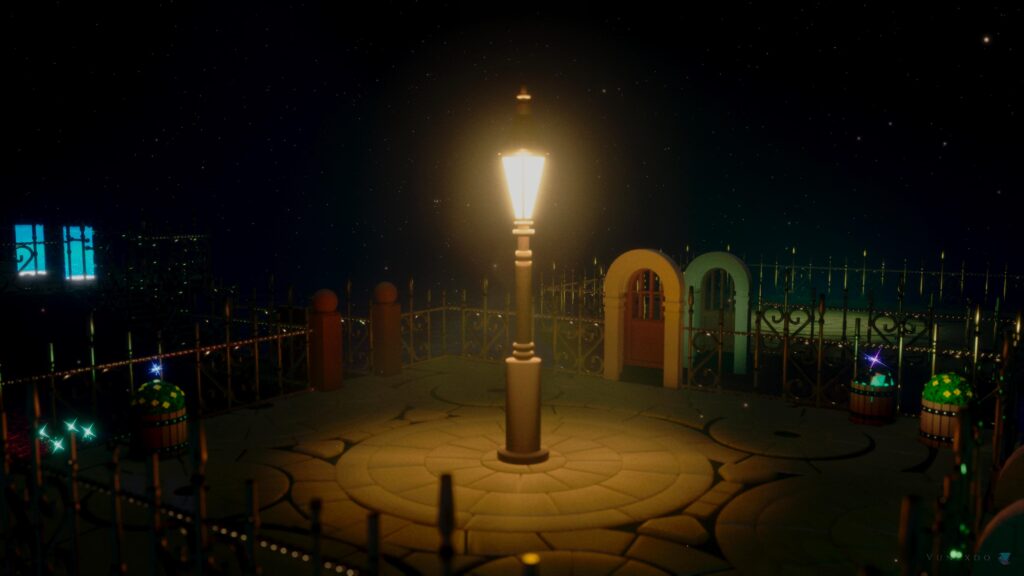
We keep traversing the JRPG circuit with one of the most influential titles that distills everything about the genre and culminates the work of Square Enix. Naturally, as the game cemented many of its now cliches, we find ourselves in another weird dimension due to time travel shenanigans, a space outside the unrelenting flow of time from which we can visit any point in the history of the universe. Who would have thought that this timeless dimension would look like 20th Century London down to the traditional inspector gadget outfit of the wise old man that has been here an eternity; perhaps this is the natural conclusion of an European Medieval fantasy inspired game and this is when fashion and technology peaked. Or it is just a space with the necessary technology for Chrono and friends to realize their destinies.
The limit of time is not at any point within it but to the sides; if time is a river then this is the shore from which you can return to its stream to any point. This means that time does not pass at this place, which is a rather modern and platonic concept since for most time time was conceptualized as an abstraction to which we arrive by perceiving change. Simple as that, no change, no time. But some modern interpretations see it as an actual thing, an actual dimension where you can move just like space, giving rise to countless time travel stories that became staples of Japanese RPG games which like to mix sci-fi tech with fantasy magic due to them not being constrained by genre expectations. As its title implies, this is at the core of Chrono Trigger, making this the main hub world of our party.
And just like the concept screams Square Enix, thus JRPG, the music, from its very first chord, is also pure Japanese fantasy with its characteristic extended harmony, parallel chords, mixture of profiles and piano. Even if you never played the game the music sounds already like a Japanese fantasy game. Games like Chrono Trigger and composers like Yasunori Mitsuda are trailblazers that codified many of these things.
Musical Analysis
The piece just tries to find interesting harmonic sonorities to represent this place where you can meditate under the singular lamp at its center. On top of that it puts a singular piano melody that follows the chord changes, which are mostly in the Dorian profile used for such sacred places or ancient or mystical. The Lydian profile is also often used in such dream worlds but usually reserved for more wacky places; this one is more serious and contemplative.
The cue begins with the harp strums playing three chords that sound similar to the very opening of the game, the track presentiment. Basically you go back and forth from Dm to Em and then finish with B. But you want it to sound more Japanese? Just add some major second intervals between the notes and you will surely end with some suspended chords or ninths, elevenths or whatever; the important thing is that those clustered chords sound more impressionistic. In this case the notes G and A become pedals that anchor the progression while the external notes of the chord change, making it Dmadd11 to Emadd11. These two minor chords will be the basis; you are trapped between worlds. The piece is an elegant ballet in 3/4.
The pizzicato strings establish the Dorian feeling by using the 6th note. The piano and glockenspiel like sound of the music box form an interesting dynamic seemingly sounding as a single instrument playing an arpeggio.
After this intro, the meat of the piece with the waltz rhythm on the piano begins. And once again, the major second clusters make the chords let you know that you are playing a Japanese RPG. This makes them parallel ninth chords and lets you know that the piece will be playing with the Dorian profiles of its parent chords. If we wanna get thematic we can say that since this is a place outside time it also has music outside a particular tonal center; you can travel anywhere both time-wise and music-wise. When the string pad is added the harmony gets even more extended. Again, just add a bunch of clusters or better just rest your hand on the white keys of the piano and as long as it sounds interesting you will get away with not knowing what the actual chords are. This extended harmony also helps pieces in these abstract spaces sound appropriately more ambiguous, capturing and giving more complex emotions to the listener. Here for example the strings by themselves would be playing major chords but are combined with the minor chords of the piano, creating this ambiguity.
Here the harmony could be thought of as parallel Em7/9 to Dm7/9.
The melody follows the accompaniment to whatever dimension it wants to go; after moving between the two main chords it descends to the Cm7/9 and thus the profile is now the Dorian of C. Told you functional harmony would be worthless for video game music analysis.
The cadence of the piece is slightly more normal, using the suspended device. Not before going to an A9sus4.
The full coda is A9sus4 – Badd11 – B. Finally a normal chord to end the piece.
The cue needed two pianos since they play on top of each other. A modern composer with access to a proper piano performance would probably limit himself to what can be achieved with the human hands and thus modify the accompaniment.
What other insights about the piece can be discussed? Is there something else that characterizes the music of these classic JRPGs? Let me know in the comments.
Help to keep the rites going around here by supporting the shrine:

Media Files, requests and support for more interactive content

Thou shall donate since this is a cult and you are now a sheep

Help staying awake analyzing game tracks and writing posts or else everything will end up being written by A.I
- Inside The Score – The Legend of Zeda: A Link to the Past – End Credits / Staff Roll
 The land rests As the last few minutes of this extensive journey that has now come to an end fly by, the nostalgia and reflective mood kicks in. Because such a massive enterprise as a Zelda game or a Lord of the Rings movie require multiple endings to convey everything… Read More »Inside The Score – The Legend of Zeda: A Link to the Past – End Credits / Staff Roll
 - Inside The Score – The Legend of Zelda: A Link to the Past – Ending / Epilogue ~ Beautiful HyruleFinal of the fantasy The Triforce has been touched. A wish has been granted. For the occasion, the newly undeceased king of Hyrule has commissioned a march in honor of the legendary hero to the Hylian Sousa, who might as well be composer Nobuo Uematsu since this piece is very… Read More »Inside The Score – The Legend of Zelda: A Link to the Past – Ending / Epilogue ~ Beautiful Hyrule
- Inside The Score – The Legend of Zelda: A Link to the Past – Triforce Chamber / Power of the GodsTake your boots off your feet And thus the Triforce spoke to men. And it became present in history. And you better treasure and contemplate this moment seldom witnessed in the course of the series. The elusive opportunity to interact and touch the most important artifact. You are now in… Read More »Inside The Score – The Legend of Zelda: A Link to the Past – Triforce Chamber / Power of the Gods
- Inside The Score – The Legend of Zelda: A Link to the Past – Ganon Battle / Prince of DarknessProgressive evil En Garde! And you better be prepared since you are about to duel the iconic enemy of the series at perhaps his canonically most powerful incarnation. Right after having touched the sacred Triforce which allowed him to conquer all of the Golden Land and whose evil and darkness… Read More »Inside The Score – The Legend of Zelda: A Link to the Past – Ganon Battle / Prince of Darkness
- Inside The Score – The Legend of Zelda: A Link to the Past – Boss Battle / Anger of the GuardiansQuick mayhem Ah, the simpler times when boss battles where not a multi epic orchestral suite but just an ostinato more basic that even what became the music for standard battle encounters out there. We are a long way from each boss having his own personalized track. And this early… Read More »Inside The Score – The Legend of Zelda: A Link to the Past – Boss Battle / Anger of the Guardians
- Inside The Score – The Legend of Zelda: A Link to the Past – Dark World Dungeon / Dungeon of ShadowsMemento mori We are getting closer to Ganondorf (or at least the wizard Agahnim who ultimately fulfills the same human side of evil role in this game) and that means getting closer to the profiles and motifs of his own theme song (which naturally was the theme of Agahnim at… Read More »Inside The Score – The Legend of Zelda: A Link to the Past – Dark World Dungeon / Dungeon of Shadows