The origin of the mythos
The True Legend Begins
The SNES era brought with it new possibilities: new colorful graphics, new sound chip with more channels and where the entire game can be scored with instrument samples, more buttons for gameplay and more power to make games bigger and more ambitious—and as it is usual with Zelda entries, this cartridge was more powerful in terms of storage. All this means Nintendo had in their hands the opportunity to cement their successful projects (the big three at the time were Mario, Zelda and Metroid) and realize that what they had in their hands were long lasting series that needed to establish a definitive identity of their own; the way forward, the lore, the tone, the music. They succeeded. The main entries from these Nintendo franchises on the Super Nintendo delivered games that established the formulas and core aspects for years to come, ones that the company can always look back for inspiration when they want to make a game that pleases the fans; the yardsticks over which future entries in the series would be compared and infinite wells of inspiration for video game developers. This is the case for the fantasy world of The Legend of Zelda series in which its triumphant return on the Super Nintendo created the formula, the mold for the structure of a Zelda game, just like the Master Sword, is finally set in stone.
And its world is also slowly showing a metamorphosis from medieval Arthurian tales of some Robin Hoodesque templar knight errant; sword, shield and Holy Bible in hand, traveling to far-off lands rescuing princesses from dragons (pigs actually) into a true epic about the kingdom of Hyrule with its own complex story and a richer world building spanning centuries. As a game of firsts it kickstarted the Zelda lore and paved the way for the legends about to be told. With its pun based subtitle, the game right off the bat shows us its innovative approach to the storytelling of the series going forward, telling the tale of a kingdom as opposed to the one of a single protagonist having adventures in sequence. The game introduced the tradition of making a chronology for the series by not only being a prequel but also featuring a completely different era of Hyrule with a brand new character known as the same Link connecting players to the true lead character of the series: The kingdom. This is the Hyrule fantasy.
All this despite the developers not really knowing what all the lore elements taken from medieval and fantasy traditions really meant. Responsible for connecting a loose thread of influences from myths, fantasy, fairy tales and chivalric romance left inside the game by the developers and tying it all into a mythology of its own and a narrative, was young employee Yoshiaki Koizumi, the storyteller at the company entrusted with making and drawing the instruction manual for the game, the one who set the approach that takes the word ‘legend’ in the title seriously; legends that, just like in the real world, dynamically change with each retelling, with little inconsistencies here and there that make a canon not be static and allowing the developers to tell loosely connected stories of a kingdom and its peoples. Just like history for a present man, it is not set in stone. This approach taken by the series moving forward can only be seen in the manual which is the reason why there are some discrepancies between the game script which was still tied to the original Arthurian influences—down to Link now having his own Excalibur—and the brand new mythology being developed in the manual and then expanded and taken inspiration from in the next entries; The manual narrates the story as an order from chaos creation myth of the world of Zelda told from the perspective of scrolls found in-universe and subjected to errors and new interpretations in light of new evidence. Unlike the in-game text which describes the triforce as an omniscient and omnipotent being analogous to the Trinity, even capable of speech, the manual takes it on a different direction, telling the tale of its origins and making it to be an inanimate object created by three gods; it also expands on the tale of Ganondorf Dragmire, now not only a monster pig but the leader of a gang of thieves who in his lust for power betrays his own kind and ended up trapped in the Sacred Realm in a previous conflict. Only thing left for the series to become high fantasy akin to Tolkien was to populate its world with different races with their own cultures as it did in the next entry where Koizumi was now a director.
It is also the first time we see the duality worlds for Zelda, the happy one and the same one corrupted; the same concept that was the basis of the Ocarina of Time story alongside its three act play of the hero retrieving three artifacts in the normal land to get the sword that defeats evil, a plot twist involving the villain after confronting him and then transitioning into its dark, twisted counterpart where the true adventure awaits and the hero must summon more courage to resolve its calamities. A lot of biomes and iconic locations for the series were also possible thanks to the SNES—since in the first entry with less power the story excuse was that the kingdom was in decline or that it was only a small part of it, so you had only very few people living in caves.
Not only the story of Hyrule was cemented but also its sound. The game that is a reclamation of the top-down view of the original The Legend of Zelda also finds the composer from that original game alongside the main overworld theme in its definitive orchestration returning to the fold—just another reason why Zelda II is considered the weird cousin within the family—now with the mission of establishing the definitive musical core of the series. Long gone, metaphorically speaking, are the days of homogeneous 8-bit sounds where games were happy to be delivered with 6 or 8 tunes. We are now in the era of possibilities, to get slightly closer to the cinematic tradition, even if with only low memory single samples of real instruments and a score that grew exponentially to more than thirty different cues. Seeing as how many of the tracks that were born in A Link to the Past continue to live and define characters, places and moments, it is safe to say that the establishment of the musical identity of the series was a success; here we see born the themes for the triforce, the master sword, the fairies (also known as the file select), Princess Zelda, Ganondorf, the royal family and Kakariko Village, staples of the series and future leitmotifs which composers of the series are still playing around with. Yet, alongside the Title Theme, what we have here is one of the non-returning themes in the series, forever tied exclusively to A Link to the Past and capturing the tone of the particular legend being told here.
Musical Analysis
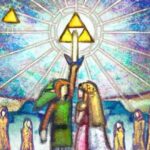
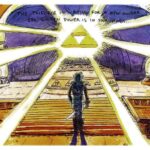
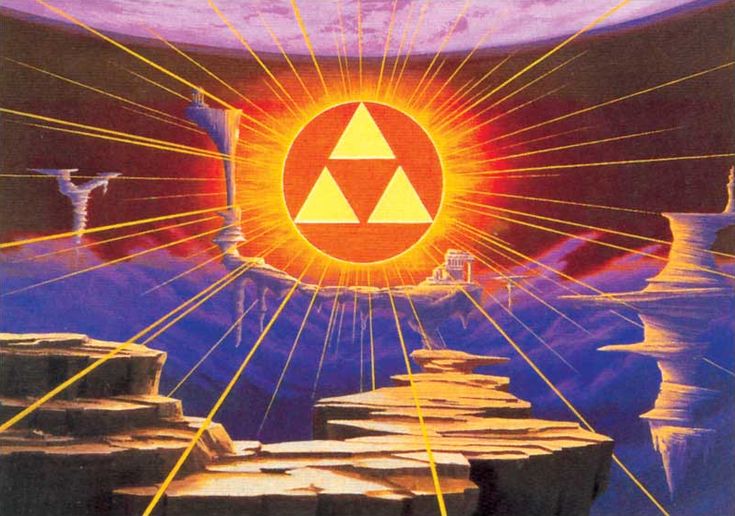
Impressionistic influences did not begin with Breath of the Wild; both A Link to the Past and Ocarina of Time Title Themes make use of the magic of extended, ambiguous harmony to set the mood for these fantasy lands (OoT even has the not often used at that time grand piano). On the SNES game titled Triforce of the Gods in the original Japanese, the triforce gets more prominence as the ultimate artifact that defines the destiny of Hyrule. The game opens up with the three dimensional triforce coming together in an animation that is matched with the impressionistic harp that conveys the precious power of these golden triangles. It plays a descending arpeggiated chord of Eb7/9 which is almost a whole tone scale (Db Eb F G Bb) delivering the sense of magical ambiguity of this artifact that can be used for both good and evil since it is a neutral entity when it comes to the struggle between these two forces. The Eb7/9 chord is also the ambiguous version of the Ab Ionian/major scale which will be the basis for the triumphant fanfare when the logo of the game appears on screen, omitting the core notes of the tonic and the third that would give away the triumphant flavor and spoil the mystique of the triforce. The scale keeps getting lower and lower as the pieces chaotically move, only finding order at the end where the sequence goes up to the 7th note of the scale, right at the tipping point before launching into the triumphant fanfare in the tonic Ab. The harp plays in rubato fashion building up the fantasy atmosphere towards the fanfare.
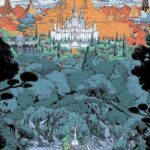
The fanfare welcomes you to the kingdom and castle of Hyrule with the appropriate reception full of big, loud instruments, including the never to be missed in a fanfare trumpets that derive power from each trumpet sample actually being the note and its octave up together. They play a chordal, pedal melody made of mighty sus4 chords over the monolithic perfect fifths of the low brass. The harmony progression is a triumphant Ab – B – Db – Ab. The B being the bIII chord outside the Ab Ionian/major profile retaining the modal nature on which the series music was based. The pedal melody made of three notes and repeated three times can be thought of and works quite nicely as the three triforce parts, their each essence being reflected by the underlying changing harmony; after all, it is a piece that will also be used in the triforce creation myth in Ocarina of Time. The cue ends with a coda that allows for the full major tonic chord, albeit with the third on top, to finally sound after being presented with suspended chords. It also brings to mind the rhythms and profiles of the main theme of the series whose intro is also a similar fanfare with a pedal melody.
Seems like a nice, prosperous kingdom…or not. The midst of conflict and its troubled history shine and are put forward in the next prologue that tells the tale of a hidden land that has captured the hearts and souls of men willing to do anything to posses this golden power. The quest for the composer is now to capture the ambiguity of this mystical land and the eternal struggle between good and evil; a balance between uplifting an sinister.
The opening music, tasked with giving mythical weight to 16-bit cartoony sprites that could not have been epic on their own, accompanies the first fully fleshed out legend told in the series, capturing the ethereal tone of the historied kingdom of Hyrule and its Sacred Realm counterpart. It is a piece at the middle point between good and evil; ominous and beautiful clash together in the music telling the tale of the triforce and its dwelling place. Even though meant to accompany a cinematic sequence the piece is treated as a video game track that loops. There are three section, the intro, Section 1 in 4/4 and the elegant Section 2 in 3/4 all smoothly connected. The theme is a string fest, using them exclusively. For some reason, in the original game all strings are panned to the center of the mix.
The clash begins in the intro where the chromatic ascending motion of the Ganondorf’s theme is layered on top of of a C5 pedal chord arpeggio as sus2 harmony, producing a dissonance that tells us this is a realm in conflict; it represents the influence of Ganon over the Sacred Realm; he is slowly taking over. It is probable that the Ganondorf’s theme had been written first. The best tremolo strings that the single sample SNES hardware can produce are introduced to raise the tension. This cue is also used for the first part of the game where you storm the castle at night with rain pouring, where this intro adds some horns and it is even transposed to a higher key; so these fast notes in the strings might also capture the raindrops falling. The suspended note replacing the usually happy third tells us something is not quite right and adds gravitas to the legend being told.
The melody begins in Section 1 accompanying the struggles that the people of Hyrule have lived due to their lust for reaching the hidden land. The mysterious chords are put against dissonant choices in the melody, which keeps clashing against the harmony, not letting the piece get completely uplifting for a moment but always covered in a mist that allows the hidden golden land to keep its sense of mystique; the melody begins with the tritone note against the first chord, then a minor second against the second chord and so on. The harmony remains based mostly around sus2 chords with a progression that keeps enigmatically traveling through the circle of fourths—which is just the circle of fifths going counterclockwise—with some twists along the way, never remaining on a singular profile but always covered in mist. The progression can be thought of as:
Fmaj7sus2 – Bbsus2 – Eb – Ab –
Am – Dadd9 – Gmaj7 – Gmaj7
Just when you think the melody has stabilized back to the Ab major chord, the piece keeps moving to a half step up to Am and then the movement by fourths keeps going from there. The relationship between the melody and harmony keeps getting less dissonant as we approach the sealing of the Sacred Realm in the narrative.
We enter the elegant 3/4 waltz Section 2 when the king of Hyrule commands seven sages to seal the path to the Sacred Realm. Each chord of the harmony is now sustained for two bars. The high notes of the accompanying string section are removed, leaving only the bass, the melody and the tremolo strings which continue their unrelenting march. Curiously, in the game files, the high strings notes remain there forming all kinds of very dissonant chords but the volume is at 0 so you don’t hear them; perhaps the original scene was different and more ominous or the composer just felt it sounded better without them at a later time. The harmony here is:
Bb – Am – Gm – C7/9 – F
Bb – Am – Ab – Gmaj7 – F# 7/b9
It begins stable enough but towards the end and in preparation of the loop it goes back to dissonance. It is a more ethereal part full of seventh chords when paired with the melody that represents the seven sages, the hope of their seal and the maidens. It is the most tonal part on the piece.
Just like the struggle between good and evil, throughout the melody there is always a tension between the F Ionian/Major profile and the F Lydian caused by the piece going between melodic phrases with the B natural and others with B flattened.
When these events are obscured by the mists of time and the tale focuses on the coming of the mysterious wizard Agahnim the piece returns to the ambiguous Section 1, back to 4/4 in smooth fashion. The elegant Section 2 comes back when the focus of the story is on Princess Zelda and the descendant maidens of the seven sages. The piece loops a second time while showing Agahnim evil plans and then ends abruptly.
The hymn exclusively and forever tied to the legend from A Link to the Past (well, it actually appeared briefly as the game over cue in Minish Cap), Seal of the Seven Maidens, as the cue is actually called, sets the stage and the mood for the mythical proportions that The Legend of Zelda is aspiring to reach from the SNES era onward. Its ambiguous tone captures—which we will hear a lot of it io A Link to the Past—the lure and magic of the mythical golden land and the struggle between the forces of good and evil about which all legendary tales are based. For the full experience is recommended that the consumer opens a second tab with sounds of rain and thunder playing.

Help to keep the rites going around here by supporting the shrine:

Media Files, requests and support for more interactive content

Thou shall donate since this is a cult and you are now a sheep

Help staying awake analyzing game tracks and writing posts or else everything will end up being written by A.I
- Inside The Score – The Legend of Zeda: A Link to the Past – End Credits / Staff Roll
 The land rests As the last few minutes of this extensive journey that has now come to an end fly by, the nostalgia and reflective mood kicks in. Because such a massive enterprise as a Zelda game or a Lord of the Rings movie require multiple endings to convey everything… Read More »Inside The Score – The Legend of Zeda: A Link to the Past – End Credits / Staff Roll
 - Inside The Score – The Legend of Zelda: A Link to the Past – Ending / Epilogue ~ Beautiful HyruleFinal of the fantasy The Triforce has been touched. A wish has been granted. For the occasion, the newly undeceased king of Hyrule has commissioned a march in honor of the legendary hero to the Hylian Sousa, who might as well be composer Nobuo Uematsu since this piece is very… Read More »Inside The Score – The Legend of Zelda: A Link to the Past – Ending / Epilogue ~ Beautiful Hyrule
- Inside The Score – The Legend of Zelda: A Link to the Past – Triforce Chamber / Power of the GodsTake your boots off your feet And thus the Triforce spoke to men. And it became present in history. And you better treasure and contemplate this moment seldom witnessed in the course of the series. The elusive opportunity to interact and touch the most important artifact. You are now in… Read More »Inside The Score – The Legend of Zelda: A Link to the Past – Triforce Chamber / Power of the Gods
- Inside The Score – The Legend of Zelda: A Link to the Past – Ganon Battle / Prince of DarknessProgressive evil En Garde! And you better be prepared since you are about to duel the iconic enemy of the series at perhaps his canonically most powerful incarnation. Right after having touched the sacred Triforce which allowed him to conquer all of the Golden Land and whose evil and darkness… Read More »Inside The Score – The Legend of Zelda: A Link to the Past – Ganon Battle / Prince of Darkness
- Inside The Score – The Legend of Zelda: A Link to the Past – Boss Battle / Anger of the GuardiansQuick mayhem Ah, the simpler times when boss battles where not a multi epic orchestral suite but just an ostinato more basic that even what became the music for standard battle encounters out there. We are a long way from each boss having his own personalized track. And this early… Read More »Inside The Score – The Legend of Zelda: A Link to the Past – Boss Battle / Anger of the Guardians
- Inside The Score – The Legend of Zelda: A Link to the Past – Dark World Dungeon / Dungeon of ShadowsMemento mori We are getting closer to Ganondorf (or at least the wizard Agahnim who ultimately fulfills the same human side of evil role in this game) and that means getting closer to the profiles and motifs of his own theme song (which naturally was the theme of Agahnim at… Read More »Inside The Score – The Legend of Zelda: A Link to the Past – Dark World Dungeon / Dungeon of Shadows