Coordinated workforce
A-hoy!
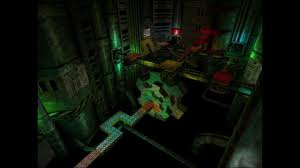
Time for taking downtime at the seven seas. Because even though this is an industrial cargo boat stationed at bay, the sailing spirit is still very much alive inside the dormitories and crew facilities. The Rusty Bucket from Twycross, England has all the basic necessities covered, from navigation rooms, storage, kitchens and of course the berthing provisions where multiple sailors sleep on the long journeys, with little personal space dedicated to pictures of their girlfriends since they will not be seeing each other for long periods of time (in this way It is implied that Conker, another character from Rare, is part of the crew) This ship is inhabited by seamen grumbling after all, so it is not surprising a version of a sea shanty is found in the music of the area. Yet the Banjo-Kazooie spin on the genre is intact thanks to the quirky harmonic progressions and reliance on the tritone interval as opposed to the harmonic profiles of your typical sea shanty, like the Dorian mode of Celtic music for example.
Sea shanties are an indelible component of pirates, sailors and other swashbuckler adventurers. You can imagine that just like eyepatches, peg legs, parrots (sometimes themselves with mini eyepatches), buried treasure, exciting adventures and codes of honor, the version of sea shanties we think today as pirate or sailor music is a highly romanticized distortion coming from films and cartoons of how the real ones would have sounded like. The swashbuckler sailor and pirate tropes we know and love were pretty much codified by those depicted in literature like Treasure Island and Peter Pan, many years removed from the golden age of sea adventuring.
Music was and still is certainly part of the entertainment aboard ships in long voyages, and worksongs have served as pedagogical and synchronizing tools for multicultural crews for ages, helping them to familiarize with boat lingo and pull or push at the same time with the beat of melodies. However, they were probably simpler in melody, based on call and response and the style varied greatly between regions—certainly nobody would be harmonizing while working. What people usually think of as sailor sea shanties are Gaelic, English folk and polka songs written many years later by professional songwriters romanticizing the topics of seafaring culture and the bygone eras. The style probably acquired that exaggerated shuffle feel and triplet rhythm trying to imitate the rocking back and forth of a boat against the ocean waves (just like swimming is synonymous with a waltz); then we got the epic chord progressions of the Dorian mode added into the mix for the sense of adventure and today the scores are fully orchestrated. Even so, true sea shanties were more used in merchant ships than adventuring ships, so it is not as unrealistic to find one in the Rusty Bucket, although the automatic industrial processes of modern steamboats do not require any music in order to sync movements like humans do.
The most famous modern example of a shanty song might be the theme song for the TV show SpongeBob, which is itself based on the sea shant ‘Blow the Man Down’:
What is true is probably the use of cheap, easy to find (or to rob) portable instruments for the entertainment of the crew and keeping the morale up back then, like non-orchestral flutes and recorders, fiddles and especially the concertina, which many confuse with the accordion since both are of the same family; It also consists of expanding and contracting bellows, with buttons (or keys) usually on both ends, unlike accordion buttons, which are on the front.
The two variations presented here offer a contrast; on the one hand we have the laid-back feeling of the sea shanty heard inside the crew quarters and on the other the mechanistic, industrial and more complex version heard in the busy engine room. It is likely that the sailor version was made first since it is the closest to the seafaring spirit of the level and the standard rooms of a boat were probably made first. They are made in the Banjo-Kazooie harmonic style, featuring heavily modal chord changes and unexpected notes.
Musical Analysis
Structure: {I – ABAC} / {I – ABA’CC’ DC”}
Tempo: 120 / 125
Melodic and Harmonic Profiles: F Lydian dominant; F Phrygian major; G Phrygian major
The sea shanty version is not in triplet time signature like 6/8 or 12/8 but still features a heavy use of shuffle feel to capture the marine vibe of the laidback quarters. Grant uses the harmonica once again to simulate a concertina like on Treasure Trove Cove and the pan flute from the tribes of Mumbo’s Mountain to differentiate it from the orchestral flute, since it is less sophisticated and has a more natural timbre; the same goes for the percussion. Surprisingly, the theme is centered around the F tonality as opposed to the C key typical of the rest of the score. Just like Rusty Bucket Bay shared some similarities with Bubblegloop Swamp, the interiors have slight resemblances to Gobi’s Valley, especially the Phrygian major flavour.
The melody begins after the accompaniment establishing intro uneventfully enough, then it gets contaminated with the Banjo-Kazooie influence when it reaches the B note, which is the tritone note of F; this is only the beginning since the answer phrase uses the note Eb from the minor tetrachord, falling into what is sometimes known as a Lydian dominant scale. The minor tetrachord at the end of the scale is the core of the Mixolydian mode, so in using this scale Grant ends up with a tune that is feeding from both the Banjo style and the epic sea heroic style. The composer is just probably going by what chords feel good with the melody without even thinking about scales or modes, as is standard procedure in Banjo-Kazooie; just looking for eccentric sonorities. As for the cadence of the section, the Eb becomes E natural, ending like a more standard sea shanty; in fact the cadence is very similar to the last notes played on the recorder in the SpongeBob theme, so they both probably have a common origin in minstrel shows—since it is a variation of the previously discussed minsky pickup but for endings.
The full progression for the A section:
F – B – F – Eb
F – B – F
The B section offers us a different kind of modality, the piece getting closer to Gobi’s Valley territory by employing a Phrygian major profile; that is, using the notes of the Phrygian mode but maintaining the tonic as a major chord (the seventh degree is also a major chord, creating a mix between Phrygian major and Mixolydian). After that, through a cascading of Kirkhope cadences [bII – V – I] we get to the dominant chord of F, which is C major (Db – G – C is the Kirkhope cadence to reach C and then Gb – C – F is the Kirkhope cadence to get back to F).
Giving us the harmony:
Gb – F – Eb – F
Db – G – C – Gb – C
We get an exact replica of the A section then as if this shanty was in rondo form and this is the call and the other sections are the responses of the sailors. The C section continues the trend of mixing the Phrygian major sensibility with the Mixolydian chord (the VII), but this time the piece is centering around G; the part sounds as mysterious and mystical as Gobi’s Valley due to mixing the major tetrachord with the Phrygian tetrachord at the head of the scale, plus the use of the mystic chord G (b6).
The full progression is:
G – Ab – G – G – F
G – Ab – G – G – F – Fm – G
All sections are based on discernible question-answer blocks.
That is it for the sea shanty variation. The engine room version contrasts by trading the laidback shuffle feel of traversing through the ocean for a mechanistic accompaniment made of the sound effects emanating from the room, a huge orchestral bass drum that might as well be a hammer somewhere, the tambourine which is now a chain and the militaristic brass, each one moving at their own tempo just like the gears inside a machine; like those same gears, the trombone fanfares are sometimes in sync with the rest of the machinery, sometimes not, giving the track the appropriate feeling of individual moving parts creating a whole. The raspy saxophone carries the melody as it does in muddy, heavy underground places in the score (same for inside Clanker; in fact, both tracks feature almost the same instruments in similar roles). Due to the composer expecting the players to spend a longer frustrating time down here when compared with the boat standard rooms, the piece required an extra section to make it longer, which is the closest one to Gobi’s Valley, particularly its C section, as both feature a very similar descending melodic cadence to cap it all off and the emphasis on the Phrygian major progression back and forth.
The piece manages to go back to the C section in the original key of F by way of the Kirkhope cadence once again. The complex progression for the new D section ends up being
Ab – G – Ab – G
Ab – G – Ab – Cm – Gb – C7
Just like on Gobi’s Valley, this final melody follows closely the profiles of its respective underlying chords.
We expect all this grimness for the ending stages of a video game; still, just like Banjo-Kazooie subverted our expectations in many ways, the game shows us that a final level can be dressed with the clothes of an introductory level as long as it has a very original twist. Nature is healing as spring downs on us.

Help to keep the rites going around here by supporting the shrine:

Media Files, requests and support for more interactive content

Thou shall donate since this is a cult and you are now a sheep

Help staying awake analyzing game tracks and writing posts or else everything will end up being written by A.I
- Inside The Score – The Legend of Zeda: A Link to the Past – End Credits / Staff Roll
 The land rests As the last few minutes of this extensive journey that has now come to an end fly by, the nostalgia and reflective mood kicks in. Because such a massive enterprise as a Zelda game or a Lord of the Rings movie require multiple endings to convey everything… Read More »Inside The Score – The Legend of Zeda: A Link to the Past – End Credits / Staff Roll
 - Inside The Score – The Legend of Zelda: A Link to the Past – Ending / Epilogue ~ Beautiful HyruleFinal of the fantasy The Triforce has been touched. A wish has been granted. For the occasion, the newly undeceased king of Hyrule has commissioned a march in honor of the legendary hero to the Hylian Sousa, who might as well be composer Nobuo Uematsu since this piece is very… Read More »Inside The Score – The Legend of Zelda: A Link to the Past – Ending / Epilogue ~ Beautiful Hyrule
- Inside The Score – The Legend of Zelda: A Link to the Past – Triforce Chamber / Power of the GodsTake your boots off your feet And thus the Triforce spoke to men. And it became present in history. And you better treasure and contemplate this moment seldom witnessed in the course of the series. The elusive opportunity to interact and touch the most important artifact. You are now in… Read More »Inside The Score – The Legend of Zelda: A Link to the Past – Triforce Chamber / Power of the Gods
- Inside The Score – The Legend of Zelda: A Link to the Past – Ganon Battle / Prince of DarknessProgressive evil En Garde! And you better be prepared since you are about to duel the iconic enemy of the series at perhaps his canonically most powerful incarnation. Right after having touched the sacred Triforce which allowed him to conquer all of the Golden Land and whose evil and darkness… Read More »Inside The Score – The Legend of Zelda: A Link to the Past – Ganon Battle / Prince of Darkness
- Inside The Score – The Legend of Zelda: A Link to the Past – Boss Battle / Anger of the GuardiansQuick mayhem Ah, the simpler times when boss battles where not a multi epic orchestral suite but just an ostinato more basic that even what became the music for standard battle encounters out there. We are a long way from each boss having his own personalized track. And this early… Read More »Inside The Score – The Legend of Zelda: A Link to the Past – Boss Battle / Anger of the Guardians
- Inside The Score – The Legend of Zelda: A Link to the Past – Dark World Dungeon / Dungeon of ShadowsMemento mori We are getting closer to Ganondorf (or at least the wizard Agahnim who ultimately fulfills the same human side of evil role in this game) and that means getting closer to the profiles and motifs of his own theme song (which naturally was the theme of Agahnim at… Read More »Inside The Score – The Legend of Zelda: A Link to the Past – Dark World Dungeon / Dungeon of Shadows