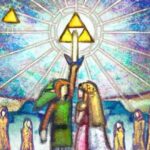
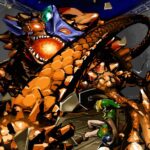
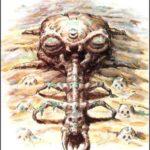
The protectors return to their lands of origin
“Shouldn’t you be returning home? Whenever there’s a meeting a parting is sure to follow. However, the parting need not last forever……whether a parting be forever or merely for a short time…that is up to you…But, my, you sure have managed to make quite a number of people happy. The masks you have are filled with happiness. This is truly a good happiness.”
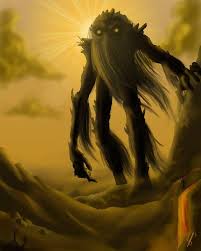
The cycle of rebirth has been broken.
Few people will ever know how long it took to save them and, just like their Hyrulean counterparts, few will ever know that there was a hero named Link who sacrificed himself for them, the proof of his deeds living only in his heart. The four stages of awakening have been completed; just like Tatl the fairy says when Link has literally awaken: he has found what he was looking for, now it is time to go back. The Hero of Time’s personal journey has been fulfilled, his identity as an adult, as a hero, robbed at the end of Ocarina of Time, has been regained. And with newfound direction and purpose, he now has a role to play.
In Majora’s Mask there is a storybook that tells us all about the significance of these events. Yoshiaki Koizumi, the person in charge of the concept and humanistic aspects of The Legend of Zeda: Majora’s Mask, will go on to incorporate similar storybook devices in subsequent games like Super Mario Galaxy. Here, the book tells us that from atop the clock tower roof a ceremony to call the gods is held and an ancient song is sung—Tingle even appears on the story, implying he is kind of an ancient being—Most likely, each year this ceremony was symbolic. But Link just performed it in a real sense and, just like the story predicted, the gods came to help. And just like the storybook says “your cries should carry to us.” The story tells of an imp who stressed his anger across the four worlds, the people then sang the song of prayer to the giants, the imp returned to the heavens and harmony was restored to the four worlds. This ancient sounding story is really telling us the events we just witnessed in Majora’s Mask, with Link using the Oath to Order to save Termina and then returning to the heavens, which in the Termina conception of the world is none other than the kingdom of Hyrule, to which Link must depart soon… “And they lived happily…ever after…”
We are onlookers as this storybook comes to life at this very moment, with the giants returning to sleep to each corner of the world. Now Link and the forest child who caused so much trouble and harm for the land can return to heaven. The skull kid is also able to find closure about his feelings of loneliness and learn a lesson about friendship. Perhaps becoming a being like this was the destiny that awaited the Hero of Time the moment he stepped into the Lost Woods had he not found direction and meaning in the land of Termina.
With that, the giants part ways toward their lands singing proudly the Oath to Order, finally immersed on their theme. It’s a powerful moment accompanied by the loud steps of the deities rumbling all across the land. The Skull Kid’s soul was the last one healed by the Hero of Time, and now Link is free to reconcile with this fellow children of the forest, with the imp now able to recognize and acknowledge Link’s past.
Musical Analysis
Structure: Section 0 / Section 1
Time Signature: 4/4
Tempo: 70
Melodic and Harmonic Profiles: D Phrygian; D Aeolian/Minor; D Harmonic Minor
As commemoration, at long last we get to hear fused together the Giants’ Theme with the Oath to Order as it was meant from the beginning, giving us a last dose of chills. The third reprise of what could be called the theme of faith: faith in the giants, faith in the Hero of Time, faith that a a new day could come amidst the tragedy and that you just have to keep moving, Now it’s tied with the Song of Healing for most versions on the soundtrack (well, technically the short ‘Get a Mask’ cue is also a reprise of the Song of Healing, getting the count to four); this makes the theme of the giants also an important motif for The Legend of Zelda Majora’s Mask, one is for the healing, one for moving forward after recovering, with the knowledge that doing so may open new wounds.
This last version of the theme is shorter. It only has Section 1 before coming to a coda. The reason? Koji Kondo was just fitting it to the cutscene: the giants disappear, the music ends. The definitive version of the theme is still perhaps the ‘Call to the Giants’ cue since it has all the sections, and an extended intro plus the coda (no giant vocals though). In this case the coda just consists of playing the tonic D at the end at the highest pitch on the harp. The intro is the exit cue of the giants singing all together the Oath to Order, the volume turned down dynamically as they get further 100 steps on each direction; this time around the voice of the giants is doubled by the male choir as opposed to the female choir, which in this iteration is reserved to add a layer of depth to the piece when they appear later. Nonetheless, the unforgettable voices of these gods will live inside Link’s (and our’s) mind forever.
The tempo is also sightly faster (from 67 to 70) for the purposes of fitting the scene. Koji moved the tempo around until he found one that ended the visuals satisfactorily.
Link must now part somewhere, once again separating from his companion. The carnival is on and so the Happy Mask Salesman disappears into thin air after carrying on his purpose, closing the curtain to this epic Chinese opera (when he vanishes there is a split second where a new mask glitches into his backpack). It was a pleasure making business with the Happy Mask Shop; the contract has been fulfilled. Now bring on the fireworks.
Help to keep the rites going around here by supporting the shrine:

Media Files, requests and support for more interactive content

Thou shall donate since this is a cult and you are now a sheep

Help staying awake analyzing game tracks and writing posts or else everything will end up being written by A.I
- Inside The Score – The Legend of Zeda: A Link to the Past – End Credits / Staff Roll
 The land rests As the last few minutes of this extensive journey that has now come to an end fly by, the nostalgia and reflective mood kicks in. Because such a massive enterprise as a Zelda game or a Lord of the Rings movie require multiple endings to convey everything… Read More »Inside The Score – The Legend of Zeda: A Link to the Past – End Credits / Staff Roll
 - Inside The Score – The Legend of Zelda: A Link to the Past – Ending / Epilogue ~ Beautiful HyruleFinal of the fantasy The Triforce has been touched. A wish has been granted. For the occasion, the newly undeceased king of Hyrule has commissioned a march in honor of the legendary hero to the Hylian Sousa, who might as well be composer Nobuo Uematsu since this piece is very… Read More »Inside The Score – The Legend of Zelda: A Link to the Past – Ending / Epilogue ~ Beautiful Hyrule
- Inside The Score – The Legend of Zelda: A Link to the Past – Triforce Chamber / Power of the GodsTake your boots off your feet And thus the Triforce spoke to men. And it became present in history. And you better treasure and contemplate this moment seldom witnessed in the course of the series. The elusive opportunity to interact and touch the most important artifact. You are now in… Read More »Inside The Score – The Legend of Zelda: A Link to the Past – Triforce Chamber / Power of the Gods
- Inside The Score – The Legend of Zelda: A Link to the Past – Ganon Battle / Prince of DarknessProgressive evil En Garde! And you better be prepared since you are about to duel the iconic enemy of the series at perhaps his canonically most powerful incarnation. Right after having touched the sacred Triforce which allowed him to conquer all of the Golden Land and whose evil and darkness… Read More »Inside The Score – The Legend of Zelda: A Link to the Past – Ganon Battle / Prince of Darkness
- Inside The Score – The Legend of Zelda: A Link to the Past – Boss Battle / Anger of the GuardiansQuick mayhem Ah, the simpler times when boss battles where not a multi epic orchestral suite but just an ostinato more basic that even what became the music for standard battle encounters out there. We are a long way from each boss having his own personalized track. And this early… Read More »Inside The Score – The Legend of Zelda: A Link to the Past – Boss Battle / Anger of the Guardians
- Inside The Score – The Legend of Zelda: A Link to the Past – Dark World Dungeon / Dungeon of ShadowsMemento mori We are getting closer to Ganondorf (or at least the wizard Agahnim who ultimately fulfills the same human side of evil role in this game) and that means getting closer to the profiles and motifs of his own theme song (which naturally was the theme of Agahnim at… Read More »Inside The Score – The Legend of Zelda: A Link to the Past – Dark World Dungeon / Dungeon of Shadows