Volcanic rituals
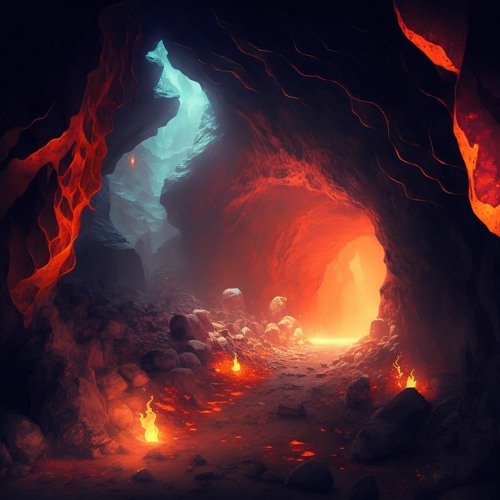
Right before our arrival at a white Christmas setting we need to traverse the depths of hell in order to appreciate it better; things are about to get hot, even though Samus is in full armor, so put on your Varia suit and enter at your own risk cause this is war.
Continuing on the theme of the alive, breathing creature concept originally conceived by Hirokazu “Hip” Tanaka for the original Metroid, Kenji Yamamoto takes over the reins of the series and cements once and for all what we think of as Metroid music, a sci-fi series action packed and exploration landscapes populated by living alien organism, ancient alien civilizations long gone and a score that blends seamlessly with the environmental sound design.
Musical Analysis
The Norfair Ancient Ruins track, also know nowadays as the Magmoor Caverns theme is a climax of sorts for the game Super Metroid where the breathing of the creature gets progressively more intense and time is ticking up for our heroine as she gets deeper into her enemy’s lair while he waits for the final showdown, creating a sense of anticipation; the planet has finally fully woken up. The theme is driven by a steady beat, hearing the beating heart of the creature as if you are inside its belly and being tossed around; this is what you hear inside a boiling cauldron. The theme for these subterranean temple ruins built by the ancient Chozo has the appropriate blend of intense and ominous, being based around a Phrygian profile figure that keeps ascending higher and higher, enhancing the sense of danger, as Samus gets progressively lower and lower.
By now identified as the lava level theme for the series and, appropriately for one of the staples of threatening geography in video games, the cue is based around the heavy percussion beat meant to sound as a scene straight from some kind of ancient ritual, like the Indiana Jones and the Temple of Doom tribal scene, with Yamamoto in this particular iteration creating a sense of huge frame drums being played by combining drum kick samples at different pitches with low pitched wooden stick sounds, as if a cannibal tribe is playing big drums hitting both the membrane and the rim at the same time—or maybe the composer just exported the track and forgot to turn the metronome off—you can even use this reliant beat to learn to time your bomb jumps. The sense of ancient temple lair is always brought to Metroid courtesy of its use of mixed choir, which is a tradition that started on Super Metroid, particularly a sample associated with the series since this very entry which is the Galeere” sample, which is included in State of the Art (Volume 1) sample library and is very recognizable seeing as how it is kind of the equivalent of an orchestra hit sample but with human voices. The breathing or volcanic core about to explode-pulsating sound is made from the horn sounds that have a slight portamento that mimics this throbbing sensation.
Musically, the song is divided in four different sections; the intro, the steady ascending section based around transpositions, the climax section of descending scales and one interlude section where the energy and intensity go down, as if recharging for the climax section. The ascending section is based around a melody line made of two phrases that both end on the tonic, the first one reaching it from a lower register than the second. This single motif begins in C Phrygian and then keeps climbing to Eb Phrygian, Gb Phrygian and then A Phrygian where the climax takes place. This mode is always called upon for many lava biomes to give that exotic, not as strong but still Middle-Eastern feeling from hot places and cultures where fire is worshiped. Yet, from the underlying harmony we can see and hear that this is not your standard Phrygian mode, but its more exotic counterpart, the Major-Phrygian, also known as the flamenco mode due to its omnipresent use on that style of music; at your disposal whenever you find yourself in either in the heat of a desert or a volcano, the Phrygian major profile sound is what happens when you play a Phrygian melody on top of the major chords born out of these notes; normally the tonic chord of the Phrygian profile is minor. This creates the I to bII vamp which on closer inspection is a motif very much associated with the Metroid sound, just like the I to bIII which comes from the main theme of the series. You will hear a I to bII across many Metroid tracks and, since we are right now in his domains, it is not surprising that this profile and pair of chords is also the basis for the Ridey’s Theme, a creature named after the director of the Alien film that directly inspired the Metroid series (the Ridley battle cue is also based around the transposition of the vamp).
The horns add an additional pedal B note that adds some dissonance to the piece, making it more ominous (it creates a minor second interval on the I chord and a tritone on the bII chord. The fourth bar of the intro emphasizes this tritone of the Db7 chord). This major chord based vamp also adds a shade of heroic determination and hope to conquer this lava world.
The melody is played by the choral hits accompanied and harmonized with monolithic parallel fifths on the lower voices played by the horns. The piece is homogeneous in the sense that the choirs and horns are enough to provide most of both the accompaniment and melody. The piece is then transposed to a different key, always jumping to the bIII chord which is the other staple chord from Metroid music. These transpositions are enough to sustain a long section that repeats the same melody, with the composer using different configurations of the orchestration to create variety throughout the climbing; for example, to create more intensity, the accompaniment first plays every measure and then every two beats when it gets to the Eb profile. When it reaches the Gb profile more horns are added to carry the melody. For when it finally arrives at the A profile, it adds another instrument, a bass synth that first plays the root notes before playing a more elaborate bass line and countermelody at the climax.
The climax consist of the choirs condemning the player with two descending phrased through the Phrygian profile, at a faster pace of one note per beat; until this point the rhythmic profile of the melody was based around a dotted quarter note, here they are standard quarter notes. The only difference between the new pair of phrases is the way they go down in the scale, first phrase reaching a F note from below and the second one reaching the F from above; a tiny difference that creates enough variety alongside the chord changes that modify the flavor of the overlaying scale. The chord pattern in the Phrygian major remains unchanged except for the fact that the bass synth and the drums play with more intensity. For these parts the clave sticks are removed.
The interlude is a reprise of the first section, reiterating the main motif of the track in a more simplified manner, with less notes. The second phrase uses the fifth note of the scale, E, to pivot even higher to the original profile C Phrygian. The tension keeps ramping up at a faster pace, the instruments getting more intense in their playing and adding more layers until a second climax comes up faster, omitting the Gb profile part and going straight to the A Phrygian descending section. There is one last instance of the interlude before the piece loops.
The Lower Norfair theme cemented its place in the series when it returned in its first foray into the 3D world, which did not happen in the N64 era like it did for its colleagues but until the GameCube, and managed to capture the spirit and tone of the series in a first person view. The track has continued to see use in many other Metroid games or whenever a Lava themed course related in any way to the Metroid series appears, including Nintendo Land and Super Smash Bros. It is a track that fills you with determination to conquer the hot lands that Samus Aran traverses, which is a nice complement for our next track based around snow.
Help to keep the rites going around here by supporting the shrine:

Media Files, requests and support for more interactive content

Thou shall donate since this is a cult and you are now a sheep

Help staying awake analyzing game tracks and writing posts or else everything will end up being written by A.I
- Inside The Score – The Legend of Zeda: A Link to the Past – End Credits / Staff Roll
 The land rests As the last few minutes of this extensive journey that has now come to an end fly by, the nostalgia and reflective mood kicks in. Because such a massive enterprise as a Zelda game or a Lord of the Rings movie require multiple endings to convey everything… Read More »Inside The Score – The Legend of Zeda: A Link to the Past – End Credits / Staff Roll
 - Inside The Score – The Legend of Zelda: A Link to the Past – Ending / Epilogue ~ Beautiful HyruleFinal of the fantasy The Triforce has been touched. A wish has been granted. For the occasion, the newly undeceased king of Hyrule has commissioned a march in honor of the legendary hero to the Hylian Sousa, who might as well be composer Nobuo Uematsu since this piece is very… Read More »Inside The Score – The Legend of Zelda: A Link to the Past – Ending / Epilogue ~ Beautiful Hyrule
- Inside The Score – The Legend of Zelda: A Link to the Past – Triforce Chamber / Power of the GodsTake your boots off your feet And thus the Triforce spoke to men. And it became present in history. And you better treasure and contemplate this moment seldom witnessed in the course of the series. The elusive opportunity to interact and touch the most important artifact. You are now in… Read More »Inside The Score – The Legend of Zelda: A Link to the Past – Triforce Chamber / Power of the Gods
- Inside The Score – The Legend of Zelda: A Link to the Past – Ganon Battle / Prince of DarknessProgressive evil En Garde! And you better be prepared since you are about to duel the iconic enemy of the series at perhaps his canonically most powerful incarnation. Right after having touched the sacred Triforce which allowed him to conquer all of the Golden Land and whose evil and darkness… Read More »Inside The Score – The Legend of Zelda: A Link to the Past – Ganon Battle / Prince of Darkness
- Inside The Score – The Legend of Zelda: A Link to the Past – Boss Battle / Anger of the GuardiansQuick mayhem Ah, the simpler times when boss battles where not a multi epic orchestral suite but just an ostinato more basic that even what became the music for standard battle encounters out there. We are a long way from each boss having his own personalized track. And this early… Read More »Inside The Score – The Legend of Zelda: A Link to the Past – Boss Battle / Anger of the Guardians
- Inside The Score – The Legend of Zelda: A Link to the Past – Dark World Dungeon / Dungeon of ShadowsMemento mori We are getting closer to Ganondorf (or at least the wizard Agahnim who ultimately fulfills the same human side of evil role in this game) and that means getting closer to the profiles and motifs of his own theme song (which naturally was the theme of Agahnim at… Read More »Inside The Score – The Legend of Zelda: A Link to the Past – Dark World Dungeon / Dungeon of Shadows