Plumber Fiction
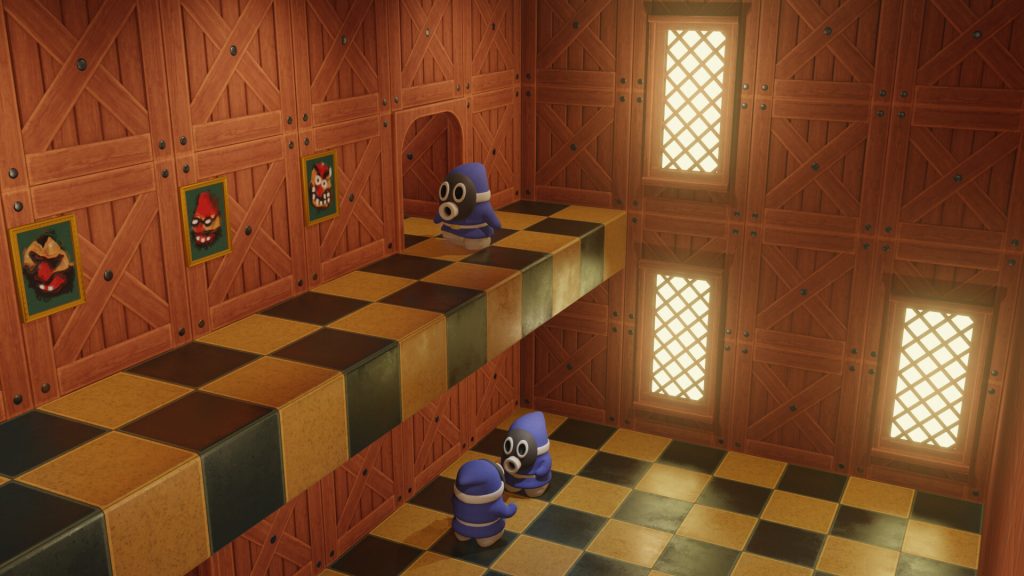
And my theme has the filthiest 16-bit saxophone ever put on record on a Super Nintendo (or in pretty much any console for that matter). Booster’s Theme is the sonification of his character, the raunchy and rowdy theme mixing swing jazz with surf rock that contrasts with the lounge in Booster Tower which actually has lounge music; that was the reception now the party has truly started. The definition of a smokey tune, which is why the shy guys now have gas masks, ‘And my name is Booster’ boasts that this fella likes to party hard, it is the sound of beer and cigarettes in a dirty biker bar (or at the very least the equivalent for tough guys who ride on trains instead of motorcycles—steamkers?) where people enter, get into fights and leave with injuries due to the recklessness all around them; this is what happens with Mario, who in order to tackle Booster has to collaborate for the very first time with his arch-nemesis Bowser for the higher purpose of rescuing both of their raison d’être from the clutches of a new menace in town, a Wario wannabe who looks, fights and sounds just like how the power-hungry manic counterpart to the plumber would. In an alternate reality we could just have had Wario in here and not much would change.
Booster the Seventh is another one of those Square contributions to the canon of Mario which would make for a nice addition to the rooster of Mario spinoff games if Nintendo ever decides they want to stop using generic minions as opposed to more fledged characters on the next Mario Party. He is just a madman with his own madhouse living for his own amusement and going to the heights of actually forcing Mario and king Koopa, now minionless, to join forces and work together—or from the point of view of Bowser, to recruit Mario and the rest of the party to his Koopa Troop—and traverse this house of torture filled with all kinds of dangerous traps, chained chomps—including a kidnapped female that Bowser ends up using as a weapon—and other wacky enemies employed by the mob-like boss who is the fourth wheel in the romantic triangle between Princess Toadstool, King Koopa and the blue-collar worker (this is Valentine’s day special for a reason). This whole mess inspired composer Yoko Shimomura to inspire herself on a raucous, non-Mario appropriate, non-wholesome scene from the 1994 crime film Pulp Fiction where two previously enemies must join forces together in a house where people get kidnapped. We can just be glad that Booster’s intentions with Peach and girl chomp are way more innocent. Or maybe Booster’s greasy appearance reminded her of the shop owner from that Pulp Fiction scene.
in any case the film was likely on their minds and so it pays homage and it is a pastiche of the song ‘Comanche’ by the Revels, a staple of the sound used in Tarantino films and employed to great effect in Pulp Fiction. The original was one of many tunes coming from the surf craze of the 1960s which, just like Booster’s Theme features heavily the use of raunchy brass section (yeah, yeah, the saxophone does not belong to the brass section for petty reasons but it sounds like an hybrid of it) where the players rely on the exciting sound of the growl to create that raspy, almost distorted sound that screams you are in for sleazy business.
Musical Analysis
Just like the Revels’ tune, ‘And my name is Booster’ is all about style and mixing the new, at the time, sound of surf rock with swinging jazz, combining simple rock’n’roll progressions and ostinatos with exciting drumming to create a party vibe. The growling technique on wind instruments is achieved when the instrumentalist vocalizes into the instrument in tandem with the blow to alter quality of the sound; The growl gives the sound a dark, guttural, gritty timbre resulting largely from the rustle noise and desirable consonance and dissonance effects produced between the sung note and the played note. It gives the jazz a rock’n’roll boost.
For the Super Mario RPG own sketchy scene Yoko did her sound design homework and brought a growling saxophone, probably made by actually distorting a saxophone sample, alongside the palm muted with reverb guitar sound straight from the surf era; complex drum beats and cool riffs complement these sounds in order to recreate this specific style. And my Name is Booster follows the contours of the Revels’ track in the simple question-answer format of the melodies; the only difference being than this one is in the B Aeolian/Minor profile while the original is in D Minor. Both start with the same perfect fifth interval (The saxophone sample uses pitch bends to articulate the notes). Both tend to end their phrases with the tonic and both rely mostly on pentatonic scales. The Yoko one does not have a proper intro, instead it just starts with and anacrusis in the melody putting the growling sax right in front of our ears.
The Mario one also discards the electric guitar chords for the harmony accompaniment, opting instead for steel acoustic guitars to give an even more Western Tarantino style. The electric guitar here is reserved to create the more surfy effect of a single note accompaniment with palm muting. The darker blues sound of both tracks is due to ignoring the typical bright, sassy blues progression made with dominant seventh chords [I – IV – V] and using their real minor counterparts that are actually in line with their melodic profiles. The Booster one being mainly based around the vamp Em7 to Bm7, the iv to i, while Comanche on the other hand is i to iv.
The 16-bit track uses a synth bass to create a deep effect but in context sounds like a good ol’ bass guitar with a big cabinet and reverb; all things surfy. It plays a bass ostinato that provides the seventh to the chords. Just like the Pulp Fiction song that also lets the bass shine after stating the main call and response melody, the bass here takes on a breakdown where another walking bass riff takes over.
It is after stating the main motif of the piece when it then goes into a typical jazz breakdown where Yoko features the other hook ostinato on the bass to which other instruments with attach in octaves in other parts of the piece; it will also serve as the bass line over which the trumpet will play its part later. Unlike Comanche, this one tends toward more jazz than blues by also incorporating other instruments like the clarinet and muted trumpet; there are also some claps straight from some drum machine 808 complementing the party atmosphere taking place at Booster Tower. Unlike Comanche, Bosster’s Theme never lets the beat go even during the breakdowns with the drummer always propelling forward. The breakdown can be interpreted as just being based around Bm7.
After their respective breakdowns, both tracks return to their main motif and then onto a solo section, the Mario track going for a less aggressive and more sophisticated muted trumpet sound. Like good rock tracks both stay mostly confined to the pentatonic minor profile for their melodies and solos with the occasional chromatic note to add the dirty flavor—the Booster’s Theme uses the second note of the scale though—The Booster one is also not much of a solo but also a call and response melody similar to the saxophone motif, tending towards the tonic at the end of phrases. It ends with a second, extended breakdown where the walking bass ostinato is joined progressively by the other instruments and then staccato rhythms with the half-clave pattern that reach the point of highest tension before looping back to the main motif as a jazz ensemble would; A couple extra chords that give the chromatic sensation can be extracted from this part, namely F#m and its major version (due to the chromatic walking via A-Bb-B). The Revels track also “loops” back to the main motif.
Overall a track that means Booster means business and is a surprising change of pace, specially when contrasting with the soothing and sophisticated enka music at the reception of Booster Tower. For the remake the sax lost a little bit of its raunchiness and bite, sounding more suave and clean. You cannot get dirtier than a 16-bit crushed saxophone sample no matter how hard you try after all. Still, the track gained more dynamics since instead of looping it just delivers a more powerful version on its second loop, with the main motif being harmonized now; It also adds piano and a more distorted electric guitar sound to fill more in the accompaniment, the jazz aspect more emphasized than the surf rock but still retaining the combination of both. It even retains the same drum machine claps. Like many other single appearance characters in the Mario series, this antagonist was served well in the music department. Time to get medieval on Booster with a chain chomp.

Help to keep the rites going around here by supporting the shrine:

Media Files, requests and support for more interactive content

Thou shall donate since this is a cult and you are now a sheep

Help staying awake analyzing game tracks and writing posts or else everything will end up being written by A.I
- Inside The Score – The Legend of Zeda: A Link to the Past – End Credits / Staff Roll
 The land rests As the last few minutes of this extensive journey that has now come to an end fly by, the nostalgia and reflective mood kicks in. Because such a massive enterprise as a Zelda game or a Lord of the Rings movie require multiple endings to convey everything… Read More »Inside The Score – The Legend of Zeda: A Link to the Past – End Credits / Staff Roll
 - Inside The Score – The Legend of Zelda: A Link to the Past – Ending / Epilogue ~ Beautiful HyruleFinal of the fantasy The Triforce has been touched. A wish has been granted. For the occasion, the newly undeceased king of Hyrule has commissioned a march in honor of the legendary hero to the Hylian Sousa, who might as well be composer Nobuo Uematsu since this piece is very… Read More »Inside The Score – The Legend of Zelda: A Link to the Past – Ending / Epilogue ~ Beautiful Hyrule
- Inside The Score – The Legend of Zelda: A Link to the Past – Triforce Chamber / Power of the GodsTake your boots off your feet And thus the Triforce spoke to men. And it became present in history. And you better treasure and contemplate this moment seldom witnessed in the course of the series. The elusive opportunity to interact and touch the most important artifact. You are now in… Read More »Inside The Score – The Legend of Zelda: A Link to the Past – Triforce Chamber / Power of the Gods
- Inside The Score – The Legend of Zelda: A Link to the Past – Ganon Battle / Prince of DarknessProgressive evil En Garde! And you better be prepared since you are about to duel the iconic enemy of the series at perhaps his canonically most powerful incarnation. Right after having touched the sacred Triforce which allowed him to conquer all of the Golden Land and whose evil and darkness… Read More »Inside The Score – The Legend of Zelda: A Link to the Past – Ganon Battle / Prince of Darkness
- Inside The Score – The Legend of Zelda: A Link to the Past – Boss Battle / Anger of the GuardiansQuick mayhem Ah, the simpler times when boss battles where not a multi epic orchestral suite but just an ostinato more basic that even what became the music for standard battle encounters out there. We are a long way from each boss having his own personalized track. And this early… Read More »Inside The Score – The Legend of Zelda: A Link to the Past – Boss Battle / Anger of the Guardians
- Inside The Score – The Legend of Zelda: A Link to the Past – Dark World Dungeon / Dungeon of ShadowsMemento mori We are getting closer to Ganondorf (or at least the wizard Agahnim who ultimately fulfills the same human side of evil role in this game) and that means getting closer to the profiles and motifs of his own theme song (which naturally was the theme of Agahnim at… Read More »Inside The Score – The Legend of Zelda: A Link to the Past – Dark World Dungeon / Dungeon of Shadows