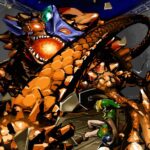
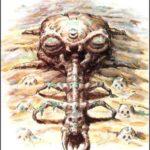
A glitch in the system
How about we throw some more love to the eminent chiptunes that paved the way? Music at its most pure and distilled form; even a string quartet has more dynamics and expressions to dress it all up. Here we have only the basic 4 elements of modern music: the ancestral melody from the times when humans learned to use their voices, the accompaniment that was added to Gregorian chants in order to make them more complex, the bass that supports the supremacy of the high pitches which the ear usually deems the main melody, and finally the percussion which went beyond its role of just reinforcing the orchestra to driving the rhythm after African influences pervaded popular music. That is it, there are no other orchestration possibilities on the NES other than playing with the duty cycle of the square waves in order to alter sightly the timbre or playing with the possibilities of noise and the minuscule memory of the sample channel which was usually employed for sound effects. Composers simply needed to create memorable tracks without hiding behind epic orchestras or cool synth tricks. And to make things more tricky, you usually need to make these short pieces loop infinitely and not get tiring. In 8-bit music the first square wave is usually in charge of the main tune, the second square can harmonize this melody or function as accompaniment harmony usually in the form of arpeggios or counterpoint, the triangle wave timbre is then put to work as the bass and noise a stand in for percussion.
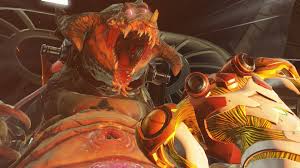
And if creating memorable pieces with just four channels was difficult, them more remarkable is creating a classic piece of music by pretty much using just two elements of music. The short piece for the Brinstar Depths known as Kraid’s Lair created by Hirokazu ‘hip’Tanaka has become a staple of the Metroid series. For all of his talking about not wanting a melodic soundtrack, the hypnotic piece sticks in your head and in a short time travels through various moods that enhance the experience of losing your way into the depths of the planet Zebes. We have here just a bass line and the melodic line that plays double duty as melody and arpeggio accompaniment. We find that there is a balance between heroic and eerie.
Musical Analysis
Even if the composition has three sections we can separate it further based on the mood set by harmonic profiles of the piece. We get a mysterious, hypnotic first section where the song travels through the minor progression i – iv – VII – i in E minor with the bass staying in the pedal note E.
Em – Am – D – Em
But then heroism kicks in in the Mario cadence like movement of the VI – VII.
C – D – C – D
Yet things get haunted in the tritone and chromatically descending laden Em – Gb7 – F – B progression. The Gb chord providing the tritone pitch against the Em since the Gb major is not a proper chord of the minor key but is usually deployed in place of the iidim. The evil sounding F comes courtesy of the Phrygian profiles who kindly lends us its second chord while the B is brought to us by the harmonic minor.
From there it is just pure confusion, with the melody playing fast, elegant scales while the harmony goes for a vamp between what can be interpreted as Em to C. After that much confusion the game simply crashes, the triangle wave at is lowest playing its role to perfection to generate that vibe that something went wrong, sounding like a glitch white the pulse wave melody sticks to the Dorian tetrachord arpeggio; this interesting choice of sound design has not being replicated on the new arrangements of this track throughout the series; only the NES triangle wave, with its peculiar timbre composed of the low end but also a whistle that is only enhanced further when it gains prominence in the lower pitches and the ear naturally brings it forward against a very low note, could produce such an effect, making this version the most faithful to the vision of the composer. This feat could only be pulled off in the 8-bit era where sounds and music share the same origin. Something is damaged down here.
The second square wave is only used for the technique of slight delaying the melody line and thus creating a fuller sound.
It is a piece that packs a lot in its short run, generating different atmospheres in a short span most people today identify with Metroid. It is also one of the few pieces of the period and the series in a 6/8 time signature.
What other chiptune classics would you like to see deconstructed?
Help to keep the rites going around here by supporting the shrine:

Media Files, requests and support for more interactive content

Thou shall donate since this is a cult and you are now a sheep

Help staying awake analyzing game tracks and writing posts or else everything will end up being written by A.I
- Inside The Score – The Legend of Zeda: A Link to the Past – End Credits / Staff Roll
 The land rests As the last few minutes of this extensive journey that has now come to an end fly by, the nostalgia and reflective mood kicks in. Because such a massive enterprise as a Zelda game or a Lord of the Rings movie require multiple endings to convey everything… Read More »Inside The Score – The Legend of Zeda: A Link to the Past – End Credits / Staff Roll
 - Inside The Score – The Legend of Zelda: A Link to the Past – Ending / Epilogue ~ Beautiful HyruleFinal of the fantasy The Triforce has been touched. A wish has been granted. For the occasion, the newly undeceased king of Hyrule has commissioned a march in honor of the legendary hero to the Hylian Sousa, who might as well be composer Nobuo Uematsu since this piece is very… Read More »Inside The Score – The Legend of Zelda: A Link to the Past – Ending / Epilogue ~ Beautiful Hyrule
- Inside The Score – The Legend of Zelda: A Link to the Past – Triforce Chamber / Power of the GodsTake your boots off your feet And thus the Triforce spoke to men. And it became present in history. And you better treasure and contemplate this moment seldom witnessed in the course of the series. The elusive opportunity to interact and touch the most important artifact. You are now in… Read More »Inside The Score – The Legend of Zelda: A Link to the Past – Triforce Chamber / Power of the Gods
- Inside The Score – The Legend of Zelda: A Link to the Past – Ganon Battle / Prince of DarknessProgressive evil En Garde! And you better be prepared since you are about to duel the iconic enemy of the series at perhaps his canonically most powerful incarnation. Right after having touched the sacred Triforce which allowed him to conquer all of the Golden Land and whose evil and darkness… Read More »Inside The Score – The Legend of Zelda: A Link to the Past – Ganon Battle / Prince of Darkness
- Inside The Score – The Legend of Zelda: A Link to the Past – Boss Battle / Anger of the GuardiansQuick mayhem Ah, the simpler times when boss battles where not a multi epic orchestral suite but just an ostinato more basic that even what became the music for standard battle encounters out there. We are a long way from each boss having his own personalized track. And this early… Read More »Inside The Score – The Legend of Zelda: A Link to the Past – Boss Battle / Anger of the Guardians
- Inside The Score – The Legend of Zelda: A Link to the Past – Dark World Dungeon / Dungeon of ShadowsMemento mori We are getting closer to Ganondorf (or at least the wizard Agahnim who ultimately fulfills the same human side of evil role in this game) and that means getting closer to the profiles and motifs of his own theme song (which naturally was the theme of Agahnim at… Read More »Inside The Score – The Legend of Zelda: A Link to the Past – Dark World Dungeon / Dungeon of Shadows