Feeling kind of blue
“The blues is a low-down, aching chill; if you ain’t never had ’em, honey, I hope you never will”
Following on the steps of the other mascot platformers from Rareware, Grant Kirkhope takes a page out of the David Wise playbook and musicalizes the demise of the bear and the bird with a standard blues ending in similar fashion to how it is used in the Donkey Kong Country series. The catch is that these blues endings are not fully resolved due to the melody ending on a dominant seventh of the tonic chord as opposed to the root; this implies that both the gameplay and the music are in need of continuity. They encourage that the show should go on, suggesting to the players that they can try again.
A pure blues is also the perfect contrary to the happy bluegrass that accompanies the successes of Banjo and Kazooie, both having roots in similar traditions but with usually different subject matter; this is specially the case when it comes to the ‘Collect Jiggy’ cue, with whom it shares its instrumentation and length. What characterizes the typical blues is of course the clash of the blues notes (usually the flat third, flat fifth and flat seventh) against the dominant 7th chords of the harmony, making a minor melody line sound against the backdrop of major chords—so while the melodies make heavy use of the flat versions of the notes, the harmony uses the natural counterparts. This gives it its characteristic swag factor by not sounding quite major or minor. Traditionally associated with bad times due to its lyrical content and culture to the point that its very name may have originated from the term “blue devils”, meaning melancholy and sadness, If you hear it in game, then you already know the heroes are feeling kind of blue, not a good state of affairs.
Musical Analysis
Structure: Section 1 / Section 2
Tempo: 135 (Section 1); 100 (Section 2)
Melodic and Harmonic Profiles: C Blues; C Harmonic minor
As stated, what gives the feeling that the show can still go on is that both composers decide to not end the melody on the root, which would feel complete and finalized, and instead opt to end the melody on the more ambiguous flat seventh note of the scale, giving the sensation of wanting to continue even though, technically, the harmony ends in the tonic chord (the one from Donkey Kong does the same in the key of G. The Banjo-Kazooie one even adds a trill with the ninth of the chord to augment the blues feeling).
Besides this, the ending is one of the typical turnarounds and stock endings bluesmen have played for ages, with the accompaniment banjo playing the typical chromatic walkdown that is endemic in blues tunes. It only uses the IV as a passing chord before returning to the I7. It still uses the bluegrass orchestration from previous cues—the instruments of the protagonists after all— with even the tuba playing akin to how a bass player would tackle the material; the tuba also participates in the chromatic walkdown, which we already know are appropriate for failures (moving up = good, moving down = bad). The tuba by itself plays what would be expected of a fully resolving melody, ending on the note C. The clarinet anchors the harmony on the pedal note C while the chromatic walk down is performed on the other notes; in this process it produces chords like a Cdim and Dm7 but this is not the important aspect of the intention. The intention is just the chromatic walkdown of the blues style. The drumming has of course a shuffle feel, another quality of the genre. Kazooie mourns this loss by playing mostly thirds on her instrument.
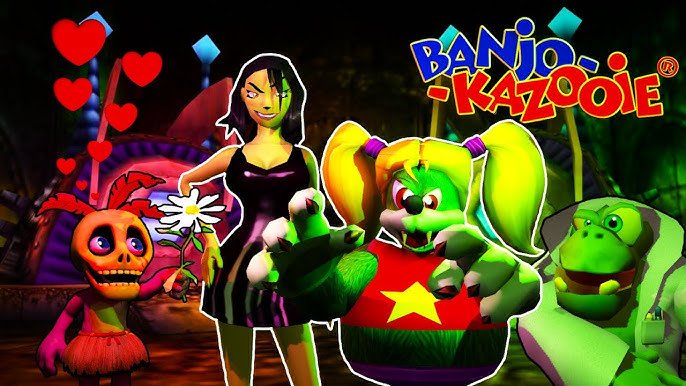
As for the Game Over cue, there is no hope left there, no more continues. It is not only a blues tune but a full-blown minor blues. So even the tonic is not the cool dominant 7th but a minor chord. There is no ambiguity anymore or a push for the player to continue. It is truly the bad ending of the game, fully resolving to the tonic with another chromatic walkdown stock ending from the blues. This is fitting since the game over from Banjo-Kazooie actually shows the consequences of failure in real time, punishing players by making them look at what they have done. The melody is, naturally, a bastardization of the main theme of the series—which was itself based on the melody for Click Clock Wood, the first composition made specifically for Banjo-Kazooie—just a matter of replacing the opening notes with their minor equivalents (Ab for A). In similar fashion to the ‘Lose life’ cue, the Chromatic walkdown is anchored by a pedal C note, an upper one this time. The instruments belong to the same bluegrass combo for cohesiveness’ sake.
The harmony mostly carried by the Banjo and the Kazoo(ie) is:
Cm – Fdim7 – G7 – Cm
Cm – G7 – Cm – D7 – G7 – Cm
With the consequences for failure already sorted out, it is imminent that the bear and the bird begin to quickly climb the lair towards more jovial events. One of those is actually opening doors to new sections of Grunty’s domains.

Help to keep the rites going around here by supporting the shrine:

Media Files, requests and support for more interactive content

Thou shall donate since this is a cult and you are now a sheep

Help staying awake analyzing game tracks and writing posts or else everything will end up being written by A.I
- Inside The Score – The Legend of Zeda: A Link to the Past – End Credits / Staff Roll
 The land rests As the last few minutes of this extensive journey that has now come to an end fly by, the nostalgia and reflective mood kicks in. Because such a massive enterprise as a Zelda game or a Lord of the Rings movie require multiple endings to convey everything… Read More »Inside The Score – The Legend of Zeda: A Link to the Past – End Credits / Staff Roll
 - Inside The Score – The Legend of Zelda: A Link to the Past – Ending / Epilogue ~ Beautiful HyruleFinal of the fantasy The Triforce has been touched. A wish has been granted. For the occasion, the newly undeceased king of Hyrule has commissioned a march in honor of the legendary hero to the Hylian Sousa, who might as well be composer Nobuo Uematsu since this piece is very… Read More »Inside The Score – The Legend of Zelda: A Link to the Past – Ending / Epilogue ~ Beautiful Hyrule
- Inside The Score – The Legend of Zelda: A Link to the Past – Triforce Chamber / Power of the GodsTake your boots off your feet And thus the Triforce spoke to men. And it became present in history. And you better treasure and contemplate this moment seldom witnessed in the course of the series. The elusive opportunity to interact and touch the most important artifact. You are now in… Read More »Inside The Score – The Legend of Zelda: A Link to the Past – Triforce Chamber / Power of the Gods
- Inside The Score – The Legend of Zelda: A Link to the Past – Ganon Battle / Prince of DarknessProgressive evil En Garde! And you better be prepared since you are about to duel the iconic enemy of the series at perhaps his canonically most powerful incarnation. Right after having touched the sacred Triforce which allowed him to conquer all of the Golden Land and whose evil and darkness… Read More »Inside The Score – The Legend of Zelda: A Link to the Past – Ganon Battle / Prince of Darkness
- Inside The Score – The Legend of Zelda: A Link to the Past – Boss Battle / Anger of the GuardiansQuick mayhem Ah, the simpler times when boss battles where not a multi epic orchestral suite but just an ostinato more basic that even what became the music for standard battle encounters out there. We are a long way from each boss having his own personalized track. And this early… Read More »Inside The Score – The Legend of Zelda: A Link to the Past – Boss Battle / Anger of the Guardians
- Inside The Score – The Legend of Zelda: A Link to the Past – Dark World Dungeon / Dungeon of ShadowsMemento mori We are getting closer to Ganondorf (or at least the wizard Agahnim who ultimately fulfills the same human side of evil role in this game) and that means getting closer to the profiles and motifs of his own theme song (which naturally was the theme of Agahnim at… Read More »Inside The Score – The Legend of Zelda: A Link to the Past – Dark World Dungeon / Dungeon of Shadows