Dawn of the real instruments (sorta)
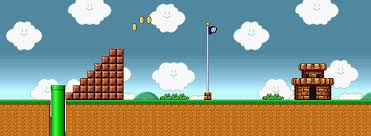
The main theme of the series is a piece that we have already covered. You can read the relevant articles here:
For details about the composer, the history of Mario and his theme song.
This one is a comparison between the original NES version made with just the five channels available and the arrangement made by Soyo Oka where the calypso track has fully blossomed.
Musical Analysis
We covered the original tack as part of the Super Smash Bros. series but still it was not a perfect recreation of the NES original. You see, the arranger, free from the 8-bit restrictions, sneakily cheated by using three pulse tones to form some of the chords of the chordal melody, the original had to drift the bass player to perform low chord voice duty from time to time, which accounts for the leaps in the triangle wave here; remember the bass sometimes is part of the chord and it is only in the B Section where it becomes a proper bass line; sometimes the bass line even goes higher than the square waves.
The composer of the original Mario Kart has some idiosyncrasies of her own. Beyond the obvious instrument upgrades and the fact that the intended steel pans can now play the melody, she makes the piece with even more Latin flavour, allowing you to dance as opposed to bounce like in the NES version. For starters, while the original only had a swing feel for the percussion, this one brings also the bass line into the groove. Other instruments perform some licks whenever they find space within the main melody.
Some slight modifications to the original melody also take place like the endings of the phrases in the A Section where one note is displaced by an eight to create even more syncopation than in the original. The steel pan melodies also add ornamentations of their own. The triangle wave is retained and just plays one lick during Section C reminiscent of the boss battle intro cue from Super Mario Bros. 3.
The most changed aspect is the new bass line which adds notes of its own and even more decorations than the humble triangle wave. The SNES version also has a higher tempo and a dramatic use of orchestral hits to mark transitions. What other differences can you perceive between these two tracks?

Help to keep the rites going around here by supporting the shrine:

Media Files, requests and support for more interactive content

Thou shall donate since this is a cult and you are now a sheep

Help staying awake analyzing game tracks and writing posts or else everything will end up being written by A.I
- Inside The Score – The Legend of Zeda: A Link to the Past – End Credits / Staff Roll
 The land rests As the last few minutes of this extensive journey that has now come to an end fly by, the nostalgia and reflective mood kicks in. Because such a massive enterprise as a Zelda game or a Lord of the Rings movie require multiple endings to convey everything… Read More »Inside The Score – The Legend of Zeda: A Link to the Past – End Credits / Staff Roll
 - Inside The Score – The Legend of Zelda: A Link to the Past – Ending / Epilogue ~ Beautiful HyruleFinal of the fantasy The Triforce has been touched. A wish has been granted. For the occasion, the newly undeceased king of Hyrule has commissioned a march in honor of the legendary hero to the Hylian Sousa, who might as well be composer Nobuo Uematsu since this piece is very… Read More »Inside The Score – The Legend of Zelda: A Link to the Past – Ending / Epilogue ~ Beautiful Hyrule
- Inside The Score – The Legend of Zelda: A Link to the Past – Triforce Chamber / Power of the GodsTake your boots off your feet And thus the Triforce spoke to men. And it became present in history. And you better treasure and contemplate this moment seldom witnessed in the course of the series. The elusive opportunity to interact and touch the most important artifact. You are now in… Read More »Inside The Score – The Legend of Zelda: A Link to the Past – Triforce Chamber / Power of the Gods
- Inside The Score – The Legend of Zelda: A Link to the Past – Ganon Battle / Prince of DarknessProgressive evil En Garde! And you better be prepared since you are about to duel the iconic enemy of the series at perhaps his canonically most powerful incarnation. Right after having touched the sacred Triforce which allowed him to conquer all of the Golden Land and whose evil and darkness… Read More »Inside The Score – The Legend of Zelda: A Link to the Past – Ganon Battle / Prince of Darkness
- Inside The Score – The Legend of Zelda: A Link to the Past – Boss Battle / Anger of the GuardiansQuick mayhem Ah, the simpler times when boss battles where not a multi epic orchestral suite but just an ostinato more basic that even what became the music for standard battle encounters out there. We are a long way from each boss having his own personalized track. And this early… Read More »Inside The Score – The Legend of Zelda: A Link to the Past – Boss Battle / Anger of the Guardians
- Inside The Score – The Legend of Zelda: A Link to the Past – Dark World Dungeon / Dungeon of ShadowsMemento mori We are getting closer to Ganondorf (or at least the wizard Agahnim who ultimately fulfills the same human side of evil role in this game) and that means getting closer to the profiles and motifs of his own theme song (which naturally was the theme of Agahnim at… Read More »Inside The Score – The Legend of Zelda: A Link to the Past – Dark World Dungeon / Dungeon of Shadows