Obscure influences
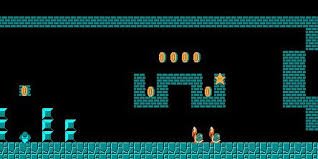
The environment where the Mario brothers thrive and where we first encountered them both having fights with turtles; the reason why we even have pipes in the first place. This is the underworld, which is meant to be a juxtaposition with the colorful world above in all senses including sound.
It is the polar opposite to the bouncy overworld. How does an ambient, almost Avant-Garde piece becomes one of the most iconic video game tracks? First by belonging to one of the most iconic games of all time (almost all cues and sound effects that came from here are a classic except arguably the Castle Theme which for some reason has not returned as much). And second by being catchy in its own right even though weird rhythms, lack of accompaniment and weird melodic choices abound. it has bee reused to death and in creative ways in almost every single subsequent Mario. It is the only Super Mario All-Stars cue reused as is for every game of the original run. The fact that each tune from the original is distinct is what makes its short soundtrack very memorable. With limited instrumentation Kondo managed to create four different soundscapes.
The track is all about differentiation within the soundtrack and, just like the Ground Theme took its first few notes from the song Sister Marian (Sister Mario) by Japanese band T-Square (wave) and then went its own way, the particular beginning of this cue was taken from the song “Let’s Not Talk About It” by the group Friendship, another jazz fusion favorite from Kondo.
From that track comes the iconic 3/4 sequence. Only the new version from Super Mario All-Stars restores its place as a cool bass line within a groove now played with slap Seinfield style, a more aggressive way of playing the bass guitar by attacking the strings in a percussive way.
Musical Analysis
The theme feels awkward, both dissonant in rhythm and melody and, since it is in the Underground, the focus is on low notes that reverberate in a cavern, as if the melody is just 6 note phrases that then rebound and echo. It feels claustrophobic. It is the antithesis to the main theme in all respects. The head melody is just that bass line that could fit a Dorian profile, still somewhat darker than the Ionian profile above and then it stumbles into dissonance as if Mario just fell down the rocks. The tail has lots of tritones and the makings of a diminished profile. It is a rather atonal piece of music, like the poor lighted spaces where this plays it is also difficult to find your way musically. Still, it is based around the C note like the rest of the score.
The rhythms at the end get progressively crazier. The uneven triplets are included.
The head melody is also just octaves and then doubled with the square wave.
Like within a cavern there is a lot of awkward silences, with more spaces between any notes and there are no chords. It feels hollow. It is the cousin to the Bowser’s Castle theme just like the Underwater is the cousing to the Overworld. A balanced soundtrack.
For Super Mario Bros. 3 Kondo added a percussion track that can mimic more movement of rocks and stuff. This arrangement is the one used as the basis for the SNES version by arranger Soyo Oka of Mario Kart fame which brings back this beat alongside a bassline with a delayed note that allows for a natural echo in this hollow cavern. There is no replacement for the square wave, ending up as a pure bass line.
Is it better with the beat or with the silence that the lack of percussion brings?

Help to keep the rites going around here by supporting the shrine:

Media Files, requests and support for more interactive content

Thou shall donate since this is a cult and you are now a sheep

Help staying awake analyzing game tracks and writing posts or else everything will end up being written by A.I
- Inside The Score – The Legend of Zeda: A Link to the Past – End Credits / Staff Roll
 The land rests As the last few minutes of this extensive journey that has now come to an end fly by, the nostalgia and reflective mood kicks in. Because such a massive enterprise as a Zelda game or a Lord of the Rings movie require multiple endings to convey everything… Read More »Inside The Score – The Legend of Zeda: A Link to the Past – End Credits / Staff Roll
 - Inside The Score – The Legend of Zelda: A Link to the Past – Ending / Epilogue ~ Beautiful HyruleFinal of the fantasy The Triforce has been touched. A wish has been granted. For the occasion, the newly undeceased king of Hyrule has commissioned a march in honor of the legendary hero to the Hylian Sousa, who might as well be composer Nobuo Uematsu since this piece is very… Read More »Inside The Score – The Legend of Zelda: A Link to the Past – Ending / Epilogue ~ Beautiful Hyrule
- Inside The Score – The Legend of Zelda: A Link to the Past – Triforce Chamber / Power of the GodsTake your boots off your feet And thus the Triforce spoke to men. And it became present in history. And you better treasure and contemplate this moment seldom witnessed in the course of the series. The elusive opportunity to interact and touch the most important artifact. You are now in… Read More »Inside The Score – The Legend of Zelda: A Link to the Past – Triforce Chamber / Power of the Gods
- Inside The Score – The Legend of Zelda: A Link to the Past – Ganon Battle / Prince of DarknessProgressive evil En Garde! And you better be prepared since you are about to duel the iconic enemy of the series at perhaps his canonically most powerful incarnation. Right after having touched the sacred Triforce which allowed him to conquer all of the Golden Land and whose evil and darkness… Read More »Inside The Score – The Legend of Zelda: A Link to the Past – Ganon Battle / Prince of Darkness
- Inside The Score – The Legend of Zelda: A Link to the Past – Boss Battle / Anger of the GuardiansQuick mayhem Ah, the simpler times when boss battles where not a multi epic orchestral suite but just an ostinato more basic that even what became the music for standard battle encounters out there. We are a long way from each boss having his own personalized track. And this early… Read More »Inside The Score – The Legend of Zelda: A Link to the Past – Boss Battle / Anger of the Guardians
- Inside The Score – The Legend of Zelda: A Link to the Past – Dark World Dungeon / Dungeon of ShadowsMemento mori We are getting closer to Ganondorf (or at least the wizard Agahnim who ultimately fulfills the same human side of evil role in this game) and that means getting closer to the profiles and motifs of his own theme song (which naturally was the theme of Agahnim at… Read More »Inside The Score – The Legend of Zelda: A Link to the Past – Dark World Dungeon / Dungeon of Shadows