Floating in three steps
A waltz that today is not only a famous video game track but a piece of music worth of being cultural heritage of a classical repertoire even if it has a diminutive length. Because this tune is as recognizable in pop culture as other famous waltzes like the Blue Danube waltz of Johann Strauss or Tchaikovsky’s “Waltz of the Flowers. But don’t think for a second this is just a classical style waltz since with the vaudeville like intro we can see that original composer Koji Kondo also has his share of influences from ragtime waltzes, making this a piece that could also fit with the saloon style soundtrack of Doki Doki Panic also known as Super Mario Bros. 2—hence why it is its Title Track— and sounds similar to those non-classical waltzes like Sun Showers by Harold Ivers:
It serves as the characteristic title theme from many Mario games.
Musical Analysis
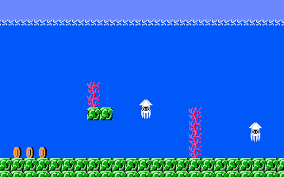
Showcasing than in Mario the movement is what needs to be captured as opposed to the environment, the calypso track which would have fitted a water theme is relegated to the overworld while this one was chosen as the Underwater BGM just because its 3/4 time signature follows the movements of not only the players pressing the buttons to put Mario floating but also the rest of the marine life from the Mushroom Kingdom (even the coins and the time score dance). It was so easy to relate the piece to the image that it came quickly to Kondo as the very first tune written for the Super Mario series; the game’s overworld in contrast was very difficult and took many iterations. This idea of synchronicity between enemies and music reached its natural conclusion on the New Super Mario Bros. games where enemies even stop on their tracks to dance to certain accents, bah-bah!
The chromatic harmony full of pivot notes is also more from that ragtime waltz tradition than the orchestral one. Like the rest of the soundtrack, it is based around C with some external notes that give the more jazzy flavour and it is the melodic counterpart of the overworld just like the castle and underground are the dissonant quota of this four main pieces soundtrack. Like the Ground Theme, it retains its intro as part of the loop, something that Mario pieces don’t do as often nowadays.
The revamped version for the SNES arranged y Soyo Oka is slower, losing slightly the connection with the movements of the creatures. Curiously the intro is now eliminated from the loop, making the piece even shorter. It also removes the percussion.
If you feel the 8-bit version sounds weird that is because it does not come with the volume dynamics Koji Kondo made for the original, in which the volume also moved in wavelike patterns. Here it is just the sequences.

Help to keep the rites going around here by supporting the shrine:

Media Files, requests and support for more interactive content

Thou shall donate since this is a cult and you are now a sheep

Help staying awake analyzing game tracks and writing posts or else everything will end up being written by A.I
- Inside The Score – The Legend of Zeda: A Link to the Past – End Credits / Staff Roll
 The land rests As the last few minutes of this extensive journey that has now come to an end fly by, the nostalgia and reflective mood kicks in. Because such a massive enterprise as a Zelda game or a Lord of the Rings movie require multiple endings to convey everything… Read More »Inside The Score – The Legend of Zeda: A Link to the Past – End Credits / Staff Roll
 - Inside The Score – The Legend of Zelda: A Link to the Past – Ending / Epilogue ~ Beautiful HyruleFinal of the fantasy The Triforce has been touched. A wish has been granted. For the occasion, the newly undeceased king of Hyrule has commissioned a march in honor of the legendary hero to the Hylian Sousa, who might as well be composer Nobuo Uematsu since this piece is very… Read More »Inside The Score – The Legend of Zelda: A Link to the Past – Ending / Epilogue ~ Beautiful Hyrule
- Inside The Score – The Legend of Zelda: A Link to the Past – Triforce Chamber / Power of the GodsTake your boots off your feet And thus the Triforce spoke to men. And it became present in history. And you better treasure and contemplate this moment seldom witnessed in the course of the series. The elusive opportunity to interact and touch the most important artifact. You are now in… Read More »Inside The Score – The Legend of Zelda: A Link to the Past – Triforce Chamber / Power of the Gods
- Inside The Score – The Legend of Zelda: A Link to the Past – Ganon Battle / Prince of DarknessProgressive evil En Garde! And you better be prepared since you are about to duel the iconic enemy of the series at perhaps his canonically most powerful incarnation. Right after having touched the sacred Triforce which allowed him to conquer all of the Golden Land and whose evil and darkness… Read More »Inside The Score – The Legend of Zelda: A Link to the Past – Ganon Battle / Prince of Darkness
- Inside The Score – The Legend of Zelda: A Link to the Past – Boss Battle / Anger of the GuardiansQuick mayhem Ah, the simpler times when boss battles where not a multi epic orchestral suite but just an ostinato more basic that even what became the music for standard battle encounters out there. We are a long way from each boss having his own personalized track. And this early… Read More »Inside The Score – The Legend of Zelda: A Link to the Past – Boss Battle / Anger of the Guardians
- Inside The Score – The Legend of Zelda: A Link to the Past – Dark World Dungeon / Dungeon of ShadowsMemento mori We are getting closer to Ganondorf (or at least the wizard Agahnim who ultimately fulfills the same human side of evil role in this game) and that means getting closer to the profiles and motifs of his own theme song (which naturally was the theme of Agahnim at… Read More »Inside The Score – The Legend of Zelda: A Link to the Past – Dark World Dungeon / Dungeon of Shadows