The melody man behind Nintendo’s sound sensibilities
Background
“One of Nintendo’s greatest strengths—or follies, depending on what stage of the deleterious decline/miraculous revival cycle the company finds itself in—is having the confidence to reach for intangible qualities of magic and the sublime in an earnest and uncynical fashion. They remain the lovable dad of the industry, corny and often eye-clawingly frustrating, but self-aware enough to make good on it. Kondo’s scores are the connective tissue in Nintendo’s enormous body of work. His particular gift was to not just create music matched to gameplay, but to grasp the way sound folds itself into our surroundings, creating associations forged and never forgotten”
Pitchfork’s Ocarina of Time Soundtrack Review
“When it comes to the essence of composing game music, the crucial elements haven’t changed at all. In that respect, I owe it to the NES that I’m able to write all kinds of music today”Koji Kondo
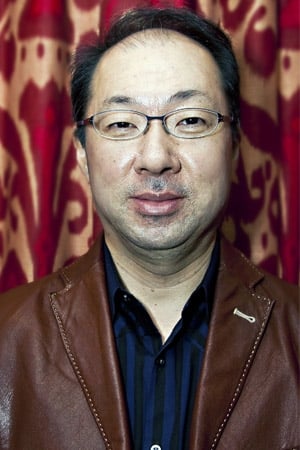
The second dimension that will influence the music sensibilities of a project is, of course, the composer himself; what he grew up listening to, his musical background and knowledge, and his approach to music. As we shall see, Koji Kondo was the perfect match for the company and its games; not only does he not need to hide behind the production values of huge orchestras to create memorable pieces, but he is also an excellent and passionate sound designer in his own right. He also doesn’t sound exclusively “Japanese”, his music has a broader range that follows Nintendo’s path of reaching global audiences.
The man surely could have by now made a fortune by going freelance but he has sticked with Nintendo as a salaried employee for forty-plus years owing to the Japanese work culture of being faithful to the job provider and grow as much as possible inside a company–he was still happily taking the subway to get to his office during the new millennium. That is because at Nintendo he has everything he needs to realize his musical ambitions: recording studio and equipment, plus huge budgets to develop audio and be at the forefront of game sound production. As the medium has evolved and the audio requires more personal he has been transitioning into the mentor role as the main director and supervisor of an army of composers at the company.
Kondo (born 1961 in Nagoya, Japan) started his music journey very early in life. When he was five years old he began keyboard lessons at the Yamaha school of music. But not any keyboard, mind you, it was on the electronic organ, an instrument that has two keyboards plus pedals for the bass notes; basically a mini orchestra for one person. He became very proficient at it and this undoubtedly helped him in seeing music in a certain way; good preparation for the NES that, similarly, had channels for melody, accompaniment and bass notes. Plus, as it is characteristic of all organs as the grandaddies of synthesizers, it allowed for customization of timbres in order to mimic various instruments.
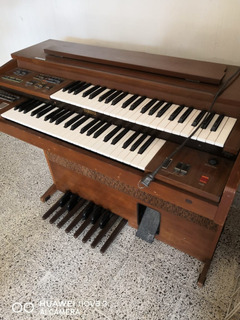
In high school his transition into “perfect candidate for video game music maker” was almost completed when his parents bought him the Yamaha CS-30, a powerhouse synthesizer that let the users create a huge variety of sounds with all of its knobs and filters; it revamped his interest in sound design.
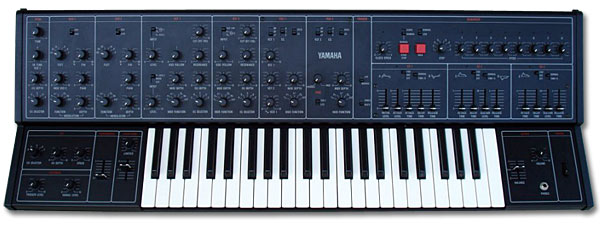
He then started cutting his teeth as most musicians do, by playing with other musicians in cover bands and school bands. What did they play? and did this influence the music he went on to make? You betcha!
Musical Influences
It all begins with space and time. All musicological analysis should start with the place of origin and the time period in which the composer lived. For Koji, it is the Japan of the 60s and his formative, impressionable years in the 70s. This means the dawn of the rock era, The Beatles are, needless to say, inescapable around the world and pretty much influenced everything after their inception. But for most people a music identity is forged in their early teens, and Koji lived those through the early 70s. Not only that, but most young musicians when they want someone to look up to, they tend to go first for groups and artists focused on their instruments of choice and the pyrotechnics that they get out of them; in the case of Koji, this was the electric organ or keyboards in general and the 70s had plenty of virtuosos to choose from.
The golden age of prog rock fits like a glove for a sophisticated musician and keyboard player like Kondo; now he would be able to stretch his musical abilities to the outlandish limits that prog acts intended, fusing classical aspirations and techniques into the new rock form. Being a keyboard player he wouldn’t gravitate to the guitar centric/blues influenced bands, which were much more popular in the West (think Pink Floyd), classically trained instrumental technique and novel sonic texture was where it’s at. Prog-rock was also arguably the first arena where synthesizers and electronic textures became indispensable parts of a rock ensemble.
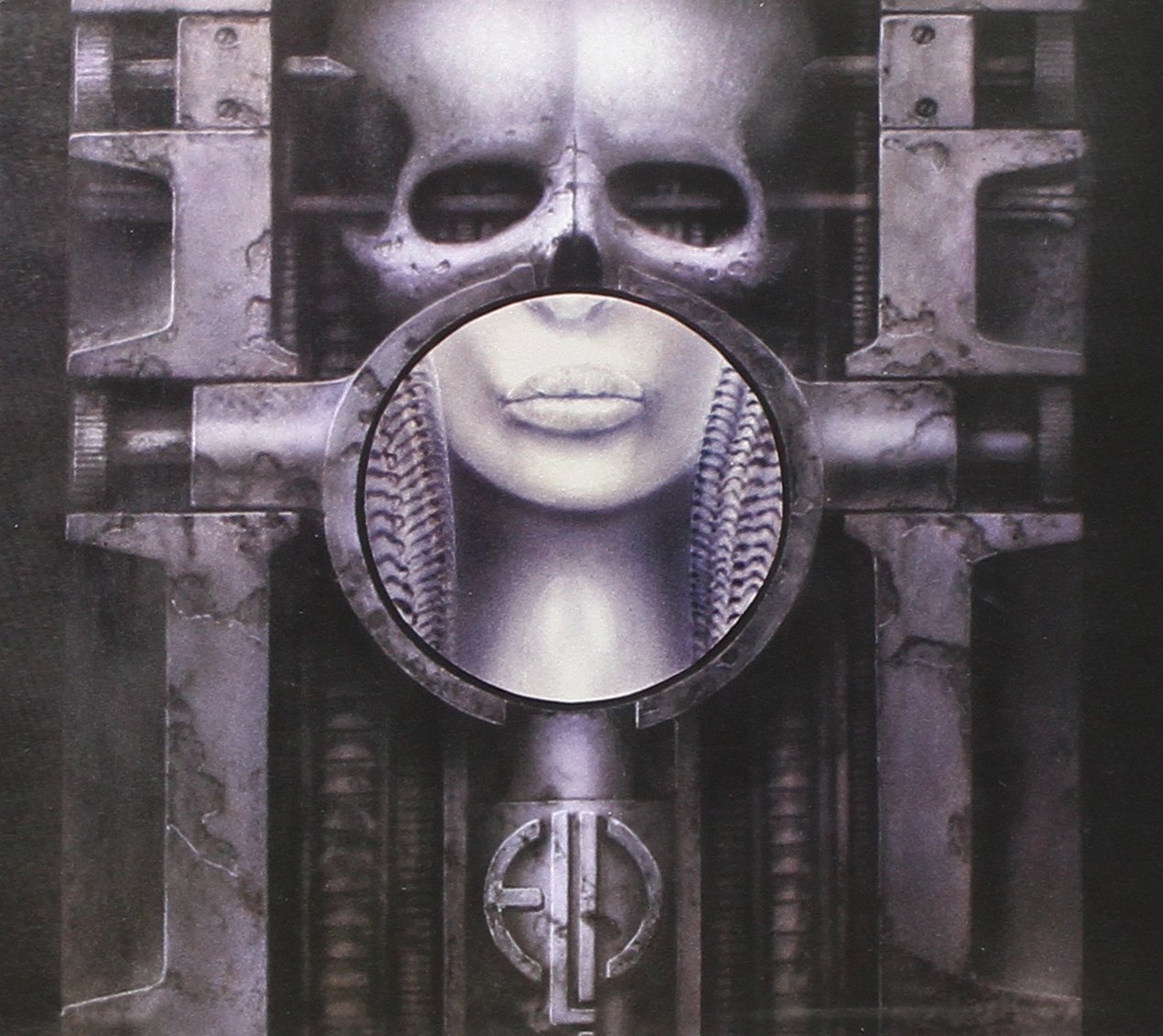
The quintessential keyboardist’s band are supergroup Emerson, Lake And Palmer, whose seminal album ‘Brain Salad Surgery‘ Kondo had on repeat growing up–listen to the song ‘Toccata’ if you want to hear 8-bit NES music ten years before the console arrival. Another band that dealt with mixing classical traditions with the standard rock format, and had a keyboardist to match those ambitions, was Deep Purple; which has a direct connection to the music of The Legend of Zelda:
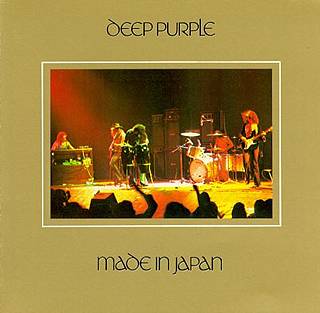
Kondo was so into it that he even played in a Deep Purple cover band. It has to be mentioned that this wasn’t Kondo being some kind of hipster listening to obscure, complicated bands from overseas. All of this music was a huge hit in Japan, which has a tendency to elevate to mainstream status acts that can only claim a ‘respected’ status in the West. A lot of famous Japanese media composers acknowledge the influence of prog rock and synths in their music–think Final Fantasy’ maestro Nobuo Uematsu and Hirokazu Tanaka of Mother’s fame– The bands were so popular with Japanese audiences that their iconic live albums were regularly filmed over there. One of those is Deep Purple’s ‘Made in Japan’ Recorded over three nights in August 1972.
Japanese musicians weren’t left out either in the innovations on electronic music happening during the 70s. The trailblazing force behind the emergence of the Japanese techno-pop sound of the late ’70s, Yellow Magic Orchestra, remains a seminal influence on contemporary electronic music. Hugely popular both at home and abroad, their pioneering use of synthesizers, sequencers and drum machines places them second only to Kraftwerk as innovators of today’s electronic culture. Keyboardist and band leader Ryuichi Sakamoto would go on to become a successful film composer worldwide, his music codified what many people identify as ‘that Japanese sound’ in J-pop, anime and video game music (extended jazzy harmony combined with pentatonic, nostalgic melodies).
Speaking of Jazzy harmonies, this is a genre that the Japanese fell in love with during the American occupation after World War II; also not a niche genre like in the West, Japan has the largest proportion of jazz fans in the world. If Koji Kondo was infatuated with prog rock during his high school years then it was jazz that caught his ear during college. Enrolled in the Art Planning Department of Osaka University of Arts to get a degree in art direction (he never pursued a proper music degree), Koji continued to improve his skills by playing in a cover band of jazz fusion; mainly covers of Japanese acts like casiopea and sax player Sadao Watanabe, which was a favorite of Koji due to his simple, memorable melodies embedded in sophisticated Latin-jazz rhythms.
Jazz and latin sensibilities would go on to dominate the music of the Super Mario, analogous to how orchestral romantic and prog rock would do the same for The Legend of Zelda: Mario=fun, cool; Zelda=sublime, heroic.
Hardware in Video Games
Koji Kondo is an interesting case study; the history of the man is basically the history of a medium itself, the medium of video game music. He was there at the beginning, he evolved alongside it and he’s still here now that video game soundtracks stand shoulder to shoulder, and even outclass the ambitions of film music.
in the early 80s Nintendo started to recruit specialized sound programmers and music composers for their booming video game business. Before this, music in games was mostly an afterthought that programmers implemented, with its main function being that of indicating information to players (did i die?!) and small fanfares; the programmer doing the music was typically the one with any semblance of musicality—Shigeru Miyamoto himself wrote the opening and ending pieces for the Donkey Kong arcade—and many games still relied on just arranging pieces already in the public domain; even Zelda was going to fall into this trend as we will see. After seeing a notice placed in a bulletin from the university, Kondo thought it the perfect job for him and applied for the company, easily getting the job without even needing to show music or previous work (ahh! the early days of job searching).
Kondo was the third person hired by Nintendo to create music and sound effects for its games, joining Hirokazu Tanaka and Yukio Kaneoka; however, he was the first at Nintendo to actually specialize in musical composition. The very first game for which he composed was for the Punch-Out!! (1984) cabinet arcade. After that, Kondo was assigned to compose music for the console’s subsequent games at Nintendo’s new development division entrusted to Shegeru Miyamoto: Nintendo Entertainment Analysis and Development (EAD) for the Famicom/NES:
Now, the arcades and the Famicom do not use real instruments, it is just a sound chip in which the sound programmer–normally the composer after learning how to program– inputs every single note and articulation for the limited channels (6 audio channels for the Famicom Disk System in Japan, 5 for the NES; usually used to represent the basic textures that a piece of music needs: melody, accompaniment, low end, percussion and harmonization). Music at its most pure and distilled form. There are no production values to hide behind and you better come up with a musically satisfying piece since the tune is going to repeat endlessly. Voice leading and counterpoint gain special prominence since each of your instruments is monophonic.
At 24 years of age, Koji Kondo would go on to compose his first major score… it would also be his most iconic. Super Mario Bros, released in 1985 for the Famicom/NES, would go on to define game music. Featuring an enthralling combination of rock-solid gameplay, ingeniously designed levels, and vibrant, colorful graphics, the sense of excitement, wonder and, most of all, enjoyment felt upon first playing this video game engulfed kids and adults around the world; everything about the game was obsession inducing, from the controls to the graphics to the sound effects and of course its soundtrack; at last, the goal of a video game was no longer scoring points but reaching its end—even though the score was still there as a remnant. Super Mario Bros, like any classic, has withstood the test of time, and the formulas established there continue to be fun and playable.
Super Mario Bros showed to the world Koji Kondo’s trademark knack for catchy yet sophisticated music that’ll have you humming along and possibly drive you insane as it stays in your head. The game’s melodies were created with the intention that short segments of music could be endlessly repeated during the same gameplay without causing boredom, but it also showed that he could match the atmosphere and “rhythms” of a game (syncopated, jumpy calypso for the overworld; sparse and low pitched for the underground caverns; floating feel, courtesy of a waltz time signature for the water level; and the foreboding, claustrophobically short piece for the castle). Whatever it was, it had to sound cool not just pleasant; no matter how colorful, wacky or childish the worlds get, the music always takes the plumber seriously because as Koji Kondo himself tells to any other composer that tackles Mario music: “if somewhere in your mind you have an image that Mario is cute, please get rid of it. Mario is cool”
That Zelda Sound
Just one year later Nintendo released The Legend of Zelda for the Famicom Disk System. Kondo’s work on The Legend of Zelda has also become highly recognized. He produced four main pieces of background music for the first installment of the series. He is usually given very few directions when it comes to the musical requests, ranging from generic to plain useless and cryptic, just like the tips characters in-game give our hero; some of the examples of requests in the work sheet from the directors of the first game, Shigeru Miyamoto and Takashi Tezuka include “short BGM” for the dungeons or “fanfare, sparkly” for the fairies.
Even though the direction is very limited in order to not constrain the imagination of the composer, Miyamoto is still very particular about the audio and music of his miniature gardens, requesting constantly multiple revisions to the work until it feels right. It happened for the main theme for Mario and with Zelda it happened with the recorder cue, where he almost drove Kondo crazy because the flute’s very short melody did not sound mystical or magical enough; it was too playful, it has to sound more ancient! The work paid off since that almost insignificant snippet ended up as the basis for the beautiful opening of the Ocarina of Time cinematic experience which we will explore in detail on the next post (that descending chromatic run of the recorder also ended up becoming a staple of fantasy and RPG games; some people even refer to it as the ‘Mitsuda lick’ since the composer famous for the Chrono Trigger soundtrack uses it a lot).
Other ingredients of the Zelda sound that we will find throughout the Ocarina of Time soundtrack and which we will explore in more detail in this series are, surprisingly, Spanish musical influences. Who says it all began with the flamenco track from Gerudo Valley? The roots go deeper. It all comes from Koji Kondo feeling that the Deep Purple track ‘April’ captured both the heroic, swashbuckling tone of this series and the epic nature of this fantasy world since it was also the most orchestral oriented song of the band. The track served as the basis for both the Overworld, which will go on to become the main theme of the series and also the theme of Link, and the gothic dungeon crawls, the two main cues of the original game. Shigeru Miyamoto was quite pleased with the overworld theme because it reminded him of the classic Spaghetti Western scores from Ennio Morricone that he grew up with and those used a lot of Spanish influenced music since it was there where the movies were usually filmed and they dealt with lots of Mexican conflicts at the border.
From the ‘April’ song we get what is known as the Andalusian Cadence in music which is a term adopted from flamenco music for a specific chord progression comprising four chords descending stepwise: i – VII – VI – V (this would be something like Cm – Bb – Ab – G) This chord progression will become the main motif of the entire Zelda series, but there is a catch; in order for it to become the ‘Zelda Cadence’ and sound more positive and heroic, and less like a cowboy of dubious motivations, the first chord needs to be major while the others remain the same: The Zelda Cadence I – bVII – bVI – V (this would be something like C – Bb – Ab – G). With this, another aspect of Koji Kondo’s composition style is opened since we will see how modal mixture is his thing and it is what helps his music sound more sophisticated and ambiguous by mixing chords from both major and minor scales in the same piece.
It is this same modal mixture, borrowing two chords from the parallel minor scale and using them with a major key, what will give us the second big ingredient of Zelda music, that is, the famous Mario Cadence. With the name you can already know this one is heavily used in the Super Mario series but make no mistake, this is pretty much the Kondo Cadence since he also uses it a lot in The Legend of Zelda, seeing as how it is pretty much the Zelda Cadence in reverse, just ascending to the I chord instead of descending from it. Its use in Super Mario and other series is meant to convey a sense of triumph and accomplishment seeing as how it was used for the ‘Course Clear’ cue. The formula is bVI – bVII – I (for example Ab – Bb – C). We will explore this further in the series when we go deep into the music.
After having the main gameplay tracks Kondo thought the classical piece Bolero from Maurice Ravel would fit perfectly the rhythm of the opening crawl and the Spanish feel of the main theme. The steady rhythm of the marching snare characteristic of the Spanish bolero may also have inspired the percussion of the Overworld theme. However, it was not meant to be. Just mere months before the game release the developers discovered that the piece was not actually in the public domain as they originally thought since legally the composer has to be dead for over 50 years for that to happen; it had only been 47 years and 11 months after Ravel’s death. So Kondo had to pull an all-nighter at the last minute and rearrange the Overworld theme for use as the Title Theme. There is a misconception going around saying the the main theme of the Zelda series was written in a single night but as you can see the Overworld was already written during development. The Title Theme rearrangement was the cue written in a single night.
The final ingredient which is particular to The Legend of Zelda: Ocarina of Time is the titular ocarina and the notes that it can actually play. We will talk more about it in the next entry
How a Midas Touch is Developed
Koji Kondo would continue to be the main composer for subsequent installments in the Mario and Zelda franchises (except Zelda II) while also establishing the musical identity of franchises like Star Fox. During the SNES era he would gain access to a more powerful sound ship (8 audio channels, each one into which you could input pre recorded sounds from your instrument libraries; although the heavy compression still made sure that the samples sounded like the cheap synthesizer sound we love).
All these limitations surely impacted the approach Koji Kondo took to music making. For instance, he had to obligatorily develop a very strong sense of melody, since sonics by themselves would not amaze anybody; he also acquired a rich harmonic language to color emotions, because again, he did not have access to the timbre associations that film composers enjoy. Thus, the definitive Koji Kondo sound is one in which melody is king; his melodies are very sophisticated (difficult to pinpoint a clear major/minor sound), not as overtly Japanese as his fellow composers colleagues down at Square Enix, nor as “Hollywood” as modern iterations of Nintendo games, just an almost unsurpassed gift to craft lovely haunting melodies with an almost mediterranean feel that seem to always find the perfect balance between happy and sad; the sound of melancholic nostalgia. Even his chord progressions are melody based since they seem to flourish from voice leading than any music theory chord chart
A knack for this type of melodic writing where they appear almost fully formed and are immediately memorable is a surprisingly isolated talent, and doesn’t have much to do with a broader musical gift for composition; From history we could say that Mozart certainly had it, Beethoven not so much. Irving Berlin also could barely play the piano and when he did it was only in a single key (F-sharp major: all the black keys), yet he wrote hundreds of haunting tunes; Paul Mccartney of The Beatles has it, with his companion Lennon having it to a lesser degree; Alan Menken has it covered for Disney; and other talented composers who can do anything musically instrument wise, conductors or arrangers, write scarcely a single memorable melody, although you can still write many songs with other stronger elements.
Here are some obscure examples of what I mean by that happy/sad sound characteristic of Kondo and a a lot of other Japanese media music; it savages the music from sounding overtly childish:
With the dawn of the Nintendo 64 era we are now close to the game in question: Ocarina of Time–Sorry for all the info dump, but this blog has been working for me as a research journal for music, plus it is always better to contextualize.
On the Nintendo 64 the chains start to break and video game music moves one step closer to incorporate the sound palette of Hollywood. Koji himself has claimed that he paused to think where he wanted to take game music: follow the path of real world music traditions or continue with a particular ‘game sound’. It turns out the answer he came up with was a little bit of both, the Nintendo 64 games certainly follow the orchestral sensibility of Hollywood and other music genres, but they spice it up with unorthodox instrument combinations and weird electronic samples.
The N64 didn’t have a dedicated sound chip, it just kind of shared the resources with the main CPU –theoretically, you could have infinite tracks with the highest sound quality, but then you wouldn’t have any resources left for the actual game!– The developer and the composer had to discuss beforehand the amount of memory allocated for audio (this is the reason for not hearing any music when you play 4-player multiplayer in Mario Kart 64). After that, the composer chose from his personal audio library the instruments he or she wanted to use on the Soundtrack (They were taken from commercial available CDs and hardware synths), then the composition process started in full on a computer equipped with the standard industry software that all other media composers were using at the time. At the end, the final MIDI sequenced files were turned to a programmer for implementation in the game. This same sequenced files straight from the game and with their original samples is what we will study on here.
For this generation of consoles sound effects start to be considered a separate specialty; they were usually exported fully as an audio file, unlike music which resides in separate sequences inside the cartridge (that’s great news because thanks to that we can get an inside look into the score!)
And looking inside the score is what we are going to do here in the future. Studying video game music is studying the biggest Japanese musical export and Koji Kondo may even have a claim to be one of the most heard composers just based on minutes people spend with a track of his as background and the fact the games are popular in both the West and East. Now that we are letting the context information behind, it’s time to dive into the music and see if we can find universal truths about the art of music making.

Help to keep the rites going around here by supporting the shrine:

Media Files, requests and support for more interactive content

Thou shall donate since this is a cult and you are now a sheep

Help staying awake analyzing game tracks and writing posts or else everything will end up being written by A.I
Let’s say good bye with a staff roll and a Japanese influenced track from Koji Kondo. Enjoy!
- Inside The Score – The Legend of Zeda: A Link to the Past – End Credits / Staff Roll
 The land rests As the last few minutes of this extensive journey that has now come to an end fly by, the nostalgia and reflective mood kicks in. Because such a massive enterprise as a Zelda game or a Lord of the Rings movie require multiple endings to convey everything that the adventure represented. You… Read More »Inside The Score – The Legend of Zeda: A Link to the Past – End Credits / Staff Roll
 - Inside The Score – The Legend of Zelda: A Link to the Past – Ending / Epilogue ~ Beautiful HyruleFinal of the fantasy The Triforce has been touched. A wish has been granted. For the occasion, the newly undeceased king of Hyrule has commissioned a march in honor of the legendary hero to the Hylian Sousa, who might as well be composer Nobuo Uematsu since this piece is very similar to the main theme… Read More »Inside The Score – The Legend of Zelda: A Link to the Past – Ending / Epilogue ~ Beautiful Hyrule
- Inside The Score – The Legend of Zelda: A Link to the Past – Triforce Chamber / Power of the GodsTake your boots off your feet And thus the Triforce spoke to men. And it became present in history. And you better treasure and contemplate this moment seldom witnessed in the course of the series. The elusive opportunity to interact and touch the most important artifact. You are now in the presence of something truly… Read More »Inside The Score – The Legend of Zelda: A Link to the Past – Triforce Chamber / Power of the Gods
- Inside The Score – The Legend of Zelda: A Link to the Past – Ganon Battle / Prince of DarknessProgressive evil En Garde! And you better be prepared since you are about to duel the iconic enemy of the series at perhaps his canonically most powerful incarnation. Right after having touched the sacred Triforce which allowed him to conquer all of the Golden Land and whose evil and darkness are pouring out into Hyrule.… Read More »Inside The Score – The Legend of Zelda: A Link to the Past – Ganon Battle / Prince of Darkness
- Inside The Score – The Legend of Zelda: A Link to the Past – Boss Battle / Anger of the GuardiansQuick mayhem Ah, the simpler times when boss battles where not a multi epic orchestral suite but just an ostinato more basic that even what became the music for standard battle encounters out there. We are a long way from each boss having his own personalized track. And this early boss battle cue is one… Read More »Inside The Score – The Legend of Zelda: A Link to the Past – Boss Battle / Anger of the Guardians
- Inside The Score – The Legend of Zelda: A Link to the Past – Dark World Dungeon / Dungeon of ShadowsMemento mori We are getting closer to Ganondorf (or at least the wizard Agahnim who ultimately fulfills the same human side of evil role in this game) and that means getting closer to the profiles and motifs of his own theme song (which naturally was the theme of Agahnim at this point) on this dungeon… Read More »Inside The Score – The Legend of Zelda: A Link to the Past – Dark World Dungeon / Dungeon of Shadows