Ancient allusions reflecting the Goddess of the Sand
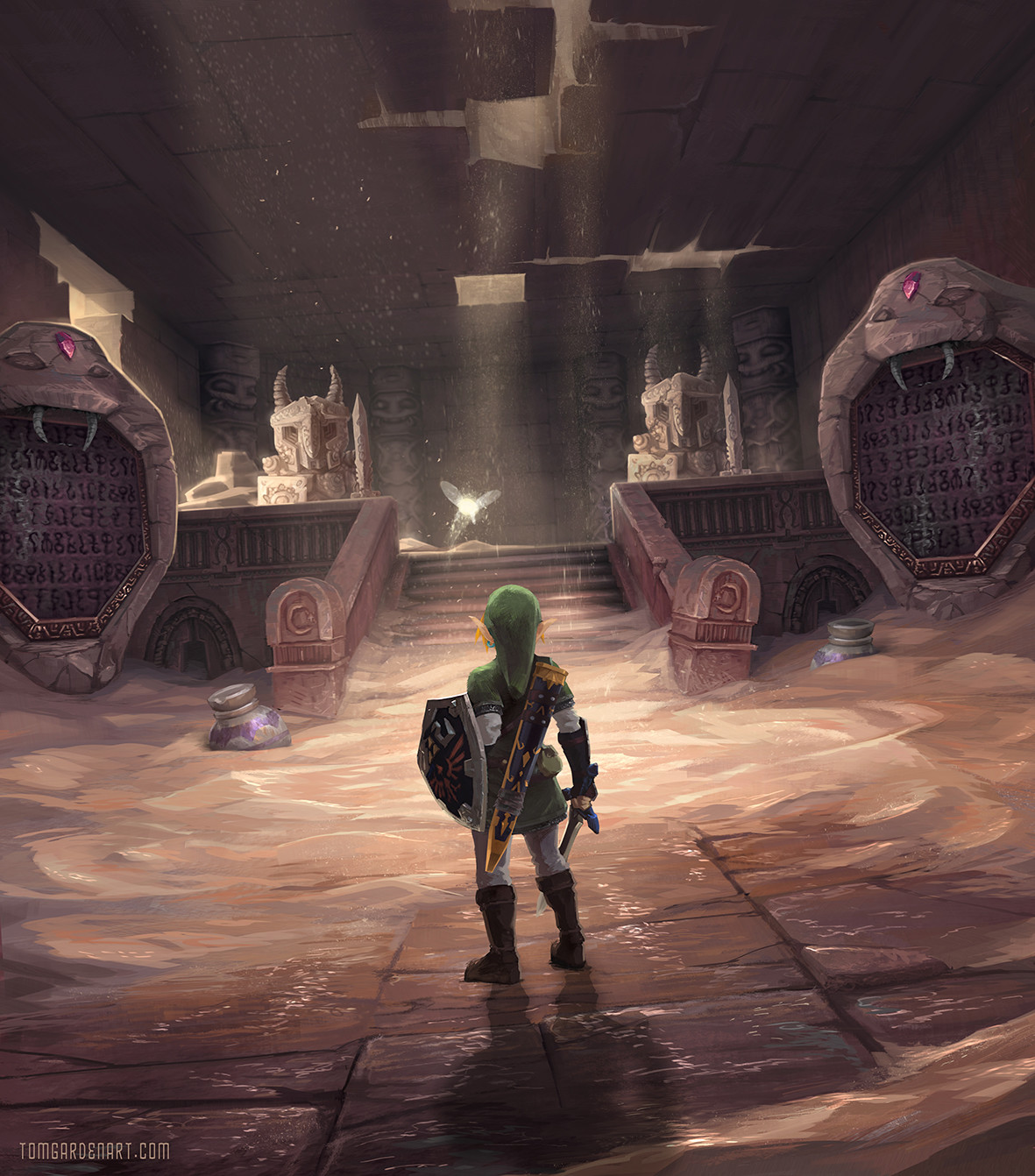
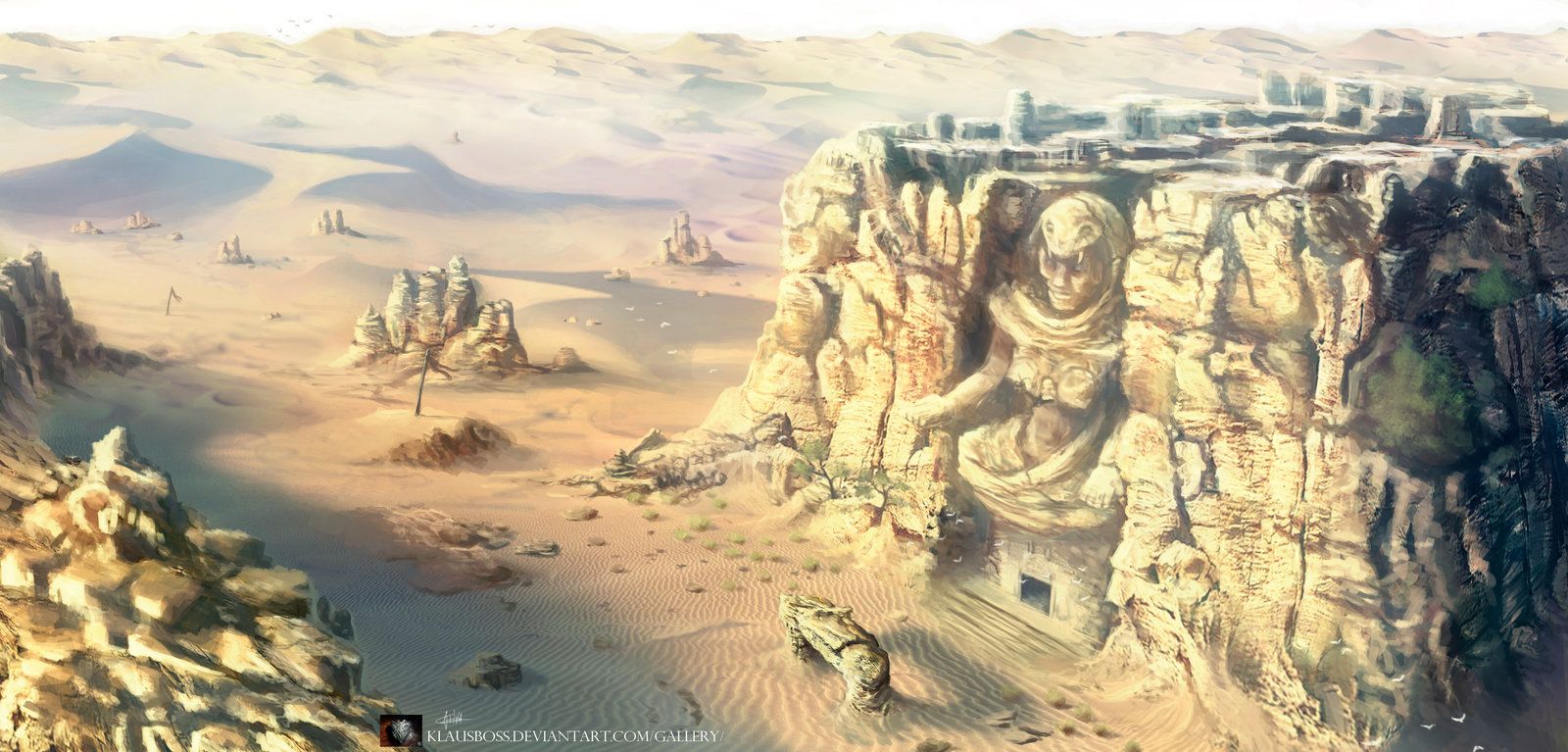
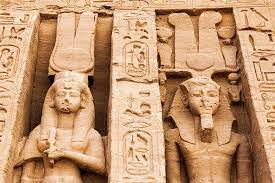
In the west, at the farthest corner of the map, lies the ancient Spirit Temple. Located in the Desert Colossus, the enormous statue of the goddess of the sand marks the entrance to this sacred place for the Gerudo. It is the longest distance Link has to travel in the game, being the polar opposite to the Kokiri Forest where it all started; not only in distance, but also in landmarks and concept. The game makes it clear that this land is so alien by pointing that the people here even have their own religion and their own language; Link is literally in another continent.
The Spirit Temple is also where Ganondorf, the main antagonist of the game, comes from, being raised by two evil witches who have managed to live hundreds of years. Ganon is not a mindless character anymore; he actually has a past and a culture he belongs to in this game. Link is about to get a little more understanding of it.
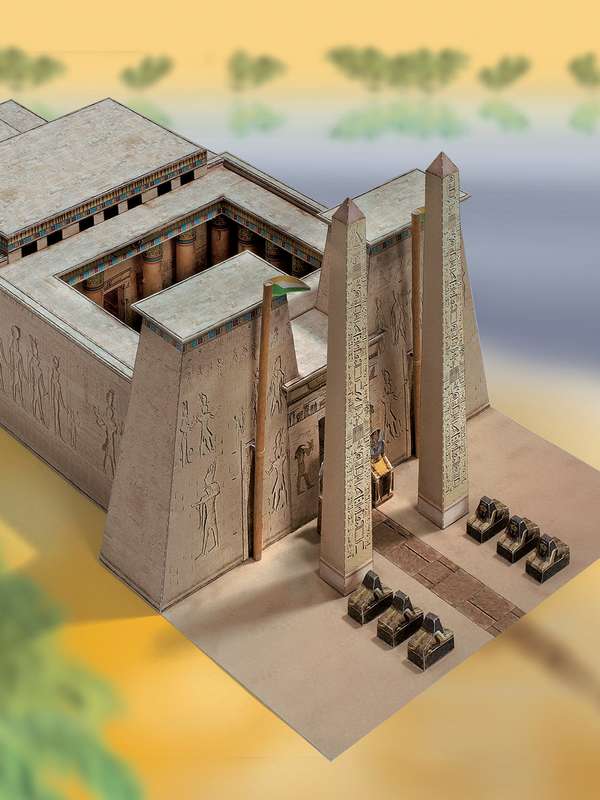
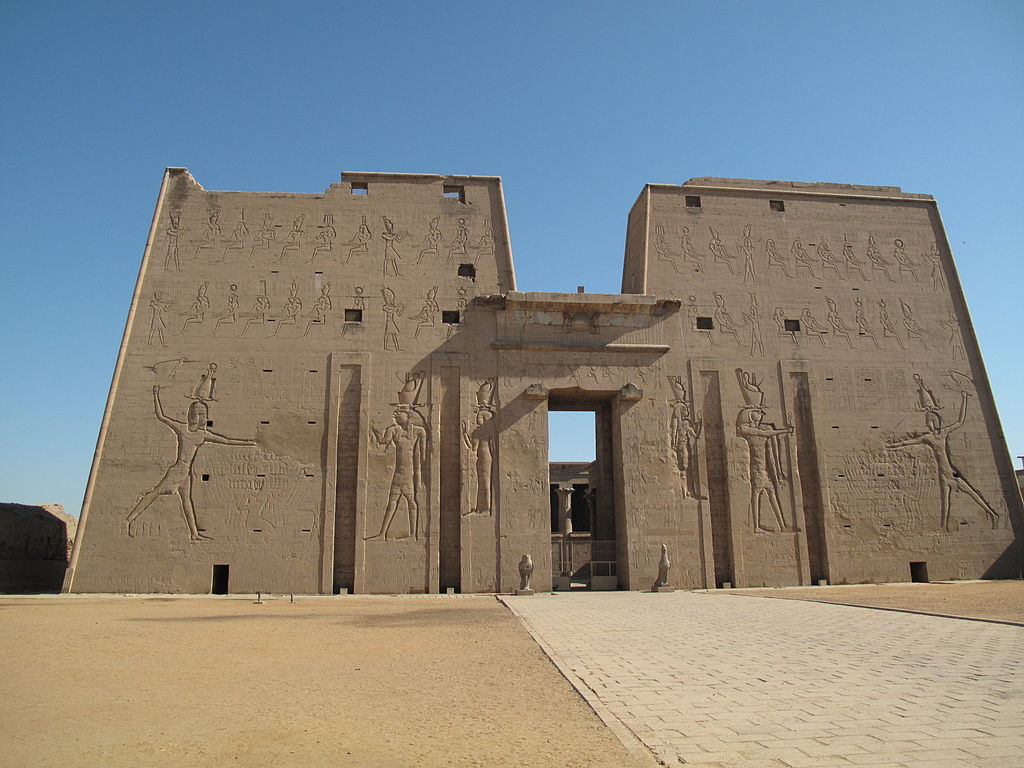
Basing a desert level around Egyptian imagery will not score originality points with anyone; however, Nintendo manages to avoid usual trope suspects like a giant pyramid as the main temple, or fill the place with sphinx-like landmarks and camels (making the ReDeads into mummies was too cool of a concept to pass though). Instead, this desert level constantly has a refreshing approach, from the Gerudo Valley right up until its dungeon. It does it by balancing multiple real world influences and fusing them into a new brand DNA for these people — at the very least, Nintendo, unlike the popular depictions of Egypt still frozen in ancient times, didn’t overlook that the country has been Islamized for over 1200 years, so combining it with Arab influences is fitting for the race — The Shadow Temple shows us that Hyrule has a dark side, our quest here will show us the opposite duality of the Gerudo people, the people of Ganondorf, and Link will shed some light on this culture, literally. Only after getting his hands on the lens of truth is Link able to reach the origins of the Gerudo tribe.
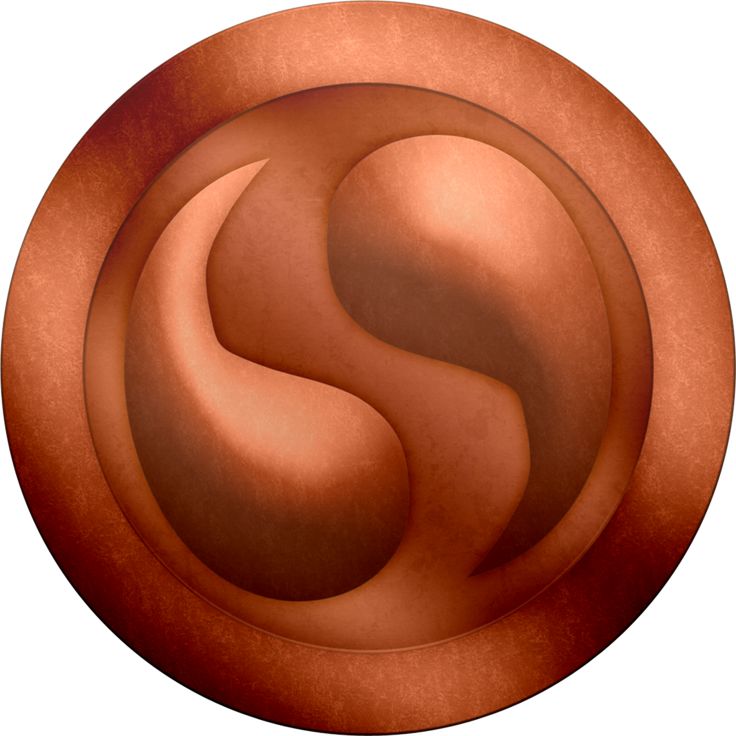
Duality is the prevalent theme of the Spirit Temple. It is a dungeon that will challenge the abilities of both child Link and adult Link; they will work together in each half of the temple to thwart the plans of the evil twins resident to the location, who each have the power of elemental opposites. This theme of duality is personified in the figure of Nabooru, a leadership figure for the Gerudo just like Ganondorf, who although still a thief, it’s rebelling against her king and his practices; she is the sage with whom we interact the most through the dungeon and the confirmation that the fate of the sages is to die. Nabooru represents the good within the Gerudo. It’s also the Spirit Temple, the only dungeon with two special items, one of them a mirror, which the temple is full of, another symbol of duality alongside the redesigned Gerudo symbol; the other one, the Silver Gauntlets, are a sound allegory for Link strengthening his spirit before growing up—not to mention dual goddess statues (let’s not forget the duality of being hit by two pots each time you enter).

Deserts are an appropriate place to reflect about the duality of the world; these are death lands where life manages to live after all, where the days bring suffocating heat and the nights are shivering cold. In ancient Egyptian religion, there was an implicit dualism in the contrast between the god Seth and the god Osiris. Seth, a violent, aggressive, “foreign,” sterile god, connected with disorder, the desert, and loneliness, was opposed to Osiris, the god of fertility and life, active in the waters of the Nile.
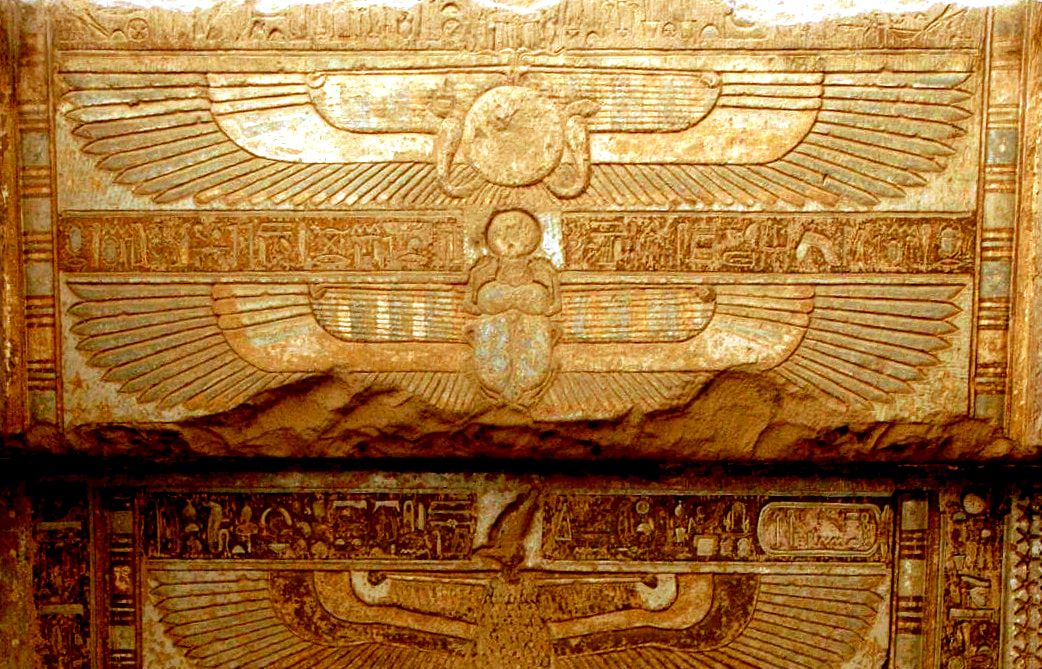
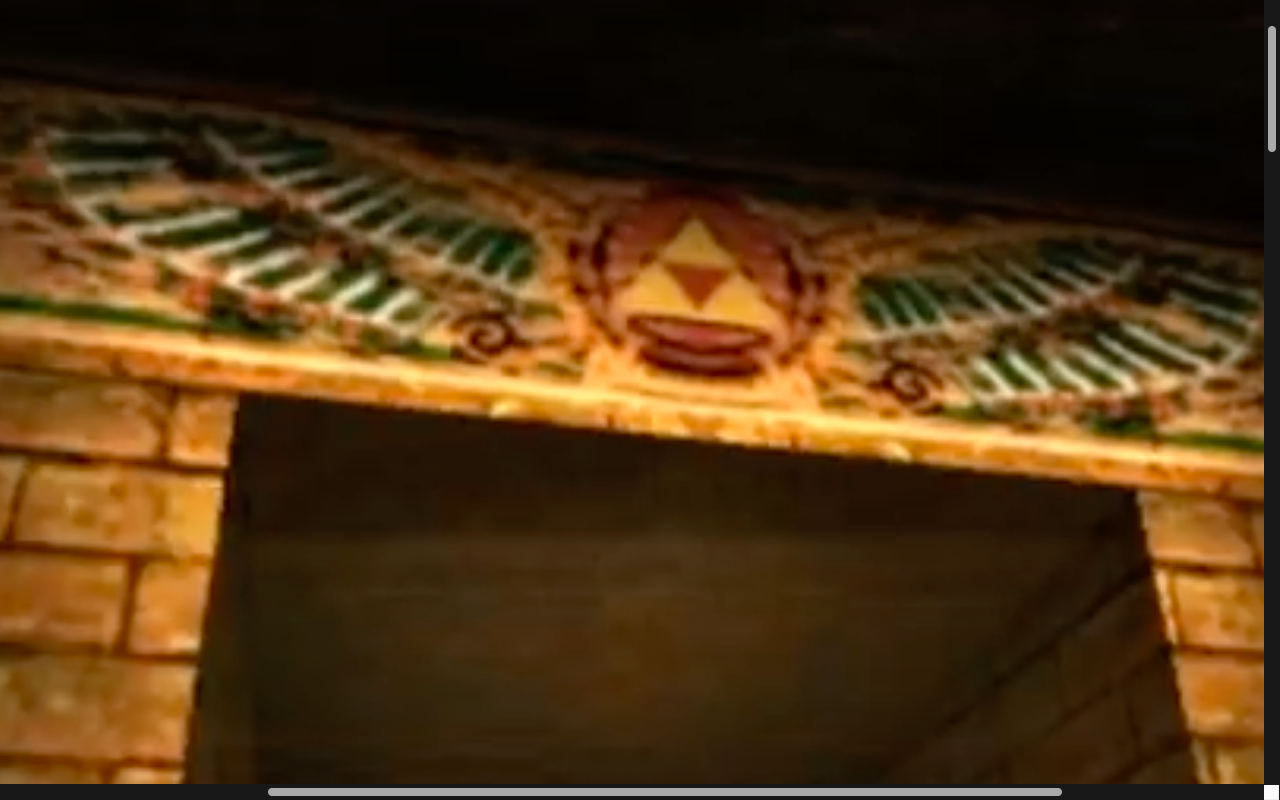
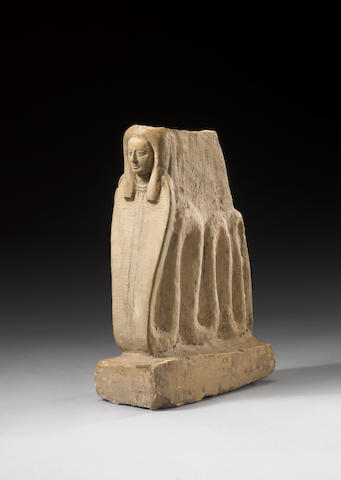
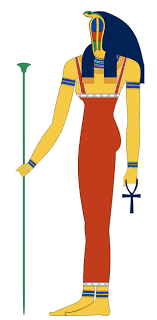
Egyptian imagery is found within the halls of the temple: adoration to the sun; jackal-like enemies called Anubis; the winged symbol which, in Egyptian architecture, was emblematic of the sun god, Ra; and cobra imagery. The goddess of the sand with the serpent curled around her body is most likely a reference to the cobra-headed goddess Meretseger from Egyptian mythology, in charge with guarding and protecting the vast Theban Necropolis, fitting for a temple that receives you with a requiem after a ghost guides you. Is this desert setting and serpentine imagery where Koji Kondo takes inspiration to craft an elaborate cue; a hypnotic melody that strives to charm a snake in the desert, but not any street cobra mind you. this ancient music wants to charm the mythical serpents that the Gerudo people worship.
Music Analysis
Structure: Section 0 / Section 1 / Section 2
Time Signature: 4/4 (3/4 Section 0)
Tempo: 73
Melodic and Harmonic Profiles: G Phrygian
History, wonder and mystery are three code words that could fit the description of both the music of the Spirit Temple and our conception of Ancient Egypt; even just the intro to the piece suffices to have already captured this three ideas in the span of only two bars. The weight of the temple falls in full force with one of the most memorable beginnings to a piece on the soundtrack. The long and elaborate intro has the highest instrument count of the entire cue; after this, only three instrument make the rest of the piece.
The ethereal choirs, far removed from their original, innocent appearance on the Zora’s Domain cue, are combined here with string pads, gong and chimes to complete the staggering beginning. The harmony here consists of perfect fifths and perfect fourths played by the choir and the string pad respectively; this along with the gong makes the piece feel heavy and ancient. They start a conversation where the ethereal choirs speak and the string pads give a mirror response; the ethereal choir ascends a tone, the ethereal strings descends a tone; the ethereal choirs begins the phrase ascending a minor third, the ethereal strings end theirs descending it; the ethereal choir are perfect fifths, the ethereal strings are perfect fourths. True opposites playing with the dual theme of the temple. The gong and the chimes are also opposites in both their panning and frequency spectrum.
But section 0 is not done yet. After a silence that extends enough for the gravitas of this place to sink in, the charming of the sacred snake begins completely alone, the others instruments slowly creeping in. Koji Kondo uses the sample of an old double reed instrument played in a middle register most likely to emulate either one of the ancient reed wind instruments popular throughout the Middle East; instruments like the Egyptian arghul and the Arabic mizmar, or perhaps he wants to bring to mind the pungi instrument used by snake charmers throughout India and the Middle East. An inseparable part of any mystical Asia setting, the snake charmer is a figure that appears to hypnotize a cobra with their exotic sounding tune; the practice as it exists today likely arose in India, where it’s almost extinct now, but snake-charmer performances still happen in other Asian and North African nations such as Pakistan, Morocco, Tunisia, and specially Egypt, and consequently form part of the collective imaginary view we have of the Middle East. Whatever the case, Koji Kondo manages to nail the atmosphere and styles found in the region by the use of particular notes from common Arabic scales, note articulation flourishes and using pitch bending to convincingly emulate the effect of microtonality—the use of intervals smaller than a semitone— that many Middle Eastern instruments are characterized for.
Original sample:
After the percussion enters—played by congas as a stand in for one of the multiple drums from these regions like the goblet drums— the song stabilizes on a steady 4/4 groove, where the instruments start to improvise on top of a string pad bed. This harmonic background is exclusively played by fifth chords, a semitone apart, to convey the antiquity of this place.
Since this is two dungeons in one, the cue is one of the longest at more than two and a half minutes, in which one of those minutes is dedicated to just an intro, never to be repeated when it loops—after all, this intro will be heard at the very least seven times in a normal play-through, so Koji made sure to make it count.
Since the music of Ancient Egypt, like that of the Greeks, is basically lost, composers have had to be recursive, ending up with a mix of medieval Arabic music for the exotic factor and modern classical music signaling the majestic; modern Egypt is Arab after all. Using the sound of strings to represent an ancient and mystic tradition in desert settings is mostly due to the sweeping influential score to the 1962 film Lawrence of Arabia by Maurice Jarre. This string-dreached score full of sensual scales has codified the majestic string sound that real life pharaohs never got to hear.
On the main sections of the track, we see that the shawm also has its own mirror self: another one playing behind it; the same notes played with a delay longer than usual, so it really feels like the instrument is duplicated. For added Middle Eastern flavor, the improvisation sometimes adds to this Phrygian scale the flattened fourth and the flattened fifth to the melody.
The cue adds additional strings in the middle that smoothly take over the melodic role of the piece, without the shawm needing to stop; almost as if a separate entity just sprouted out of the harmony strings.
The Phrygian mode, its accidentals present here, and the performance style all seem to refer to Arabic traditions. In Arabic music the system of melodic modes is called maqam—the system is conceptualized different than in Western music tradition but the Phrygian mode would be analogous to the Maqam Kurd— An essential factor in performance is that each maqam describes the “tonal-spatial factor” or set of musical notes and the relationships between them, including traditional patterns and development of melody, while the “rhythmic-temporal component” is “subjected to no definite organization. Koji Kondo certainly strives to emulate this tradition combined with the grandeur and mystery of Lawrence of Arabia.
The boss of the Spirit Temple are non other than the surrogate mothers of the Gerudo king Ganondorf. Unlike the previous dungeons, the bosses of this location are more elaborate, with extensive dialogue lines and various encounters with the main character before the battle. Such a divergent approach called for Kondo to create a brand new musical cue to represent this pair of “lovable” witches; the only dungeon bosses to receive the honor.
Like Link himself, Koji Kondo has traversed the entire world to fulfill his quest; from South America to Asia, from the United States to India, from Europe to the Middle East, from Africa to China; or, like the hero of time, from the past and the future. Koji builds upon these influences with his melodic gift and conceptual awareness to create standout themes that contain the cultures flavors imbedded but could have only come from an original fantasy work.
Samples used:
- Ethereal Strings: JX Lo Strings Right; from the Digidesign SampleCell Factory Library or basically any emulation of the iconic Roland D-50 string pad
- Ethereal Choirs: CD 2 – PAD:SYNTH-PADS 2 – PAD:Synth-Pads 5 – PAD:SYN-PAD 6 from the sample library Best Service Gigapack
- Wind Chime: CD 1 – PER:Percussion – PER:Bells – PER:Bells from the library Best Service Gigapack

Help to keep the rites going around here by supporting the shrine:

Media Files, requests and support for more interactive content

Thou shall donate since this is a cult and you are now a sheep

Help staying awake analyzing game tracks and writing posts or else everything will end up being written by A.I
- Inside The Score – The Legend of Zeda: A Link to the Past – End Credits / Staff Roll
 The land rests As the last few minutes of this extensive journey that has now come to an end fly by, the nostalgia and reflective mood kicks in. Because such a massive enterprise as a Zelda game or a Lord of the Rings movie require multiple endings to convey everything… Read More »Inside The Score – The Legend of Zeda: A Link to the Past – End Credits / Staff Roll
 - Inside The Score – The Legend of Zelda: A Link to the Past – Ending / Epilogue ~ Beautiful HyruleFinal of the fantasy The Triforce has been touched. A wish has been granted. For the occasion, the newly undeceased king of Hyrule has commissioned a march in honor of the legendary hero to the Hylian Sousa, who might as well be composer Nobuo Uematsu since this piece is very… Read More »Inside The Score – The Legend of Zelda: A Link to the Past – Ending / Epilogue ~ Beautiful Hyrule
- Inside The Score – The Legend of Zelda: A Link to the Past – Triforce Chamber / Power of the GodsTake your boots off your feet And thus the Triforce spoke to men. And it became present in history. And you better treasure and contemplate this moment seldom witnessed in the course of the series. The elusive opportunity to interact and touch the most important artifact. You are now in… Read More »Inside The Score – The Legend of Zelda: A Link to the Past – Triforce Chamber / Power of the Gods
- Inside The Score – The Legend of Zelda: A Link to the Past – Ganon Battle / Prince of DarknessProgressive evil En Garde! And you better be prepared since you are about to duel the iconic enemy of the series at perhaps his canonically most powerful incarnation. Right after having touched the sacred Triforce which allowed him to conquer all of the Golden Land and whose evil and darkness… Read More »Inside The Score – The Legend of Zelda: A Link to the Past – Ganon Battle / Prince of Darkness
- Inside The Score – The Legend of Zelda: A Link to the Past – Boss Battle / Anger of the GuardiansQuick mayhem Ah, the simpler times when boss battles where not a multi epic orchestral suite but just an ostinato more basic that even what became the music for standard battle encounters out there. We are a long way from each boss having his own personalized track. And this early… Read More »Inside The Score – The Legend of Zelda: A Link to the Past – Boss Battle / Anger of the Guardians
- Inside The Score – The Legend of Zelda: A Link to the Past – Dark World Dungeon / Dungeon of ShadowsMemento mori We are getting closer to Ganondorf (or at least the wizard Agahnim who ultimately fulfills the same human side of evil role in this game) and that means getting closer to the profiles and motifs of his own theme song (which naturally was the theme of Agahnim at… Read More »Inside The Score – The Legend of Zelda: A Link to the Past – Dark World Dungeon / Dungeon of Shadows