The opening to a cinematic experience
Introduction
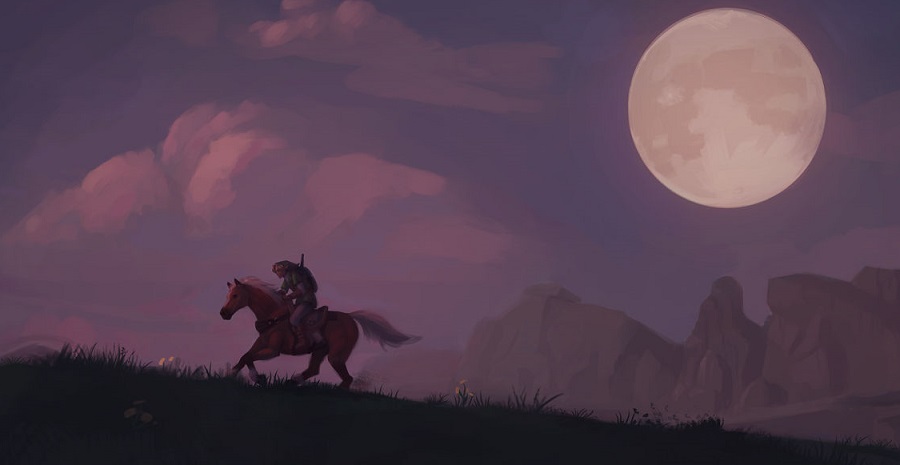
You open your copy of the much anticipated new installment in the Zelda series knowing full well how much time from school it will eat. You insert the cartridge after blowing on it –even though the manual explicitly tells you to never do that– the blue color of the Nintendo 64 logo that matches the titular ocarina appears, and now you are expecting to be blown away by the epic, loud heroic fanfare, but……silence.
You see again that same pure blue color glowing from the night sky in the background of a landscape, where the dawn of a new day is upon it. What is that sound? You make that it’s the sound of a horse galloping very, very far away, and then…..Piano? In Zelda? Yeah, impressionism and lonely riding through fields did not start with Breath of the Wild.
The cinematography, the sound design, the motifs, the music–Wait, how many years has Nintendo been making games in 3D? There is a reason why the codename for the Nintendo 64 was Project Reality; only smell is missing here even though the developers surely had it on their minds– So much has been written about Ocarina of Time that we don’t wanna restate here all the usual cliches that have already been digested by gamers around the world; Okay, just one, there had never been anything like it before.
Koji Kondo returns as the composer in charge of fulfilling the cinematic expectations of the developers, meaning, the use of leitmotifs to identify characters, places and events; cutscene scoring and music that characters in-universe hear (diegetic music). By just looking at the game’s title you know that music will play a more special role in the narrative–a central role actually- one that is usually only reserved for musicals. Because here, Nintendo has given us the control to a fully functional digital MIDI instrument: the titular ocarina. It will dictate the tone of the adventure.
The idea that music and magic have a connection is not new, in fact, some would claim is the oldest one in the book, as music has always been part of religious practices and rituals. The Ancient Greeks actually believed music was magical. They had a single word that meant both “to sing a song” and “to cast a spell.” This is most obvious in the story of Orpheus but let’s not stray that far from the path since the first layer, specially for Nintendo, is always the functional layer, not the narrative one. And it is the most important, but don’t tell that to your literature professor who swears that every tale secretly contains some deep inner meaning dealing with the human condition–no Mr Sullivan, Donkey Kong is not a metaphor for how postmodern capitalism crushes the immigrants that come to an America represented by a monster throwing the barrels of oil sacked from the east!–
Similarly to how the design of Mario comes from the fact that Miyamoto needed an 8- bit character to pop up and be recognizable, thus giving him a cap, a big nose and a moustache, the use of music in Ocarina of Time has the principal role of not having to select a magic spell from a menu, as was traditionally done in typical RPG inspired games; a simple touch that contributes hugely to not breaking the immersion–and this new Zelda tries to ditch the menus as far as it is possible for its gameplay intentions, from the possibility of having three items equipped to the C-buttons to the context sensitive A-button. The fairy companion herself was also born from being originally a pointer indicating characters and enemies, and helping the player to navigate a 3D environment, hence the name Navi. She came from functional reasons and ended up influencing the direction of the story.
Now, the series has used music for magic spells since its very inception, where the recorder was able to cause various effects in the world, and Shigeru Miyamoto is a passionate music lover (a guitar and banjo player who loves American bluegrass and country/western) so it’s no wonder that music has an exalted status in many of his games. But it was in Ocarina of Time where music reached groundbreaking interactive heights; playing a central role in both story and gameplay.
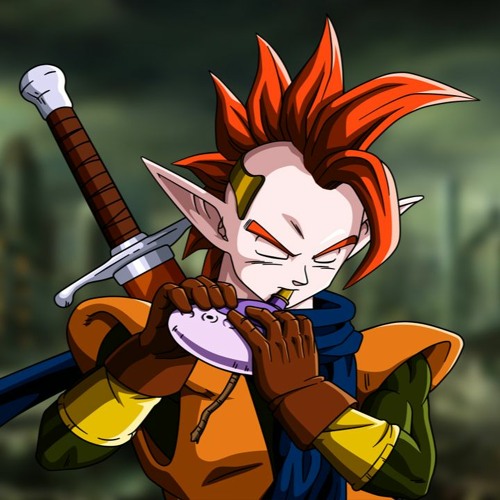
Ocarinas are a popular instrument for this mystical quality. This is due to its ancient history and its simple, yet exotic sound. Multiple cultures have their own designs for the instrument; this one, following the setting, is the European version. Just three years before Ocarina of Time, the movie Dragon Ball Z: Wrath of the Dragon was released featuring Tapion, an elf swordsman playing the Ocarina; the game Mother, released in Japan in 1989, had the Ocarina of Hope; and the Zelda series itself had used it in its two previous entries. Clearly, there is a pattern of the Japanese using the instrument to evoke magic (Fun fact: ocarina is an Italian world that means “little goose” because its form literally looks like that).
The Ocarina worked like a charm for the concept Miyamoto had in mind for the new Zelda installment; allowing the player to play a musical instrument using the Nintendo 64 controller’s buttons. They were influenced to use it because the Nintendo 64 controller looks slightly like an Ocarina and the neutral sound of the instrument was easy to realistically reproduce with sound samples.
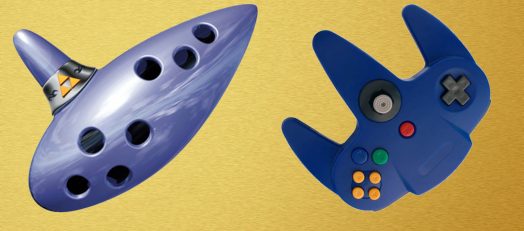
Since the songs the player would be required to play on the Ocarina would be made with just five notes (mapped to the four C-Buttons and the A-Button), Koji Kondo had the unenviable mission of trying to come up with catchy tunes using this set of limited pitches, something he considered challenging. And like the game itself, the tunes will get progressively harder to play as you get more accomplished; when you are a kid, the ocarina melodies are based on repetitive three note sequences, not anymore after you are an adult. Most of these ocarina songs will also serve as the basis for the themes of various environments, creating a connection between the tunes and the world itself.
The “Zelda Scale”
With just five musical notes to choose from, Koji Kondo had to think carefully about what would be the best five, the ones that gave him the broadest melodic possibilities; again, functionality above narrative goals. Hmm, could it be one of the pentatonic scales used throughout Asia? Or perhaps one of those used by blues musicians? As we have previously discussed, Koji Kondo has a propensity for crafting melodies that are not quite major nor minor in color, so what better than using the notes that gave him access to both flavors?
(D-F-A-B-D) These five notes pack a considerable amount of musical possibilities that Kondo would exploit to add variety to the ocarina songs from the game. The chosen notes basically form an hybrid of three different musical scales; three strings to pull for the emotion required:
| SCALE | NOTES | PROFILE |
|---|---|---|
| The Dorian Scale | D-F-A-B | An staple of film music and RPG fantasy games. A deeply reflective scale used for moments of beauty and the search for the sublime or sacred. This is the scale you would use if you want to instantaneously establish a medieval European setting; folky and sometimes bittersweet or nostalgic: think the main theme from American Beauty, Chrono Trigger’s Millennial Fair or Fi’s Theme from Skyward Sword. Here the most iconic will be the Song of Time |
| The Lydian Scale | F-A-B | Can sound playful, quirky and whimsical; or mischievous with a malicious sensibility underneath depending on how it’s harmonized. This is the scale you use when your character is way up in the clouds, with the sky people or whatever other playful race from the game exists. Sounds dreamy, spacey, and a bit disoriented: think The Simpsons’ Theme, the Chocobo’s Theme From Final Fantasy or most Banjo-Kazooie music. Here the most iconic example will be Saria’s Song. |
| The Yo Scale | A-B-D | This is a Japanese pentatonic scale that sounds bright, pastoral and yearning–just play the black keys on a piano for that certified Asian sound. You will use it when your character is visiting his family at his home village and reflecting about the simpler times: think some passages from Married Life from the movie Up, traditional Japanese folk songs, and lots of anime. It is the happy scale of the bunch. Epona’s Song comes from here. |
With just five notes Koji Kondo now has the framework to differentiate a variety of melodies for the game with the ghosts of these scales. The fact that there are two D notes one octave apart tends to favor the Dorian, medieval scale. Why specifically start and end the scale on D? it probably has to do with this:
This was the first 3D Zelda and Koji decided that he would connect the past and the future by arranging this simple motif as the full-blown opening piece; to remind audiences how far the series had come. This ‘Title Theme’ would leave behind the heroic-on the nose fanfares for a subdued cinematic sound that matched perfectly the unapologetic movielike first sequence. A motif that, not coincidentally, features extensively the two D notes of the ocarina.
Music Analysis
| Stylistic References | Impressionism; Pastoral; Evocative Erik Satie – Gymnopédie No.1 Claude Debussy – Clair De Lune Final Fantasy – Prelude The Lord of the Rings – The Shire Breath of the Wild! |
| Instruments | Ocarina – Melody High Strings – Melody and Harmony Low Strings – Accompaniment (Pad) / Accompaniment (Arpeggio) High Piano – Accompaniment (strum) / Accompaniment (Arpeggio) Low Piano – Bass (Harmony) |
| Structture | Section 0 – Low Strings, High Piano, Low Piano Section 1 – Ocarina, Low Strings, High Piano, Low Piano Section 2 – Ocarina, High Strings, Low Strings Section F – Low Strings, High Piano, Low Piano |
| Time Signature and Tempo | 4/4 Dynamic Tempo: (Range 57-74) |
| Melodic and Harmonic Profiles | C Ionian/Major |
The piece fits perfectly the dreamy scene of the morning, with Link traveling through Hyrule in his horse; however, it also belies the fact that this is anachronistic music for a medieval-eruropean fantasy setting; thank the Japanese RPG for that.
Kondo’s style is not as ‘Japanese’ as, say, the games produced by Square Enix, but he is still stepped in the JRPGs tradition of basically not giving a flying importance about the context if it means that the gameplay experience will be accentuated–can you picture a film like The Lord of the Rings using something like the Mini Game, Shop or Lon Lon Ranch’s theme as background for one of its scenes?– Western RPGs, on the other hand, strive for authenticity and realism.
Going back to the piece, which we will use to develop a standard framework for analysis, the impressionistic style matches the cinematic opening. This musical tradition conveys that feeling of floating around without a care in the world, a sense of loneliness and longing; the sound of nature. It is the kind of yearning that punches you with nostalgia 10 years down the line and as we will see it has to do with the two nostalgia chords Koji Kondo uses whenever he wants to pull those particular strings. It is very Japanese influenced since Claude Debussy, the impressionistic style main exponent, had a fondness for Eastern cultures–going full circle, it influenced back Japanese music as well– The style requires the adoption of non-traditional scales, tonal structures–don’t let semitones to appear between notes in your impressionism!– and use of extended harmony (weird chords beyond the traditional triads); oh! and no matter what happens don’t dare to lift your foot off the piano pedal!
The very first music we hear coming from the game is the piano sounding an F chord; well, it actually has a fancier name (Fmaj 7/13), but we don’t wanna go the path of the musicologist who misses the forest for the trees, certainly not with the music of Koji Kondo. Western musical academia has had for many years now an obsession with the cerebral classification and dissection of music as mainly harmony, this is mostly due to how the harmonic patterns of music have been codified for many years and are easier to put into words. Yet, this is not how most composers really work nor how most civilizations interact with music. You can research an huge volume of harmony books but you will seldom see anything beyond some basic guidelines for the art of creating memorable melodies, as they are for the most part still shrouded behind the veil of abstract intuition; this is also why most ‘popular music’ critics have to resort to analyze the lyrics of songs as opposed to the musicality (plus, if your career path is about writing then obviously you are biased towards words). But melody is king; it is what connects with people and this is where the great composers shine. That is why I can assure you that the notes that Kondo chooses for most of its chords are based purely on their melodic flow; their voice leading. He may or may not be aware of what are the names of the actual chords or the full underlying music theory, nevertheless he just follows where the melody takes him.
Having said that, we will try to not leave any stone unturned when trying to pierce behind the musical techniques used in a piece. Let’s examine section by section.
Section 0
What the game means by section 0 is the part of the cue that you only hear once at the very beginning; the intro, and the fact it’s omitted when the song loops, a staple of video game music. Take a quick listen to most of the songs from Ocarina of Time and you will hear the pattern: a short intro and then the main body of the piece starts. This consideration of needing the music to loop entails that many songs from video games don’t need a resolution or what is commonly defined as a “cadence”. Again, a situation dictated mainly by function instead of intention–so don’t fall in the trappings of saying that the lack of resolution on Zelda’s Lullaby accounts for the yearning of the princess to escape the cycle of prosperity/decline of the kingdom of Hyrule!
This intro establishes the chords in which the composer engulfs the flute motif from the NES: F and C (Cmaj 7/9) these are the IV and I degrees of the C Ionian/Major scale. And even though I put this particular scale on the table, are we really sure this is a major scale piece? then why does it sound so…melancholic? I though major scales were supposed to sound happy!! The answer is: we can’t be sure it is a Ionian piece at face value. It is a little bit technical but it has everything to do with how these two particular chords interact. When played one after the other they form what is defined as a plagal cadence–the aaaaamen from church. The cadence IV–I cannot really confirm any tonality by itself because it lacks a leading tone resolution. To see what I mean let’s undress the chord to its most pure state; the root note plus the fifth:
Notes F chord = F C
Notes C chord = C G
When you move between the two chords indefinitely, the note C remains constant between them. This is at the heart of why we don’t perceive ‘movement’ and feel like we are just floating. For a leading tone resolution we would need a different note to approach that C from above or below. Suffice to say for simplicity sake: we need more chords to establish a tonality with certainty; perfect for the not quite major, not quite minor Koji Kondo sound. This back and forth between the IV and the I is a favorite from the composer and pretty much all tracks from him that you find nostalgic, even if you have never played the game, have as their culprit this chord movement; examples include the Mario 64 File Select cue and its Ending Theme.
The chords, courtesy of the piano, during this short section are played as a strum accompaniment, unlike the rest of the piece where they are played as an arpeggio. The low strings function as a pad that answers the piano. For the original song in the game Koji uses two pianos for the low and high notes respectively.
Section 1
Here is where the melody, played by the ocarina with the maximum amount of reverb possible in the N64, starts playing–even the 3DS developers ran into trouble trying to reproduce it– Remember the Japanese pentatonic Yo scale? The similar Pentatonic major—same vibe as the Yo scale, it just begins at a different note scale—is used as the main melodic profile for the piece (normally, faster notes are considered ornamentation) this also prevents the song going full happy and makes the tonality even more ambiguous. As previously discussed, the ornamental notes Kondo struggled co come up with back then for the recorder cue because the team wanted it to sound mysterious have become a staple of video game music and it is sometimes known as the Mitsuda Lick (connecting a minor third interval via a chromatic scale); you can hear it obviously in Chrono Trigger a lot but also in the Pokemon Main Theme, Undertale and here it will come back in Hyrue Field.
Section 2
For this section the piano stops playing and its role is relieved by the low strings. The ocarina is supported by high strings panned to the left playing the melody harmonized. The harmony here also alternates between two chords: F (Fmaj7) and G. In adding the V scale degree we gain more confidence that the piece might be in C Ionian/Major, but it’s still not quite there; for all we know the piece could end on an A minor Chord, making it a different tonality (A Aeolian/Minor). Hear what I mean:
This is why talking too much about tonality is a little bit pointless and outdated for how most music is made, specially in video game soundtracks which are all about modal mixture; for caution we will just talk about ‘profiles’ within the music since standard functional harmony is of no help most of the time. Throw for analysis the Zelda series main theme (Overworld NES) at some music theory major and be prepared to receive an answer like: This piece is in Bb major with an exception here…and another exception here….and here….and this is an exception to the exception…. This basically doesn’t tell you anything. And sometimes there is really not much to tell; just a composer chasing a melody by following an instinct honed by listening to a lot of music. The best we can do is catch snippets of scales (melodic profiles) that will actually tell us the flavour the piece strives for.
Anyway, the last part of this section packs a surprise, or not for Koji Kondo since he has been famous for using this particular trick since the beginning of his career; it is even named the “Mario cadence” for how prominent it is in the series (the mission accomplished sound). This makes the piece end in the most triumphant of notes: The bVI – bVII – I chord movement. You can use this trick to give a lift to almost anything, it is also used as the ending for the famous prelude from Final Fantasy. Its power comes from borrowing two chords from the parallel minor scale, the bVI and the bVII for C Ionian/Major profile would be Ab and Bb.
Section F
After the lift, the only reason that the piece doesn’t complete the Mario cadence is because they decided to loop and fade down the track like a cheesy 80s ballad. This is an instance where the loop is dictated by artistic intention instead of a gameplay one, as this is a cutscene. The decision probably was made to substantiate the piece ethereal feel; like it has played for all eternity. This means that the section F or final section goes back to the piano arpeggio of the beginning of section 1.
As a last neat detail, the logo of the game that appears shortly after–seriously, the only thing missing from this intro for it to be a real film are the credits of the developers appearing on screen– is accompanied by a short chime when you press start. Is it music or is it a sound effect? For Nintendo the only thing that matters is that it fits pleasantly. And indeed it does, because this little ditty is an Am7 chord. This chord is composed of the notes: A C E G, and the two chords from the intro and Section 1 (the sections where the player is most likely to press start) have many of their notes in common with the Am7 chord (Fmaj 7/13: F C A D E and Cmaj 7/9: C G E B D) a lot of repeated notes, and the C-E notes are common across all chords; as you can see the “sound effects”are anything but an afterthought.
If there one thing you get from all this is that melody is the most important thing; the core around which everything else is layered, specially for Koji Kondo. The chords may appear to be very complex and jazzy, but those extra notes are just fancy jewelry to sprinkle the music.Tthey are not selected for their cerebral music theory function but for their melodic voice leading. In short, the piano is essentially playing a melody too; this is easier to hear in arpeggio form. This will become clearer in the next piece we hear in the game, where it’s futile to make sense of the notes that compose the chords; you can strip the main melody and the arpeggio will savage the piece, owing to it being a melody in and of itself. That piece is the classic Fairy Fountain Theme/Menu Theme.
This Opening immerses you in a world of ancient mystery, melancholy, and magic before you even press start. It sets the tone not for action or heroism, but for reflection and the sense of something eternal, like the lost legend of the original game being remembered. It’s a tone poem for the kingdom of Hyrule.

Help to keep the rites going around here by supporting the shrine:

Media Files, requests and support for more interactive content

Thou shall donate since this is a cult and you are now a sheep

Help staying awake analyzing game tracks and writing posts or else everything will end up being written by A.I
Let’s wrap up with the backing track for the last two sections of the piece. Thanks for reading and don’t forget to comment with any questions or insights.
- Inside The Score – The Legend of Zeda: A Link to the Past – End Credits / Staff Roll
 The land rests As the last few minutes of this extensive journey that has now come to an end fly by, the nostalgia and reflective mood kicks in. Because such a massive enterprise as a Zelda game or a Lord of the Rings movie require multiple endings to convey everything that the adventure represented. You… Read More »Inside The Score – The Legend of Zeda: A Link to the Past – End Credits / Staff Roll
 - Inside The Score – The Legend of Zelda: A Link to the Past – Ending / Epilogue ~ Beautiful HyruleFinal of the fantasy The Triforce has been touched. A wish has been granted. For the occasion, the newly undeceased king of Hyrule has commissioned a march in honor of the legendary hero to the Hylian Sousa, who might as well be composer Nobuo Uematsu since this piece is very similar to the main theme… Read More »Inside The Score – The Legend of Zelda: A Link to the Past – Ending / Epilogue ~ Beautiful Hyrule
- Inside The Score – The Legend of Zelda: A Link to the Past – Triforce Chamber / Power of the GodsTake your boots off your feet And thus the Triforce spoke to men. And it became present in history. And you better treasure and contemplate this moment seldom witnessed in the course of the series. The elusive opportunity to interact and touch the most important artifact. You are now in the presence of something truly… Read More »Inside The Score – The Legend of Zelda: A Link to the Past – Triforce Chamber / Power of the Gods
- Inside The Score – The Legend of Zelda: A Link to the Past – Ganon Battle / Prince of DarknessProgressive evil En Garde! And you better be prepared since you are about to duel the iconic enemy of the series at perhaps his canonically most powerful incarnation. Right after having touched the sacred Triforce which allowed him to conquer all of the Golden Land and whose evil and darkness are pouring out into Hyrule.… Read More »Inside The Score – The Legend of Zelda: A Link to the Past – Ganon Battle / Prince of Darkness
- Inside The Score – The Legend of Zelda: A Link to the Past – Boss Battle / Anger of the GuardiansQuick mayhem Ah, the simpler times when boss battles where not a multi epic orchestral suite but just an ostinato more basic that even what became the music for standard battle encounters out there. We are a long way from each boss having his own personalized track. And this early boss battle cue is one… Read More »Inside The Score – The Legend of Zelda: A Link to the Past – Boss Battle / Anger of the Guardians
- Inside The Score – The Legend of Zelda: A Link to the Past – Dark World Dungeon / Dungeon of ShadowsMemento mori We are getting closer to Ganondorf (or at least the wizard Agahnim who ultimately fulfills the same human side of evil role in this game) and that means getting closer to the profiles and motifs of his own theme song (which naturally was the theme of Agahnim at this point) on this dungeon… Read More »Inside The Score – The Legend of Zelda: A Link to the Past – Dark World Dungeon / Dungeon of Shadows
That is really fascinating, You’re an overly professional blogger. I have joined your rss feed and sit up for searching for extra of your magnificent post. Additionally, I have shared your website in my social networks!
Thank you so much for the support. Glad you enjoy the content