A staple tune worthy of a fairy tale
Introduction
Ahh! it really does feel like home! This is what you hear when the last of your worries is vanished, the checkpoint for a warrior on a quest, where he gathers his hopes that success is just around the corner. It is the fantaisie piece of the Zelda series.
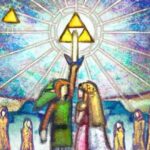
What was first? the egg or the chicken? The fairy fountain or the start menu? Is there any deep meaning for having selected this particular piece for the file select menu? Or did they just select the most relaxing piece in the game? We would have to ask the developers themselves. Koji Kondo certainly favors soothing pieces for his file select menus as seen in Super Mario 64 and even Star Fox 64 where the cue is the most different piece of the battle driven score The truth is that this cue has been tied to the series even since it was used for The Legend of Zelda: A Link to the Past, and there is an argument for it to be kind of the second main theme of the entire series. It even appears in one of the most important scenes in the narrative; when the first Link manages to get his hands on the sacred triforce, the Mcguffin of the series:
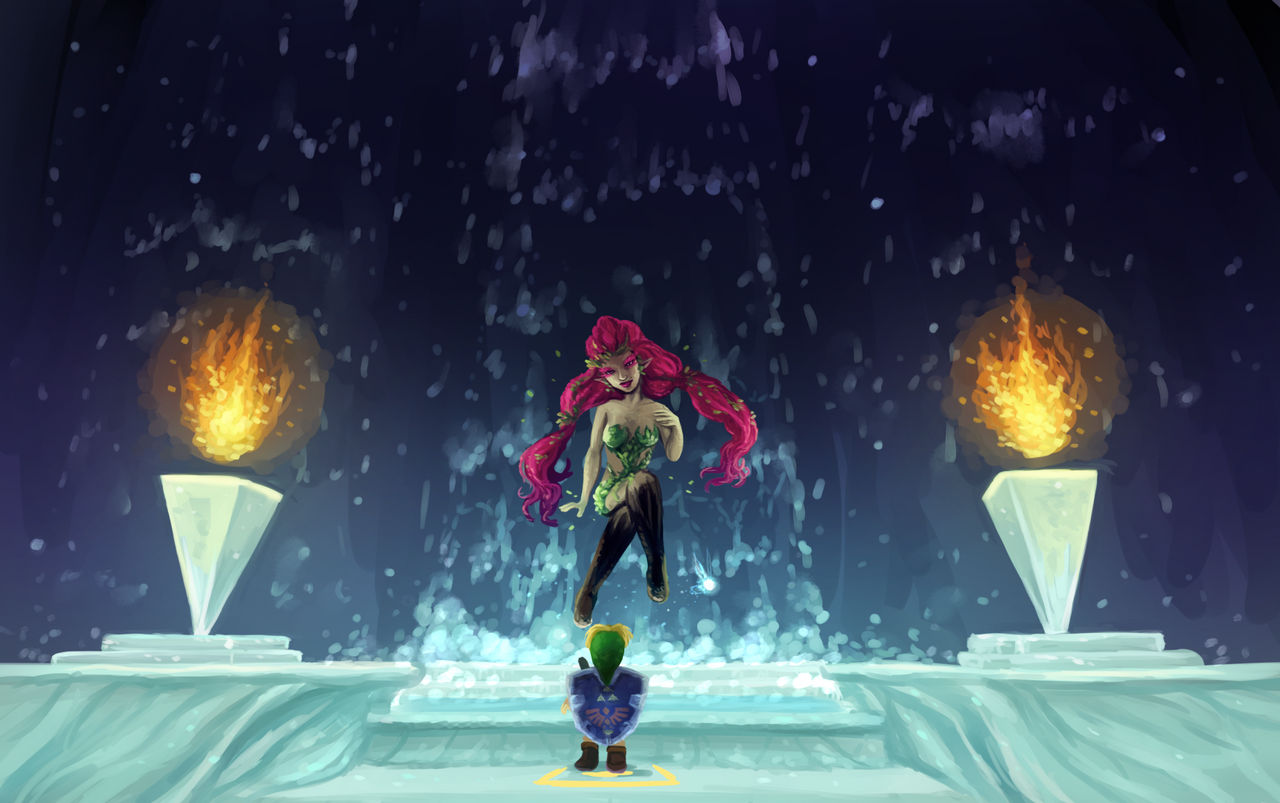
So maybe the theme is even more important than we imagine, being directly tied to the Princess Zelda/Goddess Hylia, to all that is sacred in the series. And why not? the harp is the instrument of Zelda after all and the goddess Hylia looks quite like a great fairy
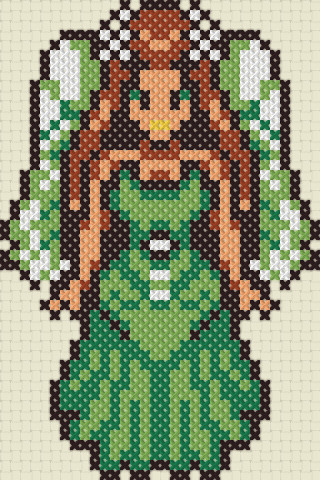
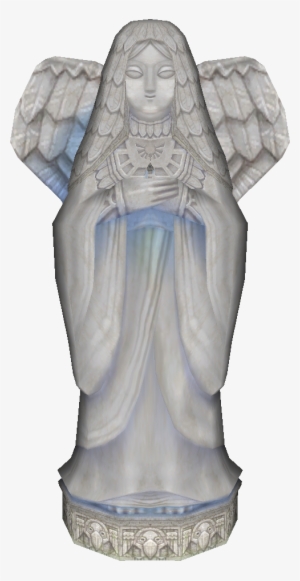
Maybe The Legend of Zelda is ultimately a fairy tale. But we will leave the weird conspiracy theories behind and focus on the music (I will just say that the name of this piece in the original Japanese is ‘The Goddess Appears‘ and rest my case).
The fairies in Zelda with their characteristic dragonfly wings are a rather modern European development that arose in Victorian English folklore when painters were obsessed with blending nature and the magical. Since fairies lived in forests they got characteristics from their more numerous inhabitants, the insects. Shakespeare’s A Midsummer Night’s Dream popularized the concept that they could also be tiny beings just like the creatures that lend them their wings. The ball of light type fairy that is introduced here in Ocarina of Time also pulls from old folklore where fairies were seen as glowing lights from afar; so technically Navi and their kind may as well also have human forms, it is just that their light is so powerful that you see them engulfed in it (besides, from a technical point of view the Nintendo 64 would not be able to feature a tiny human following you around at all times so they simplified it).
Princess Zelda, the fairies and this song play directly into the tradition of the harp being associated with femininity, or the divine and angelic. This is a tradition left behind by French impressionism; loosely robed girls with long blond tresses, capable of drawing from it nothing more than seductive glissandi.
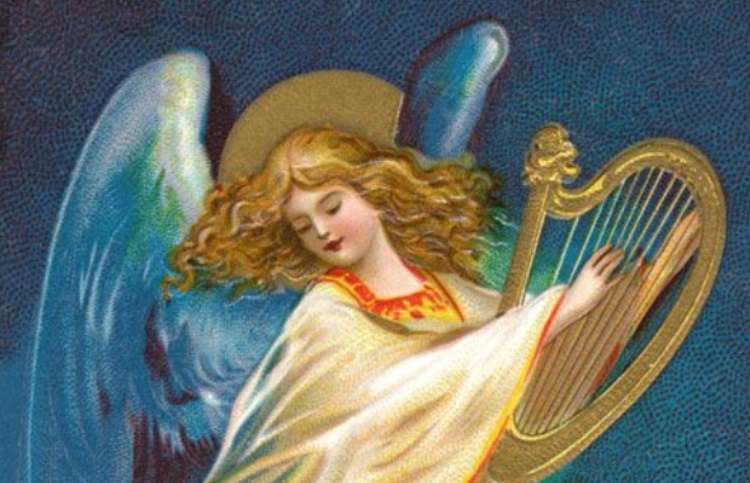
For worse or better, in most human cultures there has been an assumption that women are the more delicate and beautiful of the sexes, mostly due to physical structure; Women tend to have a smaller body than men and possess less musculature. These things, amongst others, have created the assumption that women are less “hardy” than men.
The harp with its crystalline and delicate tones, as well as its graceful curvy shape has been similarly pigeonholed and linked with that prevalent definition of femininity, not to mention that harpists have a definite air of dignity and nobility (funny thing is, the kind of harp Princess Zelda plays fits more the definition of a lyre, an ancient instrument associated with powerful men such as King David and the greek god Apollo). And yes, most harpists are women.
However, the connections that Koji Kondo is playing around in The Legend of Zelda veers in favor of the angelic and magical. We have all seen those cute cherubs floating around curing all the illnesses of the world with their little harps, this is probably a leftover from the Greek conception of music and its effects on the body (backed by scientific studies that claim music actually has soothing effects on the body), and from a physics point of view the harp tones are really more harmonically “pure” than in other instruments.
With these strong links and history that the harp has there was little melodic or harmonic work Kondo needed to do in order to convey the healing nature of the fairies. So, it is perhaps the romantic fantaisies and even the ‘fountain’ connection is where we find the piece surprising harmonic inspirations.
Music Analysis
| Stylistic References | Frederic Chopin – Fantaisie Impromptu Impressionism; Jazz; Romantic Pinocchio – When You Wish Upon a Star/ Walt Disney Company Theme Kirby 64: The Crystal Shards – Quiet Forest Donkey Kong 64 – Mermaid Palace Edward Scissorhands – The Grand Finale/Ice Dance |
| Instruments | Melody Harp – Melody Strings – Melody Arpeggio Harp – Melody Arpeggio Accompaniment Harp – Accompaniment (Arpeggio) Low Harp – Bass (Single note) |
| Structture | Section 0 – Low Harp, Arpeggio Harp, Melody Harp Section 1 – Low Harp, Accompaniment Harp, Arpeggio Harp, Strings, Melody Harp |
| Time Signature and Tempo | 4/4 78 (Accelerando in Section from 0 from to 52) |
| Melodic and Harmonic Profiles | F Ionian/Major |
Apt for beginning our fantasy adventure is noticing that the romantic nature of the Fairy fountain theme might be inspired by similar melodic movements in the Chopin piece Fanisie-Improptu which is also based on these particular chromatic movements; maybe the name fantasy was enough for it to be selected:
Look! (hear in Navi’s voice again) the piece might be coming from associations with the romantic period but Koji Kondo decided that he would put his jazz chops to good use when he was determined to infuse it into the melody with this particular descending chromatic scale. Already a staple for jazz musicians, this particular ostinato is all over the place. And why not, if its notes have that magical broadway air:
the Japanese certainly knew their jazz, so it was just a matter of time before they put their own spin on this famous riff:
It seems Kondo recognized the sort of relaxed feel–like you are in a resort a la Super Mario Sunshine– that these easy listening pieces conjure and decided that it was perfect for the water world of Super Mario Bros 3 for the NES:
The last 4 bars of the fairy’s fountain theme closely match the same melody from the Mario game, so it is not a stretch to suggest that Koji was inspired by Kondo in appropriating the bond this melody shares with water for the healing fountain in The Legend of Zelda, taking the melody further downward. This is just one possibility of the path that this melody traveled to end up here.
The effectiveness of this note pattern resides on its alternation between a major and a minor melodic profile–demonstrating again Kondo’s fondness for not relying on simple major or minor tonalities:
As for the accompaniment, at surface level it seems like a complicated mix of major and minor 7 chords. But remember that it is probable that the arpeggiated notes were chosen based on their melodic “flow”, not with any particular harmonic intention besides the bass descending in an Ionian profile. This is easier to see because when we remove the main melody the song still sounds like a ‘song'(with a tune you can follow)
That’s why it is always good to not dwell too much into what are all the different chords that a particular set of notes implies. Most pieces will keep their musical identity with just the underlying set of perfect fifths plus the melody, making most other notes a distraction that gives music the illusion of being more complex than it really is; this is why most tunes from the NES era can be arranged for huge orchestras, because they already had a strong foundation with the basic elements of music.
Talking a little bit about the Section 0 or intro of the piece: it is just a classic glissando technique characteristic of the harp used to ‘open the curtain’, like at the beginning of A Link to the Past. It rises up through a set of notes in this pattern:
| C E G Bb D |
| E G Bb D E |
| G Bb D E G |
| Bb D E G Bb |
| D E G Bb D |
| E G Bb D E |
What matters here are not the particular chords that are formed (mostly a C 7/9) But the pattern of jumping one note forward; touring a C mixolydian scale that is different from the profile of the rest of the piece. The idea is start at the highest point of tension which is the dominant chord V7 of the F Ionian/Major ptofile.
The harmony of Section 1 is punctuated by the low harp playing a descending bass line from Bb to F, while the melody is accompanied by a cascading arpeggio with notes that functions as pedal points. All things considered, the bedrock of the track ends up being: (Bb / Am / Gm / F) (Bb / Am – D7 / Gm / C) and it loops without a cadence (which would be F) because of the functional nature of gameplay music. Once again, you can play the entire piece with just perfect fifths as chords and its identity will remain intact; it will just sound in its more naked and barefaced state. The only chord outside the F key would be the D7 which is used as a secondary dominant for reaching the Gm and serves to spice up the piece.
The main difference with the same theme from A Link to the Past is that here Koji decided to add strings to double the second phrase of the melody. It is also slower in Ocarina of Time. It is the overture to the fantasy land of Hyrule.
Ultimately, this piece manages to get across a bittersweet feeling by hiding its “major tonality” behind those lush 7th and 9th chords produced by the interplay of harp melodies. The important thing to remember is to never lose sight of the core of a piece and how the melody develops within it.
Now let’s go and start a new file!

Help to keep the rites going around here by supporting the shrine:

Media Files, requests and support for more interactive content

Thou shall donate since this is a cult and you are now a sheep

Help staying awake analyzing game tracks and writing posts or else everything will end up being written by A.I
- Inside The Score – The Legend of Zeda: A Link to the Past – End Credits / Staff Roll
 The land rests As the last few minutes of this extensive journey that has now come to an end fly by, the nostalgia and reflective mood kicks in. Because such a massive enterprise as a Zelda game or a Lord of the Rings movie require multiple endings to convey everything that the adventure represented. You… Read More »Inside The Score – The Legend of Zeda: A Link to the Past – End Credits / Staff Roll
 - Inside The Score – The Legend of Zelda: A Link to the Past – Ending / Epilogue ~ Beautiful HyruleFinal of the fantasy The Triforce has been touched. A wish has been granted. For the occasion, the newly undeceased king of Hyrule has commissioned a march in honor of the legendary hero to the Hylian Sousa, who might as well be composer Nobuo Uematsu since this piece is very similar to the main theme… Read More »Inside The Score – The Legend of Zelda: A Link to the Past – Ending / Epilogue ~ Beautiful Hyrule
- Inside The Score – The Legend of Zelda: A Link to the Past – Triforce Chamber / Power of the GodsTake your boots off your feet And thus the Triforce spoke to men. And it became present in history. And you better treasure and contemplate this moment seldom witnessed in the course of the series. The elusive opportunity to interact and touch the most important artifact. You are now in the presence of something truly… Read More »Inside The Score – The Legend of Zelda: A Link to the Past – Triforce Chamber / Power of the Gods
- Inside The Score – The Legend of Zelda: A Link to the Past – Ganon Battle / Prince of DarknessProgressive evil En Garde! And you better be prepared since you are about to duel the iconic enemy of the series at perhaps his canonically most powerful incarnation. Right after having touched the sacred Triforce which allowed him to conquer all of the Golden Land and whose evil and darkness are pouring out into Hyrule.… Read More »Inside The Score – The Legend of Zelda: A Link to the Past – Ganon Battle / Prince of Darkness
- Inside The Score – The Legend of Zelda: A Link to the Past – Boss Battle / Anger of the GuardiansQuick mayhem Ah, the simpler times when boss battles where not a multi epic orchestral suite but just an ostinato more basic that even what became the music for standard battle encounters out there. We are a long way from each boss having his own personalized track. And this early boss battle cue is one… Read More »Inside The Score – The Legend of Zelda: A Link to the Past – Boss Battle / Anger of the Guardians
- Inside The Score – The Legend of Zelda: A Link to the Past – Dark World Dungeon / Dungeon of ShadowsMemento mori We are getting closer to Ganondorf (or at least the wizard Agahnim who ultimately fulfills the same human side of evil role in this game) and that means getting closer to the profiles and motifs of his own theme song (which naturally was the theme of Agahnim at this point) on this dungeon… Read More »Inside The Score – The Legend of Zelda: A Link to the Past – Dark World Dungeon / Dungeon of Shadows