Two opposite results of falling down

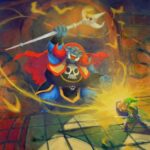
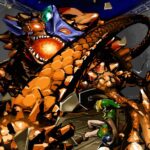
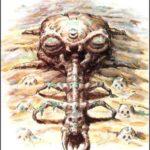
The duality of men. Sometimes you triumph, sometimes you fail. Composers are obliged to provide the sensations that you are supposed to be having while the screen goes to black or wether you are ecstatic at the release of finally defeating a difficult enemy. In these instances, we find a standard, short and depressing cue for when you fail and a solemn requiem for the giant beasts that function as the bosses of the game.
Just before the cues sound, the animations clearly lets you see the fall in silence, it is only when either Link or the boss falls down that the eulogy sounds—also because you might have a fairy waiting to resurrect you.
Musical Analysis: Game Over
Structure: Section 1
Time Signature: 4/4
Tempo: 130
Melodic and Harmonic Profiles: E Aeolian/Minor; E Chromatic
Major Chords = Happy
Minor Chords = Sad
Faster = Happy
Slower = Sad
Diatonic = Happy
Chromatic = Sad
Ascending = Happy
Descending = Sad
You see where this is going? Yeah, you just lost your life. The quest has been failed. What you do is just stick together as many sad cliches as possible and you got your game over fanfare; but don’t forget to leave a tinge of hope in the ascending counter melody of the harp. The chromaticism of the cue also adds the touch of evil triumphing.
Here we have: Chromatically descending minor chords in open inversions with a final chord that adds a major second to mitigate depression, the progression being Am – Abm – Gm – Gbm – Fm – Em; the second to last chord is sustained just before hitting you with the last sad Em. This cue is inspired by that traditional cartoon and game show sound of failure (the one with a wah-wah trombone playing in a descending, mocking way—I m sure you have heard it before) but the strings make it more sad and sublime. The major second of the last chord gives an unresolved feeling, inciting you to try again since it is also ascending.
Musical Analysis: Boss Clear
Structure: Section 1
Time Signature: 4/4
Tempo: 144
Melodic and Harmonic Profiles: C Aeolian/Minor
Both themes are structured similarly, that is why they are together here in order to compare them (also, you were killed by Gohma, sorry). They both have that last ascending, unresolved melody. Surprisingly this does not sound as victorious as expected; more like epic and an invitation to rest. It is kind of a soft optimism. The amount and nature of the instruments reflect that what is falling down is a bigger or more ancient creature. Both themes have a melody played in monolithic chordal form.
Instead of pure minor chords, the cue uses the more ambiguous major second note into each chord, still in inversion. They are the reason why the piece does not feel neither triumphant or sad. It is just a contemplation of what you have done and the acknowledgement that an imposing creature has just fallen down. You are supposed to feel in awe of the scene. It is a solemn fanfare. The harmony would be:
Db8 – Eb8
Cmadd9 – Bbmadd9 – Cmadd9 – Ebmadd9 – Dbmadd9 – Cmadd9
Both pieces also use the same device of sustaining the second to last chord and then cadence into the final one with an ascending arpeggio remaining. In the previous cue only the last chords had that major 2nd of hope, here all the chords have it.
It is a change of pace having the texture of music playing together in homophonic fashion after the messy Boss Battle that preceded it. The orchestra is playing tutti chords like your local doom metal band. Listen to the piccolo at the end and you will see how Koji Kondo gives it extreme vibrato by just using volume control (technically a tremolo)—well, not here since the visualizations don’t come with all of the N64 effects.
The continue use of minor chords and stacked fourths in what was supposed to be a celebratory cue gives the piece more ambiguity resulting in more complex emotions than a traditional fanfare like the Heart Piece Get cue with its Mario cadence. It is a rather more dignified tone; Link, the ideal chivalry knight respects the challenge that these dragons posed to his quest.
Help to keep the rites going around here by supporting the shrine:

Media Files, requests and support for more interactive content

Thou shall donate since this is a cult and you are now a sheep

Help staying awake analyzing game tracks and writing posts or else everything will end up being written by A.I
- Inside The Score – The Legend of Zeda: A Link to the Past – End Credits / Staff Roll
 The land rests As the last few minutes of this extensive journey that has now come to an end fly by, the nostalgia and reflective mood kicks in. Because such a massive enterprise as a Zelda game or a Lord of the Rings movie require multiple endings to convey everything… Read More »Inside The Score – The Legend of Zeda: A Link to the Past – End Credits / Staff Roll
 - Inside The Score – The Legend of Zelda: A Link to the Past – Ending / Epilogue ~ Beautiful HyruleFinal of the fantasy The Triforce has been touched. A wish has been granted. For the occasion, the newly undeceased king of Hyrule has commissioned a march in honor of the legendary hero to the Hylian Sousa, who might as well be composer Nobuo Uematsu since this piece is very… Read More »Inside The Score – The Legend of Zelda: A Link to the Past – Ending / Epilogue ~ Beautiful Hyrule
- Inside The Score – The Legend of Zelda: A Link to the Past – Triforce Chamber / Power of the GodsTake your boots off your feet And thus the Triforce spoke to men. And it became present in history. And you better treasure and contemplate this moment seldom witnessed in the course of the series. The elusive opportunity to interact and touch the most important artifact. You are now in… Read More »Inside The Score – The Legend of Zelda: A Link to the Past – Triforce Chamber / Power of the Gods
- Inside The Score – The Legend of Zelda: A Link to the Past – Ganon Battle / Prince of DarknessProgressive evil En Garde! And you better be prepared since you are about to duel the iconic enemy of the series at perhaps his canonically most powerful incarnation. Right after having touched the sacred Triforce which allowed him to conquer all of the Golden Land and whose evil and darkness… Read More »Inside The Score – The Legend of Zelda: A Link to the Past – Ganon Battle / Prince of Darkness
- Inside The Score – The Legend of Zelda: A Link to the Past – Boss Battle / Anger of the GuardiansQuick mayhem Ah, the simpler times when boss battles where not a multi epic orchestral suite but just an ostinato more basic that even what became the music for standard battle encounters out there. We are a long way from each boss having his own personalized track. And this early… Read More »Inside The Score – The Legend of Zelda: A Link to the Past – Boss Battle / Anger of the Guardians
- Inside The Score – The Legend of Zelda: A Link to the Past – Dark World Dungeon / Dungeon of ShadowsMemento mori We are getting closer to Ganondorf (or at least the wizard Agahnim who ultimately fulfills the same human side of evil role in this game) and that means getting closer to the profiles and motifs of his own theme song (which naturally was the theme of Agahnim at… Read More »Inside The Score – The Legend of Zelda: A Link to the Past – Dark World Dungeon / Dungeon of Shadows