In the beginning there were the voices of of the goddesses
Order from chaos.
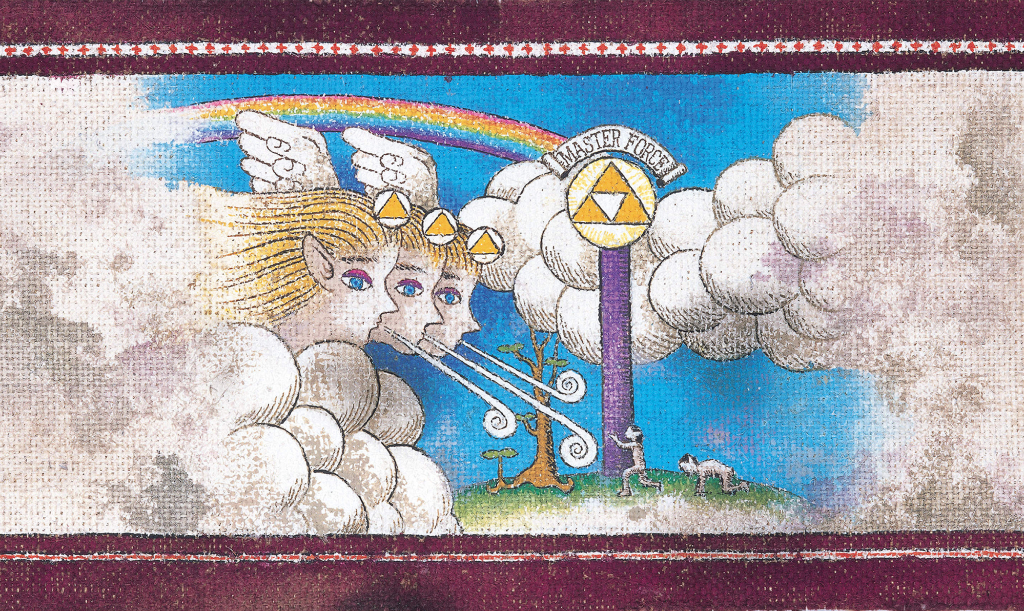
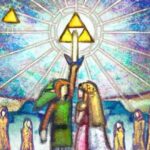
Ethereal, powerful magic is felt in the air. The music of the three golden goddesses is causing change, the movement of their vocal chords coinciding with the land, laws and life all coming together to form the cosmos out of the void via resonance; music prefiguring the creation. We had read all about it but it is only in Ocarina of Time when we are witness to the foundational myth of Hyrule as told by the Great Deku Tree. The cinematic scope of this scene grants the world that you are supposed to protect more gravitas and solemnity.
The music begins more chaotic and random until the goddesses manage to harmonize together, creating the sacred relic known as the Triforce, which seems to be the source of balance in the world of Zelda.
Developer Yoshiaki Koizumi originally conceived this creation myth for A Link to the Past in order to explain all the different elements present in the games that they pulled from various sources of inspiration, getting the series closer to true high fantasy since before it was more in line with standard European fairy tales and classic stories of wandering knights; with its own creation myth, Hyrule is now a more real land. As narrated in the manual of the game, the story is told from the perspective of scrolls found inside the world and interpreted by the sages at the present time. This gave the series its malleable tone since, just like real world legends, the stories are subjected to change in light of new information or the idea is that the progress of time distorted the original events, allowing the developers to tell different stories without the constraints of a set in stone canon. For all we know the myth of the three golden goddesses could have arisen by mixing together stories of Hylia, the golden triforce and three dragons named Din, Nayru and Farore. This legendary tone continues in the present day with the lore books that Nintendo releases and the ambiguity of where each tale fits. Events recur, landmarks shift from place to place as the narrator at the campfire sees fit and you cannot really be sure what is real and what is myth. They are in the same boat as us since history only happened once and sometimes it is difficult or even impossible to recover the past.
Musical Analysis
Structure: Section 0 / Section 1 / Section 2
Time Signature: 4/4; 12/8
Tempo: 60
Melodic and Harmonic Profiles: “C” Whole Tone (Section 1); G# Mixolydian, G# Aeolian/Minor (Section 2)
Have you ever wondered what a Koji Kondo film soundtrack would sound like? Well, rest assured, as he has already showed its chops with this masterclass of a composition in cutscene scoring. Now liberated from having to account for the player advancing the dialogue, he is free to score music to picture to tell the operatic origins of the world.
Not only did Nintendo create a stunning sequence to tell the mythical origin of the game’s universe, but we can also hear the story unfold within the music, as if the goddesses themselves had created the world and dissipated the chaos with their voices (Tolkien’s origin mythology comes to mind). Kondo makes use of the Whole-tone profile—a scale notable for its use in dream sequences and the metaphysical— to represent the chaos at the beginning or even before time. The combo of glockenspiel and harp, harmonized with perfect fifths, match the visuals of rain; and the choir, which begins by playing in a counterpoint manner, each voice of a goddess traveling independently, culminates at the end with full chords and a tonal center at last when the Triforce appears; harmony has been achieved.
In the beginning the voices of the goddesses move freely through the face of the earth, even clashing agains each other; as told in the story, each being was in charge of creating a particular feature of the world. the female choir represents the goddesses, who seem to be rhythmically outside space and time, going at their own pace.
That last melody is none other than the title theme from A Link to the Past; tying the new installment to the legacy of the series and the fact that that game also begins with the golden triangles coming together. The motif sounds three times, representing each side of the Triforce. The bass ends with the characteristic “major” Andalusian cadence of the Zelda series and the chords introduces tonality to the piece. The universe is finally in harmony, yay!
The accompaniment plays notes of the dreamy whole tone scale that signify the chaos and rain of the cutscene. The harp and glockenspiel function as poster children for all things divine and are a perfect fifth apart. At most, we can pick a harmony that is based around a C profile and a Ab profile back and forth. Depending on your preference for grouping notes you could count these arpeggios in 4/4 or 12/8 since this is the length of the accompaniment pattern.
In contrast to the whole-tone accompaniment, the first goddess—presumably Din—speaks in chromatic fashion, entering the tapestry of the world to begin weaving the earth and all that is matter. The second goddess (Nayru) enters at her own time and pace, playing slightly behind Din. The little sister Farore gives the final touch and meaning to the world, using her voice to create life. The moment they all come together to create the sacred triforce they form an Eb7 chord and then launch into part of the Zelda cadence in Ab, the harmony implied being:
Ab – Gb – E – Abmaj7
For each chord, a pedal melody motif plays three times (Eb Ab Bb Ab) , representing the three golden triangles. Three notes played three times over three chords, each underlying chord altering the flavour of the pedal notes, just like the three different essences of the triforce and the main characters. This motif from A Link to the Past was also naturally derived from the main theme of the series with that emphasis on the perfect fourth interval straight from the opening melody of that piece.
Parts of this cue are also used later when the princess talks about the triforce and whenever the sacred realm needs to be conveyed sonically.
In the realm of Hyrule music has always had magical properties dating back to the original The Legend of Zelda, fitting for a cosmos that was brought into being through the power of melody.

Help to keep the rites going around here by supporting the shrine:

Media Files, requests and support for more interactive content

Thou shall donate since this is a cult and you are now a sheep

Help staying awake analyzing game tracks and writing posts or else everything will end up being written by A.I
- Inside The Score – The Legend of Zeda: A Link to the Past – End Credits / Staff Roll
 The land rests As the last few minutes of this extensive journey that has now come to an end fly by, the nostalgia and reflective mood kicks in. Because such a massive enterprise as a Zelda game or a Lord of the Rings movie require multiple endings to convey everything… Read More »Inside The Score – The Legend of Zeda: A Link to the Past – End Credits / Staff Roll
 - Inside The Score – The Legend of Zelda: A Link to the Past – Ending / Epilogue ~ Beautiful HyruleFinal of the fantasy The Triforce has been touched. A wish has been granted. For the occasion, the newly undeceased king of Hyrule has commissioned a march in honor of the legendary hero to the Hylian Sousa, who might as well be composer Nobuo Uematsu since this piece is very… Read More »Inside The Score – The Legend of Zelda: A Link to the Past – Ending / Epilogue ~ Beautiful Hyrule
- Inside The Score – The Legend of Zelda: A Link to the Past – Triforce Chamber / Power of the GodsTake your boots off your feet And thus the Triforce spoke to men. And it became present in history. And you better treasure and contemplate this moment seldom witnessed in the course of the series. The elusive opportunity to interact and touch the most important artifact. You are now in… Read More »Inside The Score – The Legend of Zelda: A Link to the Past – Triforce Chamber / Power of the Gods
- Inside The Score – The Legend of Zelda: A Link to the Past – Ganon Battle / Prince of DarknessProgressive evil En Garde! And you better be prepared since you are about to duel the iconic enemy of the series at perhaps his canonically most powerful incarnation. Right after having touched the sacred Triforce which allowed him to conquer all of the Golden Land and whose evil and darkness… Read More »Inside The Score – The Legend of Zelda: A Link to the Past – Ganon Battle / Prince of Darkness
- Inside The Score – The Legend of Zelda: A Link to the Past – Boss Battle / Anger of the GuardiansQuick mayhem Ah, the simpler times when boss battles where not a multi epic orchestral suite but just an ostinato more basic that even what became the music for standard battle encounters out there. We are a long way from each boss having his own personalized track. And this early… Read More »Inside The Score – The Legend of Zelda: A Link to the Past – Boss Battle / Anger of the Guardians
- Inside The Score – The Legend of Zelda: A Link to the Past – Dark World Dungeon / Dungeon of ShadowsMemento mori We are getting closer to Ganondorf (or at least the wizard Agahnim who ultimately fulfills the same human side of evil role in this game) and that means getting closer to the profiles and motifs of his own theme song (which naturally was the theme of Agahnim at… Read More »Inside The Score – The Legend of Zelda: A Link to the Past – Dark World Dungeon / Dungeon of Shadows