A chaotic, disruptive and odd battle time
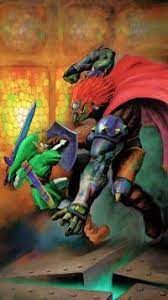
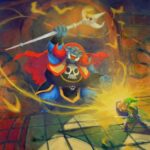
The significance of the last boss, the centerpiece of the main conflict between good and evil, needs its own unique track heard only for this battle. It will go on to become another iconic Ganondorf’s motif, being featured in subsequent games, from Wind Waker’s Phantom Ganon battle to the latest apparition of the character in Tears of the Kingdom. The theme follows on the footsteps of the Ganon Batte cue from A Link to the Past, a track that walked and stumbled so this one could fly and stumble even more as per the rhythmic rules of combat music. And this is the main villain we are talking about so of course his ostinato is the most rhythmically complex among the boss cues of the game.
Like Agahnim before him, this battle is based around playing tennis with the dark magic of the king of evil—For the sake of the story you would think that only the legendary master sword should be able to deflect this magic yet for some reason even an empty bottle is a match against the dark sorcery of the abomination known as the demon king.
Musical Analysis
Structure: Section 0 / Section 1 / Section 2 / Section 3 / Section 4 / Section 5
Time Signature: 4/4 (Section 0) 23/16 (Section 1.2.3.4.5)
Tempo: 120 (section 0); 110 (section 1, 3, 5) 109 (section 2, 4)
Melodic and Harmonic Profiles: C Whole Tone; C Aeolian Minor; Db Aeolian Minor (Harmony) D Aeolian/Minor Bb Aeolian Minor; C Phrygian
The Ganondorf Battle cue is the last opportunity Kondo uses to employ his usual combat music techniques (the battle that comes next takes a completely different approach). And since this is supposed to be the final battle, the big boss, he takes the rhythmic displacement to the extreme by making the entire piece in an asymmetric time signature; the ground is not secure, neither literally, metaphorically, nor musically. The main beat can be divided in two segments counted in groups of three’s and four’s:
(3+3+3+4) (3+3+4) to fit the twenty three sixteenth notes. Just pay attention to the marimba which is a staple instrument to musicalize Ganon for some reason.
All his years playing as a progressive rock musician had to influence Koji somehow.
You know it can be counted as 23/16 because the pattern repeats after this amount of sixteenth notes; phrase length is often the responsable for you choosing between, say, 6/8 or 12/8.
The rhythmic accents of melody and ostinato fall on different times so it is literally a clash between two forces fighting.
By also using similar instrumentation, the piece builds upon and continues the concepts that were introduced on the ‘Dragon Boss Battle’ music, in what is essentially a spiritual successor and combination of the Ganon Battle theme from A Link to the Past with the second boss battle from Ocarina of Time. The main difference is that the figure of Ganondorf was conceived as a more sophisticated kind of villain, a human just like the hero and the princess, so his cue does not focus on demonic tritones as typical of mindless monsters ut tather on more ambiguous fourths.
The piece starts with a dizzy section that employs a whole tone scale played in whirling unison to add to the confusion and chaos of the situation. This intro has the same contour and profile as the ‘Enter Ganondorf’ cue that first introduced this villain to the game. After the intro, the cue focuses entirely on a melody made of perfect fourths, jumping between being based around a C scale to one based a whole tone lower; It sits on a thorny bed of ostinatos that outline the odd time signature.
The melodic phrases fit into the the rhythmic period of the ostinatos but use different rhythmic emphasis. The harmonic profile clashes with the melodic profile and, unlike the other bosses and enemies of the game, the cue does not emphasize diminished profiles that risk caricaturing Ganondorf as just a monster of the week type of villain or put him at the same level as the other threats Link has encountered till this point. Instead, the ostinatos play minor profiles that capture the hopelessness of the situation and end of the world type of scenarios. Like the Mini-boss cue or Ganondorf’s Theme this is all about perfect fourths. Meanwhile, the Phrygian profiles of the melody lines give him a regal, ancient evil quality and perhaps a connection with his Gerudo heritage. This emphasis on sustained melody notes also comes from the final boss from A Link to the Past.
In Section 4, the ostinatos change the pattern, making the listener now focus on them by virtue of the high pitched trumpets, thus changing their role from harmony to melody; the sustained intervals are also reversed to an harmony role. The last ascending section consists exclusively of ostinatos that return to the manic whole-tone profile of the intro.
The extremely dislocated rhythm paired with the use of a whole tone scale and different profiles for melody and harmony captures the chaos that this battle represents, while at the same time avoiding overtly dissonant diminished scales that might rob some of the grandeur of this human villain.
The theme was reused again in a mashup with the Ganon Battle from A Link to the Past for the fight against Phantom Ganon on The Wind Waker.
It also has a resemblance to the boss battle theme from the arcade game Super Spy Hunter:
Link manages to defeat the evil king, but the game doesn’t let go the tension cable for more than a minute; the climax mode is enforced in full with the next series of events.

Help to keep the rites going around here by supporting the shrine:

Media Files, requests and support for more interactive content

Thou shall donate since this is a cult and you are now a sheep

Help staying awake analyzing game tracks and writing posts or else everything will end up being written by A.I
- Inside The Score – The Legend of Zeda: A Link to the Past – End Credits / Staff Roll
 The land rests As the last few minutes of this extensive journey that has now come to an end fly by, the nostalgia and reflective mood kicks in. Because such a massive enterprise as a Zelda game or a Lord of the Rings movie require multiple endings to convey everything… Read More »Inside The Score – The Legend of Zeda: A Link to the Past – End Credits / Staff Roll
 - Inside The Score – The Legend of Zelda: A Link to the Past – Ending / Epilogue ~ Beautiful HyruleFinal of the fantasy The Triforce has been touched. A wish has been granted. For the occasion, the newly undeceased king of Hyrule has commissioned a march in honor of the legendary hero to the Hylian Sousa, who might as well be composer Nobuo Uematsu since this piece is very… Read More »Inside The Score – The Legend of Zelda: A Link to the Past – Ending / Epilogue ~ Beautiful Hyrule
- Inside The Score – The Legend of Zelda: A Link to the Past – Triforce Chamber / Power of the GodsTake your boots off your feet And thus the Triforce spoke to men. And it became present in history. And you better treasure and contemplate this moment seldom witnessed in the course of the series. The elusive opportunity to interact and touch the most important artifact. You are now in… Read More »Inside The Score – The Legend of Zelda: A Link to the Past – Triforce Chamber / Power of the Gods
- Inside The Score – The Legend of Zelda: A Link to the Past – Ganon Battle / Prince of DarknessProgressive evil En Garde! And you better be prepared since you are about to duel the iconic enemy of the series at perhaps his canonically most powerful incarnation. Right after having touched the sacred Triforce which allowed him to conquer all of the Golden Land and whose evil and darkness… Read More »Inside The Score – The Legend of Zelda: A Link to the Past – Ganon Battle / Prince of Darkness
- Inside The Score – The Legend of Zelda: A Link to the Past – Boss Battle / Anger of the GuardiansQuick mayhem Ah, the simpler times when boss battles where not a multi epic orchestral suite but just an ostinato more basic that even what became the music for standard battle encounters out there. We are a long way from each boss having his own personalized track. And this early… Read More »Inside The Score – The Legend of Zelda: A Link to the Past – Boss Battle / Anger of the Guardians
- Inside The Score – The Legend of Zelda: A Link to the Past – Dark World Dungeon / Dungeon of ShadowsMemento mori We are getting closer to Ganondorf (or at least the wizard Agahnim who ultimately fulfills the same human side of evil role in this game) and that means getting closer to the profiles and motifs of his own theme song (which naturally was the theme of Agahnim at… Read More »Inside The Score – The Legend of Zelda: A Link to the Past – Dark World Dungeon / Dungeon of Shadows