The definitive statement of power
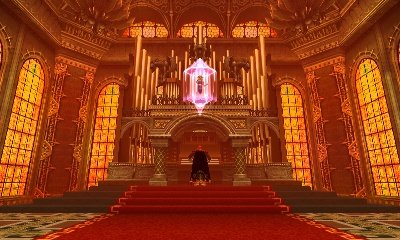
Now you are playing with power. Because only the holder of the top part of the Triforce is allowed to make such an entrance, setting the mood before the final confrontation against him. Gone are the avant-garde sounds from this dungeon cue heard at the basement as the very last stretch is all about who Ganondorf is, how he sees himself and how he wants to be perceived.
This is what occurs when the cinematic sensibilities, operatic sensibilities, use of diegetic music, and use of dynamic music; motifs that have been present all over Ocarina of Time since its very first frame, come together in one of the most stunning uses of audio from the game; gameplay, story and sound dancing in perfect sync. The buildup to the grand finale finds the development team firing on all cylinders, curving the exponential curve of tension to its absolute limit, and the audio carries most of the weight. This is as high as stakes can possibly go.
Link ascends the staircase, battling his way to the top of the castle while the music grows in volume and complexity alongside the enemies; by itself as background music it would still be a very effective use of the audio to enhance the sense of tension and anxiety, the game even prolonging the last segment of the staircase just for the sake of dramatic effect. But this music also packs one last surprise.
Turns out It was there not only hyping the player but also Link himself. There is in fact a real pipe organ at the very last floor and it’s played by none other than Ganondorf, the antagonist of the game and possessor of the triforce of power; completing also the triangle of instrumentalists on this game of operatic proportions; turns out all of its three protagonists are musicians. It is a track that synthesizes all of the musical aspirations of the game.
Musical Analysis
Structure: Section 0 / Section 1 / Section 2 / Section 3 / Section 4 / Section 5 / Section 6 / Section 7 / Section 8
Time Signature: 4/4
Tempo: 120 (accelerando on sections 2,4,6 and 8 to 135)
Melodic and Harmonic Profiles: Bb Diminished; Db Diminished; Bb Chromatic
The ominous pipe organ has been consolidated as a staple of drama. Organ music, grandeur, sophistication and villainy go hand in hand due to its powerful sound, usually heard amplified and magnified through reverberant cathedrals—some organs are as big as a church, symbiotically attached to all of the church walls in a series of interconnected tunnels. Its engulfing, complex, multilayered sound, which can even be felt on the body, lends itself to end of the world type settings and sinister settings alike, one last resort to give weight and gravitas to any situation or character; It’s the power of a full orchestra built into the architecture of a building.
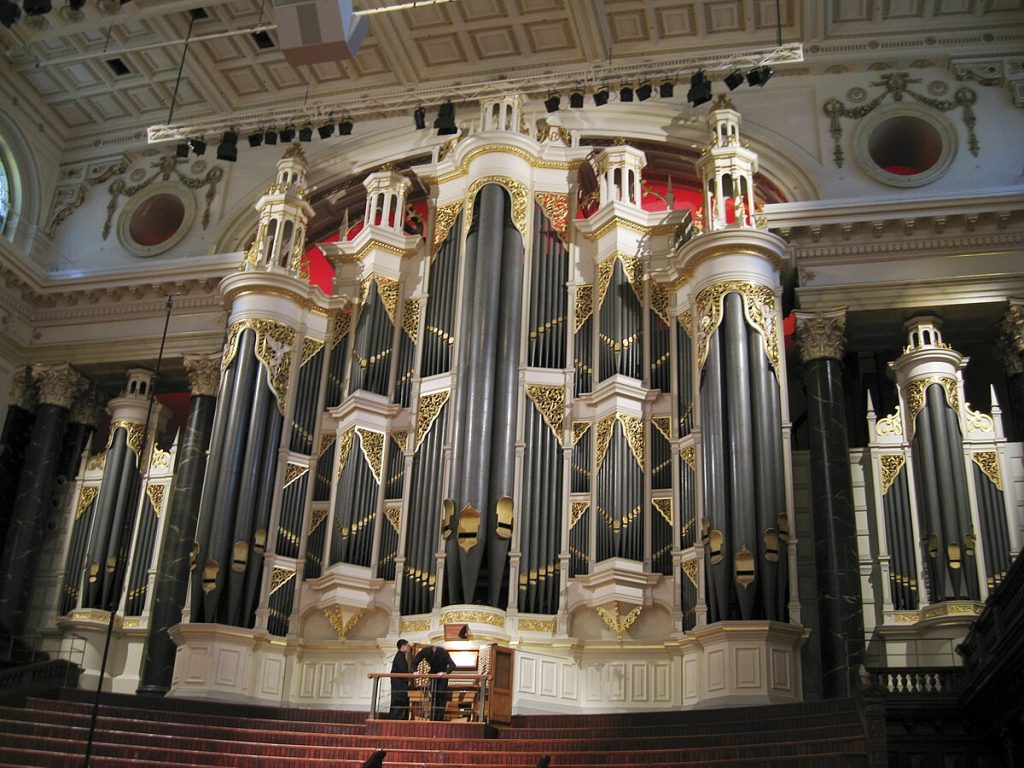
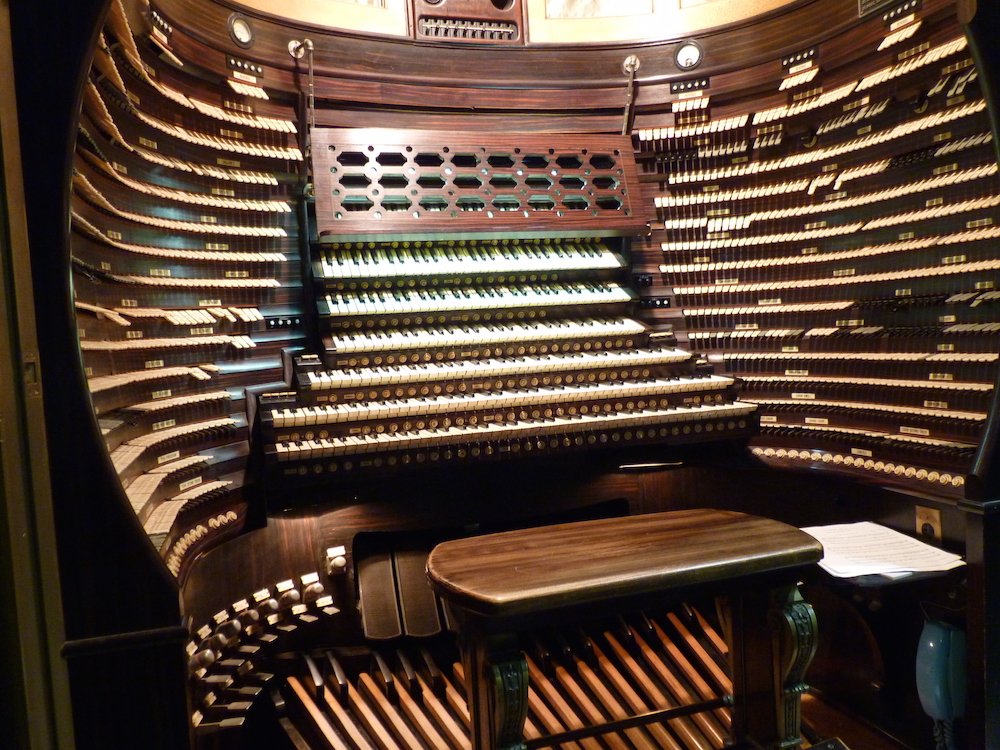
Even in its conventionality and at the expense of risking caricatured portrayals of the instrument as evil in a similar fashion to the harpsichord, Kondo simply could not pass the opportunity to employ its sonority and connotations, there is no other instrument that could symbolize power that compares to the pipe organ, it simply works on many different levels. Playing his own theme, it is essentially a musical statement of how Ganondorf sees himself as a god. From the Phantom of the Opera to count Dracula, the figure of the solitary, desperate man playing the organ on the depths of his lair has enthralled audiences and become a trope in horror and gothic stories—the instrument is after all, the grandpa of the modern synth, and you know how crazy keyboard geeks can get.
Its associations with death, the ancient Catholic Church and the supernatural plane of God is what has made the instrument a staple in horror films dating back to the beginning of the medium itself in the 1920s; it alludes to the gothic tradition in all of its forms alongside church bells and ominous Latin choirs. It adds a sense of monumentality to any scene and it is a natural fit for final bosses (for all we know, Ganondorf himself might have written also the Bowser’s final theme from Mario 64 or Dancing Mad for Kefka). Huge objects also evoke this sense of awe and terror naturally.
Sadly, the organ magically disappears right when the battle starts.
Unlike the standard Ganondorf’s Theme, this reprisal includes an intro; three seventh sus4 chords in parallel motion played with commanding authority to indicate that the escalation, both literally and metaphorically has begun.
C7sus4 – B7sus4 – C7sus4 – B7sus4 – C7sus4 – B7sus4 – Bb7sus4
After this, the Ganondorf Theme begins in earnest with its characteristic slowly ascending chromaticism. The cue has four variations that are activated depending on how far ahead Link is on the staircase; each with progressively more intricate rhythms, as if this lurking beast is getting bigger and bigger, hungrily craving the Triforce. The bass first alternates between the pitches C and G. Then this sequence is repeated but transposed a minor third up; this adds an even more menacing quality to the original composition; Ganondorf is not as calm and composed anymore. After this the track adds more arpeggio textures to both accompaniment and lead melody, always retaining the Ganondorf’s motif. This is certainly no wedding march but a classic gothic statement of evilness taken from a theme we are already familiar with at this point.
As always, the ending of each sequence is created from sustained, progressively accelerating minor chords that convey the hopelessness of even trying to match this powerful being. The horn is retained with an exaggerated vibrato effect that gives it an otherworldly sound, as if the organist just pulled another stop to generate new layers.
The organ playing villain may have lost some of it power due to overuse and parody. Nevertheless, the employment of dynamic music tied to the musical motif present throughout Ocarina of Time makes this segment a well earned moment where the team was not afraid of going over the top in order to thrill and surprise players.
Help to keep the rites going around here by supporting the shrine:

Media Files, requests and support for more interactive content

Thou shall donate since this is a cult and you are now a sheep

Help staying awake analyzing game tracks and writing posts or else everything will end up being written by A.I
- Inside The Score – The Legend of Zeda: A Link to the Past – End Credits / Staff Roll
 The land rests As the last few minutes of this extensive journey that has now come to an end fly by, the nostalgia and reflective mood kicks in. Because such a massive enterprise as a Zelda game or a Lord of the Rings movie require multiple endings to convey everything… Read More »Inside The Score – The Legend of Zeda: A Link to the Past – End Credits / Staff Roll
 - Inside The Score – The Legend of Zelda: A Link to the Past – Ending / Epilogue ~ Beautiful HyruleFinal of the fantasy The Triforce has been touched. A wish has been granted. For the occasion, the newly undeceased king of Hyrule has commissioned a march in honor of the legendary hero to the Hylian Sousa, who might as well be composer Nobuo Uematsu since this piece is very… Read More »Inside The Score – The Legend of Zelda: A Link to the Past – Ending / Epilogue ~ Beautiful Hyrule
- Inside The Score – The Legend of Zelda: A Link to the Past – Triforce Chamber / Power of the GodsTake your boots off your feet And thus the Triforce spoke to men. And it became present in history. And you better treasure and contemplate this moment seldom witnessed in the course of the series. The elusive opportunity to interact and touch the most important artifact. You are now in… Read More »Inside The Score – The Legend of Zelda: A Link to the Past – Triforce Chamber / Power of the Gods
- Inside The Score – The Legend of Zelda: A Link to the Past – Ganon Battle / Prince of DarknessProgressive evil En Garde! And you better be prepared since you are about to duel the iconic enemy of the series at perhaps his canonically most powerful incarnation. Right after having touched the sacred Triforce which allowed him to conquer all of the Golden Land and whose evil and darkness… Read More »Inside The Score – The Legend of Zelda: A Link to the Past – Ganon Battle / Prince of Darkness
- Inside The Score – The Legend of Zelda: A Link to the Past – Boss Battle / Anger of the GuardiansQuick mayhem Ah, the simpler times when boss battles where not a multi epic orchestral suite but just an ostinato more basic that even what became the music for standard battle encounters out there. We are a long way from each boss having his own personalized track. And this early… Read More »Inside The Score – The Legend of Zelda: A Link to the Past – Boss Battle / Anger of the Guardians
- Inside The Score – The Legend of Zelda: A Link to the Past – Dark World Dungeon / Dungeon of ShadowsMemento mori We are getting closer to Ganondorf (or at least the wizard Agahnim who ultimately fulfills the same human side of evil role in this game) and that means getting closer to the profiles and motifs of his own theme song (which naturally was the theme of Agahnim at… Read More »Inside The Score – The Legend of Zelda: A Link to the Past – Dark World Dungeon / Dungeon of Shadows