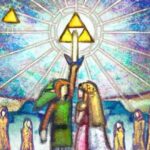
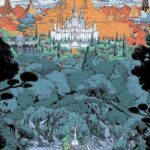
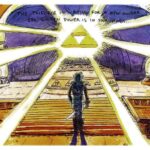
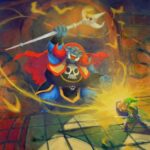
A legendary clash between man and beast, good and evil, hero and demon
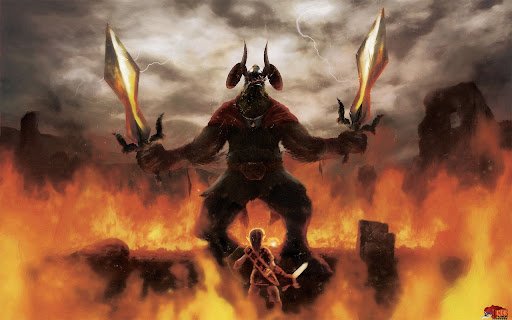
A battle for the ages. The last confrontation is presented as a scene coming directly from mythology; a clash of true epic proportions that will be forever ingrained into the legend of the Triforce. There are no more magic tricks or pyrotechnics, here the demonic beast known as Ganon will crave the blood with its own blades in a duel with a Hero of Time that is not able to retrieve the Master Sword. The flames, the screams of Zelda, the courage of Navi, and the entire darkness engulfing the scene, where just the two glowing eyes of the beast are all that is seen between small glimpses provided by lighting bolts creates the climax of the exponential curve Ocarina of Time has expertly been building up; we heard all about the legend that was told about the leader of the thieves who became the Ganon that we fought in the previous titles. We are seeing now this metamorphoses play in real time with our own eyes, with Ganondorf hanging to life by a thread making a desperate last ditch effort with the power of the Triforce.
The score of course could not stay behind, with Kondo opting for a piece to match the atmosphere of these apocalyptic stakes; the music truly feels like a hero using the last of his strength to fight an insurmountable foe. The usual combat music with high octane brass sections and ultra fast ostinatos does not work anymore for two figures that have transcended human status. Everything is at stake here, it’s good vs evil in musical form.
We will also explore the short cue that plays right when the sages ultimately seal the demon king into the sacred realm.
Musical Analysis
Structure: Section 0 / Section 1 / Section 2 / Section 3
Time Signature: 4/4
Tempo: 148 (72 in section 0)
Melodic and Harmonic Profiles: E Phrygian Major; F# Octatonic
The intro, which takes half the instruments here, could perfectly be a separate cue whose purpose is to musicalize the transformation into Ganon. It is a follow up both literally and thematically to the ‘Enter Ganondorf’ cue that worked as a leitmotif for the surprise appearances of Ganondorf—its name would be of course “Enter Ganon”— Slower, heavier and more chromatic; here we have a standard dissonant fanfare for a big bad monster using the diminished seventh chords in parallel that are known for fusing together the unsettling characteristics of the tritone, the perfect fourth and the minor second all at the same time.It is the only bombastic part here. The rest of the track matches the scale, magnificence, dramatic stakes and pace of the battle.
After that we perceive the first tinges of heroism dwelling deep within the low end of the track, where the typical connotations of the perfect fourth and Ganondorf are replaced with the more triumphant and stable perfect fifths, supporting the hero in the same way that Zelda and Navi do. They still move in chromatic fashion and slowly though, reminding the hero that he has to be cautious and that there remains a chance of failure. The upper strings are layered on top playing sus2 chords and perfect fourth intervals; the music itself is also having a clash of its own between the forces of the perfect fourths and those of perfect fifths. At the end of the phrases the upper strings finally play the perfect fifth, triumphing over the perfect fourth; there is hope for Link. The combination of the strings even manages to sound a major chord (E major)…. but then the even more evil tritone appears in order to clash against the perfect fifth, and just after that an F major chord fights back. The battle between consonance and dissonance goes on and on throughout the track; perfect fourth against perfect fifth, augmented vs major. In the end the piece clearly favors the major chord, with three consecutive ones predicting the outcome of this battle. As seen on the visuals, the low strings playing the perfect fifths are doubled note for note by the horns; Link has the support of his friends and the entirety of Hyrule.
This instrumental section can be heard isolated here:
The instruments are reinforced with choirs that are always called in to give gravitas to any situation, showing that this is truly a battle of legend or might even point out to a conflict between goddesses and demons. In any case nothing screams grand finale more than a potent choir chant. You can picture them singing in Latin (or rather some ancient Hylian language).
The only remnant of conventional battle music is the driving percussion section propelled by the snare drum combined with over the top timpani and orchestral cymbals all over it for enhancement. Sometimes the timpani even giving Oriental opera touches in the way they imitate the rhythmic language of the medium.
The track features long held chords opposed to the fast ostinatos, giving it a ritual connotation. Still, the chord changes are unpredictable, not following a fixed rhythm pattern that is easily predicted. The slow moving chordal texture often goes from E major to F major, giving it the Phrygian Major profile. At various times the chords feature suspensions that add harmonic interest with added major notes that do not sound dissonant, just solemn. It is this contrast that makes the piece feel more special and unique when compared with other boss battles; without sounding very demonic it still manages to convey the drama and the weight that is on your shoulders. It is a composition that is full of a grandiosity that matches the scale of your enemy and the stakes.
Link does not manage to eliminate the beast, the only option left is to use the power of Princess Zelda who ends on her knees due to the amount of effort, the sages and the Master Sword to seal Ganon. The fate of the land was decided on top of the ruins of its own Hyrule Castle, now it is time to celebrate, rebuild and say some painful goodbyes.
Musical Analysis: Seal of the Sages
Structure: Section 1
Time Signature: 4/4
Tempo: 77
Melodic and Harmonic Profiles: E Neapolitan Minor
Ganon, the demon king is finally slayed by the legendary Master Sword wielded by the Hero of Time, the six sages and Princess Zelda combine their powers to cast the most powerful magic found in the game, a seal to imprison the beast along with the Triforce of power. The music, taking it from the cue of the sacred realm, uses the choirs in ascending fashion to match the amount of sacred power it is being conjured here.
As a matter of fact, by the end of it the cue stops being music and the choirs are simply part of the ‘ray of magic’ sound effect we hear in the game—for example when Link exits a boss room— The magic of the sages is simply reinforced with the choirs to indicate more power and more epicness.
The mix of the male choirs and the female choirs in this context was intended to be the voices of all the different sages combining their powers together. The harmony sustains one of the weirdest chords found on the soundtrack: an Em maj7 that sounds very dissonant; reality is being broken here after all, or Kondo just wanted to match the note of the magic sound effect whatever it took. The female choirs are left alone at the end since the goddesses triumphed over the demons. They can also represent the seventh sage and Princess Zelda as the voice of the goddess Hylia.
Nonetheless, the particular chord formed is not what matters here, the important message to convey was that each sage has his or her own independent voice, so the cue picks six different notes to represent each sage; the last one played by the female choir is, as was mentioned, either the seal itself or Princess Zelda, who is the seventh sage—if we could take a fun guess, the order of the voices would be: Darunia, Rauru, Impa, Nabooru, Ruto And Saria…or perhaps it’s just in the order of the cutscene; in any case Saria has to be the last and Darunia the first for obvious reasons.
After seeing Ganondorf one last time cursing all his imprisoners amidst the theme of the Sacred Realm, it’s time for the player to be rewarded with the final cutscene of the game. The narrative and the music play together to give that characteristic bittersweet ending many Nintendo games strive for. It is a series of events that will change the course of history, with the Triforce, this balancing force broken in three, the cosmos is destined to branch into three different timelines, the timeline of Courage where the valiant hero triumphed over evil, the timeline of wisdom where the strategy of the princess thwarts the plans of Ganondorf and the timeline of power where the evil king manages to defeat his enemies. Besides this, this moment will change forever the destiny of the Hero of Time.

Help to keep the rites going around here by supporting the shrine:

Media Files, requests and support for more interactive content

Thou shall donate since this is a cult and you are now a sheep

Help staying awake analyzing game tracks and writing posts or else everything will end up being written by A.I
- Inside The Score – The Legend of Zeda: A Link to the Past – End Credits / Staff Roll
 The land rests As the last few minutes of this extensive journey that has now come to an end fly by, the nostalgia and reflective mood kicks in. Because such a massive enterprise as a Zelda game or a Lord of the Rings movie require multiple endings to convey everything… Read More »Inside The Score – The Legend of Zeda: A Link to the Past – End Credits / Staff Roll
 - Inside The Score – The Legend of Zelda: A Link to the Past – Ending / Epilogue ~ Beautiful HyruleFinal of the fantasy The Triforce has been touched. A wish has been granted. For the occasion, the newly undeceased king of Hyrule has commissioned a march in honor of the legendary hero to the Hylian Sousa, who might as well be composer Nobuo Uematsu since this piece is very… Read More »Inside The Score – The Legend of Zelda: A Link to the Past – Ending / Epilogue ~ Beautiful Hyrule
- Inside The Score – The Legend of Zelda: A Link to the Past – Triforce Chamber / Power of the GodsTake your boots off your feet And thus the Triforce spoke to men. And it became present in history. And you better treasure and contemplate this moment seldom witnessed in the course of the series. The elusive opportunity to interact and touch the most important artifact. You are now in… Read More »Inside The Score – The Legend of Zelda: A Link to the Past – Triforce Chamber / Power of the Gods
- Inside The Score – The Legend of Zelda: A Link to the Past – Ganon Battle / Prince of DarknessProgressive evil En Garde! And you better be prepared since you are about to duel the iconic enemy of the series at perhaps his canonically most powerful incarnation. Right after having touched the sacred Triforce which allowed him to conquer all of the Golden Land and whose evil and darkness… Read More »Inside The Score – The Legend of Zelda: A Link to the Past – Ganon Battle / Prince of Darkness
- Inside The Score – The Legend of Zelda: A Link to the Past – Boss Battle / Anger of the GuardiansQuick mayhem Ah, the simpler times when boss battles where not a multi epic orchestral suite but just an ostinato more basic that even what became the music for standard battle encounters out there. We are a long way from each boss having his own personalized track. And this early… Read More »Inside The Score – The Legend of Zelda: A Link to the Past – Boss Battle / Anger of the Guardians
- Inside The Score – The Legend of Zelda: A Link to the Past – Dark World Dungeon / Dungeon of ShadowsMemento mori We are getting closer to Ganondorf (or at least the wizard Agahnim who ultimately fulfills the same human side of evil role in this game) and that means getting closer to the profiles and motifs of his own theme song (which naturally was the theme of Agahnim at… Read More »Inside The Score – The Legend of Zelda: A Link to the Past – Dark World Dungeon / Dungeon of Shadows