Goodbye kingdom of Hyrule, our time has come
This opera is closing the curtain with its grand multi-part finale. Koji Kondo and his knack for encapsulating nostalgia in sound form is always called for to give the finishing punch to many Nintendo adventures; his expertise at crafting melodies that balance happiness and sadness in almost equal fashion always seem to give a bittersweet touch to any game regardless of what happens on the story being told.
When it comes to Ocarina of Time’s case, it was just a matter of reprising the main theme of the game at its most melancholic fashion, coupled with a brand new sweeping intro—two intros, in fact—stronger, more nuanced dynamics and a more symphonic arrangement and orchestration; interludes included. Malon, the songstress of this adventure inspired by the singer in Link’s Awakening, makes an appearance to perform her own rendition of Zelda’s Lullaby, she is complemented by the female choir singing in an unbelievable celestially high register, these are definitively voices that do not belong to the human realm.
After Princess Zelda sends back Link to his own era it fades to black and then the dawn over the green pastures of Hyrule is featured, as the kingdom of Hyrule and its story is the protagonist of this series; this is the Hyrule Fantasy after all.
Musical Analysis: Part 1 – End Credits
Structure: Section 0 / Section 1 / Section 2 / Section 3 / Section 4 / Section 5 / Section 6
Time Signature: 3/4
Tempo: 88 (dynamic from 88 to 35)
Melodic and Harmonic Profiles: G Ionian/Major; C Ionian/Major; A Ionian/Major; D Ionian/Major
It is pretty much Zelda’s Lullaby all the way down, at its most sublime and melancholic. The song starts in a time signature of 3/4 but played so rubato that it could perfectly fit with measures in 7/4. The harp playing caries most of the bittersweet feeling with effective use of voice leading and well placed chromaticism. The second intro moves elegantly through the harmony with pedal notes, with the bass notes descending in true Kondo-esque ending theme fashion.
The accompaniment part of the harp can be heard here:
The sense of beauty of this intro comes from the use of maj7 chords and, remember folks, I to IV back and forth is always nostalgic which is why Kondo-san uses it for his ending themes quite a lot, a Nintendo trade secret. So here we get G to C. The other trick up his sleeve is the descending accompaniment of the post-intro, a typical romantic device apt for parting ways. This produces the following harmony progression: G – Gdim – Am7 – D, ending on the dominant to prepare for the launch into the main theme.
After that long overture, Princess Zelda’s theme is released unto the listener in majestic fashion, with the melody carried by the harp, the true instrument of the princess, initially and then doubled by the fiddle which adds a string texture seldom heard on the soundtrack, more folksy and warm. Both of them are relieved by the string section shortly after; clarinets and horns playing non sustained notes reinforce the harmony.
The track starts to create a build up with increasing rhythmic density and exchanging sustained chords for repeatedly sounding ones, suspending in the air the listener with a short rallentando interlude that prepares the key change just a moment before the catharsis of listening Malon voice sing the lullaby at the top of her lungs a whole tone higher, with her horse Epona on the horizon just like on this opera’s overture. This classic technique of transposing the song a tone higher to cheat emotional release is well earned after the tense final battle the players had to overcome and all the variations and reprises of Zelda’s Lullaby The player has already encountered; it marks a significant culmination; the page can be turned now, the change key representing Hyrule moving unto a new chapter.
The tension filled build up has an harmony full of diminished chords:
C – F#dim – D – Abdim – G – A7. The dominant A7 transitions into its D chord that begins the key change.
The music is accompanied by the landscapes of Hyrule, making the player reflect on the adventure that just took pace, a reflective mood that the game set up since the fanfareless intro. Celebrations and final contemplations are also in order for the inhabitants of Hyrule. From all corners of the world, the people gather together to honor the Hero of Time.
Musical Analysis: Part 2 – End Credits
Structure: Section 0 / Section 1 / Section 2 / Section 3 / Section 4 / Section 5 / Section 6 / Section 7 / Section 8 / Section 9 / Section 10 / Section 11 / Section 12 / Section 13 / Section 14
Time Signature: 2/4, 4/4, 3/4
Tempo: 140; 69 (dynamic from 51 to 121)
Melodic and Harmonic Profiles: Atonal (Section 0); F Lydian; C Ionian/Major; A Aeolian/Minor; C Whole Tone; C Phrygian Major
Let’s get this party started, even though the magical and mysterious sounding Lost Woods theme colors this celebration with its whimsical touch. A project as massive as Ocarina of Time would of course need multiple credits cutscenes and endings to honor the entirety of the team that came together to craft the experience and to say goodbye to all the characters we met along the way, allowing players to see the results of their deeds and the fate of the land of Hyrule.
After sustaining the last chord of Zelda’s Lullaby, the credits continue shortly after to show us what’s up with the inhabitants saved by the actions taken by Link and the end of the reign of terror caused by Ganondorf. The chosen one for the big celebration taking place at Lon Lon Ranch is none other than Saria’s Song, the bringer of joy; fitting since the song itself encapsulates many of the Zelda series own sensibilities like mystery, magic, quirkiness and darkness—it doesn’t hurt that it is also downright catchy and memorable.
Everyone is here, from the characters to the instruments—surprisingly, the omnipresent piccolo was axed from the party—Here we have the opportunity to once again see Koji Kondo’s chops in film scoring; with a track that is tied to the actions happening on screen. It will also be the very last use of diegetic music from this musical adventure, with instruments appearing to imply the feast and dancing taking place here, like the goron cuica, and voices joining when singers appear on the scene. However, there is still a place for reflection when the music transitions to a more sorrowful melody as a requiem for the sages before building up to the majestic grand finale. On interviews Koji Kondo has singled out this moment as a proud one for him because of the way the soundtrack follows closely the narrative.
The track begins indistinguishable from the Lost Woods theme but, almost immediately, a flurry of instruments are juxtaposed to broaden the musical palette and indicate that this Hylian troupe has grown in size; presumably, musicians all across from the Hyrule court, the castle town, the Gorons and all of the forest children are playing as one for the first time, even Malon and the carpenter’s sons lend their vocals to add to the jolly atmosphere.
Even so, not all characters have happy endings. In this battle between good and evil there have been loses and relationships that can not continue any longer. As the camera pans to two figures among the crowd reminiscing about loved ones who are now sages, sages that are no longer among the world of the living, the music adapts to a more contemplative suite before transitioning to the distinctive theme of the Sacred Realm—of course it is based on the implied I to IV vamp. The sad part and low volume of Saria’s Song implies a distance of these characters both visually and musically from the festivities taking place. However, this time around, the theme of the Sacred Realm that represents the mythos of Hyrule does not remain on an infinite loop lacking any tonality, instead it resolves in its most grandiose harmonic fashion to the main theme song of the game, the titular ocarina of time being the very last instrument added to this orchestration as we see the sages watching over a new dawn for Hyrule, proud of the work their deeds accomplished.
But what happened with the Hero of Time? He belongs to a different time and place now, his legendary quest now part of the folklore of a different world he left never to return. The Master Sword rests again at the Temple of Time. Link, Navi and the players’s mission has finally concluded. This significant moment is marked by the departure of Navi the Fairy; the music stops abruptly and then, after a brief moment in which the two partners look at each other one last time, starts to mimic the flying patterns of this companion friend just like it did back when we first met her. The connection between player and their 3D guide is being dissolved. From the very early stages of development, the Zelda team knew that this story had to begin with Navi arriving and end with her departing no matter what happened in the narrative, after all, Navi was conceptualized as a guide for the players to traverse this first 3D adventure; her name, being short for ‘navigation’ designates the point where the connection between player and game world is established. At the very end, the player does not need navigation anymore. The control can be unplugged.
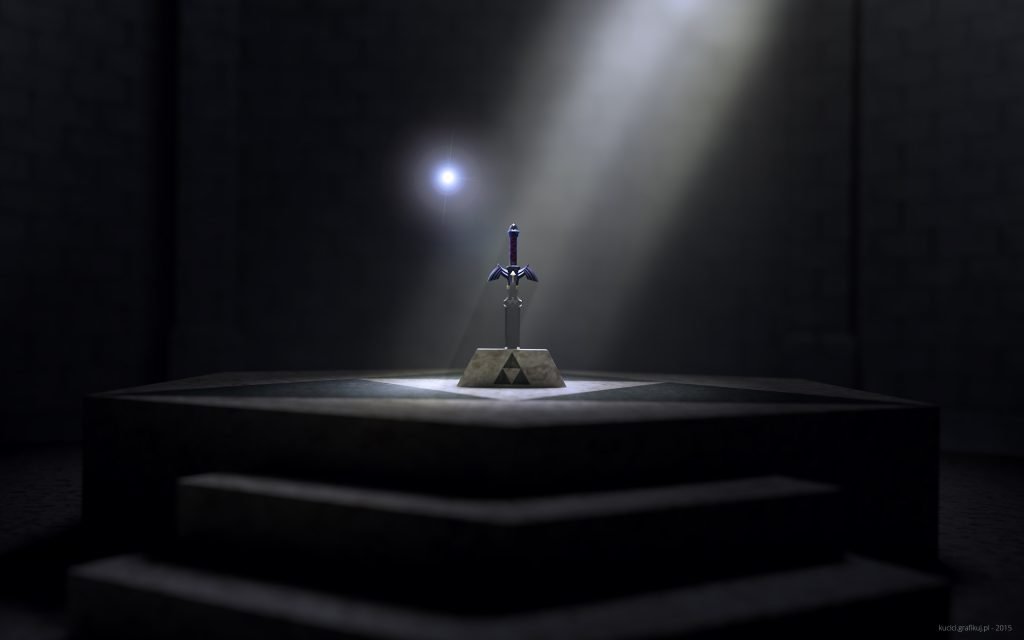
For the grand finale, Kondo takes the opportunity to add the final instrument to his soundtrack; an extended Andalusian cadence, emblematic of The Legend of Zelda is accompanied by a cacophony of church bells heard over an orchestra having a classic symphonic ending evoking a visceral reaction out of anyone who hears it, ritardando timpani playing fourths included, celebrating the triumph of the hero and the end of the journey. The camera stays put on a Master Sword shined by the light of the temple while the words ‘Presented by Nintendo’ appear on screen, moments that surely have awarded the company its passionate following. It could not end any other way, an ending for the ages and a true cadence amidst a score often based on loops. It is hard to imagine a game with grander ambitions and stakes than Ocarina of Time; it is a long, complicated project with a plot that hops across dimensions and time itself. If any game earns an ending with orchestral overkill it has to be The Legend of Zelda: Ocarina of Time.
Ocarina of Time was the very last game in the series solely scored by Koji Kondo. At this point in time, video game composers were some of the last vestiges of the concept of auteur in an industry dominated by team work; in the new millennium, high profile video games are so elaborate, that the writing of the music usually has to be done with teams of composers in order to match the scope of mainstream projects. Therefore, Ocarina of Time marks a point where original series’ creator Shigeru Miyamoto and original composer Koji Kondo start their journeys toward more supervisory roles—Koji Kondo swan song would still be Majora’s Mask since he composed all but three songs on the score—A work that strived to surprise players at every turn, Koji Kondo matched the ambitions of the team by delivering a magnum opus that binds feelings of happiness and sadness into an immediately nostalgic whole, so that your first listen feels like your thousandth. This work still colors the audio sensibilities of the series to this day.
There is still an epilogue left to close the adventure but this is a good moment to again quote a review made of The Legend of Zelda: Ocarina of Time soundtrack that captures its spirit and the scope of one of the most influential original scores in media. Pitchfork magazine, firmly establishing their hipster credentials, reviewed the soundtrack release of the game, dubbing it the high water mark for video game music:
“One of Nintendo’s greatest strengths—or follies, depending on what stage of the deleterious decline/miraculous revival cycle the company finds itself in—is having the confidence to reach for intangible qualities of magic and the sublime in an earnest and uncynical fashion. They remain the lovable dad of the industry, corny and often eye-clawingly frustrating, but self-aware enough to make good on it. Kondo’s scores are the connective tissue in Nintendo’s enormous body of work. His particular gift was to not just create music matched to gameplay, but to grasp the way sound folds itself into our surroundings, creating associations forged and never forgotten. No game soundtrack before or since has brought that to bear quite like Ocarina of Time, leaving an emotional response that lingers long after the system shuts down.”
https://pitchfork.com/reviews/albums/koji-kondo-the-legend-of-zelda-ocarina-of-time
Musical Analysis: Part 3 – Epilogue
Structure: Section 0 / Section 1 / Section 2
Time Signature: 3/4
Tempo: 90 (ritardando at the end of phrases to 75 and 60)
Melodic and Harmonic Profiles: G Ionian/Major
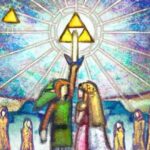
For all the pomposity and finality of the ending, there is still a last piece of silent narrative that the game needs to address, accompanied with the very first version we heard of Zelda’s Lullaby. A reprisal of the meeting between Link and Zelda when they were just children is seen again before the colors fade. The scene freezes and all we are left with is a vintage photography and the realization that the buttons on the control stopped receiving input; all that is left is to shut down the console, leaving the future of these two characters open.
A delicate string note is left ringing alongside a bright blue sky before the start of the familiar harp arpeggio of the theme is synchronized with the image of a young princess Zelda, her back turned to Link and seeing through the window. Just like on the good bye to the adult Zelda, the song here is left unresolved with two last chords that never get a resolution to that G: Am7 – D7. Both the listener and the watcher are left expectant on what will happen between these two. The cycle of the legendary hero and the princess is meant to continue at another time.
However, the honor of closing the curtain to this musical fantasy work ultimately does not belong to Koji Kondo; there is one last musician that joins this Hylian troupe at the very last minute to hijack the role of composer from him. If the end screen is left untouched, the song that the player themselves wrote for the scarecrow when Link was just a child will play, bringing an unique conclusion to each person that reached the end of the game and putting the last cherry on top of a project that undoubtedly has directly and indirectly turned up some into real life musicians.
And so, The Legend of Zelda: Ocarina of Time, true to its title, ends up being a story where music and growing up are its two protagonists.

Help to keep the rites going around here by supporting the shrine:

Media Files, requests and support for more interactive content

Thou shall donate since this is a cult and you are now a sheep

Help staying awake analyzing game tracks and writing posts or else everything will end up being written by A.I
- Inside The Score – The Legend of Zeda: A Link to the Past – End Credits / Staff Roll
 The land rests As the last few minutes of this extensive journey that has now come to an end fly by, the nostalgia and reflective mood kicks in. Because such a massive enterprise as a Zelda game or a Lord of the Rings movie require multiple endings to convey everything… Read More »Inside The Score – The Legend of Zeda: A Link to the Past – End Credits / Staff Roll
 - Inside The Score – The Legend of Zelda: A Link to the Past – Ending / Epilogue ~ Beautiful HyruleFinal of the fantasy The Triforce has been touched. A wish has been granted. For the occasion, the newly undeceased king of Hyrule has commissioned a march in honor of the legendary hero to the Hylian Sousa, who might as well be composer Nobuo Uematsu since this piece is very… Read More »Inside The Score – The Legend of Zelda: A Link to the Past – Ending / Epilogue ~ Beautiful Hyrule
- Inside The Score – The Legend of Zelda: A Link to the Past – Triforce Chamber / Power of the GodsTake your boots off your feet And thus the Triforce spoke to men. And it became present in history. And you better treasure and contemplate this moment seldom witnessed in the course of the series. The elusive opportunity to interact and touch the most important artifact. You are now in… Read More »Inside The Score – The Legend of Zelda: A Link to the Past – Triforce Chamber / Power of the Gods
- Inside The Score – The Legend of Zelda: A Link to the Past – Ganon Battle / Prince of DarknessProgressive evil En Garde! And you better be prepared since you are about to duel the iconic enemy of the series at perhaps his canonically most powerful incarnation. Right after having touched the sacred Triforce which allowed him to conquer all of the Golden Land and whose evil and darkness… Read More »Inside The Score – The Legend of Zelda: A Link to the Past – Ganon Battle / Prince of Darkness
- Inside The Score – The Legend of Zelda: A Link to the Past – Boss Battle / Anger of the GuardiansQuick mayhem Ah, the simpler times when boss battles where not a multi epic orchestral suite but just an ostinato more basic that even what became the music for standard battle encounters out there. We are a long way from each boss having his own personalized track. And this early… Read More »Inside The Score – The Legend of Zelda: A Link to the Past – Boss Battle / Anger of the Guardians
- Inside The Score – The Legend of Zelda: A Link to the Past – Dark World Dungeon / Dungeon of ShadowsMemento mori We are getting closer to Ganondorf (or at least the wizard Agahnim who ultimately fulfills the same human side of evil role in this game) and that means getting closer to the profiles and motifs of his own theme song (which naturally was the theme of Agahnim at… Read More »Inside The Score – The Legend of Zelda: A Link to the Past – Dark World Dungeon / Dungeon of Shadows