The modern nightlife
“I continue standing here at the counter hoping one of my favorite customers will appear…And I wasn’t wrong. See? You stopped in”
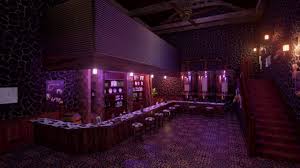
We are all gonna die anyway so why not have at least a little bit of fun and, furthermore, have the opportunity to intoxicate our fears and drown the sorrows at the local milk bar; only thing needed is having a soundtrack that is happy, sad, fun, bittersweet, cool, earnest, modern and old school at the same time in order to say goodbye and dance and drink and screw because there is nothing else to do. Easy piece right? And since there is no sign of the Skull Kid anywhere and the last Bomber kid with information is hidden on some crate, maybe Link can clear his mind a little here.
Kondo probably could have just gotten away with writing a banger song with a catchy rhythm for people to dance at the local bar. However, he can’t help but infuse melancholy and earnestness into even its most simple requested tunes. The Milk Bar, a very modern place closer to the spirit of Earthbound than Zelda, where Link is going to have a set of memorable encounters with characters that need to be reminded of what is really important.
Even so, the credit for manipulating a jazzy tune into a tender melody shouldn’t be placed exclusively on Koji Kondo. There has to be more to it since a lot of Japanese composers end up with similar results, and the Milk Bar cue is perhaps as close as Kondo has got to a true pop song for the Zelda series, or as Japanese popular music is usually called: J-pop.
It just takes a passing glance at the instruments featured on this cue to know how truly far ahead Termina is in terms of technology (almost all the instruments are new and from popular music). It wouldn’t be preposterous to assume that they even have their own recording industry—nothing is preposterous in this world—because in case you had’t noticed, the music of shops, lounges and minigame sites has changed from being non-diegetic in Ocarina of Time, to diegetic in Majora’s Mask; the songs are now in mono as opposed to stereo and they have been applied an equalization effect to make them sound just as if they were coming from a radio within the shop. This means Link is hearing the music as well as the player (the Milk Bar theme does not apply since of course a bar would not have a mono radio as a sound system, nonetheless the Hero of Time is surely hearing the music inside the bar). We also have modern five piece bands and artificial lights inside the house.
The popular music of Japan has some of its roots in traditional Japanese music, but significantly in 1960s pop and rock music, such as The Beatles and The Beach Boys, with an added edge of jazz for good measure (the American occupation after the war played a part in this). It’s ironic that jazz has such a big influence on the mainstream popular music of Japan and not as much on the nation where the genre was actually developed. The Amercian popular music industry usually has the quality of ‘coolness’ as its topmost priority due to having its roots in the more chromatic inflected and rhythm focused blues; its descendants, including jazz, rock and hip hop, for the most part are focused on moving the body and being as ahead of the trend as possible in order to generate new and innovative styles, find the next big thing, together with being different and original; rhythm, dance, technology and beat-making are the best elements of music to accomplish these goals.
The 1960s pop boom, as personified in the figure of The Beatles, was a success precisely because the bands took the catchy dances and exciting rhythms coming from American music and infused them with the particular melancholy of the folk melodies that are prominent in North European and Nordic countries. In short, ‘sweet’ is usually not an adjective that an American popular music act wants to be associated with, ‘hip’ would be better—it’s a bit of a simplification and of course there are exceptions like the American Broadway tradition, R&B and Brill Building pop, which tend to value melody above all, yet mainstream music is still more rhythm based— A traditional, sweet melody placed over an innovative new rhythm remains to this day, the safest path to reach a widespread audience; a true formula for universally ‘good music’ still practiced to this day, where Scandinavian songwriters are recruited to put their unique bittersweet melodies on top of American modern beats to create the biggest hits heard all over the world.
Japanese pop also belongs to this tradition, where originality and trendsetting are not as valued as just writing a well crafted tune on top of any pre-existent rhythm coming from any part of the world, specially the United States. They are even more traditionalists, still maintaining the spirit of jazz and 60s pop alive in the mainstream. This means J-pop usually has more room for extended harmony and melodies with an excess of saccharine or sometimes simply based around pentatonic scales—the ones without the sassy chromaticism.
Often deliberately cheesy, lightweight, silly, and sweet, the insular Japanese pop scene has its melancholic roots in the genre known as enka, analogous to what shclager music is to Europop; the origin of the bittersweet for these nations—’Dancing Queen’ from the group ABBA might even be the ultimate example of plastering a melancholic melody on top of the latest dance craze: disco. In fact, the song would fit like a glove on the Milk Bar’s playlist— In the case of J-pop, it mixed the traditional music of Japan with the jazz of the U.S occupation era and 60s pop in order to create the style we can nowadays recognize in much idol music, Japanese video games and anime productions—Section 2 of the Milk Bar Theme with just a bump in tempo and an ultra high pitched girly vocal would perfectly work as a TV show opener or ending theme— This means that for many composers like Kondo, writing the type of music that mixes earnest, nostalgic melodies with a jazzy flavor is basically second nature.
Musical Analysis
Structure: Section 0 / Section 1 / Section 2
Time Signature: 4/4
Tempo: 140
Melodic and Harmonic Profiles: Bb Ionian/Major; F Ionian/Major
The starting point is all about that bass; the addictive bass line, played for the first time by an actual modern electric bass, is unabashedly melodic in its own way, mixing walking jazz lines and imitations of the main melody with pop music-style jumps, finding the perfect space within the track to breath and fill up where the melody is silent. During Section 2 it changes to a traditional bass role of supporting and anchoring the harmony with steady eighth notes; though it still walks between transitions, always approaching the next chord either a semitone from below or a semitone from above. Meanwhile, the funky syncopated electric organ (Koji’s main instrument as a performer) complements the bass to create a strong rhythm section in which the orchestral percussion exclusive to The Legend of Zelda, is replaced with a drum set and a tambourine that might be the best sound Koji found to imitate a hi hat playing sixteenth notes throughout the song —although the second section introduces an actual hi hat played by foot.
The harmony in this first section would be a pretty standard pop chord progression like IV – V – I – vi except for the fact that Kondo makes it more lively and less romantic by making the sixth degree a major chord, otherwise the song would be an 80s ballad. He also introduces some spicy tension to the harmony by using a diminished chord.
Section 1
Eb – F – Bb – Bdim – G
Eb – F – Bb – Gsus4 – G
Eb – F – Bb – Bdim – G
Eb – F – Bb – F – Bb – F – Bb
A progression with inversions that still leans more in pure voice leading than any music theory rule.
Making the sixth degree of the scale a major chord in Section 1 sets the stage for the melancholy of the second section, when the same chord now will become minor in a new tonality, contrasting the two section just like a professional songwriter usually does. At the end of Section 1, the electric organ is joined by the Fender Rhodes piano at the last bit and then replaces it altogether till the end of the theme. Also an electric keyboard, the Rhodes became popular in the 1970s. its sound is more akin to an electric guitar, product of using pickups. On Section 2 the instruments cede all the prominence to the melody, dropping the pretense of sounding through the cracks and instead transforming into a full, steady rhythm section on full support mode.
The harmony is now VI – ii – V – I in a tonality based around F. After this, it goes on to try to find its way back to the original tonality by way of transforming the C chord into minor, just in time for when the loop occurs. The road goes like this:
Section 2
D – Gm – C – F
D – Gm – Cm-F-Bb -G
The section where everyone is sad but it doesn’t matter anymore, just dance away while the world ends.
You can check the never before released “rhythm section cut” of the track here:
However, for all of the electronics present here, the spirit of the baroque is still preserved by giving the main melodic role to the harpsichord; it is doubled by the acoustic guitar two octaves down, a sample sound that, soon enough, both Link and the player will be able to manipulate in their hands. The spirit of jazz ultimately possesses the cue when the tenor sax enters to deliver the bittersweet Section 2, also harmonizing with itself and doubled by glockenspiel.
The music is similar in part to the song ‘When The Rainbow Comes’ from World Party, in harmony and melody.
The whole of the Milk Bar is just another staple showing that Majora’s Mask is not your typical The Legend of Zelda game. We are not even in a legend anymore, just a futuristic fever dream full of characters that have emotions and struggles outside those of Link and the world they inhabit.
The Milk Bar is just only one of those places where they can open what is bottled up
Samples used on this track:
Rhodes Piano: CD 2 – PIA:E-PIANOS ok – PIA:Rhodes ok – PIA:Rhodes stere from the library Best Service Gigapack
Hammond Organ: CD 2 – ORG:B-3 ORGANS – ORG:B-3 Organs – ORG:B3-Organ 1 from the library Best Service Gigapack
Bass Guitar: Disk 1 – Abe Basses (Partition E) – FRENCH FRTLS – AL FRENCH A [424] from the library Spectrasonics Bass Legends
Saxophone: Partition A – TENOR SAX 1 – TENOR SAX from the library from the library InVision Lightware 1 Stratus [459]
Something that hasn’t been mentioned before is that all these samples sound better in their original form since the Nintendo 64 needed to compress the audio files in order to save memory—most sound samples in Ocarina of Time and Majora’s Mask had a sample rate of 32000 kHz; This means that, presumably, the soundtrack can be recreated with full definition samples and in theory sound more crisp. There are some fan made recreations like that found on the internet.

Help to keep the rites going around here by supporting the shrine:

Media Files, requests and support for more interactive content

Thou shall donate since this is a cult and you are now a sheep

Help staying awake analyzing game tracks and writing posts or else everything will end up being written by A.I
- Inside The Score – The Legend of Zeda: A Link to the Past – End Credits / Staff Roll
 The land rests As the last few minutes of this extensive journey that has now come to an end fly by, the nostalgia and reflective mood kicks in. Because such a massive enterprise as a Zelda game or a Lord of the Rings movie require multiple endings to convey everything… Read More »Inside The Score – The Legend of Zeda: A Link to the Past – End Credits / Staff Roll
 - Inside The Score – The Legend of Zelda: A Link to the Past – Ending / Epilogue ~ Beautiful HyruleFinal of the fantasy The Triforce has been touched. A wish has been granted. For the occasion, the newly undeceased king of Hyrule has commissioned a march in honor of the legendary hero to the Hylian Sousa, who might as well be composer Nobuo Uematsu since this piece is very… Read More »Inside The Score – The Legend of Zelda: A Link to the Past – Ending / Epilogue ~ Beautiful Hyrule
- Inside The Score – The Legend of Zelda: A Link to the Past – Triforce Chamber / Power of the GodsTake your boots off your feet And thus the Triforce spoke to men. And it became present in history. And you better treasure and contemplate this moment seldom witnessed in the course of the series. The elusive opportunity to interact and touch the most important artifact. You are now in… Read More »Inside The Score – The Legend of Zelda: A Link to the Past – Triforce Chamber / Power of the Gods
- Inside The Score – The Legend of Zelda: A Link to the Past – Ganon Battle / Prince of DarknessProgressive evil En Garde! And you better be prepared since you are about to duel the iconic enemy of the series at perhaps his canonically most powerful incarnation. Right after having touched the sacred Triforce which allowed him to conquer all of the Golden Land and whose evil and darkness… Read More »Inside The Score – The Legend of Zelda: A Link to the Past – Ganon Battle / Prince of Darkness
- Inside The Score – The Legend of Zelda: A Link to the Past – Boss Battle / Anger of the GuardiansQuick mayhem Ah, the simpler times when boss battles where not a multi epic orchestral suite but just an ostinato more basic that even what became the music for standard battle encounters out there. We are a long way from each boss having his own personalized track. And this early… Read More »Inside The Score – The Legend of Zelda: A Link to the Past – Boss Battle / Anger of the Guardians
- Inside The Score – The Legend of Zelda: A Link to the Past – Dark World Dungeon / Dungeon of ShadowsMemento mori We are getting closer to Ganondorf (or at least the wizard Agahnim who ultimately fulfills the same human side of evil role in this game) and that means getting closer to the profiles and motifs of his own theme song (which naturally was the theme of Agahnim at… Read More »Inside The Score – The Legend of Zelda: A Link to the Past – Dark World Dungeon / Dungeon of Shadows