A drummer at the reins
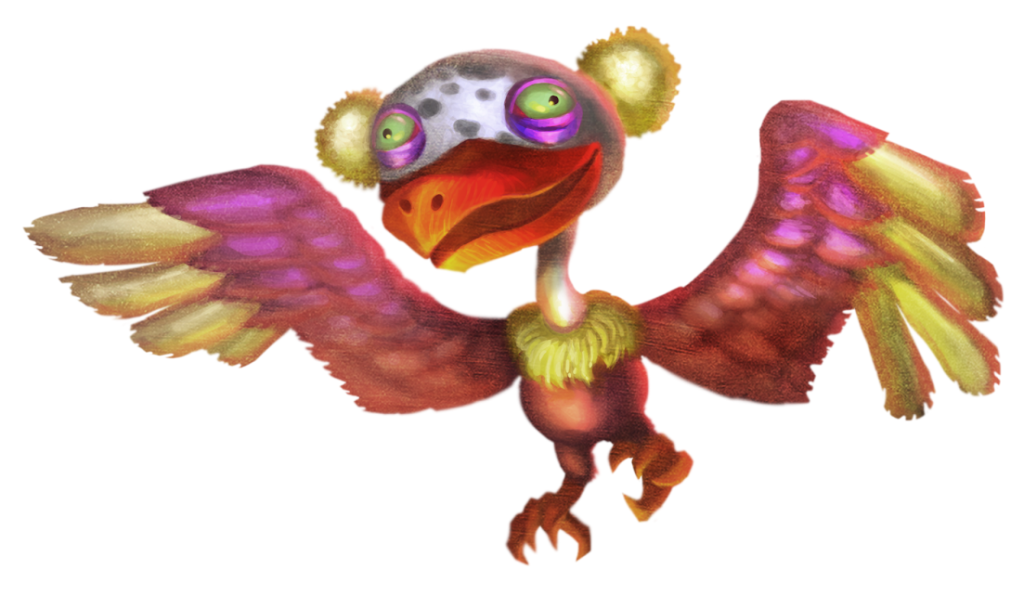
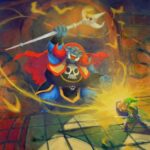
We finally reach the first of the Toru Minegishi-penned battle tracks on the soundtrack, the man who started his Zelda adventure here and will go on to become the lead composer for Twilight Princess (In the picture here we get the enemy who is the most likely to trigger the full piece).
The first battle Link encounters is pretty late for an action-adventure game. He gets the secret code and becomes a member of the secret society of Termina meant to help people, giving him access to the underground passages of Clock Town where The tempo here is faster than on the sister battle cue from Ocarina of Time (159 against 100), yet they start in almost the same way, an ostinato alternating fast between two notes separated by a semitone (pure Jaws); The one from Majora’s Mask Goes right for it, played first with the marimba which is joined by the same bassoon from the previous game. The bassoon is playing slightly behind the marimba to create even more of a whirlwind effect, disorienting the player and making they wonder from where the danger is coming from; both continue this pattern adapting accordingly to each harmony change. The pattern is modified for the other sections but never lets go of its chromatic sensibilities.monsters lurk.
The new composer clearly tries to stay and match very closely the battle writing style of Koji Kondo, with this piece qualifying as a spiritual successor, not even spiritual, make it a true successor to the battle cue employed in Ocarina of Time. But since Toru started his musical career as a drummer, his style mainly differs in how much more fun he has with the percussion, removing the angular aspects of the battle cues of Kondo and making the percussion more songlike and more at the forefront; he retains the menace but the rhythms are more catchy and melodic. He also, for some reason, seems to display a Star Fox 64 influence on his work here for Majora’s Mask; perhaps he studied this soundtrack closely, which was the soundtrack that pioneered the use of orchestral arrangements and battle music for the Nintendo 64.
Musical Analysis
Structure: Section 0 / Section 1 / Section 2
Time Signature: 4/4
Tempo: 159
Melodic and Harmonic Profiles: E Chromatic; E Diminished
The tempo here is faster than on the sister battle cue from Ocarina of Time (159 against 100); one was more for suspense and dread, now Link is fully prepared with sword in hand. Yet they start in almost the same way, an ostinato alternating fast between two notes separated by a semitone (pure Jaws); The one from Majora’s Mask goes right for it, played first with the marimba which is joined by the same bassoon from the previous game. The bassoon is playing slightly behind the marimba to create even more of a whirlwind effect, disorienting the player and making they wonder from where the danger is coming from; both continue this pattern adapting accordingly to each harmony change. The pattern is modified for the other sections but never lets go of its chromatic sensibilities.
Most of the piece is basically an intro that prepares the moment when the timpani enter in explosive fashion. In this sense, it’s more effective that the one from Ocarina due to the fact that it works with the level of threat of the enemy; an enemy more difficult to battle will reach the incendiary section of the piece, while an easy one is not going past the only slightly alarming beginning sections. The theme adapts to the enemy in an organic way without needing any programing tricks.—on subsequent Zelda installments the music starts to react to battle moments, marking hits and endings to the battle. So this one prepared Toru for his role in Twilight Princess.
The brass section is introduced slowly, appearing just in key moments alongside the snare with rapid fire notes that become higher and more tension filled as they advance (the tuba is panned left when it is harmonizing in thirds with the trombones, when it changes to doubling the octave it goes to the right side).
The horns and the strings begin playing a foreboding melody that is so disjointed from the accompaniment that, out of nowhere, the tuba and low strings ostinatos start playing while the melodic phrase is not even finished. Similarly, the low strings seem to act independent of the high strings, randomly relieving the starting horn line—Minegishi also has some fun changing the notes of the low strings by way of pitch bending.
Then the piece then starts in full, with the more abrasive and bright trombone timbre used as if it were a trumpet; the real trumpet now joins the brass section to reinforce the rhythmic accents heard on the intro. What truly makes the excitement of these last sections apparent are the timpani playing a very melodic accompaniment instead of just ornamental percussion. Also of note is that the snare plays more with articulation and ghost notes, something that a drummer would certainly pay more attention to.
Surprisingly for a battle cue, the fanfare part that plays at the end section, begins with a major chord [Eb major] However, it quickly decays into dissonance in a descending chromatic pattern that forms all kinds of chords, from augmented and minor to diminished.
A more sectioned piece than the one found in Ocarina of Time, Toru Minegishi proves himself apt for the task of composing for Zelda, being able to maintain stylistic ties with the tradition of the franchise but also allowing himself to inject ideas that make the battles more dynamic and with more of a narrative arc; film like sensibility that he would go on to perfect for Twilight Princes, where the technology of the Gamecube made easy to do truly dynamic battle music that responds to the action on screen in real time.
Help to keep the rites going around here by supporting the shrine:

Media Files, requests and support for more interactive content

Thou shall donate since this is a cult and you are now a sheep

Help staying awake analyzing game tracks and writing posts or else everything will end up being written by A.I
- Inside The Score – The Legend of Zeda: A Link to the Past – End Credits / Staff Roll
 The land rests As the last few minutes of this extensive journey that has now come to an end fly by, the nostalgia and reflective mood kicks in. Because such a massive enterprise as a Zelda game or a Lord of the Rings movie require multiple endings to convey everything… Read More »Inside The Score – The Legend of Zeda: A Link to the Past – End Credits / Staff Roll
 - Inside The Score – The Legend of Zelda: A Link to the Past – Ending / Epilogue ~ Beautiful HyruleFinal of the fantasy The Triforce has been touched. A wish has been granted. For the occasion, the newly undeceased king of Hyrule has commissioned a march in honor of the legendary hero to the Hylian Sousa, who might as well be composer Nobuo Uematsu since this piece is very… Read More »Inside The Score – The Legend of Zelda: A Link to the Past – Ending / Epilogue ~ Beautiful Hyrule
- Inside The Score – The Legend of Zelda: A Link to the Past – Triforce Chamber / Power of the GodsTake your boots off your feet And thus the Triforce spoke to men. And it became present in history. And you better treasure and contemplate this moment seldom witnessed in the course of the series. The elusive opportunity to interact and touch the most important artifact. You are now in… Read More »Inside The Score – The Legend of Zelda: A Link to the Past – Triforce Chamber / Power of the Gods
- Inside The Score – The Legend of Zelda: A Link to the Past – Ganon Battle / Prince of DarknessProgressive evil En Garde! And you better be prepared since you are about to duel the iconic enemy of the series at perhaps his canonically most powerful incarnation. Right after having touched the sacred Triforce which allowed him to conquer all of the Golden Land and whose evil and darkness… Read More »Inside The Score – The Legend of Zelda: A Link to the Past – Ganon Battle / Prince of Darkness
- Inside The Score – The Legend of Zelda: A Link to the Past – Boss Battle / Anger of the GuardiansQuick mayhem Ah, the simpler times when boss battles where not a multi epic orchestral suite but just an ostinato more basic that even what became the music for standard battle encounters out there. We are a long way from each boss having his own personalized track. And this early… Read More »Inside The Score – The Legend of Zelda: A Link to the Past – Boss Battle / Anger of the Guardians
- Inside The Score – The Legend of Zelda: A Link to the Past – Dark World Dungeon / Dungeon of ShadowsMemento mori We are getting closer to Ganondorf (or at least the wizard Agahnim who ultimately fulfills the same human side of evil role in this game) and that means getting closer to the profiles and motifs of his own theme song (which naturally was the theme of Agahnim at… Read More »Inside The Score – The Legend of Zelda: A Link to the Past – Dark World Dungeon / Dungeon of Shadows