Theme of corruption for corrupted water
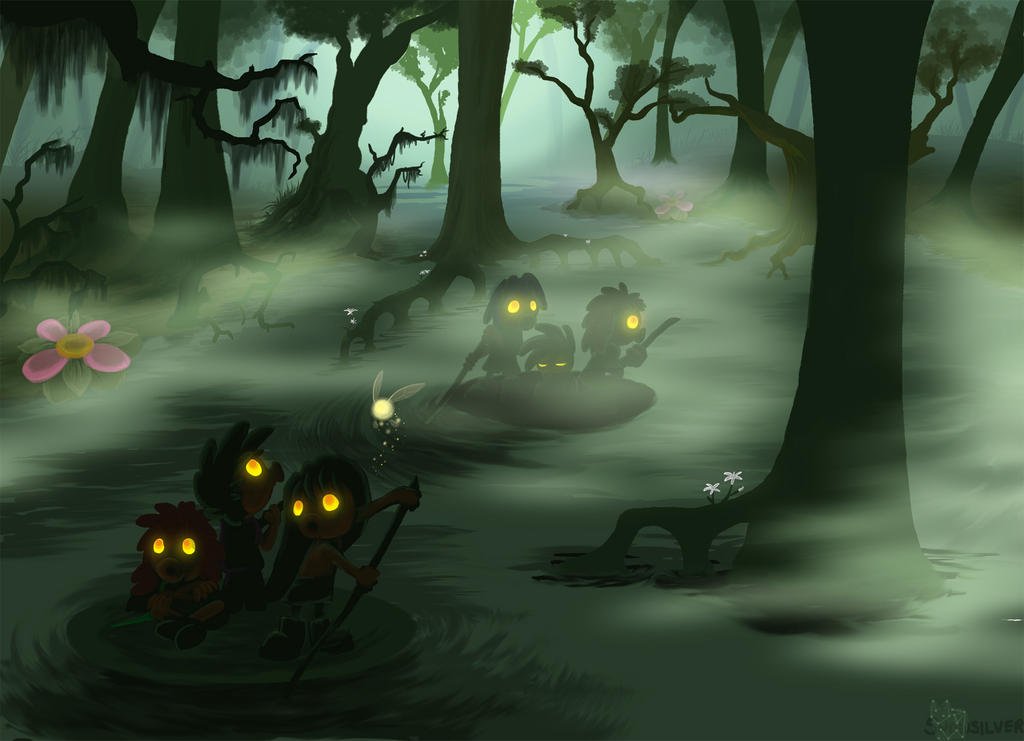
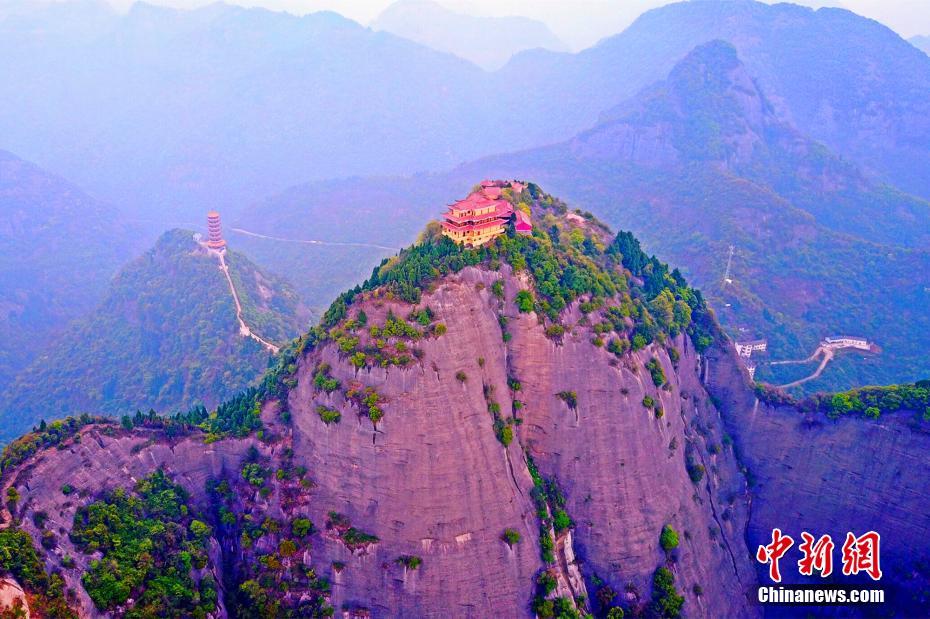
The first stage of our hero’s journey is to go to the wetland area in the cardinal south, a swamp being the perfect representation of the corrupted state of crystal clear water. The Legend of Zelda: Majora’s Mask is a more free form kind of game, so usually its main areas mix different influences and cultures, creating an amalgam of landmarks that feel outside a specific place or time—Ikana region being most likely the only exception. In the case of the Southern Swamp, its design continues some of the Chinese motifs as seen in the architecture of the Swamp Tourist Center, the return of the witches along their catchy theme from Ocarina of Time and the purple, twisted Death Mountain reminiscent of famous landmarks of the Jiangsu province—which curiously also has temple on top:
However, the region also uses elements brought from Latin America, specially the Amazon; Mesoamerica indigenous people; and the fact we even have a monarchy residing here means that regal Europe is not left behind; not to mention the audio of the different locations that mix and match different influences without a care or intention to mimic any actual real world culture.
None of this matters though, since the four lands of Termina all share the same musical theme adapted to fit the specific atmosphere of each region instead of any particular cultural association. This theme is none other than a version of the theme of Majora, corrupting each land, lands that will only revert to the Termina Field theme once Link purifies them from the influence and the ills caused by this cursed mask; it’s the song of the hero after all. The swamp theme itself is already corrupted since they are not exactly the same notes or intervals from Majora’s Theme, just the basic rhythmic and melodic profile played in slower fashion. The theme of Majora sounds dissonant in lieu of the minor seconds, while the cardinal locations’ theme is based around the tritone. So even the main locations from Majora’s Mask want you to be uncomfortable through them. Seriously, who bases a main region theme around tritones, whole-tone scales and diminished profiles? Majora’s Mask truly doesn’t hold back. Don’t expect a banger at the level of the Gerudo Valley from it (okay, the palace theme is actually a banger at that level).
Musical Analysis
Structure: Section 0 / Section 1 / Section 2
Time Signature: 4/4
Tempo: 64 (40 Section 0)
Melodic and Harmonic Profiles: D Whole Tone; D Diminished (Section 1) A Phrygian Major; A Harmonic Minor; A Chromatic (Section 2)
So the lack of time for doing four different region compositions ends up giving cohesiveness to the soundtrack as a side product; and Koji Kondo using the same theme in different rearrangements is also expected. As for the specific variation heard on the Southern Swamp, it is meant to feel heavy and dizzy, like the effects of this poisoned wetland are going to your head, moving as slowly as anyone would move on these muddy waters. There is a dry summer afternoon laziness to it; this effect is mainly realized by Kondo turning up to eleven the vibrato effect and reverb of each dulcimer note, creating a wobbly sound that fits the ambient unlike any other normal instrument.
Tritones everywhere, from the harmonization to the interval movement. The strings mostly contribute the ominous tone as slow pedal notes play with occasional melodic flourishes from the low strings. Similar to the happy Kokiri Forest in Ocarina of Time, this rainforest from Majora’s Mask uses the woodwinds as its main focus, not in the same way though; here they are doing counter-melodic accompaniment, short phrases with tritones included to add to the dread. The very first chord we hear formed by the strings and the woodwinds is a totally alien chord that can be interpreted as an Ab add9/#9. Who even uses this besides jazz musicians trying too hard and Majora’s Mask?
The low strings and the woodwinds never go beyond a whole tone scale, contributing to a lack of any sense of balance to the music, all while the melodies are harmonized exclusively in tritones. This right here is the sound of a very bad trip where you are afraid to even go outside; there is a latent danger that never quite takes off but just stays there, breathing on your neck.
Section 2 is slightly more reflective, a very sparse section where only two instruments are left to carry the entire piece—the phrases even start with major chords—The lack of a low end feels like fresh air for a moment but also contribute to the sense of isolation. But then it starts to descend, slowly preparing the loop back to the dreaded Section 1. Nonetheless, just before the end, there is an oasis moment where the violins sustain a G note, giving the piece an harmony progression of C – Gm – C- A7 a progression reminiscent of the opening cutscene from the game (when Link is lost in the forest). Sadly, just like on the Clock Town and Termina Field cues, the theme ends with three chords in descending chromatic fashion; three days till game over—As a matter of fact, Section 1 also ends in this fashion, adding cohesiveness to the piece.
On this swamp land, Link will find a brand new tribe, one which in Hyrule is limited to being a disorganized species splattered all over the land. On Majora’s Mask they are now a more sophisticated monarchy who will present some troubles to the hero. Before that though, Link will have to entertain a cruse service that will help him get to the palace; just like any park attraction, it is accompanied by a little carnival cue; showing the specialty of Majora’s Mask of contrasting happy silliness with dread and danger.

Help to keep the rites going around here by supporting the shrine:

Media Files, requests and support for more interactive content

Thou shall donate since this is a cult and you are now a sheep

Help staying awake analyzing game tracks and writing posts or else everything will end up being written by A.I
- Inside The Score – The Legend of Zeda: A Link to the Past – End Credits / Staff Roll
 The land rests As the last few minutes of this extensive journey that has now come to an end fly by, the nostalgia and reflective mood kicks in. Because such a massive enterprise as a Zelda game or a Lord of the Rings movie require multiple endings to convey everything… Read More »Inside The Score – The Legend of Zeda: A Link to the Past – End Credits / Staff Roll
 - Inside The Score – The Legend of Zelda: A Link to the Past – Ending / Epilogue ~ Beautiful HyruleFinal of the fantasy The Triforce has been touched. A wish has been granted. For the occasion, the newly undeceased king of Hyrule has commissioned a march in honor of the legendary hero to the Hylian Sousa, who might as well be composer Nobuo Uematsu since this piece is very… Read More »Inside The Score – The Legend of Zelda: A Link to the Past – Ending / Epilogue ~ Beautiful Hyrule
- Inside The Score – The Legend of Zelda: A Link to the Past – Triforce Chamber / Power of the GodsTake your boots off your feet And thus the Triforce spoke to men. And it became present in history. And you better treasure and contemplate this moment seldom witnessed in the course of the series. The elusive opportunity to interact and touch the most important artifact. You are now in… Read More »Inside The Score – The Legend of Zelda: A Link to the Past – Triforce Chamber / Power of the Gods
- Inside The Score – The Legend of Zelda: A Link to the Past – Ganon Battle / Prince of DarknessProgressive evil En Garde! And you better be prepared since you are about to duel the iconic enemy of the series at perhaps his canonically most powerful incarnation. Right after having touched the sacred Triforce which allowed him to conquer all of the Golden Land and whose evil and darkness… Read More »Inside The Score – The Legend of Zelda: A Link to the Past – Ganon Battle / Prince of Darkness
- Inside The Score – The Legend of Zelda: A Link to the Past – Boss Battle / Anger of the GuardiansQuick mayhem Ah, the simpler times when boss battles where not a multi epic orchestral suite but just an ostinato more basic that even what became the music for standard battle encounters out there. We are a long way from each boss having his own personalized track. And this early… Read More »Inside The Score – The Legend of Zelda: A Link to the Past – Boss Battle / Anger of the Guardians
- Inside The Score – The Legend of Zelda: A Link to the Past – Dark World Dungeon / Dungeon of ShadowsMemento mori We are getting closer to Ganondorf (or at least the wizard Agahnim who ultimately fulfills the same human side of evil role in this game) and that means getting closer to the profiles and motifs of his own theme song (which naturally was the theme of Agahnim at… Read More »Inside The Score – The Legend of Zelda: A Link to the Past – Dark World Dungeon / Dungeon of Shadows