Whimsical Lost Woods
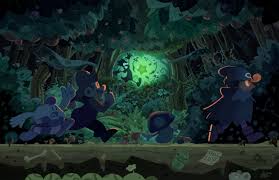
Walking a fine balance between whimsical, regal and classical, the famous catchy track known as ‘Beware of the Forest Mushrooms’ from the score of Super Mario now in the form of a role playing game because of course omnipresent mascot Mario who goes from being a doctor to referee a Mike Tyson fight somehow also works with such a concept; it captures the feeling of getting lost in an enchanted fantasy forest looking for a sorcerer puppet.
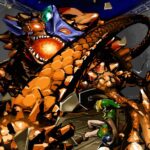
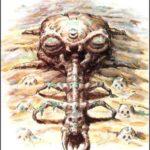
This legend of the seven stars was born out of a curious one time partnership between Nintendo and RPG master developers Square, who magically made the wacky world of the Mario brothers work in a self aware role playing context which lampshades and plays around with tropes of both the Mario series and Square’s own RPGs, including an epic fight against an eldritch multiverse-threatening abomination straight from a Final Fantasy final boss fight (music from Final Fantasy IV included and everything). It introduced new characters and deeper characterization for Mario’s familiar cast, creating a compelling story and a soundtrack which pays respect to the rich music of the series while also passing the RPG litmus test of ambitious, high standard music. It kickstarted a brand new avenue for Mario and friends to explore, evolving into the Paper Mario series and the Mario and Luigi saga. To help the game fit with the Mario series, it was made to be more action and movement-focused compared to other RPGs; it is still all about the jump for the plumber once called Jump-man.
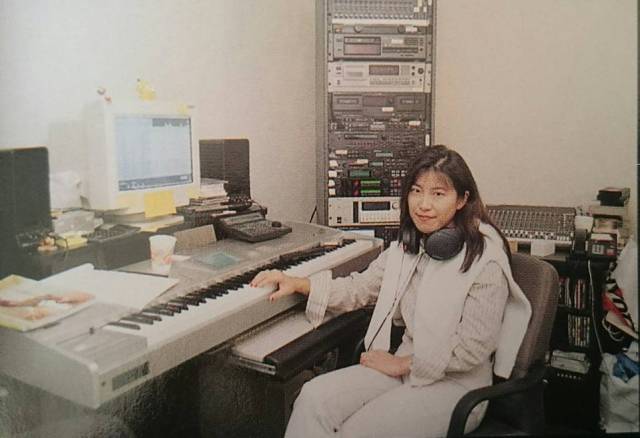
This soundtrack was the work of none other than Yoko Shimomura, who regards the Super Mario RPG score as one of the turning points in her career. She was also one of the early adopters of the video game medium, a medium whose infancy permitted some women composers to become household names in the industry unlike its classical or film music counterparts. In fact, Yoko, an avid gamer who learned to play piano at age five, had pushback from her family when deciding to apply for work in the field, abandoning a promising career as a piano performer and teacher after graduating from music college. She was accepted to Capcom where she scored the famous fighting game Street Fighter II.
While working for Capcom, Shimomura contributed to the soundtracks of over 16 other games. However, with her classical background and love for ambitious compositions, she thought the fantasy, expansive worlds created in the RPG genre suited her more than action oriented games. That is why she decided to leave Capcom and join the RPG makers Square. There she got the large scale projects she craved. The second of those was the famous Super Mario series alongside its storied music baggage.
She played around with classic tunes from the series and created brand new ones that sit comfortably in the Mushroom Kingdom sound but with the more enchanted, emotional side of the storytelling focused genre. Forest Maze, meant to sound in the own Lost Woods for Mario and friends has become famous due to its bouncy catchiness while at the same time maintaining the mysterious feeling of a magical setting. It also works as a theme for the sorcerer puppet Geno (whose real name is ♡♪!? and whom we only get a glimpse of his true form as a high dimensional being later—a Luma sent by Rosalina?), capturing the typical elements of witchcraft including the walking bassoons as popularized by classical pieces like ‘The sorcerer’s Apprentice’
Musical Analysis
The fantasy is initially captured by the Dorian profile of the melody played by the oboe alongside some classically inspired playful trills befitting a professional pianist; it uses all the notes from the mode right off the bat. They are accompanied by marching oom-pah bassoons and pizzicato strings that capture the walking pass of Mario and Geno throughout the wizardly forest. The melody is then taken by the violins while the oboe harmonizes with a lower voice. As you can hear this is all standard fare for mysterious forests in a fantasy setting; woodwinds and strings made from the trees, glockenspiel for the magical fairy dust, and mischievous pizzicatos. The horns are the only outsiders and add a regal nature to the piece.
Structurally, there is a main melody, an enigmatic interlude that serves as a recharging point for the theme to return transposed in a different key and then a coda that is more regal.
From the driving pizzicatos we can infer the harmony that points us to the Dorian profile initially:
(A)
Dbm – Gb – E – Gb, B – A – B – Abm
Dbm – Gb – E – Gb, B – A – B – Abm
The A stabilizes the key back to the standard minor
(Interlude)
Dbmadd9 – Bm6/9 – Db7(b9)
The glockenspiel playing arpeggios that add mist to the harmonic profiles. The Db chords serves as the bridge to jump into the new key, functioning now not as a tonic but as the dominant of the Gbm key. Fifth chords are usually the safest bridges to cross when transposing. We end up in Gb Dorian which is the sister key of the Db Aeolian/minor profile (as in, they use the same notes).
Thus the melody now sounds higher and more exciting after that period of hiding and recharge
(A) Transposed
Gbm – B – A – B, E – D – E – Db7
The triumph of the coda is anticipated by the last chord of the progression which is now major unlike in the first progression.
Coda:
Gbm – E – D – Db
Gbm – E – D – Db – Gb – Abm
A mini Andalusian cadence and the now major Gb puts us back into the Db dorian profile as the piece is ready to loop by way of the anacrusis set by Abm
The basses are, like usually, playing in fifths while the counterpoint like strings complete the triad allowing us to deduce the intended chord.
Yoko went on to achieve greater fame with the Kingdom Hearts series which did for Disney what this game did for the Mario series: unorthodoxly putting their characters in a fantasy JRPG setting. After all, arranging classic tunes from well known series while adding new ones for a fantasy setting was the specialty she achieved right here; so it is not surprising she was the right fit to take on Disney just like she did with Nintendo years ago. Not every composer can lay claim to have touched the two biggest mascots of media on the planet. Like your typical Square employee she then decided to go freelance and continues to be one of the premium RPG composers in the medium of video games.

Help to keep the rites going around here by supporting the shrine:

Media Files, requests and support for more interactive content

Thou shall donate since this is a cult and you are now a sheep

Help staying awake analyzing game tracks and writing posts or else everything will end up being written by A.I
- Inside The Score – The Legend of Zeda: A Link to the Past – End Credits / Staff Roll
 The land rests As the last few minutes of this extensive journey that has now come to an end fly by, the nostalgia and reflective mood kicks in. Because such a massive enterprise as a Zelda game or a Lord of the Rings movie require multiple endings to convey everything… Read More »Inside The Score – The Legend of Zeda: A Link to the Past – End Credits / Staff Roll
 - Inside The Score – The Legend of Zelda: A Link to the Past – Ending / Epilogue ~ Beautiful HyruleFinal of the fantasy The Triforce has been touched. A wish has been granted. For the occasion, the newly undeceased king of Hyrule has commissioned a march in honor of the legendary hero to the Hylian Sousa, who might as well be composer Nobuo Uematsu since this piece is very… Read More »Inside The Score – The Legend of Zelda: A Link to the Past – Ending / Epilogue ~ Beautiful Hyrule
- Inside The Score – The Legend of Zelda: A Link to the Past – Triforce Chamber / Power of the GodsTake your boots off your feet And thus the Triforce spoke to men. And it became present in history. And you better treasure and contemplate this moment seldom witnessed in the course of the series. The elusive opportunity to interact and touch the most important artifact. You are now in… Read More »Inside The Score – The Legend of Zelda: A Link to the Past – Triforce Chamber / Power of the Gods
- Inside The Score – The Legend of Zelda: A Link to the Past – Ganon Battle / Prince of DarknessProgressive evil En Garde! And you better be prepared since you are about to duel the iconic enemy of the series at perhaps his canonically most powerful incarnation. Right after having touched the sacred Triforce which allowed him to conquer all of the Golden Land and whose evil and darkness… Read More »Inside The Score – The Legend of Zelda: A Link to the Past – Ganon Battle / Prince of Darkness
- Inside The Score – The Legend of Zelda: A Link to the Past – Boss Battle / Anger of the GuardiansQuick mayhem Ah, the simpler times when boss battles where not a multi epic orchestral suite but just an ostinato more basic that even what became the music for standard battle encounters out there. We are a long way from each boss having his own personalized track. And this early… Read More »Inside The Score – The Legend of Zelda: A Link to the Past – Boss Battle / Anger of the Guardians
- Inside The Score – The Legend of Zelda: A Link to the Past – Dark World Dungeon / Dungeon of ShadowsMemento mori We are getting closer to Ganondorf (or at least the wizard Agahnim who ultimately fulfills the same human side of evil role in this game) and that means getting closer to the profiles and motifs of his own theme song (which naturally was the theme of Agahnim at… Read More »Inside The Score – The Legend of Zelda: A Link to the Past – Dark World Dungeon / Dungeon of Shadows