Deep south bear
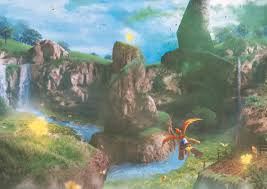
When it comes to the music of the main gameplay levels of Banjo-Kazooie—or any other mascot platform for that matter—There is less emphasis on the cultural connotations since the mission statement for Grant Kirkhope was quite simple and specific: to make the catchiest, most memorable tune possible, one that a listener playing a level for hours never gets tired of; music that can loop indefinitely. This has been a video game specialty since the early days of the medium. This meant that Grant had to study religiously the benchmark that the development team was striving to pass. And just like with the intricate level design, colorful graphics, charming characters and complexity, the goal at Rare was to build upon and one up the Super Mario series, especially the revolutionary 3D platformer Super Mario 64 that basically made them change directions and scrap the original project since this was now the future of gaming. But it had to be bigger. When it came to the music the bosses at Rare had a desire for the catchiness of Mario, the cohesive use of leitmotif of film scoring and the interactive music aspects of the game Monkey Island working all together to make something more ambitious. Grant had to distill what made Mario music tuneful without getting tiring and as a result the game ended up as an exercise in ear worming.
So what lessons did Grant reap from the competition and where does he differ? The key insight is in the word balance. Repetition is an indelible characteristic of memorability, but it has to be done with caution in order to not fall into the tiring side of the spectrum. It is a balance game where repetition must be disguised in multiple forms. There are techniques employed that vary from straight up repetition of the melody, to repetition with different instrumentation, to transposition, to repetition with a countermelody, to rhythmic repetition varying the pitches, to repeating the melody but changing the melody underneath it, to clever use of music structure among others. All these are employed throughout the Banjo-Kazooie series.
Even though the music in games like Super Mario and Banjo-Kazooie captures the basic outlines and sensibilities of the environments where it plays, the whole enterprise is in service of the melody, to enhance it above any other other consideration, sometimes even using instruments for how they combine together with the melody as opposed to following any particular tradition or overtone goal (just listen to the main theme from Super Mario 64 which, although called Bob-omb Battlefield, certainly does not capture the horrors and struggles of war times; or Angry Aztec from Donkey Kong 64 which is neither angry much less Aztec (the melody is straight from the Arabic inspired piece Sheherazade). Catchiness does simply come first.
And catchiness comes with repetition. Yet, perhaps since the beginning of time, composers who wanted to not get drowned in repetition while entering some kind of trance quickly discovered the concept of structure and contrasting sections, which is just the macroscopic version of the question-answer nature of music. Video game composers inevitably make use of it alongside the art of looping in their pursuit for hummable tunes that can withstand perhaps hundreds of listens. This is achieved through a balance between repetition and novelty, repetition and novelty, reiteration and novelty.
Just like Banjo-Kazooie strove to be a bigger, more complex version of Super Mario 64, it follows that, like the game itself, its music also wanted to be larger and more intricate. Structure is the first fort to look into when it comes to addressing complexity; the outline that a composition will follow. The NES’s technological constraints, like the limited memory, made composers of the era spend their time devising ways to play around with repetition in creative ways; this meant the use of internal repetition or using again parts of a melody in new contexts to make it feel like new musical material. The pieces of Mario music that Grant Kirkhope had to study follow clear, differentiated patterns and forms that expertly contain repetitive melodies that can be mixed without driving players crazy. The songs have sections chained together and micro sections inside those, like Russian matryoshka dolls. Like the game itself, the music of Banjo-Kazooie goes one step further by making use of more complex structures, creating longer pieces with more sections and more internal repetition. For comparison, here are the structures of the main themes from the Super Mario series up to that point:
Super Mario Bros:
Intro – {ABC – Intro – ADC – Intro – D/}
Curiously, for some reason the humble NES piece that started it all remains the most complex of all the overworld themes from Super Mario; they became progressively less complex as time went on. The composer, Koji Kondo, never went back to revisit this structure that was born out of clever use of limited memory to make it feel like there was more musical material than there is in reality. The piece has heavy emphasis on internal repetition of alternate sections before the full song loops, going so far as to make the Intro appear multiple times within it and feel natural as the tail of C section. It also mixes and matches the different sections so they appear in new settings, like for example section C and D repeat within the loop but they are surrounded by different sections each time, like looking to the same object from a different angle (D is also shortened the second time), which for those not paying enough attention makes it feel like new material. This means that a 90 second piece only has 25.5 seconds of unique content. This is the only piece that has a comparable level of structure to the Banjo-Kazooie levels—Although Banjo has the benefit of being able to use the technique of different orchestration based repetition.
Super Mario Bros 2:
I – {ABC}
Less sections but each with longer form melodies not based as much around internal repetition.
Super Mario Bros 3:
I – {AB}
Even less sections, with section B having emphasis on motif repetition.
Super Mario World:
I – {Post-intro – AB}
A piece with a double intro where only the second one repeats each loop. It has demarcated question-answer blocks with Section A being a long form section made up of lower level structures.
Super Mario World 2:
{I – AB}
The whole piece, including the long Intro, repeats. Section B uses the same motif repetition technique as Section B from Super Mario Bros 3. The Intro can be included into the loop because it is a harmony establishing kind of intro as opposed to the characteristic impact based intro of Mario music (just like the post-intro from Super Mario World).
Super Mario 64:
I – {AA’ BC}
Finally Kondo brings back a section C to the series but without mixing sections or repetitions within the loop. Section A is repeated with a twist in which new melodic material is added in a call and response way courtesy of the trumpets; a countermelody based repetition. It has outlined question-answer blocks and section C once again uses the motif repetition technique similar to section B from Super Mario Bros 3.
In contrast, Banjo-Kazooie usually arrives up to section D, adding orchestration-based repetition, counterpoint-based repetition and alternate section repetition within the loop, among other techniques. Spiral Mountain, being the tutorial level where the player learns the moveset and does not spend as much time collecting stuff is one of the exceptions alongside the hub world. Here Grant just writes two sections and squeezes them with motif repetition, counterpoint and orchestration.
Musical Analysis
Structure: { I – A – I – A’ B A’ }
Tempo: 110
Melodic and Harmonic Profiles: C Ionian/Major
All the A sections are presented differently each time, the A’ being countermelody based and the third orchestration based. Taking cues from the Super Mario series main theme, it also reutilizes the Intro as an internal device, making it feel as if it was always meant to be the tail of Section A; the art of music looping that video game composers had to master. This long form section uses a different set of instruments each time it appears and also has a trombone countermelody. All this repetition contributes to make repetition not feel repetitive.
The track itself aims to capture the idyllic life of Banjo the bear alongside his family and friends. It is a bluegrass style piece with a western country-like melody featuring the banjo instrument. Banjo is technically some kind of black honey bear endemic to North America, likely from the Appalachian mountains. And the character certainly fits the common stock personality of the half-witted Hillbilly with a dumb haircut; just a simple country bumpkin who likes to play his banjo in the arpeggiated Scruggs style and live calmly (bears in general are usually portrayed in media with this lazy personality too). But more than that, the mood of the piece is just set to capture the laidback, happy life and colorful environment, contrasting it to Gruntilda’s Lair; so no tritones in the tune are heard yet outside Grunty’s domains (at least in the melody).
The vice main theme of the series, Spiral Mountain serves to capture the mood of each of the games it appears on, setting the stage for each adventure; here it is happy, sad in the sequel, and reminiscent, nostalgic in the comeback game. The melody is inspired by bluegrass country tunes that you could sing around a campfire. Just strip it down and slow the tempo; the melodic profiles and contours would sound like ‘Old McDonald had a Farm’. In fact, what might be the purest version of the song appears as the title theme from Banjo-Kazooie: Nuts and Bolts, with an amateurish sounding solo banjo piece that slowly gets back on its feet.
However, although the piece is in the country-western tradition, it never reduces to pastiche since its harmony betrays the composer classical training which, along with its orchestration, makes it nothing but a track in the video game genre. Grant Kirkhope is a harmony-first kind of composer; he comes up with the chords, trying to find odd or interesting sounding ones, and then forces himself to try and fit a memorable melody onto them no matter how frantic they are. It starts innocent enough, a standard intro from the dominant: G – C – G7 and then to a progression that fits the style and key: C – Am – G – C. Nothing out of the ordinary here; but then it gets weirder and becomes a baroque piece: C – E – Am – F# dim – G which thanks to that diminished chord sounds closer to the Bach Cello suite 1 (a.k.a the only song Cello players know how to play) than to a bluegrass staple. We begin to see chords outside the standard C major key appear. After that, for the tail of section A Grant uses the same pedal based technique that is also similarly used by Kondo on Section B from Super Mario Bros 3, where the rhythm of the melody and most of the notes remain unchanged but the harmony underneath moves, another way to play around with repetition. The chords are:
C – Eaug – F – Fm
Nothing like the IV -iv chord change to give that slight touch of melancholy to a melody, which helps to separate it more from strictly happy children’s music. It then finishes with:
C – G – C – Ab – (F# dim) – (G)
Grant just goes to any chord he wants and nobody is stopping him. As long as it is distinctive, it will give an interesting flavor to the melody. The arpeggiated chords of the Scruggs-style banjo retain a kind of voice leading movement thanks to the chord inversions though. The I – bVI chord movement appears once again, characteristic of Banjo series music and also the basis of section C from the Super Mario main theme.
However, this particular Section A is structurally different to the other A’ sections since it is incomplete. It goes right to the intro without using the F# dim chord, creating greater variety and remembering the lesson of hearing sections in different contexts.
Section B is more in line with its major key spirit. It goes to the fourth like any other sane contrasting section would but still uses the F# dim to retain its edginess.
F – C – F – G
F – C – F – F# dim – G
By the way, whenever you see a dim chord it could also be replaced by its counterpart dominant seventh chord which has kind of the same flavour;it can always be found whole step up/ So the F#dim also works as a Ab7.
You can listen to a stripped down version of the accompaniment here in order to hear easily its harmony and countermelody:
Repetition is not a concept limited to the structure of a piece. When it come to melody, it is a key notion to master. Grant uses two main rhythmic motifs throughout the piece, repeating them and mangling them just like Beethoven did on his famous Fifth Symphony. They are featured right on the opening question-answer block of section A:
Basis of motif 1
C C D C (dun dun duduun)
The rhythm pattern is familiar; although the character Banjo is featured with his own instrument, his friend Kazooie is not forgotten. Remember the taunt Nyah nyah nyah nyah nyah nyah inspired melody Kazooie annoyingly plays on the main theme with her Kazoo (Nyaaah nyaaah nyah nyah nyaaaah!). The rhythm of this little melody will serve as the basis for the main motif in Spiral Mountain, helping to give cohesiveness to the game through repetition in a subliminal manner.
So a question-answer block typically consists of ascending-descending contour melodies or vice versa. In the case of Spiral Mountain the melody goes: C C D C low G (descending contour) —— A Ab A B C (ascending contour). This first answer will serve as the basis for the second rhythmic motif.
Basis of motif 2
A Ab A B C (dun dudun dun dun)
The rhythms of these two motifs are all over the place on this piece, from the intro being based around the rhythmic profile of motif 1 to Section B taking the entire rhythm from motif 2 (The flute trills should be considered as conveying timbrical/ornamentation meaning as opposed to melodic meaning). Grant sometimes repeats the questions with different answers, sometimes transposes the pitches, and other times gives these rhythms different set of notes. The most obvious example being the last subsection of A, where it repeats the same notes C D as pedal notes while the harmony changes and the answer notes ascend in chromatic fashion. All this is the basis of making a catchy melody through rhythmic repetition.
Motif 2 is also the basis for the cue for Bubblegloop Swamp.
The melody also uses chromatic notes to give color and transition between core notes. We even also find repetition between some of the low notes of the tuba and the main melody—like the bluegrass stepwise walking bass to the tonic pattern that is used to connect melodic phrases (G A B C). All in all, motif 1 appears nine times during Section A with motif 2 being its main answer, exceptions being only the last notes of the section and the bluegrass stepwise motion ( 7 times it appears within the C – D pitches). The two main sections also contrast each other by section B having longer notes in the melody while section A has staccato shorter notes (flute trills don’t count as melody!). The oom-pah will be present no matter the style of course. It uses orchestral cymbals as opposed to the drum kit cymbals for extra impact.
The piece shows how structure and repetition play a role in making hummable melodies that are remembered long after the game is finished, with Spiral Mountain being identified with the series as much as the main theme; it was even used for the triumphant return of the characters to Nintendo consoles when the announcement trailer for Banjo entering Super Smash Bros. featured a brand new arrangement from Grant Kirkhope himself using it alongside snippets from the music of other levels.

Help to keep the rites going around here by supporting the shrine:

Media Files, requests and support for more interactive content

Thou shall donate since this is a cult and you are now a sheep

Help staying awake analyzing game tracks and writing posts or else everything will end up being written by A.I
- Inside The Score – The Legend of Zeda: A Link to the Past – End Credits / Staff Roll
 The land rests As the last few minutes of this extensive journey that has now come to an end fly by, the nostalgia and reflective mood kicks in. Because such a massive enterprise as a Zelda game or a Lord of the Rings movie require multiple endings to convey everything… Read More »Inside The Score – The Legend of Zeda: A Link to the Past – End Credits / Staff Roll
 - Inside The Score – The Legend of Zelda: A Link to the Past – Ending / Epilogue ~ Beautiful HyruleFinal of the fantasy The Triforce has been touched. A wish has been granted. For the occasion, the newly undeceased king of Hyrule has commissioned a march in honor of the legendary hero to the Hylian Sousa, who might as well be composer Nobuo Uematsu since this piece is very… Read More »Inside The Score – The Legend of Zelda: A Link to the Past – Ending / Epilogue ~ Beautiful Hyrule
- Inside The Score – The Legend of Zelda: A Link to the Past – Triforce Chamber / Power of the GodsTake your boots off your feet And thus the Triforce spoke to men. And it became present in history. And you better treasure and contemplate this moment seldom witnessed in the course of the series. The elusive opportunity to interact and touch the most important artifact. You are now in… Read More »Inside The Score – The Legend of Zelda: A Link to the Past – Triforce Chamber / Power of the Gods
- Inside The Score – The Legend of Zelda: A Link to the Past – Ganon Battle / Prince of DarknessProgressive evil En Garde! And you better be prepared since you are about to duel the iconic enemy of the series at perhaps his canonically most powerful incarnation. Right after having touched the sacred Triforce which allowed him to conquer all of the Golden Land and whose evil and darkness… Read More »Inside The Score – The Legend of Zelda: A Link to the Past – Ganon Battle / Prince of Darkness
- Inside The Score – The Legend of Zelda: A Link to the Past – Boss Battle / Anger of the GuardiansQuick mayhem Ah, the simpler times when boss battles where not a multi epic orchestral suite but just an ostinato more basic that even what became the music for standard battle encounters out there. We are a long way from each boss having his own personalized track. And this early… Read More »Inside The Score – The Legend of Zelda: A Link to the Past – Boss Battle / Anger of the Guardians
- Inside The Score – The Legend of Zelda: A Link to the Past – Dark World Dungeon / Dungeon of ShadowsMemento mori We are getting closer to Ganondorf (or at least the wizard Agahnim who ultimately fulfills the same human side of evil role in this game) and that means getting closer to the profiles and motifs of his own theme song (which naturally was the theme of Agahnim at… Read More »Inside The Score – The Legend of Zelda: A Link to the Past – Dark World Dungeon / Dungeon of Shadows