Bluesy chant
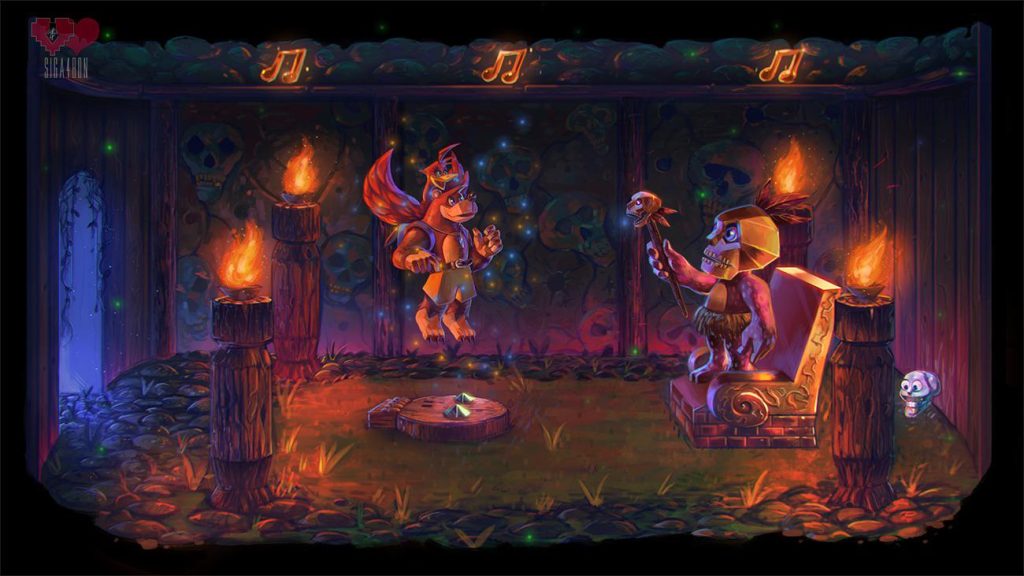
“Oomenacka”
And so ritual complete. Bear and bird transfigured.
As Grant Kirkhope also says: when in doubt, use marimba. The thing just works; cartoonish, tribal, primitive, exotic, spooky, caribbean…doesn’t matter, it has you covered—plus its quick attack uses little memory and sample space.
Ever since the opening number, we saw how the marimba, among other instruments pulled out of thin air, was going to be the instrument closely associated with Mumbo Jumbo, the village’s shaman voiced by Grant Kirkhope himself. The jungle, tribal motifs accompanying this witch doctor are well served by the marimba; but Mumbo also has his jazzy blues side inherited by the previous musical direction of the game. Perhaps his theme was originally meant to have synergy with the original Mumbo’s Mountain cue, which had that boogie-woogie flair going on.
The name Mumbo Jumbo literally means confusing or meaningless language, like the one he uses for chants and speaking—as do everyone in Banjo-Kazooie. It also refers to practices based on superstition, rituals intended to cause confusion, or languages that the speaker does not understand; this is of course reflected in the speech patterns and iconic phrases from the character, with “eekum bokum” being one of the most famous and constantly heard in-game thanks to the Mumbo tokens spread all over the worlds. Mumbo Jumbo is a West African word often cited by historians and etymologists as deriving from the Mandinka word “Maamajomboo”, which refers to a masked male dancer who takes part in religious ceremonies. So this shows that someone at Rare certainly did their homework in naming him.
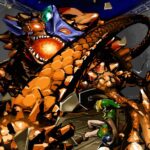
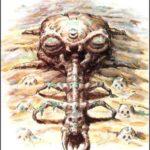
Like your prototypical tribal shaman, Mumbo always speak in the third person, is based around skull and feather motifs and uses his vodoo magic to help Banjo and Kazooie throughout their adventures; he is the African counterpart and rival to the Native American Humba Wumba, perhaps going back to their days at the Handsome Shaman Institute where they learned magic (true lore). It is known that he was a magical instructor of Gruntilda’s at some point in time. However, despite Mumbo’s teachings, Grunty turned to dark magic and transformed Mumbo’s head into a skull. His true form was probably just like the enemies you find on this level.
Musical Analysis
Structure: Section 1 / { I – AA’B A – O }
Tempo: 160 (Section 1); 90
Melodic and Harmonic Profiles: Atonal; C Lydian; C Ionian/Major
The only part that musically zeroes into the shamanic influences is the transformation cue when he actually performs his sorcery. The cue is composed of frantic minor seconds played on the marimba and tribal sounding percussion, as if the music is a diegetic part of the spell in game—you can picture the guy having an actual shaker made with branches and manipulating drums during spells. The congas begin playing a specific rhythm before frantically changing to just fast, alternating hits. Like on the overture film of the game, the celesta provides sound effect meaning, as opposed to musical information, in the form of magic dust sparkle. The orchestral cymbals are pitched extremely low in order to form some kind of gong or a primitive African metallic instrument. The cue is also imbued with tension and expectancy, anticipating the results of playing with this magic. It then ends with the Kirkhopian whirlwind made, of course, of the I to bV chord movement going back and forth, a technique that Grant says was inspired by watching the similar transformations of the character Mr Benn from the British cartoon series; the strings resort to playing the minor second Jaws-like motif characteristic of impending danger or the unknown.
The rest of the hut experience, however, is musicalized with a quirky blues inspired tune with a jazzy rhythm courtesy of the swing from the drummer playing the ride cymbal cooly (the shakers serve as a hi-hat played with a foot pedal). Likely a remnant of the original direction from the game, the track feels at home in the cartoony world of Banjo-Kazooie. The use of instrumentation, phrase structure and blues notes (the flat fifth and the flat seventh) was also deployed effectively two years earlier in the overall tribal, shamanic themed game Crash Bandicoot, also a project inspired by classic Warner Bros cartoons where a disembodied, feathered shaman is also a side character that helps the hero. Its cartoony music was an early influence for the 3D platform genre being developed.
The Mumbo track only consist of two main sections divided in easily identifiable question-answer blocks nested inside bigger ones. The song is heavily based on minor second motifs, which provide its bluesy flavor. It plays with the Lydian profile to give a more whimsical feeling. The whole structure plus the percussion intro can be thought of as:
A: { [ (a b) (c d) ] [ (a b) (c d’) ] } {Repeats harmonized} ——————— B: { [ (a b) (a’ c) ] [ (a b) (d) ] }
Section A is repeated harmonized mostly in thirds as is standard, with just some perfect fourths and fifths sprinkled in. The sax is silent during the first four bars of the phrase, entering playing a bluesy accompaniment also based in a minor second motif and walking bass lines to accompany the end of phrases, working either downward or upwards.
The melody follows closely the chords, leaving behind the ambiguity that a single bass line could cause. The Lydian profile is established with the use of a D major chord early on before returning to the more stable major tonality; Lydian is rarely used by itself, it is usually a temporary flavor that accompanies the standard major tonality. The progression goes:
C – D – G – C – G
C – D – G – C – C
For the B section Grant continues to use the dissonant minor seconds to add flavor to the melody and goes to the IV chord as he usually does for contrasting sections, the harmony being:
F – C – F – C
F – C – G – G
The orchestration also creates contrasts by introducing elements one at a time, like the bass line and the snare drum.
Mumbo is not the only character we meet here. Hiding on these mountains there are some funny creatures that need to be found. Perhaps they are destined to play a bigger role in the bear and the bird quest against the evil witch Gruntilda.

Help to keep the rites going around here by supporting the shrine:

Media Files, requests and support for more interactive content

Thou shall donate since this is a cult and you are now a sheep

Help staying awake analyzing game tracks and writing posts or else everything will end up being written by A.I
- Inside The Score – The Legend of Zeda: A Link to the Past – End Credits / Staff Roll
 The land rests As the last few minutes of this extensive journey that has now come to an end fly by, the nostalgia and reflective mood kicks in. Because such a massive enterprise as a Zelda game or a Lord of the Rings movie require multiple endings to convey everything… Read More »Inside The Score – The Legend of Zeda: A Link to the Past – End Credits / Staff Roll
 - Inside The Score – The Legend of Zelda: A Link to the Past – Ending / Epilogue ~ Beautiful HyruleFinal of the fantasy The Triforce has been touched. A wish has been granted. For the occasion, the newly undeceased king of Hyrule has commissioned a march in honor of the legendary hero to the Hylian Sousa, who might as well be composer Nobuo Uematsu since this piece is very… Read More »Inside The Score – The Legend of Zelda: A Link to the Past – Ending / Epilogue ~ Beautiful Hyrule
- Inside The Score – The Legend of Zelda: A Link to the Past – Triforce Chamber / Power of the GodsTake your boots off your feet And thus the Triforce spoke to men. And it became present in history. And you better treasure and contemplate this moment seldom witnessed in the course of the series. The elusive opportunity to interact and touch the most important artifact. You are now in… Read More »Inside The Score – The Legend of Zelda: A Link to the Past – Triforce Chamber / Power of the Gods
- Inside The Score – The Legend of Zelda: A Link to the Past – Ganon Battle / Prince of DarknessProgressive evil En Garde! And you better be prepared since you are about to duel the iconic enemy of the series at perhaps his canonically most powerful incarnation. Right after having touched the sacred Triforce which allowed him to conquer all of the Golden Land and whose evil and darkness… Read More »Inside The Score – The Legend of Zelda: A Link to the Past – Ganon Battle / Prince of Darkness
- Inside The Score – The Legend of Zelda: A Link to the Past – Boss Battle / Anger of the GuardiansQuick mayhem Ah, the simpler times when boss battles where not a multi epic orchestral suite but just an ostinato more basic that even what became the music for standard battle encounters out there. We are a long way from each boss having his own personalized track. And this early… Read More »Inside The Score – The Legend of Zelda: A Link to the Past – Boss Battle / Anger of the Guardians
- Inside The Score – The Legend of Zelda: A Link to the Past – Dark World Dungeon / Dungeon of ShadowsMemento mori We are getting closer to Ganondorf (or at least the wizard Agahnim who ultimately fulfills the same human side of evil role in this game) and that means getting closer to the profiles and motifs of his own theme song (which naturally was the theme of Agahnim at… Read More »Inside The Score – The Legend of Zelda: A Link to the Past – Dark World Dungeon / Dungeon of Shadows