Eekom Bokan
The ground shakes, drums… drums in the deep
We cannot get out
They are coming
The natives are getting restless and that means big, deep, ominous, relentless drums pounding that capture the most primal instincts of mankind’s nature. These drums have become a codeword in media to depict the deepest jungle and the dangerous tribes that inhabit it, aboriginal people that will not think twice about shooting you an arrow, possibly preparing a ritual after abducting the damsel in distress and about to cook her and eat her or sacrifice her to the gods to placate the elements of nature. In any case, pay attention to the rhythms of their midnight drumming if you wanna know how perilous the situation truly is; the faster they are, the faster you must act…or perhaps they are just normal folks celebrating, communicating and dancing, which is how most actual natives used the characteristic drums made from materials found in their habitat.
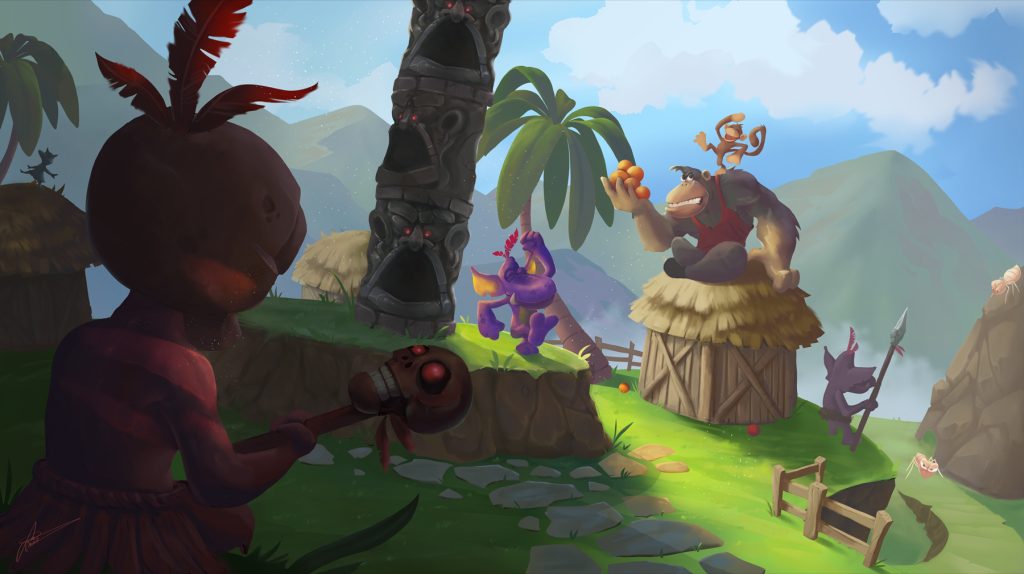
In Banjo-Kazooie all this is more innocent though, with the leader of the village being a mostly cooperative friend to the bear and the bird, and perhaps the only cannibalistic victim being a jinjo found trapped in one of the huts of the village. Nonetheless, the instruments chosen for these arrangements of the Mumbo’s Mountain theme are pretty much self explanatory, aiming to capture the jungle and native environment by making the connection with those big wilderness drums.
Musical Analysis
Structure: { I – AA B A CC B A D }
Tempo: 95
Melodic and Harmonic Profiles: C Ionian/Major; F Ionian/Major
In typical Hollywood fashion, nothing beats the sound of the Japanese Taiko drums to stand in for any of the big drums one may (or may imagine) find in the deepest jungle when encountering native people. Similar settings in films use taiko drums or similar drums to represent the jungle; the soundtracks of the Jumanji franchise have featured these drums to reinforce that booming, full of danger environments from all across the world:
It also means that the music gets less sophisticated in melody, harmony and instrumentation, giving it a more primitive feeling when compared to the standard cue. After all, they haven’t been introduced to the cosmopolitan counterpoint rules of colonizers yet.
Grant Kirkhope uses only the pan flute, drums and samples of an actual African march to create the mood when Banjo and Kazooie reach the top of the mountain where a small village with a totem is located. The drums co opt the pattern of the original track but add a couple of extra strokes to better convey the mood of some kind of ritual; unlike the constant drum kit beat that serves as a backdrop for the normal version, this beat is the only thing more complex since it weaves itself with the melodic patterns to create a richer interplay with the melody. With so much less instruments to share sonic space with, it is easier to get creative in the drumming department.
The pan flute provides both the harmony and the melody, the song losing its orchestration and counterpoint based repetition, instead allowing to easily access a trance thanks to the constant sensorial assault of a single timbre throughout.
Unlike the original, the intro goes straight into the tritone based harmony that plagues the rest of the sections, harmony that all over consist only of intervals as opposed to three note chords, mostly fifths and fourths. The melody only retains the core notes, discarding the faster runs that sound more natural in mallets or light orchestral woodwinds; it still keeps the bluesy accidentals though. Since Grant, for the most part, sticks to chordal tones when constructing melodies, the wacky sense of harmony is still retained even when there is less harmonic information.
Section C is the only one where the melody receives a considerable overhaul. Perhaps the use of pan flute and the totem inspired Grant to come up with a more Native American sounding melody during this part.
For the variation heard on the Conga patch, the gorilla receives the full Donkey Kong treatment, with voices, name, red attire and clips taken from the character himself and a score that tries to match the energy of the main theme from this Rare series, the Jungle Hijinx track composed by David Wise for the original Donkey Kong Country. It uses similar instrumentation, adding an additional percussion layer with the big sounding tom drums, shakers and the saxophone that may be inspired by DK—or Grant just likes to use this instruments for large, heavy bosses due to its rash and muddy timbre. Conga’s theme dismisses all harmony whatsoever with only the sax carrying pitch information, making the character feel even more primitive (his speech shows that indeed he is).
Time to traverse this curious village and meet the mountain’s king who hopefully will use his voodoo to bring some good against the witchcraft of Grunty.
Samples used: AfricanMarch and Tribal Claps from Roland SR-JV80-05 World

Help to keep the rites going around here by supporting the shrine:

Media Files, requests and support for more interactive content

Thou shall donate since this is a cult and you are now a sheep

Help staying awake analyzing game tracks and writing posts or else everything will end up being written by A.I
- Inside The Score – The Legend of Zeda: A Link to the Past – End Credits / Staff Roll
 The land rests As the last few minutes of this extensive journey that has now come to an end fly by, the nostalgia and reflective mood kicks in. Because such a massive enterprise as a Zelda game or a Lord of the Rings movie require multiple endings to convey everything… Read More »Inside The Score – The Legend of Zeda: A Link to the Past – End Credits / Staff Roll
 - Inside The Score – The Legend of Zelda: A Link to the Past – Ending / Epilogue ~ Beautiful HyruleFinal of the fantasy The Triforce has been touched. A wish has been granted. For the occasion, the newly undeceased king of Hyrule has commissioned a march in honor of the legendary hero to the Hylian Sousa, who might as well be composer Nobuo Uematsu since this piece is very… Read More »Inside The Score – The Legend of Zelda: A Link to the Past – Ending / Epilogue ~ Beautiful Hyrule
- Inside The Score – The Legend of Zelda: A Link to the Past – Triforce Chamber / Power of the GodsTake your boots off your feet And thus the Triforce spoke to men. And it became present in history. And you better treasure and contemplate this moment seldom witnessed in the course of the series. The elusive opportunity to interact and touch the most important artifact. You are now in… Read More »Inside The Score – The Legend of Zelda: A Link to the Past – Triforce Chamber / Power of the Gods
- Inside The Score – The Legend of Zelda: A Link to the Past – Ganon Battle / Prince of DarknessProgressive evil En Garde! And you better be prepared since you are about to duel the iconic enemy of the series at perhaps his canonically most powerful incarnation. Right after having touched the sacred Triforce which allowed him to conquer all of the Golden Land and whose evil and darkness… Read More »Inside The Score – The Legend of Zelda: A Link to the Past – Ganon Battle / Prince of Darkness
- Inside The Score – The Legend of Zelda: A Link to the Past – Boss Battle / Anger of the GuardiansQuick mayhem Ah, the simpler times when boss battles where not a multi epic orchestral suite but just an ostinato more basic that even what became the music for standard battle encounters out there. We are a long way from each boss having his own personalized track. And this early… Read More »Inside The Score – The Legend of Zelda: A Link to the Past – Boss Battle / Anger of the Guardians
- Inside The Score – The Legend of Zelda: A Link to the Past – Dark World Dungeon / Dungeon of ShadowsMemento mori We are getting closer to Ganondorf (or at least the wizard Agahnim who ultimately fulfills the same human side of evil role in this game) and that means getting closer to the profiles and motifs of his own theme song (which naturally was the theme of Agahnim at… Read More »Inside The Score – The Legend of Zelda: A Link to the Past – Dark World Dungeon / Dungeon of Shadows