Sad trombone, happy fanfare
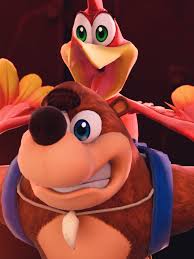
The duality of man (bear).
First, for the wounded victims of Mr Vile we have the universal loser anthem, the sliding down trombone that has mocked contestants since ancient times whenever they give wrong answers or fail tasks in game shows. This series of sad notes tap into the most primal instincts that humans developed, or even mammals; descending movements physically go from higher energies to lower energies due to the connection between frequency and wavelenght. So it is not surprising that a situation that is meant to be deflating and dispirited is accompanied by its equivalent aural movement. The glissando ability of the trombones attach an extra mockery dimension, adding insult to injury. A muted trombone is characteristically used in these situations, where a mute is a device brass players use to lower the volume and/or alter the timbre (tonal quality) of the instrument, often mimicking the human voice. Like many other tropes used frequently in cartoons and popular media it most likely has its origins in American Vaudeville and pantomime where information about internal emotions was conveyed in an easy way via aural cues. It can also be done in onomatopoeic way by the human voice.
Musical Analysis
Structure: Section 1 / section 2
Tempo: 100
Melodic and Harmonic Profiles: A Chromatic; C Ionian/Major
The cue descends in chromatic fashion, with Grant adding some extra notes to spice the trombone. The tritone is of course featured in the marimba trills that accompany the piece. Meanwhile, there is an added snare roll, usually used to create anticipation and excitement, but here most likely used to ground both the winner and the loser cue in the same orchestral framework.
And the winner cue is also exactly what you would expect, the contrary to the sad trombone. It is a regal fanfare that celebrates trough the primal means of more energy; that means more notes, faster notes, in ascending fashion, and opting for a stable, diatonic major chord as opposed to the dissonance of chromaticism. These cues are used throughout Banjo-Kazooie and its sequel for many other mini games or races. Since in the game files its name is attached to the character Bogey, it likely means both tracks were originally composed for Freezezy Peaks, which was an earlier level than the swamp during development and then repurposed for all remaining mini game challenges. It is to these frost lands where we put our sights on. Not before encountering another Gruntilda deserter.

Help to keep the rites going around here by supporting the shrine:

Media Files, requests and support for more interactive content

Thou shall donate since this is a cult and you are now a sheep

Help staying awake analyzing game tracks and writing posts or else everything will end up being written by A.I
- Inside The Score – The Legend of Zeda: A Link to the Past – End Credits / Staff Roll
 The land rests As the last few minutes of this extensive journey that has now come to an end fly by, the nostalgia and reflective mood kicks in. Because such a massive enterprise as a Zelda game or a Lord of the Rings movie require multiple endings to convey everything… Read More »Inside The Score – The Legend of Zeda: A Link to the Past – End Credits / Staff Roll
 - Inside The Score – The Legend of Zelda: A Link to the Past – Ending / Epilogue ~ Beautiful HyruleFinal of the fantasy The Triforce has been touched. A wish has been granted. For the occasion, the newly undeceased king of Hyrule has commissioned a march in honor of the legendary hero to the Hylian Sousa, who might as well be composer Nobuo Uematsu since this piece is very… Read More »Inside The Score – The Legend of Zelda: A Link to the Past – Ending / Epilogue ~ Beautiful Hyrule
- Inside The Score – The Legend of Zelda: A Link to the Past – Triforce Chamber / Power of the GodsTake your boots off your feet And thus the Triforce spoke to men. And it became present in history. And you better treasure and contemplate this moment seldom witnessed in the course of the series. The elusive opportunity to interact and touch the most important artifact. You are now in… Read More »Inside The Score – The Legend of Zelda: A Link to the Past – Triforce Chamber / Power of the Gods
- Inside The Score – The Legend of Zelda: A Link to the Past – Ganon Battle / Prince of DarknessProgressive evil En Garde! And you better be prepared since you are about to duel the iconic enemy of the series at perhaps his canonically most powerful incarnation. Right after having touched the sacred Triforce which allowed him to conquer all of the Golden Land and whose evil and darkness… Read More »Inside The Score – The Legend of Zelda: A Link to the Past – Ganon Battle / Prince of Darkness
- Inside The Score – The Legend of Zelda: A Link to the Past – Boss Battle / Anger of the GuardiansQuick mayhem Ah, the simpler times when boss battles where not a multi epic orchestral suite but just an ostinato more basic that even what became the music for standard battle encounters out there. We are a long way from each boss having his own personalized track. And this early… Read More »Inside The Score – The Legend of Zelda: A Link to the Past – Boss Battle / Anger of the Guardians
- Inside The Score – The Legend of Zelda: A Link to the Past – Dark World Dungeon / Dungeon of ShadowsMemento mori We are getting closer to Ganondorf (or at least the wizard Agahnim who ultimately fulfills the same human side of evil role in this game) and that means getting closer to the profiles and motifs of his own theme song (which naturally was the theme of Agahnim at… Read More »Inside The Score – The Legend of Zelda: A Link to the Past – Dark World Dungeon / Dungeon of Shadows