Organic sci-fi
Metroid music is all about breathing—and suspended chords— a direction taken since the very first installment by original composer Hirokazu ¨hip¨Tanaka, the most senior sound related person working for Nintendo at the time, and then expanded on by other composers such as Kenji Yaamamoto.
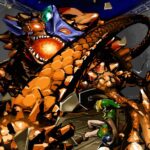
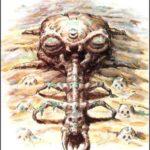
The science fiction, action packed, solitary interplanetary exploration series known as Metroid was meant to feel as if players were inside a living organism, the music and sound effects blending together to create the pulsating environment of an entire planet whose ecosystem bounty hunter Samus Aran is ought to become familiar with. The only two times a melodic theme is heard in the original game is when the main villain, Mother Brain, is defeated in order to give the victorious player catharsis and the ¨Overword¨ theme heard in this arrangement for the Super Smash Bros series, which is the closest the series gets to the heroic tone from The Legend of Zelda series, albeit with slightly darker chords provided by replacing strictly major chords with suspended and extended ones.
During the rest of the game, the melodies are more minimalistic, because Tanaka wanted the soundtrack to be the opposite of the “hummable” pop tunes found in other games at that time, making it one of the earliest attempts at true sound design in a game akin to a movie, following the scores of films like Alien (1979) and the dark synth heavy score of the film Birdy (1984). Those pulsating sounds as codified on the very first track of the series, the always present ´Title Theme´ also work wonders to convey machinery and computers performing cycles or pulsating in emergency alert mode. Either the ´Title Theme´ or this track known as ´Brinstar´ could be considered the main theme of the series.
Planet Zebes
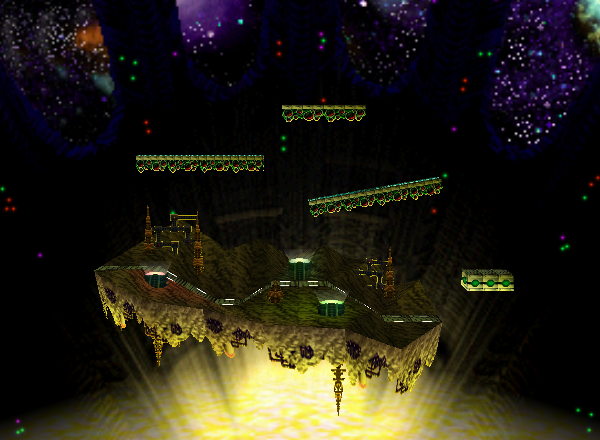
Although not drawing homage to any particular game, this stage is based on Zebes, the planet on which Metroid and Super Metroid are set. The only reference is the yellow acid or lava featured in some rooms in Metroid; This rising and falling acid might also be reference to Super Metroid, wherein the lava in some Norfair and Tourian rooms would rise after earthquakes. The stage’s platforms, composed of green bubbles with red highlights, are a direct reference to the aesthetics of Norfair in both games.
The breathing aspect of Metroid music is captured on this arrangement by the ethereal female choir pulsating with volume fades. the rest of the instrumentation brings to mind the science fiction nature of the series with various futuristic sounds playing short notes reminiscent of computers performing calculations.
The harmonic basis of the piece is the transition between the G major and Bb, a chromatic mediant that combines aspects of both the major scale of G and its parallel minor, a modal sound that is close to a major Phrygian profile. However the Bb is not fully major but instead modifies the notes to create different extended versions, opting to not use the shared note between the G and Bb chords (D) and using the more ambiguous and less heroic C note to create suspended harmony. G – Bbsus2.
It has one of the higher track counts in the score for the first Super Smash Bros. games, reflecting the various layers that were needed to convey the series´ tone.
Samus Victory Theme
The fanfare that plays whenever the mighty bounty hunter known as Samus Aran is victorious in one of her matches. Also written for the original Metroid game by Hirokazu ¨hip¨Tanaka, this flourish would originally play when Samus Aran obtained a new power-up or addition to her Power Suit, as well as when Samus defeated major villains Ridley or Kraid. In nearly every Metroid game since, a variation of this fanfare is used for acquiring major item upgrades.
For some reason on this particular arrangement it was decided that the harmonica would play the role of the bass; perhaps it created a very specific synthetic sound. Like other tracks and fanfares in the original Super Smash Bros. it uses extended harmony to create colorful chords; the descending regal progression goes something like Bb5 Maj7 – A57 – G7sus4 – Edim – Dadd9.
Help to keep the rites going around here by supporting the shrine:

Media Files, requests and support for more interactive content

Thou shall donate since this is a cult and you are now a sheep

Help staying awake analyzing game tracks and writing posts or else everything will end up being written by A.I
- Inside The Score – The Legend of Zeda: A Link to the Past – End Credits / Staff Roll
 The land rests As the last few minutes of this extensive journey that has now come to an end fly by, the nostalgia and reflective mood kicks in. Because such a massive enterprise as a Zelda game or a Lord of the Rings movie require multiple endings to convey everything… Read More »Inside The Score – The Legend of Zeda: A Link to the Past – End Credits / Staff Roll
 - Inside The Score – The Legend of Zelda: A Link to the Past – Ending / Epilogue ~ Beautiful HyruleFinal of the fantasy The Triforce has been touched. A wish has been granted. For the occasion, the newly undeceased king of Hyrule has commissioned a march in honor of the legendary hero to the Hylian Sousa, who might as well be composer Nobuo Uematsu since this piece is very… Read More »Inside The Score – The Legend of Zelda: A Link to the Past – Ending / Epilogue ~ Beautiful Hyrule
- Inside The Score – The Legend of Zelda: A Link to the Past – Triforce Chamber / Power of the GodsTake your boots off your feet And thus the Triforce spoke to men. And it became present in history. And you better treasure and contemplate this moment seldom witnessed in the course of the series. The elusive opportunity to interact and touch the most important artifact. You are now in… Read More »Inside The Score – The Legend of Zelda: A Link to the Past – Triforce Chamber / Power of the Gods
- Inside The Score – The Legend of Zelda: A Link to the Past – Ganon Battle / Prince of DarknessProgressive evil En Garde! And you better be prepared since you are about to duel the iconic enemy of the series at perhaps his canonically most powerful incarnation. Right after having touched the sacred Triforce which allowed him to conquer all of the Golden Land and whose evil and darkness… Read More »Inside The Score – The Legend of Zelda: A Link to the Past – Ganon Battle / Prince of Darkness
- Inside The Score – The Legend of Zelda: A Link to the Past – Boss Battle / Anger of the GuardiansQuick mayhem Ah, the simpler times when boss battles where not a multi epic orchestral suite but just an ostinato more basic that even what became the music for standard battle encounters out there. We are a long way from each boss having his own personalized track. And this early… Read More »Inside The Score – The Legend of Zelda: A Link to the Past – Boss Battle / Anger of the Guardians
- Inside The Score – The Legend of Zelda: A Link to the Past – Dark World Dungeon / Dungeon of ShadowsMemento mori We are getting closer to Ganondorf (or at least the wizard Agahnim who ultimately fulfills the same human side of evil role in this game) and that means getting closer to the profiles and motifs of his own theme song (which naturally was the theme of Agahnim at… Read More »Inside The Score – The Legend of Zelda: A Link to the Past – Dark World Dungeon / Dungeon of Shadows