Cries of suffering from those who still hold a grudge against their land
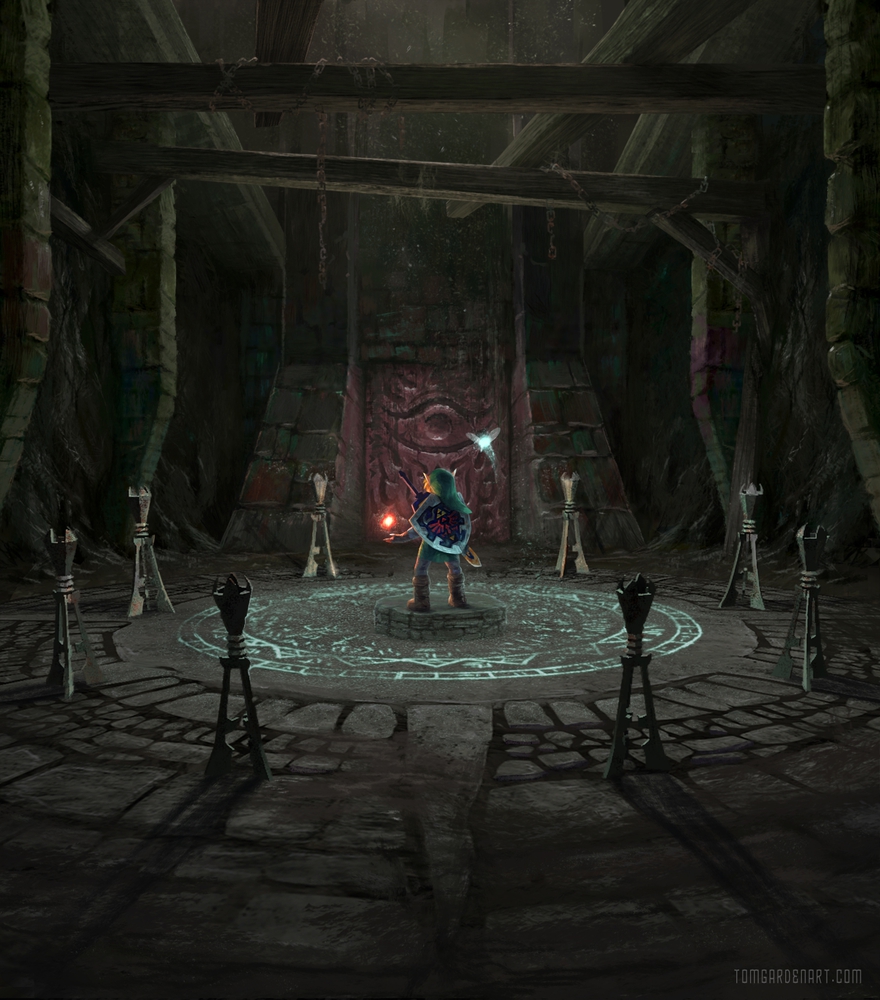
The Legend of Zelda: Ocarina of Time is a video game often celebrated for its revolutionary gameplay design and mechanics, epic scale, cinematic scope, immersion and sense of adventure. However, within Ocarina of Time there is also an element of darkness hidden below its magical fairy tale surface. For instance, its horror elements stand shoulder to shoulder with other games that actually belong to the genre. Enemies like the ReDead are a masterclass in horror, an uncannily human design that manages to avoid the cliche zombie with a hanging eye in favor of a seemingly malnourished person with an eerie sound design that actually takes the control away from players for a few unnerving seconds—The way they grab you is truly the stuff of nightmares— Kakariko Village too, even since the child portion of the game, had a suspicious element to it; from the windmill hut and the cursed Skulltula house to the graveyard where music is absent. All places coated in a serene atmosphere that enhances their mystery.
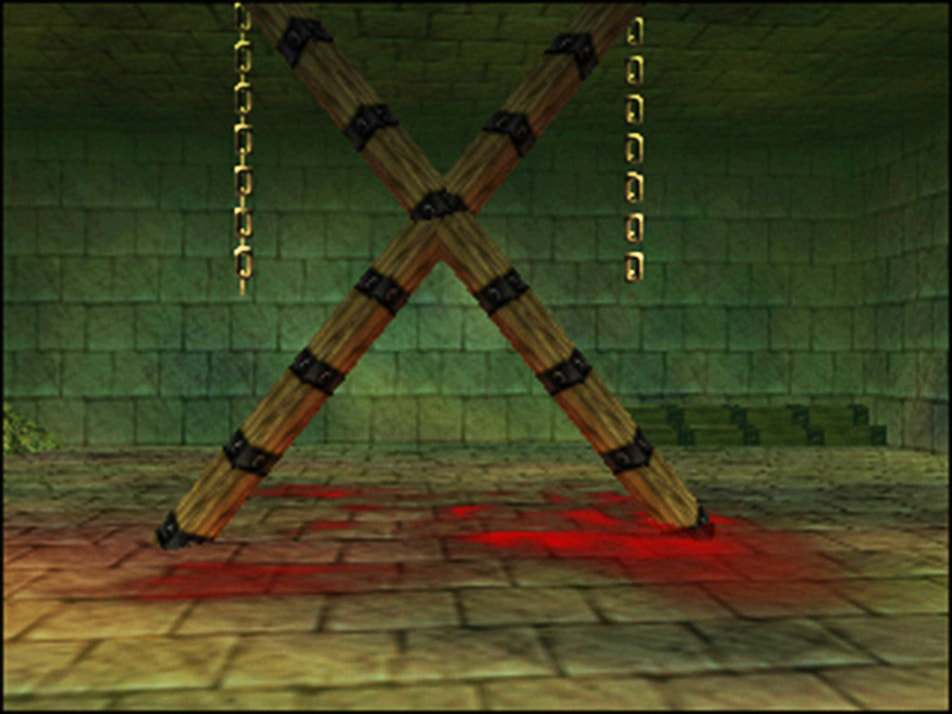
The fact that a company like Nintendo gave this sort of treatment to the “good guys”, in which they are actually acknowledgedly responsible for creating a prison that deals torture and death to its enemies is almost unthinkable, more so in the typical fantasy settings of the time, where a black and white type morality was prominent. This moment is still perhaps as dark as the series has drifted—it does not help that Link enters this aberrant world as a small child first— A concept that would probably be deemed as ‘going too far’ for the villains is given an even more unsettling dimension coming directly from the royal family of Hyrule, the side of the protagonist. Guess this is part of Link growing up too.
“Here is gathered Hyrule’s bloody history of greed and hatred”
Some Random Skull
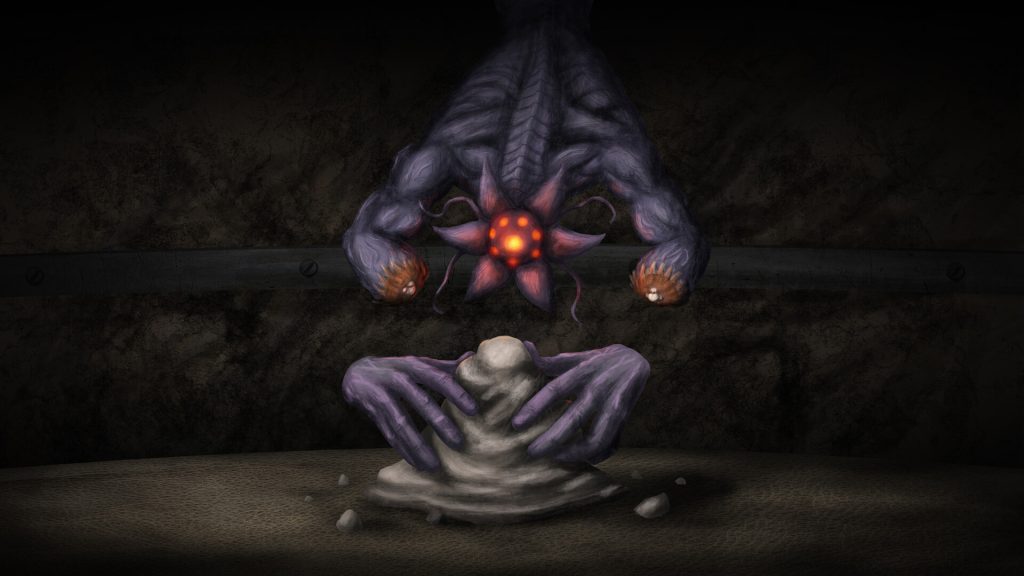
Only after cleansing himself of his inner dark side under the Bodhi tree at the Water Temple is Link able to open his third eye both literally and metaphorically by acquiring the legendary Sheikah artifact known as the Lens of Truth. With this, his path to the last two dungeos will be open and he will be able to see through the traps built within the Shadow Temple, a dungeon in the truest sense of the word built by the Sheikah monk tribe that operates in secret in order to perform the royal family dirty business. Here Link will serve as a witness to the sins committed by his own kingdom and perhaps the prize of peace, all sweep undder the rug of the peaceful Kakariko Village. Torture devices galore and even the final boss seems to represent all the hatred and sorrow caused to the prisoners of the royal family that came back to bite them. This mimics the concept of Yūrei, the Japanese equivalent of ghosts that are thought to be spirits barred from a peaceful afterlife.
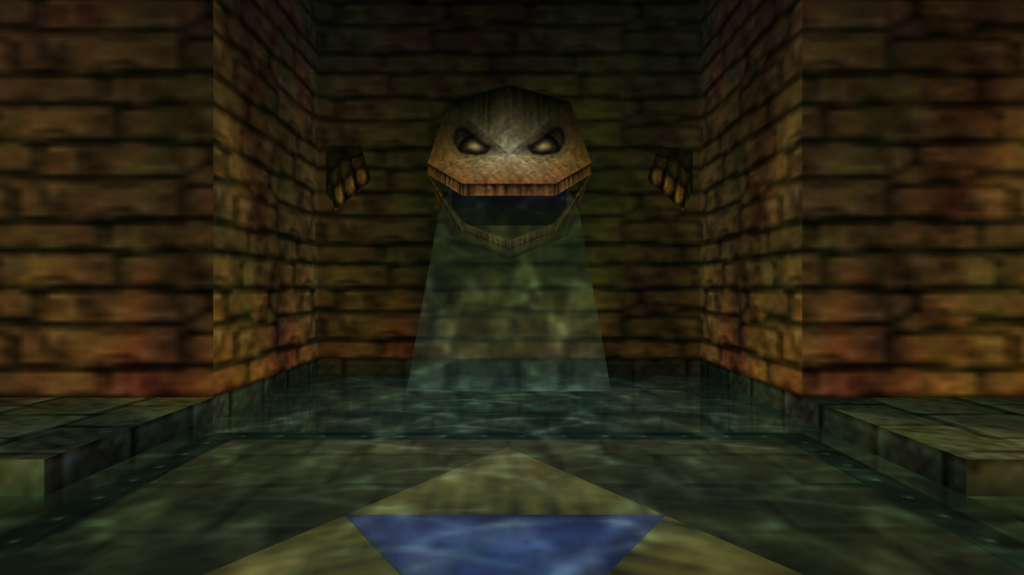
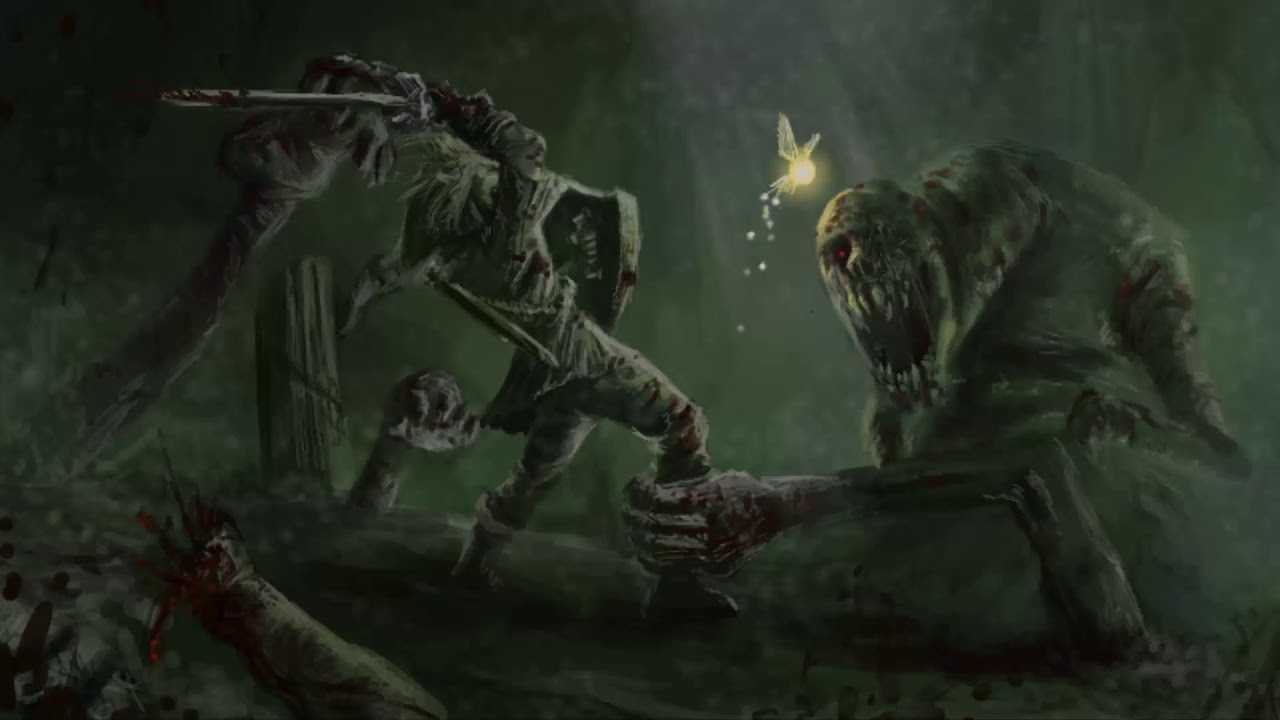
The concept parallels what we remember as the Spanish inquisition which, similarly, was a kingdom sponsored institution that was originally intended primarily to identify traitors against the royal family and founded towards the end of the Reconquista. With both the Shadow Temple and Spirit Temple, Link, with the aid of the lens of truth, will be able to see the dark within the Hylians and the light within the Gerudo.
In the Bottom of the well and the Shadow Temple, Link is literally embarking into the valley of the dead, where all the evilness of the kingdom is brushed up, put under the rug and never talked about again. The symbol of the Sheikah tribe, the people responsible for the creation of these chambers, is an eye that seeks the truth no matter what it takes, the tear symbolizing the sins that this task inevitably entails. The Shadow Temple appropriates motifs and traditions of many cultures in relation to what is known as the underworld or hell: obscurity, catacombs, death, bones, skeletons, spikes, sharp blades, chains, mutilation, crows and bat imagery fill the place; there is even a boat that, like in many mythologies, takes the deceased across a river to the afterlife—even accompanied by a funeral toll, like a procession (the fancy word to describe this entity is ‘psychopomp’)
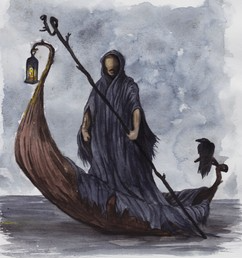
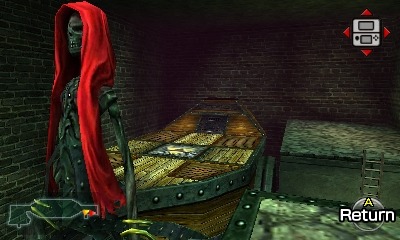
The music, like in previous dungeons, uses unearthly voices, this time to create an effect of souls passing away from the world of the living, not in a pleasent way but full of pain and sorrow. Who knows how many innocent people were prosecuted here.
Music Analysis
Structure: Section 0 / Section 1 / Section 2 / Section 3
Time Signature: 4/4
Tempo: 104
Melodic and Harmonic Profiles: D Octatonic; D Chromatic; Atonal
The Shadow Temple cue brings reinforcements coming directly from the Dodongo’s Cavern theme to imbue it with the strange and the macabre. The wind roar returns with a different pattern along with the irregular sonorities that this time around symbolize metallic devices used for…ahem… different purposes than mining.
The music found inside the tombs at the graveyard is the same cue from Dodongo’s Cavern, so the use of these same sounds plays with Kondo’s concept of connecting locations through music—one of the previous metal rattles is now used in a higher pitch, creating a sound typically associated with bones and skeletons (it sounds like an anklung but it’s not the same sample used on the Forest Temple)
Here are some of the sounds heard within the depths of the Shadow Temple:
Another big theme in Ocarina of Time is the connection between the music snd its world. The Shadow Temple presents us with yet another example of music that blurs the lines between diegetic and non-diegetic; the drums we hear throughout the temple have a significance that we can only grasp by the end of the dungeon.
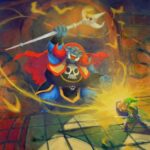
The boss battle of the Shadow Temple is fought on top of a giant drum. The implications are clear, Link has heard this ritualistic drum beat from the very beginning throughout the dungeon, calling him to the depths of the earth in a procession march — turns out we have been lied all this time, because the disembodied hands of Bongo Bongo never play anything remotely sounding like bongos we are familiar with, but the connections are still implied— In similar fashion to other dungeon tracks, the volume of the instruments is manipulated, fading in and out to give it a more realistic feeling to the ambience.
Where the track differs from the cue heard inside the tombs is in its use of voices to create this underworld sonority. They are the same choirs we have been hearing in other tracks from the game, but this time around they are manipulated with pitch bending to create the effects of souls falling down the abysm in pain or maybe spirits passing rapidly through Link ears; they are even referred to in dialogues inside the temple, possibly alluding to their diegetic nature as well. The voices of the spirits, the male choirs are played in an almost inhuman register, they are meant to be after all (their opening motif sounds similar to the Voldemort’s Theme of the Harry Potter series). Kondo had already used this same effect on the ghost houses from Super Mario World (that last chord is practically the same as in that game) Unlike the Fire Temple voices that seem to be crying for help, these choirs seem to be past the point of help already.
The female choirs often sound in dissonant minor or major seconds, heard independent of the other voices; they are not playing music together after all, each one just wants to scream.
Like for many other soundtracks, the always recurrent suite of Gustav Holst ‘The Planets’ seems to have influenced this trope of the wordless choirs to signify the metaphysical world; In this case, with the planet Neptune, the bringer of mysticism.
From there, the use of disembodied voices in horror has become commonplace, with the influential score of Jerry Goldsmith for the movie The Omen (1976) giving them the demonic pitch bending that now Koji Kondo is appropriating for dramatic effect—Also thank this film for the overuse of Latin chants in final boss battles.
It turns out that the controversial Muslim chants that had to be removed from the Fire Temple continue to live sneakily inside Ocarina of Time, because the demonic sounds that rumbles at the very bottom of this track is none other than that same sample pitched very low and played in chord form as to be indecipherable; it doesn’t even sound like a human voice anymore.
The last melodic element on the track is provided by the quintessential-always called for-gothic horror instrument: the harpsichord, playing different chromatic ostinatos. From vampire stories, to halloween specials, to represent hell, or in Tim Burton movies, we can always count on the harpsichord to add to the mood. This tradition dates back to the era of silent film music, where synchronizing sound with image was a more difficult endeavor. The fast attack of the harpsichord and its antiquity was more appropriate for the horror film soundtracks of the era than other slower instruments like the strings. They also exemplified the century-old and dangerously seductive vampire. However, after being used in countless monster flicks, going so far as to being used in the famous theme song from the Addams Family, the harpsichord rings now closer to parody than true horror, so this means the Shadow Temple is dangerously close to misuse this instrument. It is all savaged because the harpsichord is not given the main role and Kondo only uses it to give dissonant flourishes to the track instead of a true melody or accompaniment.
Ultimately, this track wanted to check all the boxes of a staple horror soundtrack. The metallic, razor like noises, tribal sounds, dissonances and demonic choirs are all here.
After purging himself first on the Water Temple, Link finally manages ro purge his own land, unspeakable sins committed that make the royal family of Hyrule a more ambiguous entity. It was in Kondo’s hands to capture this horror and desperation, the duality of Hyrule.
Samples Used:
- Djembe: African – Djembe Groove 4 100/21_21_17 from the library Zero-G CE21 Ethnic Flavours
- Male Choir: Gregorian Mmmh unisono from the library Best Service Hallelujah
- Female Choir: CD 1 – HAL:NUNS AAH/OOH – HAL:Nuns Aahhh – HAL:Nuns Aahh from the library Best Service Gigapack 2
- Prayer Chant: track 76 Volks – 0:19/prayers from the library Best Service Voice Spectral
- Metal Rattle: Lore Drone from the library Zero G Ambient
- Harpsichord: HARPSICHORD – SINGLE NOTE from the library Sound Ideas Sampler Library
Help to keep the rites going around here by supporting the shrine:

Media Files, requests and support for more interactive content

Thou shall donate since this is a cult and you are now a sheep

Help staying awake analyzing game tracks and writing posts or else everything will end up being written by A.I
- Inside The Score – The Legend of Zeda: A Link to the Past – End Credits / Staff Roll
 The land rests As the last few minutes of this extensive journey that has now come to an end fly by, the nostalgia and reflective mood kicks in. Because such a massive enterprise as a Zelda game or a Lord of the Rings movie require multiple endings to convey everything… Read More »Inside The Score – The Legend of Zeda: A Link to the Past – End Credits / Staff Roll
 - Inside The Score – The Legend of Zelda: A Link to the Past – Ending / Epilogue ~ Beautiful HyruleFinal of the fantasy The Triforce has been touched. A wish has been granted. For the occasion, the newly undeceased king of Hyrule has commissioned a march in honor of the legendary hero to the Hylian Sousa, who might as well be composer Nobuo Uematsu since this piece is very… Read More »Inside The Score – The Legend of Zelda: A Link to the Past – Ending / Epilogue ~ Beautiful Hyrule
- Inside The Score – The Legend of Zelda: A Link to the Past – Triforce Chamber / Power of the GodsTake your boots off your feet And thus the Triforce spoke to men. And it became present in history. And you better treasure and contemplate this moment seldom witnessed in the course of the series. The elusive opportunity to interact and touch the most important artifact. You are now in… Read More »Inside The Score – The Legend of Zelda: A Link to the Past – Triforce Chamber / Power of the Gods
- Inside The Score – The Legend of Zelda: A Link to the Past – Ganon Battle / Prince of DarknessProgressive evil En Garde! And you better be prepared since you are about to duel the iconic enemy of the series at perhaps his canonically most powerful incarnation. Right after having touched the sacred Triforce which allowed him to conquer all of the Golden Land and whose evil and darkness… Read More »Inside The Score – The Legend of Zelda: A Link to the Past – Ganon Battle / Prince of Darkness
- Inside The Score – The Legend of Zelda: A Link to the Past – Boss Battle / Anger of the GuardiansQuick mayhem Ah, the simpler times when boss battles where not a multi epic orchestral suite but just an ostinato more basic that even what became the music for standard battle encounters out there. We are a long way from each boss having his own personalized track. And this early… Read More »Inside The Score – The Legend of Zelda: A Link to the Past – Boss Battle / Anger of the Guardians
- Inside The Score – The Legend of Zelda: A Link to the Past – Dark World Dungeon / Dungeon of ShadowsMemento mori We are getting closer to Ganondorf (or at least the wizard Agahnim who ultimately fulfills the same human side of evil role in this game) and that means getting closer to the profiles and motifs of his own theme song (which naturally was the theme of Agahnim at… Read More »Inside The Score – The Legend of Zelda: A Link to the Past – Dark World Dungeon / Dungeon of Shadows