An Amen for the heroes
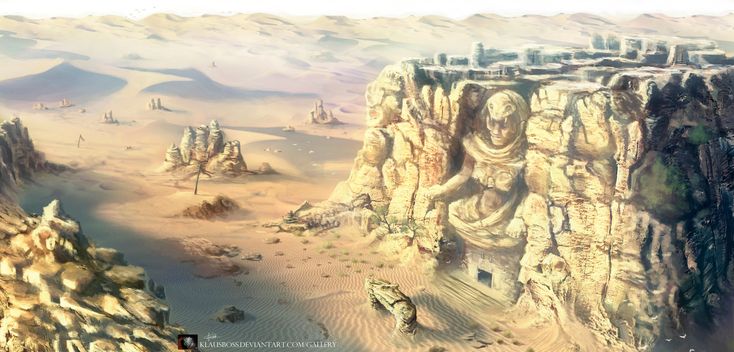
Link arrives to the Desert Colossus after traversing what at the time felt like an entire continent. a place located in the farthest corner of the map—it is the equivalent of crossing from Spanish Andalusia to Northern Africa, this corner of the map is the home of the antagonist of the game, Ganondorf, where he probably was brought up into the dark arts. This desert houses the Spirit Temple, in which Link will need the abilities from both his past self and his present self in order to overcome the trials in each of the symmetrical sides of this dungeon; and it is symmetry that which will be the name of the game from here on.
After exiting the temple, failing to progress further on an adult body, Link finds Sheik waiting for him. She will teach him the melody that leads a child back to the desert. the Requiem of Spirit, a requiem for the fate of the sage of spirit, which is the only sage that we are yet to know (or did we already meet her? Time travel is messy). She used to be the second-in-command of the Gerudo people and rebelled against the injustices of the Gerudo king while planning to sabotage him in the long past. Her fate was worse than death and it is up to the Hero of Time to let her go of her suffering. It is the only sage we see die on screen.
After getting up to a rough start with the Gerudo tribe, becoming imprisoned and all, Link gains their respect by managing to save the carpenters from who knows what. Since the interactions with them during the child era were minimal, this last race is able to add more variety and an extra cultural dimension to the last part of the game since otherwise it would be just the same three races of the past era. Plus their quest uses seriousstealth and battle mechanics in order to open the path towards the dungeon.
Apt for a place called the Spirit Temple, a requiem in a musical context refers to compositions associated with death, dying, and mourning; mostly on religious settings, where it is used for a liturgical service known as Mass for the dead in the Catholic Church, offered so that the spirit is finally put in repose. The dramatic character of this type of music has inspired numerous composers to the extent that it became a genre of its own, not necessarily tied to religious contexts. However, the requiem is mostly a vibe; it’s defined more for its utility than specific musical characteristics; although, since it’s been used for the deceased, don’t expect uptempo numbers in major keys played by electronic instruments.
Musical Analysis
Structure: Section 1
Time Signature: 4/4
Tempo: 80 (ritardando to 50)
Melodic and Harmonic Profiles: D Aeolian/Minor; D Ionian/Major
This piece consists of only one motif repeated three times, enhanced with various countermelodies, timbres and composition techniques. It’s not surprising that the only song from the warp tunes where the question phrase and the answer phrase are the same is the one attached to a temple based around equal halves, mirrors and twins. The motif is limited to the notes of a D minor chord. Like the other warp songs, it is played first by the harp and then the ocarina follows; they are doubled by the high strings. The third time it is left for the strings and the glockenspiel to cap it all off.
the accompaniment, consisting exclusively of strings, begins playing thirds, with the high strings responding to each ending of the phrase with a countermelody, just like a congregation does.
The last time, the phrase is playing against a Gm chord and a suspension that resolves to the major chord all warp songs require. The progression can be though of as:
Dm – Em – Dm – Edim – [Repeat]
Gm – Dsus2 – D
Since the Dsus2 chord contains a perfect fourth between the notes E and A, it could have easily been substituted for an A major chord and create a stronger authentic cadence [V – I] but the suspension gives it a more subdued, regal feel to the piece. As per the religious connotations of a requiem it ends up with the Amen cadence and that suspension that is common in liturgical choral music.
There is an interesting contrapuntal technique going on starting on the third measure; Kondo uses for the first time a new set of strings to play the theme’s motif again, but the catch is that the note lengths have been doubled, sort of as if they are playing the song in slow motion; an echo that mirrors the melody (watch and listen closely to the orange strings playing the same melody). This is called rhythmic augmentation and almost subliminally reinforces the melody for the listener. Counterpoint like this is difficult to do well, but since the motif here is just the notes of a D minor chord, it lends more easily to the style.
With this melody child Link can be called again to complete the other temple from the duology of duality, quests that require both the abilities of a young heart and an adult soul. The past and the future working together to create s new present; it is the ultimate test of all you know from Ocarina of Time.
The piece returns for Twilight Princess sung by the spirit of the Hero of Time himself, perhaps as a requiem for his own soul that is destined to help another hero before being put to rest.
Help to keep the rites going around here by supporting the shrine:

Media Files, requests and support for more interactive content

Thou shall donate since this is a cult and you are now a sheep

Help staying awake analyzing game tracks and writing posts or else everything will end up being written by A.I
- Inside The Score – The Legend of Zeda: A Link to the Past – End Credits / Staff Roll
 The land rests As the last few minutes of this extensive journey that has now come to an end fly by, the nostalgia and reflective mood kicks in. Because such a massive enterprise as a Zelda game or a Lord of the Rings movie require multiple endings to convey everything… Read More »Inside The Score – The Legend of Zeda: A Link to the Past – End Credits / Staff Roll
 - Inside The Score – The Legend of Zelda: A Link to the Past – Ending / Epilogue ~ Beautiful HyruleFinal of the fantasy The Triforce has been touched. A wish has been granted. For the occasion, the newly undeceased king of Hyrule has commissioned a march in honor of the legendary hero to the Hylian Sousa, who might as well be composer Nobuo Uematsu since this piece is very… Read More »Inside The Score – The Legend of Zelda: A Link to the Past – Ending / Epilogue ~ Beautiful Hyrule
- Inside The Score – The Legend of Zelda: A Link to the Past – Triforce Chamber / Power of the GodsTake your boots off your feet And thus the Triforce spoke to men. And it became present in history. And you better treasure and contemplate this moment seldom witnessed in the course of the series. The elusive opportunity to interact and touch the most important artifact. You are now in… Read More »Inside The Score – The Legend of Zelda: A Link to the Past – Triforce Chamber / Power of the Gods
- Inside The Score – The Legend of Zelda: A Link to the Past – Ganon Battle / Prince of DarknessProgressive evil En Garde! And you better be prepared since you are about to duel the iconic enemy of the series at perhaps his canonically most powerful incarnation. Right after having touched the sacred Triforce which allowed him to conquer all of the Golden Land and whose evil and darkness… Read More »Inside The Score – The Legend of Zelda: A Link to the Past – Ganon Battle / Prince of Darkness
- Inside The Score – The Legend of Zelda: A Link to the Past – Boss Battle / Anger of the GuardiansQuick mayhem Ah, the simpler times when boss battles where not a multi epic orchestral suite but just an ostinato more basic that even what became the music for standard battle encounters out there. We are a long way from each boss having his own personalized track. And this early… Read More »Inside The Score – The Legend of Zelda: A Link to the Past – Boss Battle / Anger of the Guardians
- Inside The Score – The Legend of Zelda: A Link to the Past – Dark World Dungeon / Dungeon of ShadowsMemento mori We are getting closer to Ganondorf (or at least the wizard Agahnim who ultimately fulfills the same human side of evil role in this game) and that means getting closer to the profiles and motifs of his own theme song (which naturally was the theme of Agahnim at… Read More »Inside The Score – The Legend of Zelda: A Link to the Past – Dark World Dungeon / Dungeon of Shadows