Raveware
Well, the main stage at Tomorrowland just burned down, but still, the festival went through; we could say they had a bad fur day. The next best thing to that is seeing how the humble Nintendo 64 managed to pack a fully formed techno track with all of its characteristic sections inside a cartridge (even though this game specifically required a special 64 MB cartridge, one of the few Nintendo 64 games that size, and audio made up around 40–48 MB of all cartridge space. So now you know why very few N64 games used streamed audio or voice acting).
All this in service of bringing to life a rave party at the night club where Conker has to rescue his Jessica Rabbit-like girlfriend from the Roger Rabbit-like mafia weasels amidst a bunch of rocky guards and strippers, which is actually the least preposterous place where you can end after a night of binge drinking with your war buddies. Conker, the squirrel, the forgotten mascot character who debuted in Diddy’s Kong Racing and had some cute adventures on the Game Boy Color, has grown too fast and on his sequel he ditches his child-friendly image and becomes the complete edgy younger brother that the company Rareware always wanted to be. A cute animal that drinks, curses and loves money; the culmination of the company’s platforming mascot adventures with toilet humor, and shooter prowess learned from GoldenEye 64 and Jet Force Gemini. This is the swan song from Rare for the Nintendo 64.
We didn’t need another typical mascot platformer after Banjo-Kazooie. The people who grew up with a N64 controller are now ready for college and for this game which captures the zeitgeist of the 90s with its satire of popular culture, including the video game medium, and edgy humor. It is a good way to say goodbye to the decade. The strange adventures that transcur in a single day can best be described as an update to The Wizard of Oz if Dorothy was a drunken squirrel and a yellow brick road was filled with brown, great mighty stuff. The game screams personality.
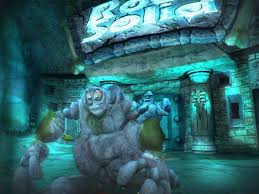
Musically, the audio was entrusted to a Rare composer we have not featured yet, Robin Beanland, who actually remains with the company to this day helping them in traversing the seas. He composed for the Killer Instinct series and co-wrote some of the screenplay in Conker’s Bad Fur Day. He was also the one who recommended Grant Kirkhope to send demos and apply for the company. It seems he is quite fond of electronic music and tools since this Rock Solid Night club out of nowhere in the story already had a precursor in Jet Force Gemini where the space cadets ended up also at a night club for some reason with a DJ who played various techno tracks to dance. Here we can see Conker dancing if he stays idle.
Musical Analysis
The music is rather faithful to the style of techno music very popular throughout the 90s, and specially during this time at Britain, known as Trance, its name deriving precisely because the repetitive loops and ostinatos put the listeners and party goers in this state which is better enjoyed with substances not endorsed by this channel or Google LLC in any way, shape or form. Like popular tracks in the genre, it is all about manipulating a synth riff and using the artificial percussion to create a set of buildups and climaxes to control the energy on the dance floor. Usually there is a middle section where the percussion drops and a more Eurodance melody plays; it slowly rises up again until it climaxes. The tracks are often long and usually require single versions to be edited when it comes to listening purposes as opposed to dancing.
A good reference that may have served up as a template for this track is the classic trance Acperience 1:
We also grab this opportunity to cover a style of music seldom heard in older games.
Here we get the DJ controller featured as an instrument which is just a software controller for a bunch of synth sounds and prerecorded music that allows you to manipulate sound like Robin does here, mostly focusing on filtering the audio to remove or add more energy and presence to them, volume and pan control. We can also make them fluctuate, distort them or alter the pitch, heavy work which a piano roll visualization does not capture since the real difficulty is in manipulating all MIDI messages to make it sound as smooth as a real life Disc Jockey. The rest are also synth sounds, the most important being the Drum machine with classic sounds like electronic kick, snare, sticks, claps, hi-hat, crash cymbals, low 808 sine waves and tambourine.
Thanks again to Juke Denton for getting these fully functional MIDI sequences.
Help to keep the rites going around here by supporting the shrine:

Media Files, requests and support for more interactive content

Thou shall donate since this is a cult and you are now a sheep

Help staying awake analyzing game tracks and writing posts or else everything will end up being written by A.I
- Inside The Score – The Legend of Zeda: A Link to the Past – End Credits / Staff Roll
 The land rests As the last few minutes of this extensive journey that has now come to an end fly by, the nostalgia and reflective mood kicks in. Because such a massive enterprise as a Zelda game or a Lord of the Rings movie require multiple endings to convey everything… Read More »Inside The Score – The Legend of Zeda: A Link to the Past – End Credits / Staff Roll
 - Inside The Score – The Legend of Zelda: A Link to the Past – Ending / Epilogue ~ Beautiful HyruleFinal of the fantasy The Triforce has been touched. A wish has been granted. For the occasion, the newly undeceased king of Hyrule has commissioned a march in honor of the legendary hero to the Hylian Sousa, who might as well be composer Nobuo Uematsu since this piece is very… Read More »Inside The Score – The Legend of Zelda: A Link to the Past – Ending / Epilogue ~ Beautiful Hyrule
- Inside The Score – The Legend of Zelda: A Link to the Past – Triforce Chamber / Power of the GodsTake your boots off your feet And thus the Triforce spoke to men. And it became present in history. And you better treasure and contemplate this moment seldom witnessed in the course of the series. The elusive opportunity to interact and touch the most important artifact. You are now in… Read More »Inside The Score – The Legend of Zelda: A Link to the Past – Triforce Chamber / Power of the Gods
- Inside The Score – The Legend of Zelda: A Link to the Past – Ganon Battle / Prince of DarknessProgressive evil En Garde! And you better be prepared since you are about to duel the iconic enemy of the series at perhaps his canonically most powerful incarnation. Right after having touched the sacred Triforce which allowed him to conquer all of the Golden Land and whose evil and darkness… Read More »Inside The Score – The Legend of Zelda: A Link to the Past – Ganon Battle / Prince of Darkness
- Inside The Score – The Legend of Zelda: A Link to the Past – Boss Battle / Anger of the GuardiansQuick mayhem Ah, the simpler times when boss battles where not a multi epic orchestral suite but just an ostinato more basic that even what became the music for standard battle encounters out there. We are a long way from each boss having his own personalized track. And this early… Read More »Inside The Score – The Legend of Zelda: A Link to the Past – Boss Battle / Anger of the Guardians
- Inside The Score – The Legend of Zelda: A Link to the Past – Dark World Dungeon / Dungeon of ShadowsMemento mori We are getting closer to Ganondorf (or at least the wizard Agahnim who ultimately fulfills the same human side of evil role in this game) and that means getting closer to the profiles and motifs of his own theme song (which naturally was the theme of Agahnim at… Read More »Inside The Score – The Legend of Zelda: A Link to the Past – Dark World Dungeon / Dungeon of Shadows