The Xave-Files
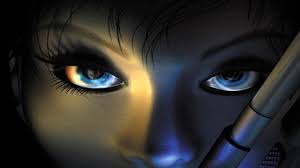
In the year 2023 cars will fly, the governments of the world will be controlled by reptilians waging wars with big corporations, AI has gained conscience and laptops become weapons. These are all the accurate predictions that were made by Perfect Dark—they just don’t want you to know the truth—the tech noir sequel to GoldenEye 007 in a parallel world where the James Bond series jumped the shark and went into a mega futuristic direction (even though the series has come close to it). In a video game though, it allowed the GoldenEye team to do a more ambitious story and permeate the gameplay with all kinds of wacky mechanics that only the freedom of thinking about the future and not dwell in the set on stone past brings to the table.
The Rare team are not longer limited by the constraints of the Bond franchise. They can now lean into any kind of influence in order to advance the FPS genre thanks to the bold decision of trying to establish a brand new IP as opposed to the well known spy film that gave them the GoldenEye success—it also didn’t help that Electronic Arts basically outbid them for the rights to the next 007 film—This freedom permitted this spiritual successor to be a, literally, more advanced sequel with exciting new plot points, devices and weapons that otherwise wound not have been possible. The game is a love letter to classic cyberpunk staples like the films Blade Runner and Ghost in the Shell, TV shows like the X-Files or full on conspiracy theories on the internet. To differentiate further the game from its predecessor it was decided that this time around you would be put on the heels of a female protagonist, Joanna Dark, possibly named after the historical patron saint Joan of Arc and modeled after the actress Winona Ryder; she is the titular Perfect Dark due to her perfect scores at the Carrington Institute. The developers might have come with the name of the game due to its cool sounding properties or maybe the character was named first after Joan of Arc and then the name followed.
The music once again was going to be provided by the team made of Grant Kirkhope and Graeme Norgate—at least before the later decided to leave Rare mid-development alongside half of the team to found the company Free Radical Design, which would take with them the futuristic concept of a FPS to create their own TimeSplitters series; Grant Kirkhope actually had to come into the project after this incident since he was already in charge of two other big projects—They were joined by new hire Dave Clynick who did the cinematic sequences and multiplayer tracks. The score, just like the game itself, is GoldenEye 007 with an additional layer of futuristic and sci-fi paint applied. Graeme Norgate brought in most of the new sounds used. We now have brand new synthesizer sounds directly inspired by the famous Blade Runner electronic score and the iconic whistling sound from the X-Files on top of the industrial, beat based production of the Eric Serra’s GoldenEye movie score. Analogous to the game itself, the composers are no longer constrained by the musical tradition of 007; we no longer have the reliance on the James Bond theme. It is all originals. The main menu theme composed by Grant Kirkhope exemplifies this brand new mix of sounds, having the GoldenEye sound at its basis with additional sci-fi elements and a more mysterious sounding use of notes.
Musical Analysis
Bringing his signature tritone based compositions from the Danny Elfman inspired Banjo-Kazooie series, which is now forever in his DNA, Grant shapes the new conspiracy tone of the Perfect Dark series, using the diminished fifth as the basis for both the harmony and melody of the theme. The 007 roots are still there, with a distorted version of the chromatic 007 vamp. For the 007 vamp you must retain pedal root note and then advance the interval chromatically from a perfect fifth to a minor sixth then to a major sixth and back to the minor sixth; that is James Bond. Like CG – CAb – CA – CAb. For the Perfect Dark one, as can be seen on the electric piano ostinato, you get the same idea of advancing chromatically and then back but this one is more dissonant, reflecting the vibe of the game; instead of going up to the major sixth interval it goes down to the tritone so the vamp is now based around CG – CAb – CGb; you are no longer a cool, sophisticated spy but a heroine trying to solve an otherworldly conspiracy. The instruments also serve as an additional spoiler—just like the alien Elvis being reflected in the eyes of Joanna—for the sci-fi and alien elements we will encounter.
The industrial percussion now made of sounds UFO engines would produce are aided by the theremin, a staple of otherworldly science fiction and alien invasions since the Bernard Herrman score for The Day the Earth Stood Still, plus the Blade Runner synth sounds. These are no longer sounds coming from soviet submarines or nuclear industrial facilities; these are now sounds made by non-human made weapons, UFOs and other space ships. The filtered out arpeggiator-like sound was inspired by Blade Runner—similar to the Stranger Things theme song which also takes inspiration from 80s film scores. It is a modular analog synth sound inspired by music sequencers.
Could the N64 actually replicate this sound of a dynamic filter that evolves the sound in real time of a synth patch as if it was some kind of organic based alien technology? Not at all. So what you hear here are the results of the sound designers painstakingly recording different samples of the synth sound with different filter settings applied and then putting them together manually to give the effect of an electronic musician turning the filtering knob in a musical manner—which is basically an EQ that modifies the frequency content of a sound, altering its timbre and creating this pulsating effect. This trick has been used by Rare composers since the Donkey Kong Country days, pioneered by synth enthusiast David Wise.
The idea of the electric piano ostinato and sinister sounding notes combined with industrial percussion and distorted cymbals might have also come from the Blade Runner soundtrack
We also have other unnatural sounds like reverse cymbals which is something only musicians with access to alien technology can produce. The 007 submarine sonar is also back, but this one is a different metal percussion clank pitched down, creating continuity with the previous entry and making this a true spiritual successor in presentation, gameplay and sound. The synthesizer used for the bass has a very metallic attack, so much that at the lower frequencies it is practically another percussion instrument.
Musically, the theme goes between a C Aeolian/minor profile and a C Lydian one due to the tritone, figure that is then transposed to F when the theremin plays. There is an interesting rhythm contrast between the dotted quarter note basses and the electric piano ostinatos changing every two beats, since the bass notes arrive faster to the chord than the ostinato. The strings play the same melody on the C based progression. The transitions are marked by the reversed cymbal, which is when the attack and sustain of the note are interchanged, creating a strong sense of anticipation before the cymbal hit arrives in sync with the new section.
A full progression that would work is
Cm – Ab
Cm – F# – C – F#
Fm – Db
Fm – B – F – B
The two favorite harmonic movements of Grant Kirkhope, going to the minor sixth and going to the tritone chords. This adds the something-not-quite-right layer to the Perfect Dark tone.
Perfect Dark was the first ever Nintendo published game to get an M-rating since there was more blood depicted than in GoldenEye. Since all eyes were on what the developers of GoldenEye would come up with, unlike the first time, the team grew to three times its size and decided to expand on all fronts, with lots of content and customization for the multiplayer. The less realistic setting allowed the team to have carte blanche and go wild with ideas for gadgets and weapons. The series has continued sporadically, with even a long forgotten Game Boy game companion to the N64 title, trying to establish a new franchise and heroine on subsequent platforms. There is a next installment coming up and apparently (whoops! seems it was cancelled. Thank you Microsoft) Grant Kirkhope auditioned but was not selected since the landscape of video game music today is more incidental film score type oriented than a level theme looping endlessly, which is what the composer is maybe more closely associated with.
Help to keep the rites going around here by supporting the shrine:

Media Files, requests and support for more interactive content

Thou shall donate since this is a cult and you are now a sheep

Help staying awake analyzing game tracks and writing posts or else everything will end up being written by A.I
- Inside The Score – The Legend of Zeda: A Link to the Past – End Credits / Staff Roll
 The land rests As the last few minutes of this extensive journey that has now come to an end fly by, the nostalgia and reflective mood kicks in. Because such a massive enterprise as a Zelda game or a Lord of the Rings movie require multiple endings to convey everything… Read More »Inside The Score – The Legend of Zeda: A Link to the Past – End Credits / Staff Roll
 - Inside The Score – The Legend of Zelda: A Link to the Past – Ending / Epilogue ~ Beautiful HyruleFinal of the fantasy The Triforce has been touched. A wish has been granted. For the occasion, the newly undeceased king of Hyrule has commissioned a march in honor of the legendary hero to the Hylian Sousa, who might as well be composer Nobuo Uematsu since this piece is very… Read More »Inside The Score – The Legend of Zelda: A Link to the Past – Ending / Epilogue ~ Beautiful Hyrule
- Inside The Score – The Legend of Zelda: A Link to the Past – Triforce Chamber / Power of the GodsTake your boots off your feet And thus the Triforce spoke to men. And it became present in history. And you better treasure and contemplate this moment seldom witnessed in the course of the series. The elusive opportunity to interact and touch the most important artifact. You are now in… Read More »Inside The Score – The Legend of Zelda: A Link to the Past – Triforce Chamber / Power of the Gods
- Inside The Score – The Legend of Zelda: A Link to the Past – Ganon Battle / Prince of DarknessProgressive evil En Garde! And you better be prepared since you are about to duel the iconic enemy of the series at perhaps his canonically most powerful incarnation. Right after having touched the sacred Triforce which allowed him to conquer all of the Golden Land and whose evil and darkness… Read More »Inside The Score – The Legend of Zelda: A Link to the Past – Ganon Battle / Prince of Darkness
- Inside The Score – The Legend of Zelda: A Link to the Past – Boss Battle / Anger of the GuardiansQuick mayhem Ah, the simpler times when boss battles where not a multi epic orchestral suite but just an ostinato more basic that even what became the music for standard battle encounters out there. We are a long way from each boss having his own personalized track. And this early… Read More »Inside The Score – The Legend of Zelda: A Link to the Past – Boss Battle / Anger of the Guardians
- Inside The Score – The Legend of Zelda: A Link to the Past – Dark World Dungeon / Dungeon of ShadowsMemento mori We are getting closer to Ganondorf (or at least the wizard Agahnim who ultimately fulfills the same human side of evil role in this game) and that means getting closer to the profiles and motifs of his own theme song (which naturally was the theme of Agahnim at… Read More »Inside The Score – The Legend of Zelda: A Link to the Past – Dark World Dungeon / Dungeon of Shadows