The Meso-American royalty
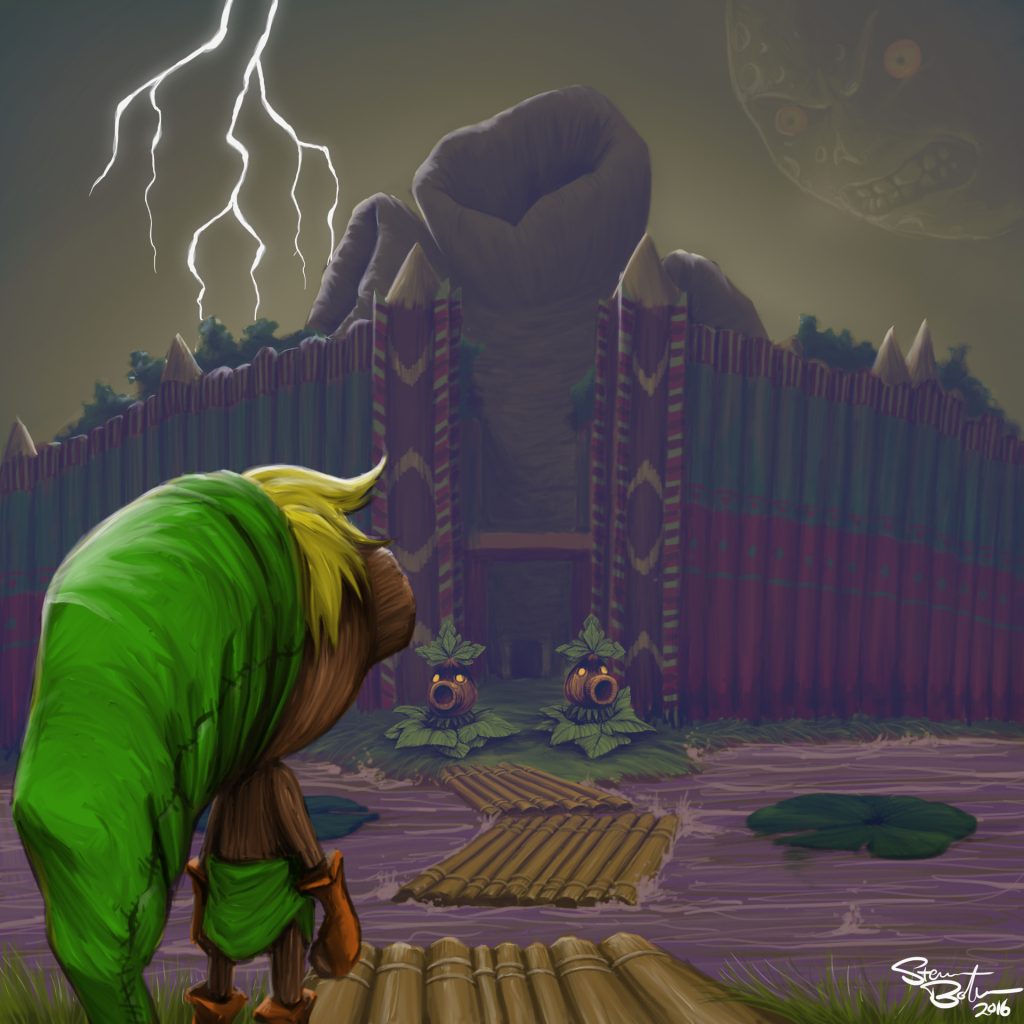
Out of nowhere in the middle of our boat cruise we find ourselves in the kingdom of a brand new culture, the Deku people to whom the spirit of the mask Link has carried since being bestowed with it by the skull kind belongs to. They are the new children of the forest, the replacement of the Kokiri. Turns out that the music also comes across as a surprise right after the dread of the swamp theme and the theme park musak, making the Deku Palace a spiritual successor to the Gerudo Valley cue from Ocarina of Time in the things they strive to accomplish; a clear line of exotic-catchy-song can be traced from that desert theme up to the Deku Palace, passing through Dragon Roost Island, then the Hidden Village from Twilight Princess and ending with the Overworld from Spirit Tracks. All the themes from this list seem to grab a very defined style of music from the real world and plaster it into Zelda, sometimes even mixing two genres, just like Gerudo Valley originally did with Spanish flamenco and Mexican mariachi, they are deigned to be catchy, exotic, unexpected and likable at first sound. Koji Kondo just has to write a banger that stands out in less than a second. This location from Majora’s Mask needs to accomplish the blend between tribal and regal at the same time —the Deku Palace location itself is also kind of a spiritual successor to Gerudo Valley, being also a stealth mission.
As stated, the Deku tribe theme needs to balance the indigenous side of the race with their developed monarchy; they are the barbaric leaf people about to cook alive a monkey without evidence of his wrongdoings but they also have royalty with a king, a princess, butler and other servants. Koji Kondo convincingly gave a musical identity to the Deku by zeroing on their design, an anatomy that is suited to play all kinds of pipes, and their skirts was perhaps a dead giveaway for Kondo to focus on a Scottish jig, easily capturing the regal nature of the Deku with these gaelic connotations of real world kingdoms. However, the Deku are not medieval in the same sense that the Hyrule kingdom is, there is still a tribalistic element to them that has a “Mayincatec” feel to it, where historical elements from ancient Mexican, Central, and South American nations (Maya, Inca, Aztec) are lumped into one exotic and often barbaric people; this Meso-America influence will be doubled down on their square pyramid temple which even adds African customs. The only thing that matters is that the Deku seem exotic, so any element is fair game for the developers.
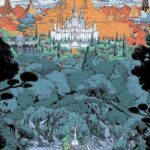
Their central structure is also supposed to look like their own pipes.
Musical Analysis
Structure: Section 0 / Section 1 / Section 2 / Section 3 / Section 4 / Section 5
Time Signature: 4/4
Tempo: 112
Melodic and Harmonic Profiles: E Aeolian/Minor; E Harmonic Minor
All this means that for Koji the music also has an air of Latin American music, creating sort of a precursor to the Dragon Roost Island theme that will fully embrace Andean music—series’ creator Shigeru Miyamoto might have influenced the inclusion of those styles since he is a fan of exotic acts like the Gypsy Kings (Gerudo Valley) and Inca, Peruvian folk music—The combination of the jig instrumentation and performance with the particular way the mandolin, a.k.a the acoustic guitar played on a high register, is played could point to an original recipe of European and Andean music; and of course the tambourines also contrast heavily with the folk European influence, being the most tribal sonority found in the piece.
The British side might have come from these types of traditions:
But the style of mandolin playing, just like the design of their kingdom and temple, could also have been inspired by the folk music of the Andes mountains across Peru, Bolivia, and Ecuador, a genre that developed combining Spanish musical styles with those of Quechua and Aymara peoples; so from the outset it is already appropriate since it has a mix of European and indigenous music at its core. Some samples of the style can be found here:
A style that will come to be fully implemented in Wind Waker and Spirit Tracks.
The instruments, which are most likely meant to be played by the Deku People in circles around a big fire, are the standards we would find in any troupe playing jigs in a ceremony of burning someone alive to placate bad luck, dancing and singing while the foolish monkey is condemned. The mandolin is the main differentiator element with respect to tracks using similar orchestration like the Clock Town theme and the Hyrule Castle Town music. Like any other plucked guitar-type string instrument, Koji Kondo knows the notes of the chord must have more distance between them to make the performance feel authentic to the style; it is the only harmony accompaniment instrument so it is at the centerpiece of the track, playing Em – D as the main progression and then D – G back and forth again. It turns around with an Eb dim followed by Em (who would have thought that the exact same instrument from Mikau, the Zora guitarist, was played at the forest kingdom).
The melodic instruments take turns to play their phrases as if the Deku are improvising, relieving each other; they are echoing their phrases on a question-answer rite—the calls and responses are even panned opposite sides— At the end, the theme sounds at its most tribalistic when the percussion is left alone with the fiddles playing mostly fifths and fourths with pitch bending that might or might not be emulating bagpipes. You can sense the fire and the heat on this Section, as if they were carrying their prisoner in a procession march. There are only three melodic phrases throughout the entire song but the interplay of different timbres makes the piece feel more dynamic and full, as if it were more complicated than it really is.
The percussion is so potent that an echo of it, will be even heard muffled on their Woodfall Temple far outside the palace, always reminding Link that the ritual of the monkey is still taking place so he must hurry up. Here It is the first sound that receives players when they enter this location, creating a groove that immediately catches attention and also helps to distinguish the piece from a true jig, closing the gap even more between tribal and royal. A track as memorable and original as the Deku Palace itself.
Link will sneak with the help of the Deku soul he possesses and get to the kidnapped monkey who has the key to the dungeon of this region. For Majora’s Mask, these keys are music; the four songs for the four temples are the analogous to the warp songs Sheik used to teach Link back in Ocarina of Time. They are ocarina songs that are magically accompanied by orchestra and are fashioned in similar way to the original warp songs. It is just a matter of finding Link a new duet partner; that partner might be inside of him now.

Help to keep the rites going around here by supporting the shrine:

Media Files, requests and support for more interactive content

Thou shall donate since this is a cult and you are now a sheep

Help staying awake analyzing game tracks and writing posts or else everything will end up being written by A.I
- Inside The Score – The Legend of Zeda: A Link to the Past – End Credits / Staff Roll
 The land rests As the last few minutes of this extensive journey that has now come to an end fly by, the nostalgia and reflective mood kicks in. Because such a massive enterprise as a Zelda game or a Lord of the Rings movie require multiple endings to convey everything… Read More »Inside The Score – The Legend of Zeda: A Link to the Past – End Credits / Staff Roll
 - Inside The Score – The Legend of Zelda: A Link to the Past – Ending / Epilogue ~ Beautiful HyruleFinal of the fantasy The Triforce has been touched. A wish has been granted. For the occasion, the newly undeceased king of Hyrule has commissioned a march in honor of the legendary hero to the Hylian Sousa, who might as well be composer Nobuo Uematsu since this piece is very… Read More »Inside The Score – The Legend of Zelda: A Link to the Past – Ending / Epilogue ~ Beautiful Hyrule
- Inside The Score – The Legend of Zelda: A Link to the Past – Triforce Chamber / Power of the GodsTake your boots off your feet And thus the Triforce spoke to men. And it became present in history. And you better treasure and contemplate this moment seldom witnessed in the course of the series. The elusive opportunity to interact and touch the most important artifact. You are now in… Read More »Inside The Score – The Legend of Zelda: A Link to the Past – Triforce Chamber / Power of the Gods
- Inside The Score – The Legend of Zelda: A Link to the Past – Ganon Battle / Prince of DarknessProgressive evil En Garde! And you better be prepared since you are about to duel the iconic enemy of the series at perhaps his canonically most powerful incarnation. Right after having touched the sacred Triforce which allowed him to conquer all of the Golden Land and whose evil and darkness… Read More »Inside The Score – The Legend of Zelda: A Link to the Past – Ganon Battle / Prince of Darkness
- Inside The Score – The Legend of Zelda: A Link to the Past – Boss Battle / Anger of the GuardiansQuick mayhem Ah, the simpler times when boss battles where not a multi epic orchestral suite but just an ostinato more basic that even what became the music for standard battle encounters out there. We are a long way from each boss having his own personalized track. And this early… Read More »Inside The Score – The Legend of Zelda: A Link to the Past – Boss Battle / Anger of the Guardians
- Inside The Score – The Legend of Zelda: A Link to the Past – Dark World Dungeon / Dungeon of ShadowsMemento mori We are getting closer to Ganondorf (or at least the wizard Agahnim who ultimately fulfills the same human side of evil role in this game) and that means getting closer to the profiles and motifs of his own theme song (which naturally was the theme of Agahnim at… Read More »Inside The Score – The Legend of Zelda: A Link to the Past – Dark World Dungeon / Dungeon of Shadows