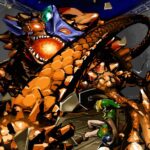
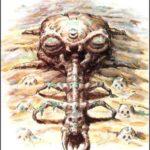
They are among us
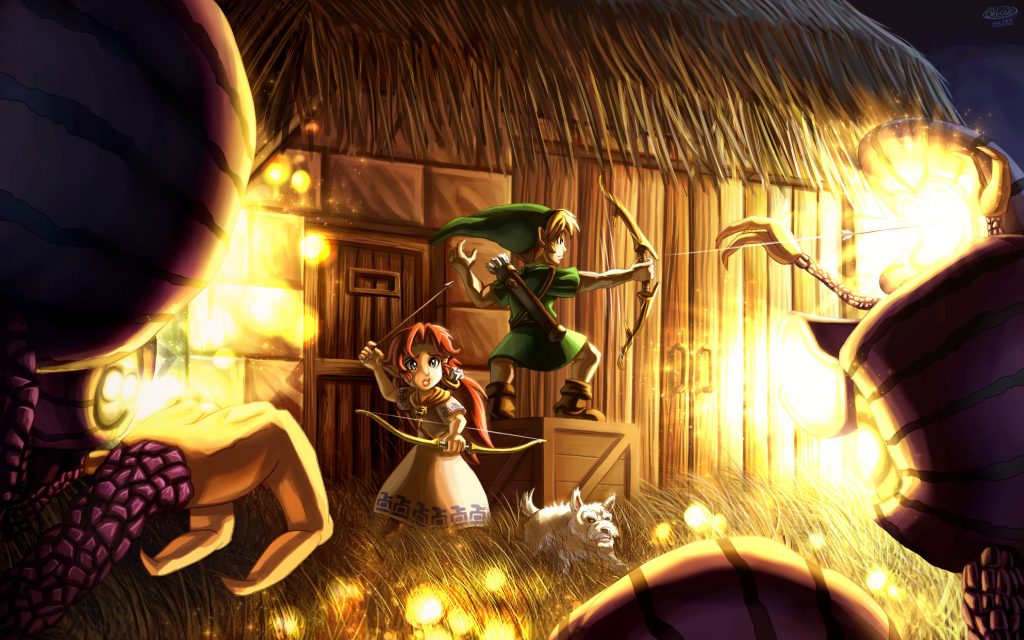
Many theories have been conjectured by players about the mysterious creatures that visit the Romani Ranch each year on the eve of the carnival of time. Romani, the little girl living in the ranch, claims to have seen them. Could she be just a little girl with fruitful imagination? Turns out she’s right and what’s more, none of these theories are really needed; even though text-wise the game never says who are these creatures, textual language is not the only language that exists in media. The game communicates it all exclusively through context, visual and aural language; if a picture is worth a thousand words, then a picture plus music is worth an entire narrative and the associations between what plays out on screen and pop culture are enough to define what is happening right now in one of the most out of left field moments in the entire The Legend of Zelda series.
If the game dialogue tries to shroud in mystery the nature of “them” then the artists and Koji Kondo spill the beans by employing the most cliche elements possible of a true saga of aliens stealing cattle, a staple of the most cartoony science fiction stories and the next Americana saga after the Western influences of the previous ranch. Link will have to fight them in order to get closer to the sisters, a pair of isolated-from-town girls based around both the child and adult version of Malon, the ranch girl from Ocarina of Time (having twins were one is an adult certainly defies all logic, and it is something that can only happen in Termina) Link will give them his attention for a full cycle of his time, seeing them develop throughout the three days and learning more about the bonds these sisters have to each other and with some of the townsfolk; it’s to this ranch where a great deal of population flees on the final day, thinking it is a safe haven from the impending doom.
Link better prepares in order to not fail this mission, as doing so will trigger one of the most disturbing implications of the game, seeing as how Romani gets abducted but mysteriously returns the next day; but she is not the same person anymore…yikes! The whole saga is both unsettling and amusing at the same time.
As you know, When UFOs fly over a farm, it always seems that the first thing they do is to beam up the farmer’s cows with their tractor beam. You’d think aliens would be more interested in scientists or political leaders than farmers, but where else would you test a device called ‘tractor beam’? These stories have become popular as a sort of satirical combination of cattle-mutilation stories and alien abduction stories, popular in rural parts of the world. It’s a useful narrative device for designating aliens that are up to no good, but in a slightly comedic way.
Musical Analysis
Structure: Section 0 / Section 1 / Section 2
Time Signature: 4/4
Tempo: 120
Melodic and Harmonic Profiles: F# Chromatic; G Double Harmonic Minor
The music of course also plays with these tropes, with Kondo employing techno-futuristic sounds that the mind associates with very advanced computers—the exact same soundtrack could work for a robot invasion— and shows how advanced the creatures that have developed interstellar space travel must be. Koji picked synth sounds from his sample libraries and made them sound as if a flying saucer is rotating just above the ranch; he still has to infuse it with a certain degree of danger, this is where the section of notes and accents play a part. This same set of instruments will return for the technology-infused next dungeon.
Perhaps the tempo is 120 because if fits perfect with the timer in seconds of the mission, giving an added dimension of anxiousness. The track also has laser beam sounds alternating between a burst of four shots and three shots each measure; they appear as if belonging to an arcade machine due to the use of the 8-bit, noise channel nature straight from a video game like Space Invaders (1978), the game that revolutionized the video game medium in Japan; these ones are the real deal.
The second sound is a classic; spaceships and undulation sounds are ingrained in popular culture, perhaps developed to imitate the sound of a rotating disc on the sky or what levitation should sound like without mechanical engines. Kondo does this by using a electric organ sound used by countless film composers in the times when this technology was a new thing, so of course they, alongside synthesizers and the theremin, were abused for all kinds of sci-fi stories, playing around with effects to make them sound even more alien. In this case, Kondo also uses volume automatization to create an extreme tremolo effect that is a staple of UFOs; It sounds as a computer chip processing information. The track is playing parallel minor chords in second inversion, a standard horror progression made futuristic with the tremolo effect.
F# m – Gm – G# m – Gm
The work that codified this style for aliens was the soundtrack for the film The Day the Earth Stood Still (1951) by Bernard Herrmann:
Just put lots of tremolo into anything, the universal language of extraterrestrial beings.
The other distorted weird sound will be recognized by players that have step foot into the twilight realm of The Legend of Zelda: Twilight Princess. It is not the same sample but the nature of the sound is similar, an eerie pad that sounds phantasmagorical and other-worldly; they are both employed as a drone sound throughout the piece. Kondo manipulates the volume and the pitch to make it sound like an UFO or their laser beam is descending right now.
Pretty close in sound.
Kondo didn’t need to write a melody per se for this track but he still did it, employing the bass synth sound of the Roland MC-202 with delay and pitch bend. it is playing one of the most evil sounding scales out there, product of having what is known as a “gypsy” tetrachord (G A Bb Db) The reasons for this Middle Eastern vibe being considered evil are probably rooted in..let’s put it, the complicated history between Europe and the Middle East, or, on a more musical note, because the fourth degree naturally forms a tritone with the first, and there are lots of semitones. The mini melody consists of just a pair of question-answer blocks where the questions remain the same.
That was close, Link jut saved the precious cows and little Romani’s Head from these mysterious ghosts, now it is the turn for the older sister to spend some quality time with the hero in shinning armor who will be key to protect this milk with intoxicating properties from a more human threat; the envy of other ranchers.
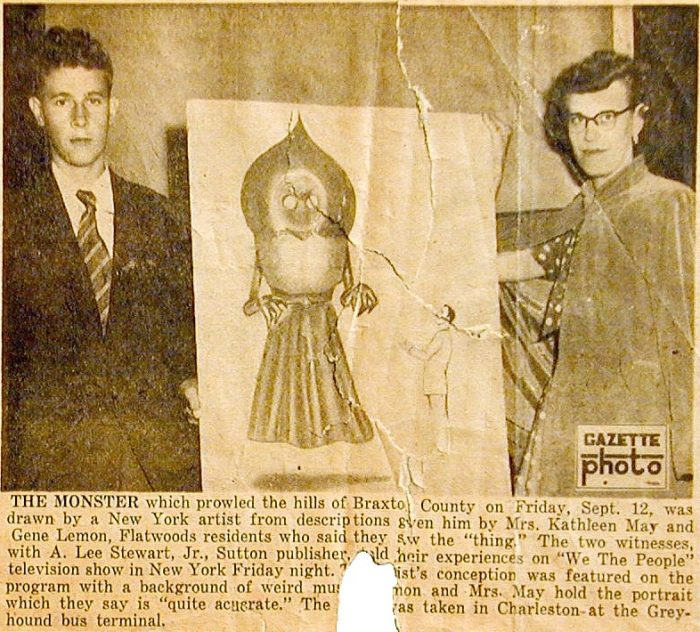
As a fun fact, the design of the aliens was based around that of the Flatwoods monster, a cryptid and alien archetype that sprung from an event that occurred on September 12, 1952 in Flatwoods in Braxton County, West Virginia, United States. Ironically, this monster is more popular in Japan nowadays; it entered Japanese pop culture through shounen magazines in the 1960s and 1970s, which sometimes claimed the seven witnesses were all children. Investigators have concluded that the creature apparition was in fact just a barn owl perched on a tree.
Samples used on this track:
CD 2 – SYN:TB303+MC202 – SYN:MC202 – SYN:MC-202 5.A from the library Best Service Gigapack
CD 2 – PAD:SYNTH-PADs 1 – PAD:Synth-Pads 2 – PAD:Mystic Pad from the library Best Service Gigapack
CD 2 – ORG:B-3 ORGANS – ORG:B-3 Organs – ORG:B3-Organ 1 from the library Best Service Gigapack

Help to keep the rites going around here by supporting the shrine:

Media Files, requests and support for more interactive content

Thou shall donate since this is a cult and you are now a sheep

Help staying awake analyzing game tracks and writing posts or else everything will end up being written by A.I
- Inside The Score – The Legend of Zeda: A Link to the Past – End Credits / Staff Roll
 The land rests As the last few minutes of this extensive journey that has now come to an end fly by, the nostalgia and reflective mood kicks in. Because such a massive enterprise as a Zelda game or a Lord of the Rings movie require multiple endings to convey everything… Read More »Inside The Score – The Legend of Zeda: A Link to the Past – End Credits / Staff Roll
 - Inside The Score – The Legend of Zelda: A Link to the Past – Ending / Epilogue ~ Beautiful HyruleFinal of the fantasy The Triforce has been touched. A wish has been granted. For the occasion, the newly undeceased king of Hyrule has commissioned a march in honor of the legendary hero to the Hylian Sousa, who might as well be composer Nobuo Uematsu since this piece is very… Read More »Inside The Score – The Legend of Zelda: A Link to the Past – Ending / Epilogue ~ Beautiful Hyrule
- Inside The Score – The Legend of Zelda: A Link to the Past – Triforce Chamber / Power of the GodsTake your boots off your feet And thus the Triforce spoke to men. And it became present in history. And you better treasure and contemplate this moment seldom witnessed in the course of the series. The elusive opportunity to interact and touch the most important artifact. You are now in… Read More »Inside The Score – The Legend of Zelda: A Link to the Past – Triforce Chamber / Power of the Gods
- Inside The Score – The Legend of Zelda: A Link to the Past – Ganon Battle / Prince of DarknessProgressive evil En Garde! And you better be prepared since you are about to duel the iconic enemy of the series at perhaps his canonically most powerful incarnation. Right after having touched the sacred Triforce which allowed him to conquer all of the Golden Land and whose evil and darkness… Read More »Inside The Score – The Legend of Zelda: A Link to the Past – Ganon Battle / Prince of Darkness
- Inside The Score – The Legend of Zelda: A Link to the Past – Boss Battle / Anger of the GuardiansQuick mayhem Ah, the simpler times when boss battles where not a multi epic orchestral suite but just an ostinato more basic that even what became the music for standard battle encounters out there. We are a long way from each boss having his own personalized track. And this early… Read More »Inside The Score – The Legend of Zelda: A Link to the Past – Boss Battle / Anger of the Guardians
- Inside The Score – The Legend of Zelda: A Link to the Past – Dark World Dungeon / Dungeon of ShadowsMemento mori We are getting closer to Ganondorf (or at least the wizard Agahnim who ultimately fulfills the same human side of evil role in this game) and that means getting closer to the profiles and motifs of his own theme song (which naturally was the theme of Agahnim at… Read More »Inside The Score – The Legend of Zelda: A Link to the Past – Dark World Dungeon / Dungeon of Shadows