The five saviors of the land
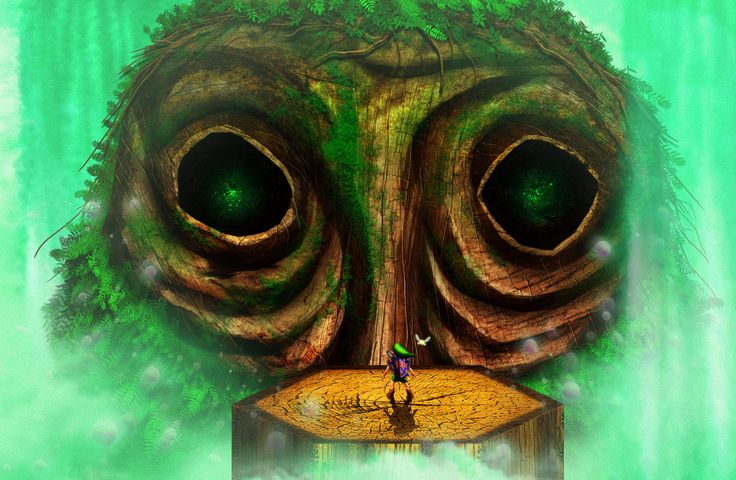
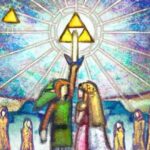
The mysterious lands of the guardian deities of Termina; Link can only access these after defeating the influence from Majora in each of the four cardinal directions: south, north, west and east. The giants, inspired by the Chinese god known as pangu, are the four protectors of the world. These giants made a promise to the people of Termina a long time ago; they swore to protect them whenever they were in need. It is the task of the Hero of Time to make the fulfillment of that promise possible.
So Link gains the honor of being welcomed to each of these gods’ pure lands, an ethereal realm with strange properties where the theme of the giants play; there is hope for Termina after all. The land has not been forsaken by its friends, they just need a little help waking up.
Like always, the combination of the visuals, the music and the sound design create outstanding moments in the memorable scenes where the giants are on screen. The fact that they can’t even communicate directly with Link and their unforgettable sounds have to be interpreted by Tatl, the fairy companion, also gives them an even more otherworldly, although more believable dimension, seeing as how a mere mortal could not even begin to comprehend beings of such a higher level.
A song full of a hope at the brink of desperation, just waiting there for someone, anyone to come and help. There is also a sadness to it, as if the gods are admitting that they have abandoned their friends but they want for the people to know that they still have every intention to help them. Nonetheless, there is still a sense of guilt and wanting to correct a wrongdoing. it’s truly the sound for when you are at the mercy of something bigger than you; just close your eyes, kneel down and throw your hands up in the air.
If Majora’s Mask didn’t already have a main theme, the Giants’ Theme would be a strong contender for being that cornerstone theme that glues one of the important thematic beats of the narrative; that you have to fulfill your promises. This song personifies the notion of sacrificing in order to save someone else.
Musical Analysis
Structure: Section 1 / Section 2
Time Signature: 4/4
Tempo: 66
Melodic and Harmonic Profiles: D Phrygian; D Aeolian/Minor; D Harmonic Minor; D Dorian
Like many a great Koji Kondo track, it uses very few instruments and relies mostly on melody and harmony to derive all of its power; product of the training Koji had during the NES era where restrictions in quantity and timber were the order of the day, so only melody, voice leading and harmony would do; no way to hide behind lush orchestration or powerful music production techniques, just pure music at its barebones. A few elegantly placed notes are all that is needed to make this short piece feel sacred, sad and hopeful at the same time. You can feel the sense of responsibility Link and the guardian deities are feeling. The harmony can be thought of as:
Section 1
Dm – Eb add9 – Dm – Eb add9 – Em7 (b5) – [A aug7-A7] – Dm
Section 2
Dm7 – G – Bb – Dm – [A aug 7-A7]
Normally the song would end on a Dm but on the lands of the giants it is designed to loop back to Section 1. We will need to wait and fight for that coda.
The goal of this particular voice leading is making the bass line move half steps. The melodic sensibilities of Kondo is what produces the multiple colorful chords thanks to the dance between the bass melody and the melodies present in the harmony.
Section 1 can be thought of representing the plea for help to the gods, and Section 2 the part where the deities decide to take action and descend to intervene in the world of the mortals, where the celestial choirs shall join the piece.
Kondo uses here a brand new technique for the upper part of the strings: a tremolo. The harp and female choirs are your standard fare for any godlike beings, the former arpeggiating up to give that sense of hope—seeing how they are also heavily used for the golden goddesses.
The song will reach its most effective application at the end of the game when the four giants manage to stop the unrelenting moon in an impressive cutscene that gains extra cinematic depth thanks to a full blown rendition of the Giants’ Theme. Could this music have been originally composed to this final scene? It is likely since the tempo matches the rhythms of the characters’ movements and Section 2 has that quality that perfectly adapts to the moment when all the combined power of the guardians mange to stop the cataclysm. And rhythms of the action is something Koji Kondo has always paid attention to, so perhaps this track is a shorter reprise of that grand theme.
But how can Link communicate with the guardians of Termina then? Music. It will be the connection between them as the first giant teaches Link the melody that can call for help; a true religious chant that is appropriately called the Oath to Order. It’s up to the Hero of Time that this oath along with the roar of the giants can be heard across all four corners of the world.
Help to keep the rites going around here by supporting the shrine:

Media Files, requests and support for more interactive content

Thou shall donate since this is a cult and you are now a sheep

Help staying awake analyzing game tracks and writing posts or else everything will end up being written by A.I
- Inside The Score – The Legend of Zeda: A Link to the Past – End Credits / Staff Roll
 The land rests As the last few minutes of this extensive journey that has now come to an end fly by, the nostalgia and reflective mood kicks in. Because such a massive enterprise as a Zelda game or a Lord of the Rings movie require multiple endings to convey everything… Read More »Inside The Score – The Legend of Zeda: A Link to the Past – End Credits / Staff Roll
 - Inside The Score – The Legend of Zelda: A Link to the Past – Ending / Epilogue ~ Beautiful HyruleFinal of the fantasy The Triforce has been touched. A wish has been granted. For the occasion, the newly undeceased king of Hyrule has commissioned a march in honor of the legendary hero to the Hylian Sousa, who might as well be composer Nobuo Uematsu since this piece is very… Read More »Inside The Score – The Legend of Zelda: A Link to the Past – Ending / Epilogue ~ Beautiful Hyrule
- Inside The Score – The Legend of Zelda: A Link to the Past – Triforce Chamber / Power of the GodsTake your boots off your feet And thus the Triforce spoke to men. And it became present in history. And you better treasure and contemplate this moment seldom witnessed in the course of the series. The elusive opportunity to interact and touch the most important artifact. You are now in… Read More »Inside The Score – The Legend of Zelda: A Link to the Past – Triforce Chamber / Power of the Gods
- Inside The Score – The Legend of Zelda: A Link to the Past – Ganon Battle / Prince of DarknessProgressive evil En Garde! And you better be prepared since you are about to duel the iconic enemy of the series at perhaps his canonically most powerful incarnation. Right after having touched the sacred Triforce which allowed him to conquer all of the Golden Land and whose evil and darkness… Read More »Inside The Score – The Legend of Zelda: A Link to the Past – Ganon Battle / Prince of Darkness
- Inside The Score – The Legend of Zelda: A Link to the Past – Boss Battle / Anger of the GuardiansQuick mayhem Ah, the simpler times when boss battles where not a multi epic orchestral suite but just an ostinato more basic that even what became the music for standard battle encounters out there. We are a long way from each boss having his own personalized track. And this early… Read More »Inside The Score – The Legend of Zelda: A Link to the Past – Boss Battle / Anger of the Guardians
- Inside The Score – The Legend of Zelda: A Link to the Past – Dark World Dungeon / Dungeon of ShadowsMemento mori We are getting closer to Ganondorf (or at least the wizard Agahnim who ultimately fulfills the same human side of evil role in this game) and that means getting closer to the profiles and motifs of his own theme song (which naturally was the theme of Agahnim at… Read More »Inside The Score – The Legend of Zelda: A Link to the Past – Dark World Dungeon / Dungeon of Shadows