A full blown infusion of technology into a fantasy setting
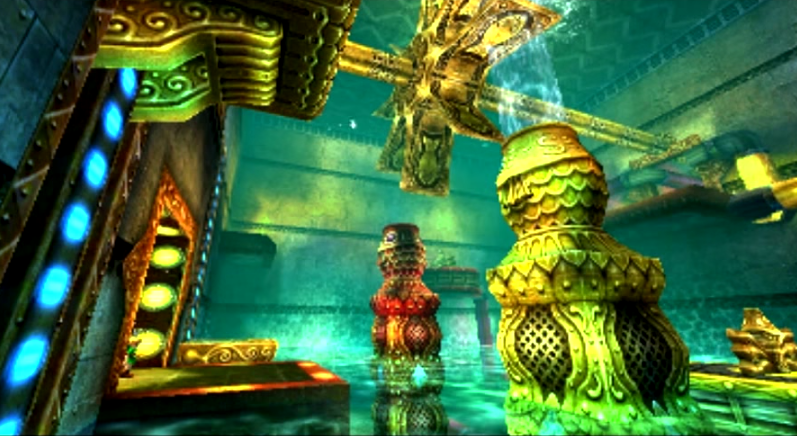
Another game, another confusingly difficult water temple. Oblivious to the critiques of the previous water temple, Nintendo went again and fabricated a puzzle heavy lair where you have to change the water levels and, on top of that, you have to control the direction of currents in order to access the different rooms of this techno-lair. The Legend of Zelda Majora’s Mask is the game where technology elements start to crop up in the series, a notion that began to grow in slow fashion throughout The Wind Waker, Twilight Princess, Skyward Sword and culminated on the so called Sheikah technology from Breath of the Wild (2017)—the ice arrow mechanic from this dungeon will also go on to be featured heavily in Breath of the Wild—the series flirting with sci-fi elements but staying true to the medievalism by making sure the designs stay original and cohesive with the games’ universe and aesthetic (a motorbike was probably a bit too much but that was just for the sake of fun, which in a video game rules over any other notion).
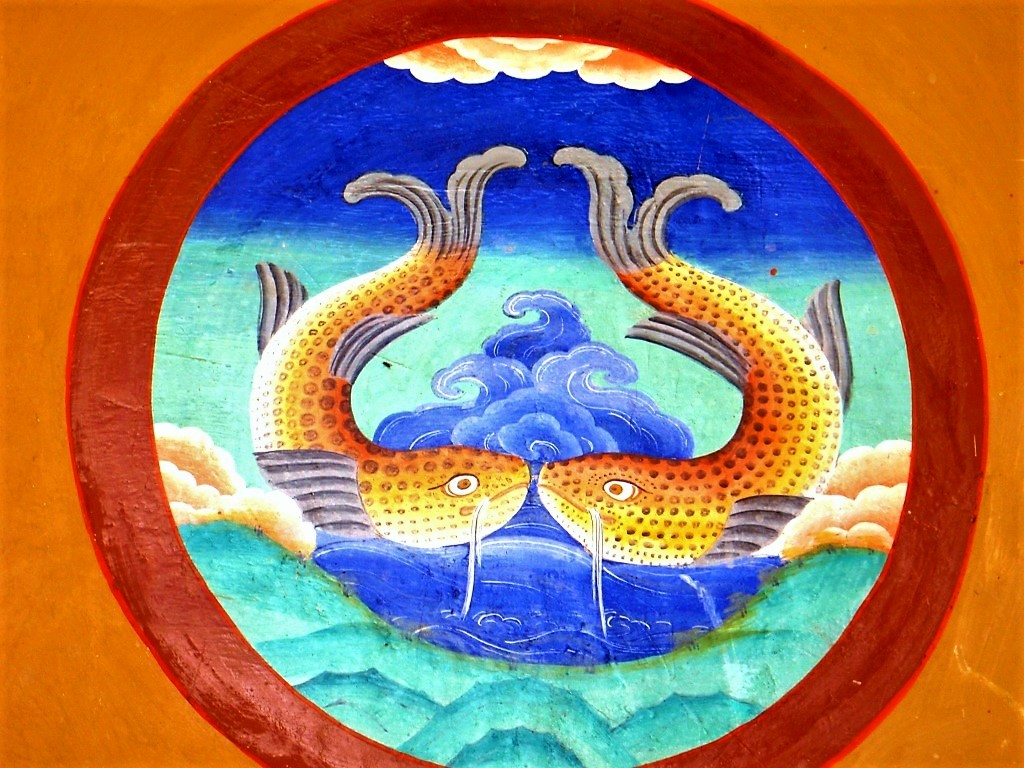
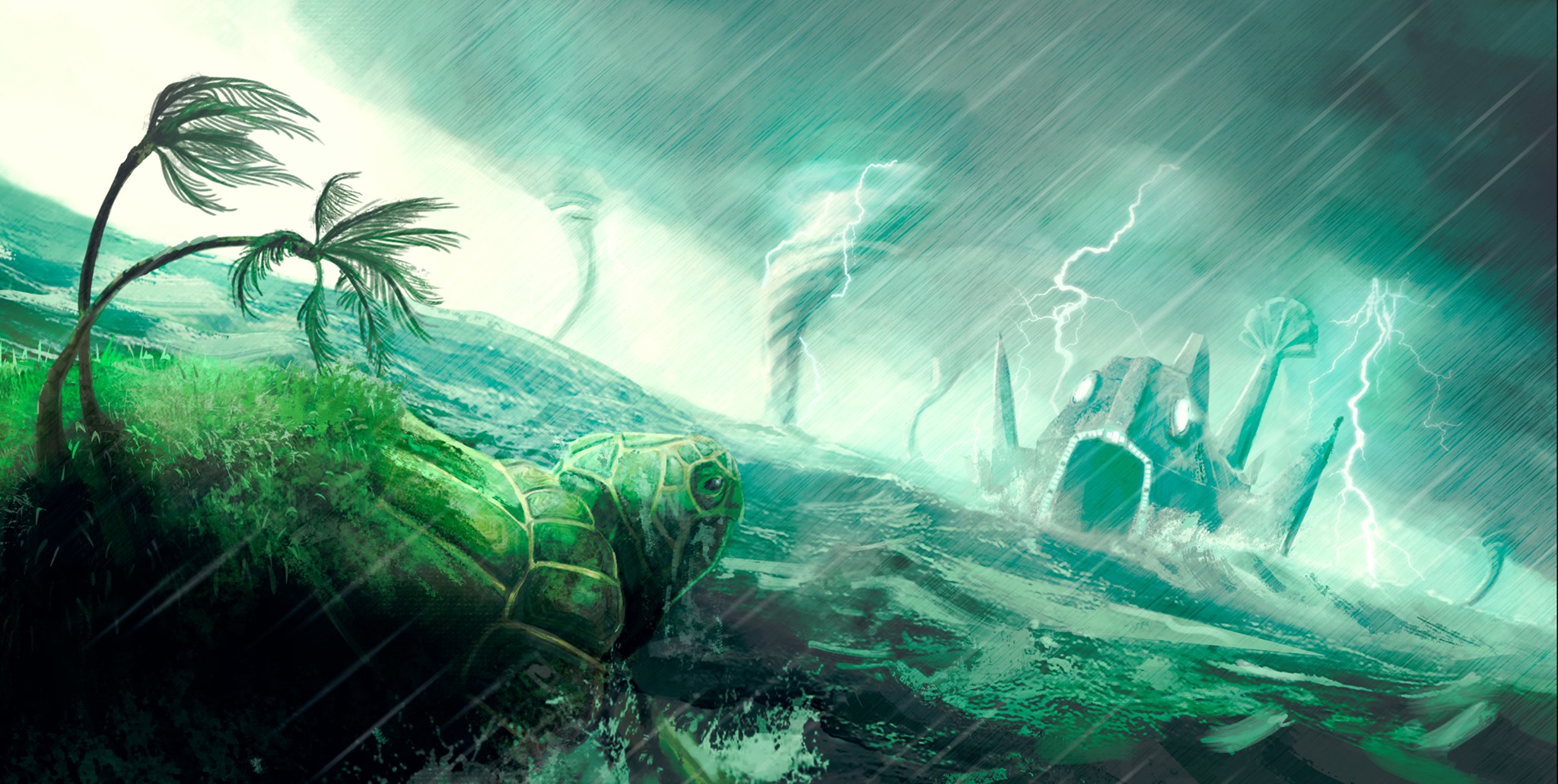
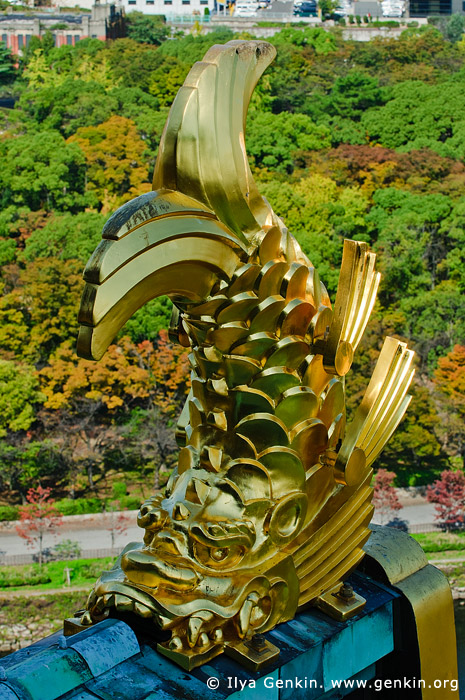
The outside design of the temple is a giant fish, a design that will go on to inspire the future architecture for Zora’s Domain; a structure that maybe is reminiscent of Lord Jabu Jabu, patron deity of the zoras from Hyrule. Both the design of the water temple from Skyward Sword and Zora’s Domain from Breath of the Wild take elements from the mythical Japanese fish known as shachihoko, which adorns temples all over the country. As always, it also has a Chinese counterpart and might have even been derived from it.
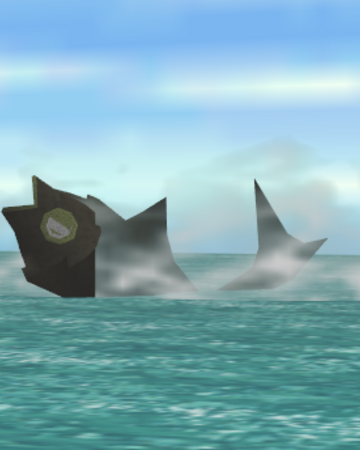

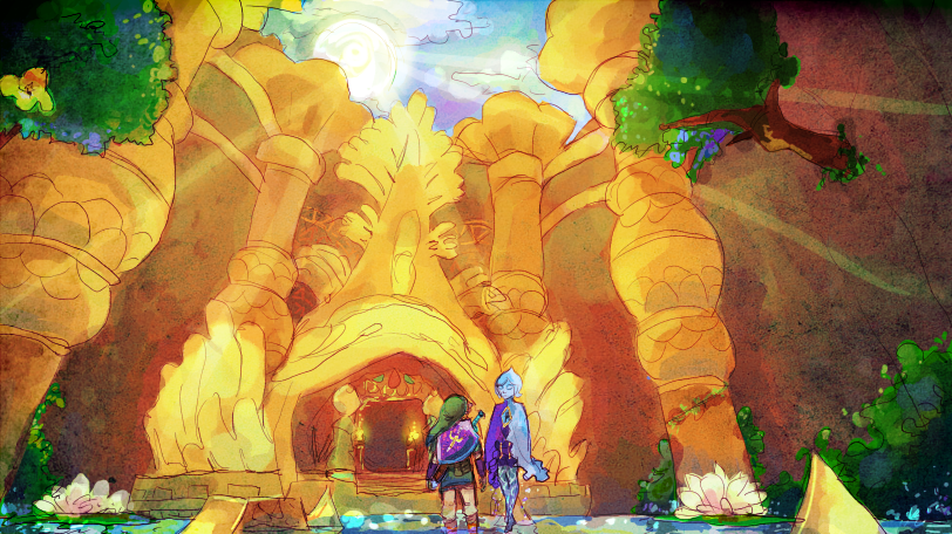
On the temple we, once again, not only have difficult puzzles but also challenging mini bosses and one of the hardest bosses in the series if you don’t know exactly what has to be done; so yeah, Nintendo didn’t put any brakes for their next water dungeon and has continued the video game tradition of making water levels confusing and hard to navigate.
The design of the temple is that of a water power plant with colored pipes that work both as visually interesting and also for providing gameplay information. Unlike any other Zelda temple, it seems this lair is illuminated not by torches Indiana Jones-style, but actual artificial light, most likely powered by its own water. The zora definitively are on par with the people from Clock Town as a technically advanced civilization. It seems the temple is malfunctioning and corrupted, which means nature has to pay the consequences, with the water from the ocean acting strangely and the living creatures within it struggling.
With this much evil and unprecedented technology, it is not surprising Kondo reused most of the instruments from the ‘aliens’ cue (or most likely, it was the other way around), a bunch of synth sounds meant to bring to mind electricity, electronics, codes; you know, all kinds of techy stuff. Where are all the robots? Anyway, it seems the plant operation is totally automated. There are also specific sounds that bring to mind elevators operating; perhaps the facility even has interface sounds to indicate water elevation and activation of switches. Since the dungeon is literally built all around the concept of whirlwinds, it’s not surprising that Kondo focused on this motion to create music that matches it. As usual, Koji Kondo strives to navigate the line between atmosphere and ‘music’ in a way that organically mixes with the visuals and the actions happening on screen.
Music Analysis
Structure: Section 0 / Section 1 / Section 2 / Section 3 / Section 4 / Section 5
Time Signature: 4/4
Tempo: 99
Melodic and Harmonic Profiles: Atonal; A Diminished; A Lydian; Db Phrygian Major
Most of the factory feeling is carried by a great sample of water running though pipes in an underground setting. The actual recording is perhaps of rain falling down with a microphone placed inside a tunnel, giving it components of wind and also water flowing; it was taken from the iconic sample CD library called Distorted Reality, although this time the distorted part is very tame; it’s basically a recording of rain that fit perfectly the ambient of this dungeon. As usual, the reverb is at a maximum level and the volume is manipulated throughout the track to add variety and make it more dynamic. Koji uses two notes of the sample, the low note makes you feel more the water and the upper note makes you feel the cavernous ambience; some psychoacoustic effect going on here.
After the overall ambience is established, it’s time to pile up the industrial noises and the robotic chimes, barely giving a bump to melodic sensibilities to maintain the piece in the music terrain and not be completely diegetic.
One of the most iconic sounds of all time is present right here on Great Bay Temple, none other than the anvil hit sound from classic Looney Tunes cartoons, extracted directly from the original Warner Bros sound library; it’s the sound used whenever a cartoon character is hit by something heavy on their head. Its use here is obviously meant to be platforms and machinery moving around. Instead of using a decay effect that requires more processing power than the Nintendo 64 had the benefit to lend, Koji simply uses the old school method of putting the same note with progressively less volume, generating a space for the sound; a sense of hearing it in the distance in a large space. It is used randomly throughout the track, pushing it away from music land.
Other sounds more present in the mix are also the ones of grinds and platforms rotating (just what is expected from opening and closing those giant faucets), created by employing the same bronze drums of the Happy Mask Salesman theme from way back. They are technically playing arpeggios but nobody should think of them as providing any meaningful musical input, it’s just that in this way, Koji conjures the sound of rotation in a feat of sound design.
Now onto the sounds from the aliens. As was said, they can also function to bring to mind computerized sounds, electronic equipment or robots. The 8-bit sound of the laser beam straight from a Space Invaders-type of video game is back, like a computer on the background processing information.
Repeating its presence here after appearing in the Milk Bar cue, we also have the Hammond organ. The chosen one destined to inject some music into the proceedings. Although it stills retains the electronic associations with computer equipment, it manages to sound melodic albeit very chromatic, with its phrases capturing in a satisfying manner the movements of the zora swimming; diegetic sound and non-diegetic sound working at the same time, also sounding like multiple water streams moving in circles. Mixing it with the 8-bit sound, it is unmistakably the sound of a computer at work; you can picture the lights of the computer alternating to the rhythms of the electric organ. As a matter of fact, we got two organs, so there are multiple computers controlling the facility, sometimes stepping into each other. We can try hard and look for a melodic profile to the notes yet it would be completely meaningless since the true intent of the sound designer, the hat Koji Kondo is wearing right now, is to provide the sounds of this hydroelectric plant.
Even though the piece is in 4/4 time, the ostinatos consist of only three notes, creating rhythmic displacement and giving the impression of an odd time signature or even an effect of song speeding up. The five note ostinato of the second organ sometimes syncs and sometimes clashes with the three-note ostinato, creating the whirlwind effect. You don’t even need to go through the tunnels to get dizzy, just trip along with this music. Since one ostinato is ascending and the other descending, they match the two possible movements Link can have inside the facility, where you can change the direction of water.
Here you can hear how Kondo combines different sound elements in order to engulf the player into the ambience:
The “harmony” in this case is coming from the sounds of the Twilight Realm from Twilight Princess, or at least very close ones to those. They are meant to be icy and inorganic, perhaps reminding us of the ice arrows and all the ice related puzzles we will encounter in this cold place. On the other hand, they can perfectly function as the sound an interface makes when it’s operated on, or even the sounds elevators made to communicate information to the user (like the little chime that sounds when you reach your floor). They are still technology related and were also used as the main backing track during the alien invasion. The pad itself is playing single notes, but in the way it was originally designed it definitely has multiple note information. What is true is that the notes they play have nothing to do with what our ears actually hear, assuring us that Kondo was thinking more in terms of ambience than music. Each note played seems to be composed of a major chord: for example, the first is a D note on the keyboard but the notes that actually sound seem to be those of a major chord that doesn’t even include the D; roughly it sounds as if D = (A Db E) an A major chord.
Thus we end up with the phrase harmony being: A – B – A – B – D – Db, providing a Lydian flavor to the piece that suspends you in the air
And to cap things off, at the very end of the cue Koji uses the last remaining alien synth to write some weird code in major thirds, perhaps just an afterthought to fill space and add a new sound layer that would make the piece less repetitive. Anyway, here are more computer sounds:
When Link sets things alright within the temple, the external waters once again become stable, regaining their purity and capacity to support life; the “temple” is now operational. A dungeon that will be influential for the future of the series, one that from this point on will begin flirting with sci-fi technology; in the subsequent Zelda games at least one dungeon has these techy elements, and even actual robots, but thanks to clever design they all still feel cohesive and part of the universe. That being said, the tech in The Legend of Zelda Majora’s Mask feels uncannily more human-like, slightly off from the tone of the entire series compared with the Hylian-fantasy technology we get in the other Zelda games. We will see if the developers continue doubling down on these tech elements as time goes on. The 3DS remake made it even more temple-like by adding the dragon skin coating similar to the Water Temple from Ocarina of Time and adding ornamentation and fish drawings.
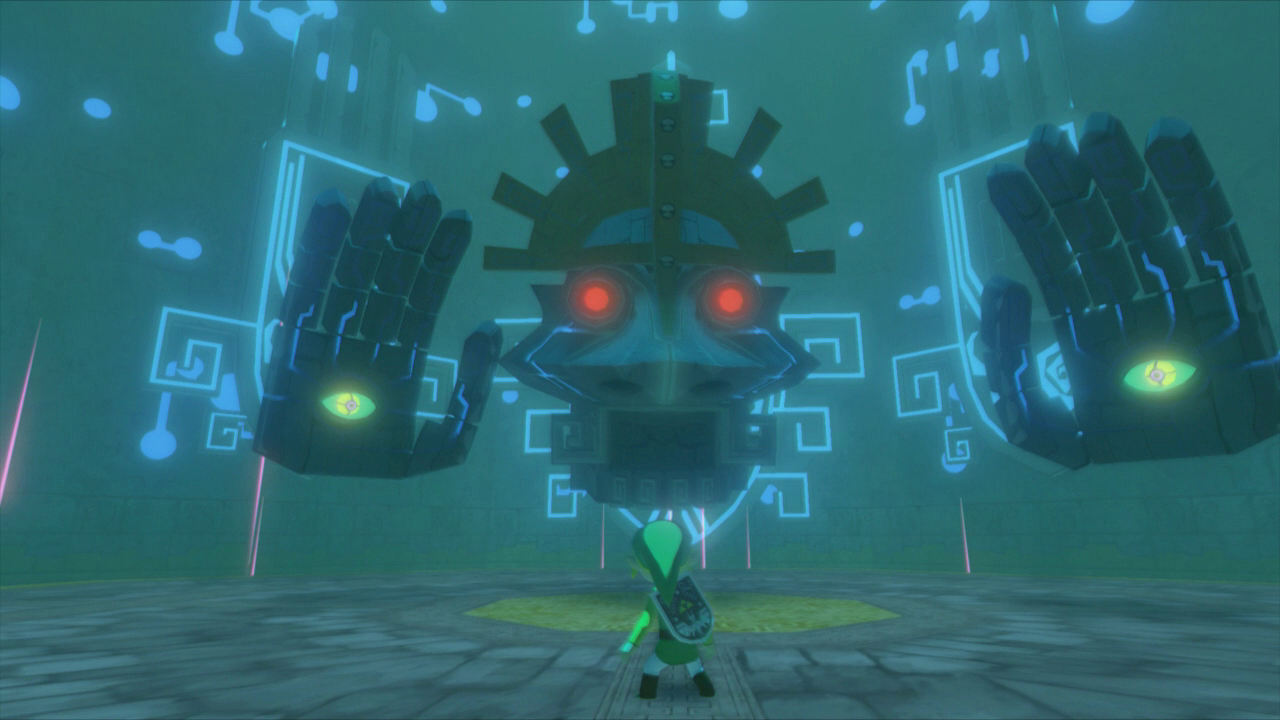
After saving the Great Bay, we can use the place as an actual vacation resort, spending time with the zora and why not, spending some of that time actually writing the end credits song for our own game. Time to finish Mikau’s slightly less important affairs that were left incomplete.
Some samples used on this track:
- Mysthic Pad Synthesizer: CD 2 – PAD:SYNTH-PADs 1 – PAD:Synth-Pads 2 – PAD:Mystic Pad from the library Best Service Gigapack
- Hammond Organ: CD 2 – ORG:B-3 ORGANS – ORG:B-3 Organs – ORG:B3-Organ 1 from the library Best Service Gigapack
- Water Pipe Flow: TUNNEL RAIN from the library Spectrasonics Distorted Reality
- Heavy Metallic Hit: CARTOON, HIT – BIG, HEAVY METALLIC HIT from the library Warner Bros. Sound Effects Library
- MC-202 Synthesizer: CD 2 – SYN:TB303+MC202 – SYN:MC202 – SYN:MC-202 5.A from the library Best Service Gigapack
Help to keep the rites going around here by supporting the shrine:

Media Files, requests and support for more interactive content

Thou shall donate since this is a cult and you are now a sheep

Help staying awake analyzing game tracks and writing posts or else everything will end up being written by A.I
- Inside The Score – The Legend of Zeda: A Link to the Past – End Credits / Staff Roll
 The land rests As the last few minutes of this extensive journey that has now come to an end fly by, the nostalgia and reflective mood kicks in. Because such a massive enterprise as a Zelda game or a Lord of the Rings movie require multiple endings to convey everything… Read More »Inside The Score – The Legend of Zeda: A Link to the Past – End Credits / Staff Roll
 - Inside The Score – The Legend of Zelda: A Link to the Past – Ending / Epilogue ~ Beautiful HyruleFinal of the fantasy The Triforce has been touched. A wish has been granted. For the occasion, the newly undeceased king of Hyrule has commissioned a march in honor of the legendary hero to the Hylian Sousa, who might as well be composer Nobuo Uematsu since this piece is very… Read More »Inside The Score – The Legend of Zelda: A Link to the Past – Ending / Epilogue ~ Beautiful Hyrule
- Inside The Score – The Legend of Zelda: A Link to the Past – Triforce Chamber / Power of the GodsTake your boots off your feet And thus the Triforce spoke to men. And it became present in history. And you better treasure and contemplate this moment seldom witnessed in the course of the series. The elusive opportunity to interact and touch the most important artifact. You are now in… Read More »Inside The Score – The Legend of Zelda: A Link to the Past – Triforce Chamber / Power of the Gods
- Inside The Score – The Legend of Zelda: A Link to the Past – Ganon Battle / Prince of DarknessProgressive evil En Garde! And you better be prepared since you are about to duel the iconic enemy of the series at perhaps his canonically most powerful incarnation. Right after having touched the sacred Triforce which allowed him to conquer all of the Golden Land and whose evil and darkness… Read More »Inside The Score – The Legend of Zelda: A Link to the Past – Ganon Battle / Prince of Darkness
- Inside The Score – The Legend of Zelda: A Link to the Past – Boss Battle / Anger of the GuardiansQuick mayhem Ah, the simpler times when boss battles where not a multi epic orchestral suite but just an ostinato more basic that even what became the music for standard battle encounters out there. We are a long way from each boss having his own personalized track. And this early… Read More »Inside The Score – The Legend of Zelda: A Link to the Past – Boss Battle / Anger of the Guardians
- Inside The Score – The Legend of Zelda: A Link to the Past – Dark World Dungeon / Dungeon of ShadowsMemento mori We are getting closer to Ganondorf (or at least the wizard Agahnim who ultimately fulfills the same human side of evil role in this game) and that means getting closer to the profiles and motifs of his own theme song (which naturally was the theme of Agahnim at… Read More »Inside The Score – The Legend of Zelda: A Link to the Past – Dark World Dungeon / Dungeon of Shadows