Repurposing the instruments of a region found at the intersection between sound design and music
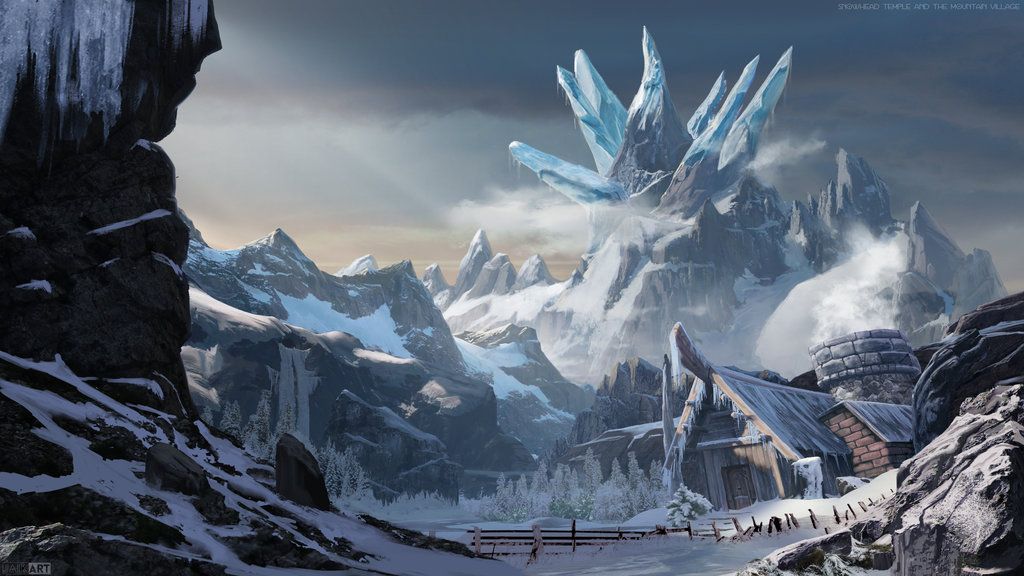
We find ourselves upon the giant ice palace known as Snowhead Temple, a structure that seen from the outside looks just like the ice enemies that used to roam the Ice Cavern, blizzard attack included and all—although it is later discovered that this blizzard actually comes from a huge invisible goron. However, this is the real deal, a true ice fortress that also resembles that previous mini dungeon in the music department. Internally, it is based around a central room puzzle in similar fashion to Ocarina of Time’s Water Temple, where Link has to go to multiple levels in order to modify the layout of the temple and access new territory. So perhaps those two blue, water element dungeons inspired this one.

Snowhead Temple is based more around this conceptual framework than any real world cultural identity; it is just an ice tower that the developers tried to make as cool as possible (no pun intended), a new element and environment that was not explored as much in the previous game, snow. Kondo follows suit with the music, an ambient track that truly places this dungeon in an isolated place, with atmospheric sounds and little melodic touches meant to be slightly unsettling and uncomfortable. It fits the theme of a palace called Snowhead Temple by having nods related to an extremely cold place, pieces of ice shattering and other mysterious avant-garde sounds full of reverberation that give an eerie vibe and a sense of being on an enormous site. Dungeons are dangerous places after all so don’t look forward to having pleasant music. This is a theme that will continue to the next temple, a dungeon also based mainly on concepts, as opposed to culture. The theme heard across the land of Snowhead Mountain also influences the theme of its own temple, something that Kondo is usually trying to accomplish, consistency and connections between locations—Although this is actually the only temple that uses the exact same instruments from the music of the region.
All in all, it tends to be an ambient track that, like Dodongos’s Cavern, derives its effectiveness purely through song design. Nonetheless, there are just little touches of melody and harmony that maintains the piece anchored to the domains of music and even nods to the spiritual predecessor. This musical information comes, once again, largely courtesy of the Rhodes electric pianos also featured on the snow mountains plus a couple phrases from other instruments.
Music Analysis
Structure: Section 0 / Section 1 / Section 2 / Section 3 / Section 4 / Section 5 / Section 6 / Section 7 / Section 8 / Section 9
Time Signature: 4/4
Tempo: 80
Melodic and Harmonic Profiles: Atonal; D Whole Tone; B Harmonic Minor
Of course the fantasia chimes have to be present in Kondo’s ice levels; and not only that, they actually play the exact same melody pattern they did on the Ice Cavern from Ocarina of Time, a true easter egg left by the composer. They only play the chords near the end of this cue.
The rapid arpeggios play:
D aug 9 – E7/9(b5) – C aug 9 – D aug 9 – E7/9(b5) – C aug 9
But no sane person should pay attention to the harmony, this is just the composer playing around with a whole tone scale for the same reasons he did on the Ice Cavern, mainly to create confusion and disrupt the sense of security.
You can hear the Ice Cavern easter egg here and compare it with the original:
There is an overall sense of space and time throughout the piece, slowly developing and giving small snippets of sounds that are gone as soon as they play, just like an evolving organism. It doesn’t have to be said that once again the wind sound is back to create the sensation you are still on a high altitude mountain. It is exactly the same sample used on the Ice Cavern, the Mountain Village and the Fire Temple. It is used here at its most exaggerated and dynamic fashion, the notes climbing up and then going down in a wave like pattern; after all, the track is very long, so Kondo has to make sure the wind sound doesn’t cause too much fatigue by varying it as much as possible. Yet, this is not the only ambience sound. For this dungeon Koji combined the wind sound with the cavern atmosphere used previously on the ‘Cavern’ cue from Majora’s Mask, the fusion of two ambient recordings creating a totally new one that belongs to a place that doesn’t exist in real life.
Here are the two ambiences plus their combined form:
In what could be considered the lead instrument of the piece, the Fender Rhodes plays cluster, staccato chords in an unexpectedly catchy rhythm full of syncopation. This electric piano is back in order to make the connection between the Mountain Village and the temple.—the dungeon makes little attempt at connecting with the Goron culture. Again, the particular chords don’t matter as much as some of the relations found between the notes; those being the emphasis on the tritone of dread (between D – Ab and C – Gb) and moving through the whole tone scale in order to create a confused, sinister vibe. So Kondo was truly inspired by Kondo’s Ice Cavern cue in developing his new ice palace. The tritones are so important and recognizable that the rest of the notes can virtually be thought of as ornamentation and softening of the clusters. On the cue, the pattens play first very close to each other in time and then with more distance between each repetition, giving the theme a layer of randomness that drives it away from music.
The impactful sounds of the metal clangs that were used on the cue for the final hours are also present here; again, due to their associations with frightening and alertness. Similarly, they are provided with a panning effect that makes the sound travel through the stereo spectrum.
Another Rhodes plays what is interpreted as a bass line. But in truth it is just another organic element of the track, used only to give tension and a sense of time ticking; it consist of a low D followed by a major second cluster that starts to fade away until the next batch starts. While this accompaniment pattern is playing, a third, different Rhodes piano enters abruptly with some jazzy chords that clash with the entire piece out of nowhere. The notes go against the whole tone philosophy, introducing the extremely dissonant note of Db that creates an even more clustered cluster (C Db, D). The fact that it is played on the high register makes it even more startling, with introduction of minor seconds to the piece taking most of the blame.
The huge, starting metal rumble sound from the ‘Cavern’ theme is also used here with pitch bend and lots of reverb to create greater sense of depth, as if something really big and heavy just fell down within the height of the tower and is bouncing off the walls.
The last two elements are the muted guitar and the female choirs also reprising their roles from the Mountain Village cue; they limit themselves to playing short one time melodies to vary the piece. The choirs doing a very short part with an harmonic profile that can potentially have an evil connotation as it is composed of two minor seconds; both the choirs and dissonant Rhodes share some contours with the Mountain Village cue melody. The guitar is just this weird ostinato in a whole tone scale.
There is a balance between sound design and music that Koji Kondo expertly maintains throughout the piece, giving small tastes of melody and then taking them away to let the piece breathe and the atmosphere to engulf the players. It is basically an evolved version of the short cue from the Ice Cavern, using similar ideas but expanding upon them with more sounds from the region and more length.
The purpose of visiting Snowhead Temple was not only to save the gorons and fulfill Darmani’s destiny of becoming the hero to his people. Link and Tatl also have a personal agenda in liberating the guardian spirits from Termina. They still have not comprehended yet the nature of their mission or how the apocalypse of Termina can be prevented. But there is a sense that moving forward will provide them with answers. This is, after all, just the second stage of awakening.
Some samples used on this track:
- Metal Rumble: Partition D – PIT HITS – PIT HIT 1 from the library Spectrasonics Distorted Reality
- Rhodes Piano: CD 2 – PIA:E-PIANOS ok – PIA:Rhodes ok – PIA:Rhodes stere from the library Best Service Gigapack
- Wind Moan: WIND – LOW EERIE WIND MOAN, WEATHER 03 from the library Warner Bros. Sound Effects Library
- Fantasia Chimes: CD 2 – SYN:DIGITAL 1 – SYN:Digital 3 – SYN:Fantasia from the library Best Service Gigapack
Help to keep the rites going around here by supporting the shrine:

Media Files, requests and support for more interactive content

Thou shall donate since this is a cult and you are now a sheep

Help staying awake analyzing game tracks and writing posts or else everything will end up being written by A.I
- Inside The Score – The Legend of Zeda: A Link to the Past – End Credits / Staff Roll
 The land rests As the last few minutes of this extensive journey that has now come to an end fly by, the nostalgia and reflective mood kicks in. Because such a massive enterprise as a Zelda game or a Lord of the Rings movie require multiple endings to convey everything… Read More »Inside The Score – The Legend of Zeda: A Link to the Past – End Credits / Staff Roll
 - Inside The Score – The Legend of Zelda: A Link to the Past – Ending / Epilogue ~ Beautiful HyruleFinal of the fantasy The Triforce has been touched. A wish has been granted. For the occasion, the newly undeceased king of Hyrule has commissioned a march in honor of the legendary hero to the Hylian Sousa, who might as well be composer Nobuo Uematsu since this piece is very… Read More »Inside The Score – The Legend of Zelda: A Link to the Past – Ending / Epilogue ~ Beautiful Hyrule
- Inside The Score – The Legend of Zelda: A Link to the Past – Triforce Chamber / Power of the GodsTake your boots off your feet And thus the Triforce spoke to men. And it became present in history. And you better treasure and contemplate this moment seldom witnessed in the course of the series. The elusive opportunity to interact and touch the most important artifact. You are now in… Read More »Inside The Score – The Legend of Zelda: A Link to the Past – Triforce Chamber / Power of the Gods
- Inside The Score – The Legend of Zelda: A Link to the Past – Ganon Battle / Prince of DarknessProgressive evil En Garde! And you better be prepared since you are about to duel the iconic enemy of the series at perhaps his canonically most powerful incarnation. Right after having touched the sacred Triforce which allowed him to conquer all of the Golden Land and whose evil and darkness… Read More »Inside The Score – The Legend of Zelda: A Link to the Past – Ganon Battle / Prince of Darkness
- Inside The Score – The Legend of Zelda: A Link to the Past – Boss Battle / Anger of the GuardiansQuick mayhem Ah, the simpler times when boss battles where not a multi epic orchestral suite but just an ostinato more basic that even what became the music for standard battle encounters out there. We are a long way from each boss having his own personalized track. And this early… Read More »Inside The Score – The Legend of Zelda: A Link to the Past – Boss Battle / Anger of the Guardians
- Inside The Score – The Legend of Zelda: A Link to the Past – Dark World Dungeon / Dungeon of ShadowsMemento mori We are getting closer to Ganondorf (or at least the wizard Agahnim who ultimately fulfills the same human side of evil role in this game) and that means getting closer to the profiles and motifs of his own theme song (which naturally was the theme of Agahnim at… Read More »Inside The Score – The Legend of Zelda: A Link to the Past – Dark World Dungeon / Dungeon of Shadows