The bringer of peace
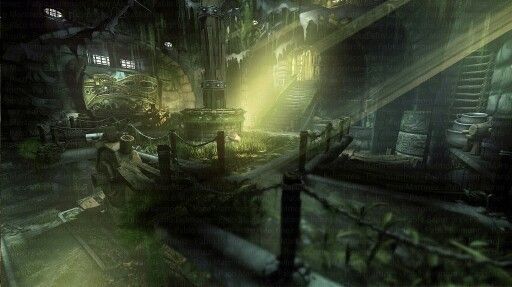
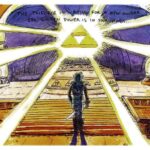
After crossing the underground tunnels and finding the soulless body of what used to be a sentient creature—the soul that now gives Link his new form—we finally arrive at the main theme of The Legend of Zelda: Majora’s Mask. Following a bizarre, literal turn of events, Link crosses a twisted halfway that puts him upside down, a land where the sky is below and the floor is above, a land where people refer to Hyrule as heaven. Then, it’s not surprising that the music also has to flip.
Over the years, many people have given their view on the meaning of Majora’s Mask, one of the prevalent takes being that Link has already left the world of the living or that he finds himself in some kind of afterlife. And who can blame them? When Koji Kondo might have just captured what heaven sounds like with a piece that matches its title down to every single letter; this can’t be anything but the sound that a soul hears when a sense of peace engulfs its parting of the world. The sound that is full of sadness for what is left behind but accepting of what has to come.
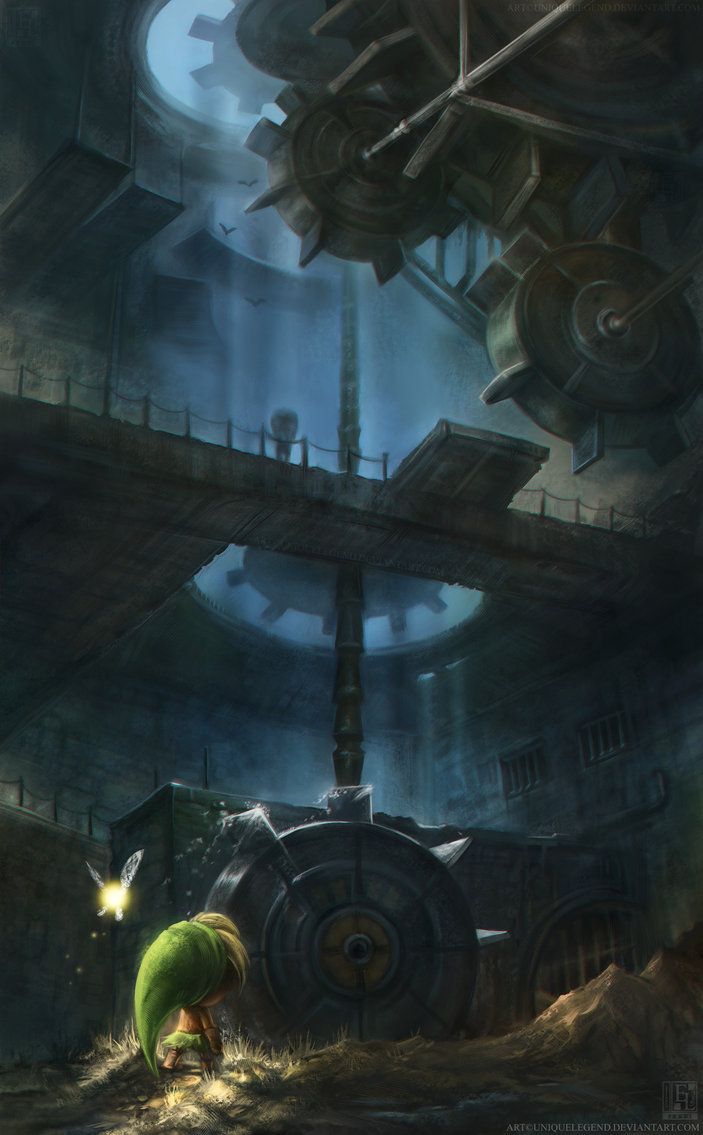
Whatever the ultimate interpretation of Majora’s Mask is, the clock tower is really a place literally and metaphorically beyond the reach of time, where Link will reunite with a character that appears to be omniscient both about him and the land he is about to enter.
If Kondo is renown for always capturing ambiguous emotions with his melodies, the Song of Healing may just be one of his brightest moments. A stunning example of this ability, so much that even the surrealist, abstract and immensely rich Majora’s Mask could not escape from it; for all of its weirdness, conflicting emotions and variety of profound themes touched upon, Kondo still managed to reliably fulfill the titanic task of encapsulating the entire soul of the game in just a short snippet of aural time. And the best part is, the tune belongs to the set of ocarina melodies limited by the scale chosen back in Ocarina of Time; the notes that keep on giving. There must be something special in that scale after all.
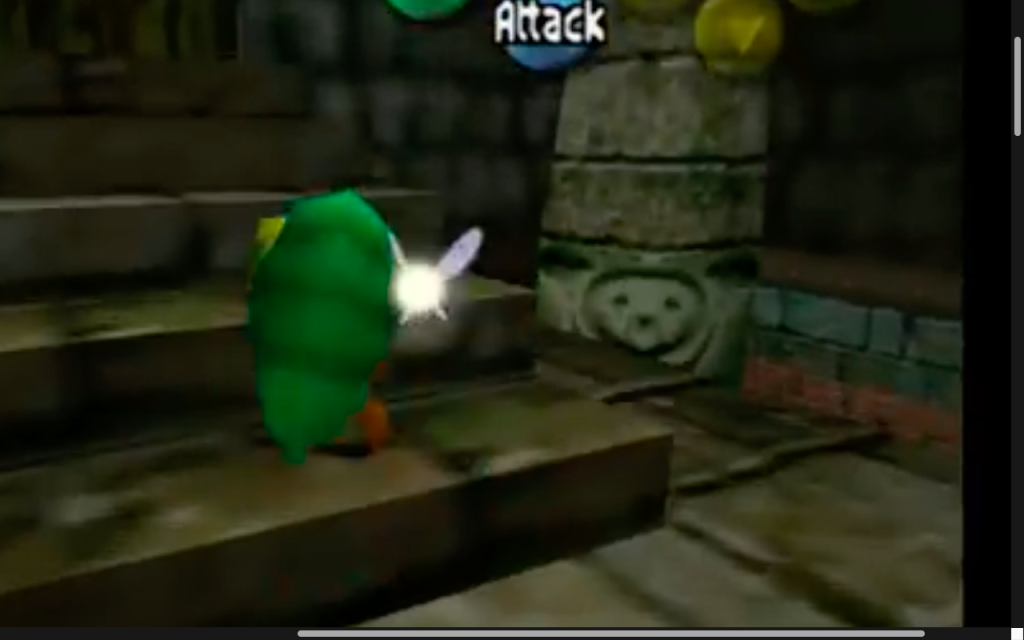
Thus, it’s is fitting that the Song of Healing, heard for the first time under the clock tower, was the song to welcome Link to the land of Termina. He finds himself perhaps at his lowest point in life, any trace left of an identity robbed, no friends, back to being treated like a kid and Tatl, the fairy that joined him midway by mistake, is not as cooperative as his previous guide in life; she is along for the ride just out of necessity and, like Navi, she will probably leave when their mission is over.
Both Saria’s Song and the Song of Healing are the bringers of joy, allowing, in their own way, for Link to meaningfully connect with other beings. But they could not be further apart in the way they accomplish this. There is mystery and happiness in Saria’s Song. There is serenity and ease into the Song of Healing; sometimes the cure for sadness isn’t a troupe of jolly musicians, sometimes you just need to embrace it. They both are opposites in composition, not only because the energy and propulsiveness of one is contrasted against the slow, sustained other, but because the motif of the Song of Healing is an actual reversal of the motif of Saria’s Song, just like the Lost Woods and the clock tower are in opposite sides both metaphorically and literally. Only at the very end of the game will the main theme of Majora’s Mask be allowed to be reverted back to the pure bringer of joy and friendship; Saria’s Song.
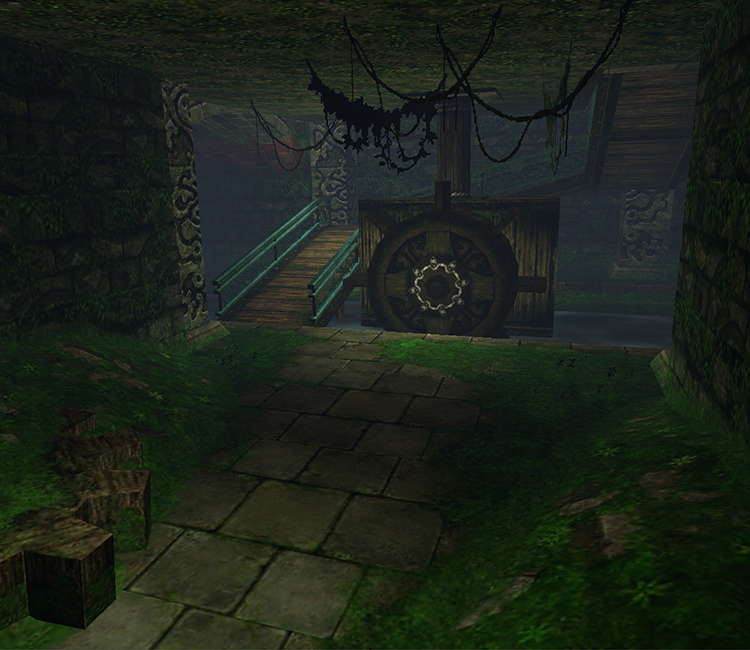
The clock tower is also the first taste of Chinese arquitecture found by a Link familiar with the medieval castles of Hyrule. Like Termina, the Chinese of our own world were some of the first to dominate time to such a fine degree as to build timekeeping devices that were very precise. Su Song was the engineer for the famous hydro-mechanical astronomical clock tower invented in China, a clock with special mechanisms and dials to display astronomical information, such as the relative positions of the Sun, Moon, and the approximate time of the day. In Termina, being a land identified with time to such a profound degree, these astronomical clocks will be found in almost every household.
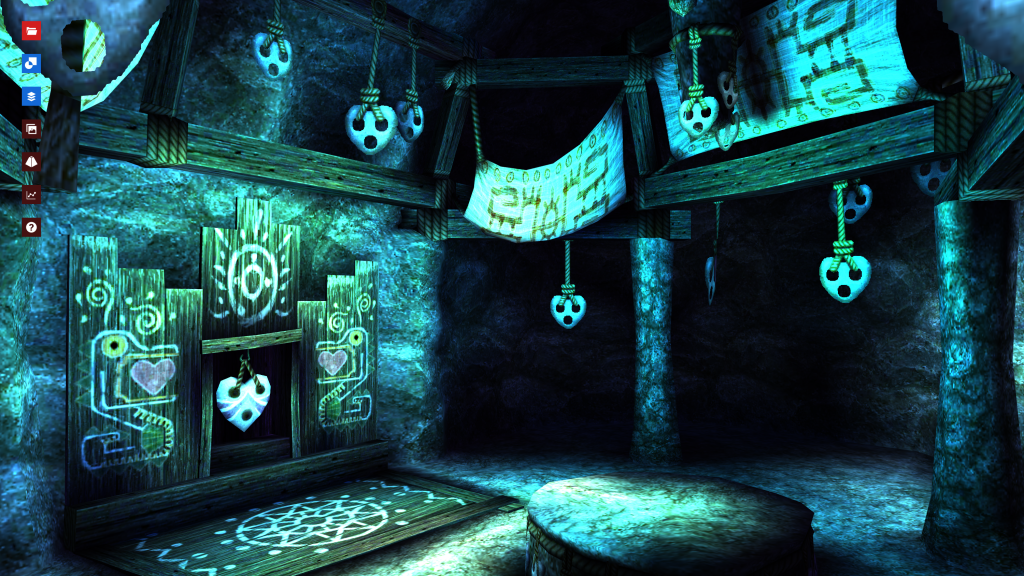
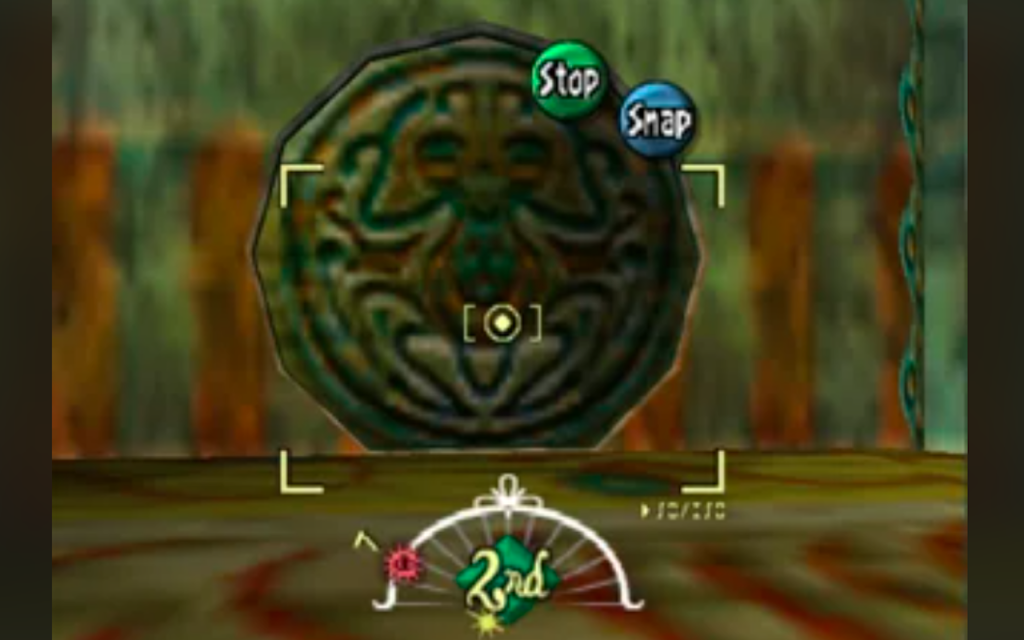
As a fun fact, the clock tower found in Termina seems to be a more ancient building than the rest of Clock Town, with different stonework from that of the walls of the town. It is also full of symbols pertaining to the Ikana region of the game; so perhaps it is the remainder of how expansive and ancient the kingdom of Ikana was, the kingdom that opened the path to the heavens and might have introduced the masks custom.
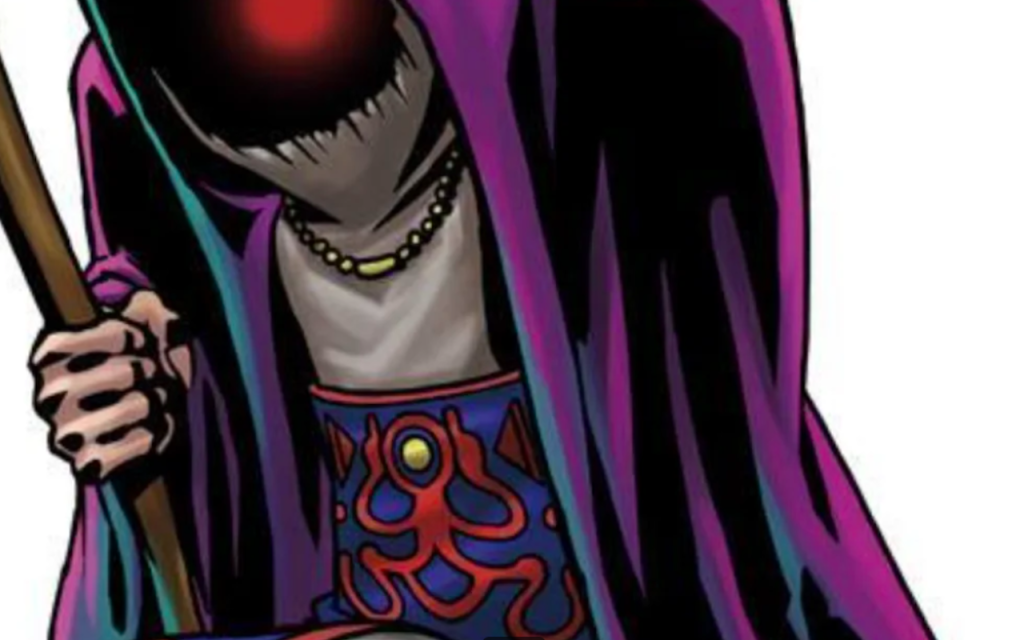
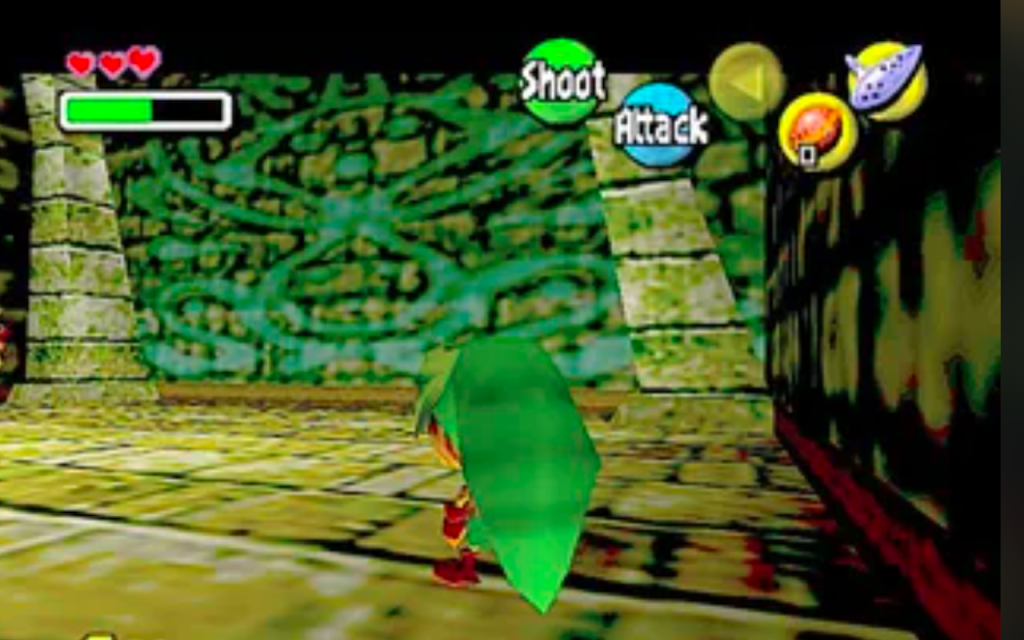
Music Analysis
Structure: Section 0 / Section 1 / Section 2 / Section 3 / Section 4
Time Signature: 3/4
Tempo: Dynamic (from 85 to 69)
Melodic and Harmonic Profiles: F Lydian; F Ionian/Major
The only original ocarina song from Majora’s Mask to receive a location cue, the Song of Healing, is based around the middle portion of the ocarina scale: D F A B D. Briefly recapitulating, this ocarina scale can be divided in three portions that were carefully chosen to be able to extract a wide variety of emotions and harmonic feelings, allowing Kondo to craft a variety of melodic motifs for the instrument the player has to control. The sections are mainly:
D F A – The minor, mournful sad section
F A B – The lydian dark, quirky, mysterious, strange, unsettling section
A B D – The major, joyful, relaxed, happy section
You can probably guess what is the section of the scale Majora’s Mask has the strongest focus on.
Most of the ocarina songs from the previous game focused on the first and third portions—only the Nocturne of Shadow and Saria’s Song used the lydian profile, and it shows— This portion is about to get more melodies courtesy of Majora’s Mask, so most of the new ocarina tunes we will learn in the game will also carry the uncanny stamp of of the tritone imbued between the F and the B.
And who knew a focus on a tritone could sound beautiful? Kondo plays the question motif of Saria’s Song upside down to create the descending, mournful Song of Healing; a true counterpart in melody, rhythm and tone.
We start to see creeping in one of the main instruments on the soundtrack; used sporadically (two tracks) in Ocarina of Time, the ethereal strings a.k.a the “Twin Peaks synth” slowly starts to hijack the role that was almost exclusive to the orchestral strings in the previous game, contributing to the otherworldly dreamlike atmosphere of the land of Termina. The influence of this acclaimed American television series on the Zelda series, being a show that was hugely popular in Japan, was at a maximum on Majora’s Mask, connections that Koji Kondo would not miss; hence, many important tracks from the game now have this classic string pad at their core (the original sound would be from a Roland D-50 synth)
They start playing a series of perfect fourth intervals, beginning with the unforgettable sustained monolithic F5 chord accompanied by the sounds of the machinery inside this mechanical water clock.
[C4 – B4] intervals that the brain can easily interpret as F – Em
This first section could be dubbed the confused part, looking for an explanation:
Section 2 changes from perfect fourths to perfect fifths. However, the slowly descent of the harmony continues, one of the biggest sources of sadness in the piece. The melody maintains the same rhythm of the motif but the intervalic movements are farther, in what will be the lowest point in the hopelessness scale. But when everything seems lost, the light at the end of the tunnel manages to shine in the form of that ascending perfect fifth that fights against the descent, just before the end of the section.
[D5 – C5] intervals that the brain can easily interpret as Dm – C
Then, in the next section is truly where the acceptance starts to sink in, the melody giving a few traces of hope by now including ascending intervals in its profile. And would you look at that, the tritone between F and B has been resolved to a perfect interval. The soul is certainly now slowly recovering back the strength that seemed lost, preparing to take one last chance. However, the confidence is still not fully achieved, as the song decays in its last chord, losing some of the strength gained.
[Bb5 – A5 – G5 – F5] intervals that can be played as Bb – Am – Gm – F
The very last section can’t be called anything but the section of healing; it is the part that ultimately gives the name to this composition. With the harmony being subdued to ascend together with the melody, and with its faith completely restored, It tries once again the previous rising pattern; and after one last struggling diminished chord, it finally reaches its resting place on that same E major chord that used to end Saria’s Song.
[Bb5 – A5 – Bb5 – B5 (5b) – B4] which translate to Bb – Am – Bb – B dim – E
The other instruments, including the celestial chimes and angelical choirs are doubling the melody. The tempo of the piece also seems to veer pretty close to the tempo that the clocks from Termina mark.
This means Koji Kondo just apprehended the process of healing in song form, a process Link will be entrusted to perform for many characters throughout his adventure in Majora’s Mask, characters that remain full of regrets and unfinished business in the land of the living; and by doing so, the hero of time may end up healing himself, just as that one unassuming character promised him a long time ago. It is with that unassuming character that Link will reunite here, under the clock, beyond the reach of time’s sight. Link began his adventure looking for a guide, he is about to find out who will be that figure, a person who is going to give him a little more elaborate side quest than before. A side quest that may end up being more meaningful for himself than even his most legendary deeds.

Help to keep the rites going around here by supporting the shrine:

Media Files, requests and support for more interactive content

Thou shall donate since this is a cult and you are now a sheep

Help staying awake analyzing game tracks and writing posts or else everything will end up being written by A.I
- Inside The Score – The Legend of Zeda: A Link to the Past – End Credits / Staff Roll
 The land rests As the last few minutes of this extensive journey that has now come to an end fly by, the nostalgia and reflective mood kicks in. Because such a massive enterprise as a Zelda game or a Lord of the Rings movie require multiple endings to convey everything… Read More »Inside The Score – The Legend of Zeda: A Link to the Past – End Credits / Staff Roll
 - Inside The Score – The Legend of Zelda: A Link to the Past – Ending / Epilogue ~ Beautiful HyruleFinal of the fantasy The Triforce has been touched. A wish has been granted. For the occasion, the newly undeceased king of Hyrule has commissioned a march in honor of the legendary hero to the Hylian Sousa, who might as well be composer Nobuo Uematsu since this piece is very… Read More »Inside The Score – The Legend of Zelda: A Link to the Past – Ending / Epilogue ~ Beautiful Hyrule
- Inside The Score – The Legend of Zelda: A Link to the Past – Triforce Chamber / Power of the GodsTake your boots off your feet And thus the Triforce spoke to men. And it became present in history. And you better treasure and contemplate this moment seldom witnessed in the course of the series. The elusive opportunity to interact and touch the most important artifact. You are now in… Read More »Inside The Score – The Legend of Zelda: A Link to the Past – Triforce Chamber / Power of the Gods
- Inside The Score – The Legend of Zelda: A Link to the Past – Ganon Battle / Prince of DarknessProgressive evil En Garde! And you better be prepared since you are about to duel the iconic enemy of the series at perhaps his canonically most powerful incarnation. Right after having touched the sacred Triforce which allowed him to conquer all of the Golden Land and whose evil and darkness… Read More »Inside The Score – The Legend of Zelda: A Link to the Past – Ganon Battle / Prince of Darkness
- Inside The Score – The Legend of Zelda: A Link to the Past – Boss Battle / Anger of the GuardiansQuick mayhem Ah, the simpler times when boss battles where not a multi epic orchestral suite but just an ostinato more basic that even what became the music for standard battle encounters out there. We are a long way from each boss having his own personalized track. And this early… Read More »Inside The Score – The Legend of Zelda: A Link to the Past – Boss Battle / Anger of the Guardians
- Inside The Score – The Legend of Zelda: A Link to the Past – Dark World Dungeon / Dungeon of ShadowsMemento mori We are getting closer to Ganondorf (or at least the wizard Agahnim who ultimately fulfills the same human side of evil role in this game) and that means getting closer to the profiles and motifs of his own theme song (which naturally was the theme of Agahnim at… Read More »Inside The Score – The Legend of Zelda: A Link to the Past – Dark World Dungeon / Dungeon of Shadows
Wonderful analysis of the song!
When delving deeper into the harmonic landscape implied by the melody and bass together, in section three we get Bbmaj7 – Am7 – Gm7 – Fmaj7. These chords have the same relationship as those of the B section of Zelda’s Lullaby (Fmaj7 – Em7 – Dm7 – Cmaj7). Futhermore, both of these sections appear at a place in the music where the harmony switches from lydian to ionian! (Or alternatively analysed, takes the lydian sound up a fourth).
Thus, it could be said that Song of Healing is also borrowing heavely from Zelda’s Lullaby, which is arguably the main theme of Ocarina of Time.
Great analysis of the song!
Something else, when looking at the chords implied by the melody and harmony parts together, in section three we get: Bbmaj7 – Am7 – Gm7 – Fmaj7. These chords have the same relationship as those in the B section of Zelda’s Lullaby (Fmaj7 – Em7 – Dm7 – Cmaj7). Furthermore, each of these sections arrival imply a change in the music from lydian to ionian (or alternatively analyzed, to a lydian scale a fourth higher than the piece started in).
With this in mind, Song of Healing can be seen as also being a nod to Zelda’s Lullaby, which is arguably the main theme of Ocarina of Time.
That is a great insight Jonas. I did not make the connection with Zelda’s Lullaby. Interesting seeing the two main themes of the games have this connection